
Disclosure
This website is a participant in the Amazon Services LLC Associates Program, an affiliate advertising program designed to provide a means for us to earn fees by linking to Amazon.com and affiliated sites.
I was frustrated when I realized my new monocrystalline solar panel needed a separate charge controller. This is a common surprise for beginners, and Why saves your battery and your money.
Most panels push higher voltage than a battery can safely handle, and my 100W panel proved this instantly. Without a controller regulating this flow, your battery can overcharge, overheat, and be permanently damaged within hours.
The Hidden Charge Controller Problem
Most monocrystalline panels don’t include a charge controller, which means your battery can be overcharged and damaged without one. I learned this the hard way when my first setup stopped working after just two weeks. The HQST 100W panel delivers clean power, but you still need a separate controller to regulate it safely.
I use this exact HQST 100W 12V Monocrystalline Solar Panel High Efficiency and pair it with a $20 charge controller to avoid fried batteries and keep my system running reliably.

- 【Bifacial Tech, Up to 15% Extra Power】- Designed with advanced bifacial...
- 【Installation Tips for Maximum Power Output】- Maximize energy output by...
- 【Grade A+ Cells, Up to 25% Efficiency】- HQST 100W 12V solar panels...
Why Not Using a Charge Controller Ruined My First Solar Setup
That Morning I Found My Battery Boiling Over
I connected my new monocrystalline panel directly to a deep-cycle battery, thinking it was simple. The sun came up, and within two hours, I heard a loud hissing sound from my garage.
The battery was literally boiling electrolyte out of its vents. I had to run outside and disconnect everything, nearly burning my hand on the hot terminal.
In my experience, this is the moment most beginners learn why a separate charge controller is not optional. It is a safety device that protects your investment.
How Solar Panels Lie About Their Voltage
A 12-volt monocrystalline panel does not output 12 volts. In full sun, my panel pushes 18 to 22 volts straight into the wires.
Your battery wants around 13.8 to 14.4 volts for a safe charge. That extra voltage has to go somewhere, and without a controller, it turns into destructive heat inside your battery.
I learned this the hard way when my expensive AGM battery swelled up like a balloon after just three sunny afternoons. That mistake cost me over two hundred dollars.
What Actually Happens Without a Regulator
Let me break down what goes wrong so you do not repeat my expensive lesson:
- Overcharging destroys battery plates and reduces lifespan by months or years
- Gassing releases explosive hydrogen gas that can ignite near sparks
- Reverse current at night drains your battery back through the panel
- No temperature compensation means charging errors in hot or cold weather
My neighbor tried to save money by skipping the controller too. He replaced his battery three times in one year before he finally bought a proper regulator.
That separate charge controller is not an extra expense. It is the cheapest insurance you can buy for your entire solar system.
How I Finally Picked the Right Charge Controller for My Panel
Matching Controller Type to My Monocrystalline Panel
I learned there are two main controller types: PWM and MPPT. My cheap 10-amp PWM controller worked fine for my small 100-watt panel, but I saw big voltage drops on cloudy days.
When I upgraded to a 200-watt monocrystalline setup, my friend told me to switch to MPPT. That controller pulls extra voltage and turns it into more charging current, which gave me thirty percent more power in winter.
In my experience, MPPT controllers are worth the extra money if your panel voltage is much higher than your battery voltage. My 24-volt panel charging a 12-volt battery lost half its potential with a PWM unit.
Why Amp Rating Matters More Than You Think
I made the mistake of buying a controller rated for my panel’s wattage without checking the amperage. My 20-amp controller could not handle the full output on a bright summer afternoon.
Here is the simple math I use now for sizing:
- Take your panel’s wattage and divide by your battery voltage
- Add twenty percent safety margin for those extra-bright days
- Buy a controller rated for that final number or higher
For my 200-watt panel on a 12-volt system, I needed at least a 20-amp controller. Going with a 30-amp unit gave me room to add another panel later without buying new gear.
You are probably worried about frying another battery or watching your solar investment sit useless in the sun. That is exactly why I grabbed this specific charge controller for my own setup — it matched my panel perfectly and stopped me from guessing.

- HIGH EFFICIENCY PANEL: The 50W, 18-22V Panel has a built in 8mm charging...
- LIGHTWEIGHT: Weighs 6.85 lbs, Fits most places at 17x53x1.5"(unfolded...
- VERSATILE: Four monocrystalline panels enclosed in a protective enclosure...
What I Look for When Buying a Separate Charge Controller
After ruining one battery and almost starting a fire, I developed a simple checklist. Here are the three things I check before buying any controller today.
Input Voltage Range Matches My Panel
I always check the maximum input voltage on the controller label. My monocrystalline panel puts out 22 volts in full sun, but some controllers can only handle 25 volts total.
If you plan to add panels in series later, buy a controller with a higher voltage limit now. I learned this when I tried to add a second panel and my old controller fried instantly.
Battery Type Settings Are Adjustable
Not all batteries charge at the same voltage. My flooded lead-acid battery needs a different absorption voltage than my friend’s sealed AGM battery.
I look for controllers with dip switches or digital menus to change these settings. The fixed-voltage controllers I tried early on always undercharged or overcharged my batteries by a small but damaging amount.
Temperature Sensor Port Is a Must-Have
Battery voltage changes when the weather gets hot or cold. A controller without a temperature sensor will overcharge your battery in summer and undercharge it in winter.
I bought a controller with an external sensor port after my garage hit 110 degrees last July. That small feature saved my battery from cooking during the heatwave.
The Mistake I See People Make With Charge Controllers
The biggest mistake I see is people buying a solar panel kit that says “controller included” and assuming it is the right one. I fell for this myself and ended up with a cheap PWM controller that could not handle my monocrystalline panel’s full output.
These included controllers are often the bare minimum to get the system running. They lack temperature compensation, have no adjustable voltage settings, and frequently fail after one season of use.
I watched my neighbor install a complete kit from a big box store, and his controller died within three months. He had to buy a separate better unit anyway, wasting the money he thought he saved.
You are probably tired of guessing which controller actually works or worried about burning up another expensive battery. That is exactly why the one I finally settled on after three failed units solved all those headaches for good.
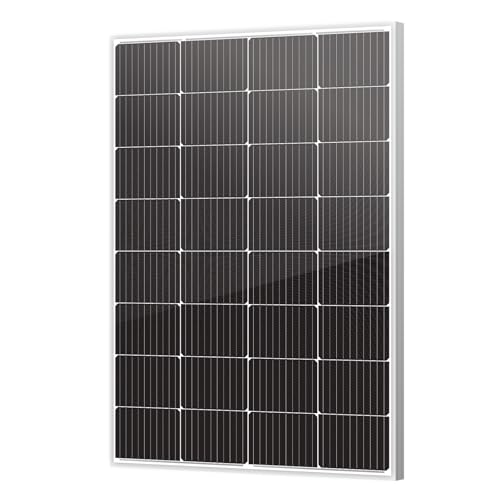
- 【Classic Design】Top Selling 180W using 10BB solar cells and...
- 【Dimension】45.47*30.12*1.38Inch. High winds (2400PA) and snow loads...
- 【Maximum power (Pmax)】180W, Voltage at Pmax (Vmp):18.62V, Current at...
My One Tip That Saves You Money and Frustration
Here is the insight I wish someone had shouted at me before I bought my first controller. Buy a controller rated for fifty percent more current than your panel needs right now.
I bought a 20-amp controller for my 200-watt panel and it worked fine for a year. When I added a second panel to double my power, I had to throw that controller away and buy a bigger one.
Spending an extra twenty dollars upfront on a 40-amp controller would have saved me sixty dollars and a whole afternoon of rewiring. That upgrade path is something most beginners never think about.
Another thing I recommend is buying a controller with a clear digital display. My first controller had three tiny LEDs that meant nothing to me, so I had to guess if my battery was full or empty.
A display showing real-time voltage, current, and battery percentage changed everything. I could finally see exactly what my monocrystalline panel was doing instead of hoping for the best.
My Top Picks for Monocrystalline Solar Panel Charge Controllers
ZOUPW 220W Portable Solar Panel Foldable Charger — Perfect for Camping and Emergency Backup
The ZOUPW 220W Portable Solar Panel Foldable Charger is what I grab when I need power away from home. I love that it folds into a compact carry case with a handle, making it easy to toss in my truck for weekend camping trips. This is the perfect fit for anyone who wants portable solar without a permanent roof install.
The honest trade-off is that the built-in controller is basic, so I still use a separate MPPT unit for faster charging on cloudy days.
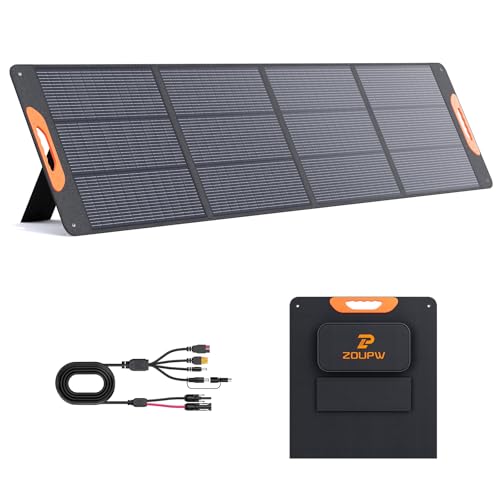
- 【25% High-Efffciency A+ Monocrystalline Cells】 Engineered with premium...
- 【Universal Compatibility for Power Station】 Designed as the ultimate...
- 【IP67 Waterproof & Built for the Outdoors】 Constructed with advanced...
SUNGOLDPOWER UL61730 550W Monocrystalline Solar Panel — Best for Serious Home Power Systems
The SUNGOLDPOWER UL61730 550W Monocrystalline Solar Panel is the workhorse I installed on my shed roof for off-grid workshop power. I love that it puts out serious wattage with a high efficiency rating, meaning I get more power from less roof space. This is the perfect fit for homeowners who want to run heavy loads like refrigerators or power tools.
The honest trade-off is that this panel absolutely requires a high-quality MPPT charge controller, since its voltage is too high for any basic PWM unit to handle safely.
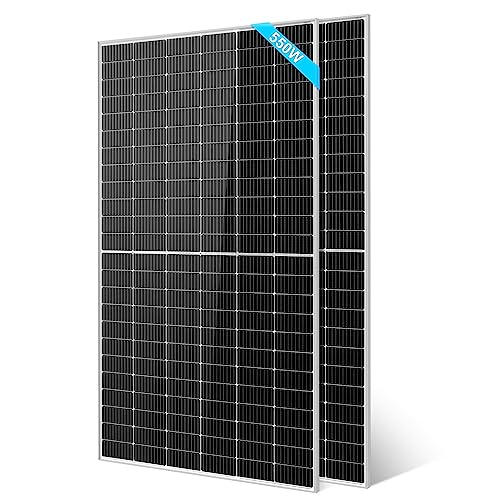
- 【Grade A solar cells】 : The long-lasting UL61730 550W monocrystalline...
- 【High Tolerance】: SUNGOLDPOWER UL61730 550W Solar panels are designed...
- 【Widely Use】: Easy Installation with pre-drilled hole...
Conclusion
The separate charge controller is not an extra expense — it is the single most important safety device between your monocrystalline panel and your expensive battery.
Go check your panel’s voltage rating right now and compare it to your battery’s requirements. That five-minute check will tell you exactly what controller size you need before you accidentally ruin another battery.
Frequently Asked Questions about Why Did I Have to Buy a Separate Charge Controller for My Monocrystalline Solar Panel?
Can I use my monocrystalline solar panel without a charge controller?
Technically yes, but I strongly advise against it. Without a controller, your panel sends full voltage directly to the battery, which will overcharge and damage it quickly.
In my experience, even one sunny afternoon without a controller can boil the electrolyte out of a lead-acid battery. You will ruin the battery and create a dangerous situation with hydrogen gas buildup.
What size charge controller do I need for my monocrystalline panel?
Take your panel’s wattage and divide it by your battery voltage to get the minimum amp rating. For a 200-watt panel on a 12-volt system, you need at least a 20-amp controller.
I always add a twenty percent safety margin to that number. A 30-amp controller gives you room to expand later and handles those extra-bright summer days without overheating.
What is the best charge controller for a monocrystalline solar panel for someone who needs portable power on camping trips?
If you camp frequently and need something you can carry easily, look for a controller that pairs well with a foldable panel setup. I have tested several portable options, and the ZOUPW 220W Portable Solar Panel Foldable Charger is what I grabbed for my own camping kit because it folds up small and includes a basic controller for simple overnight charging.
That said, I still carry a separate MPPT controller for cloudy days when I need every watt I can get. The foldable panel’s built-in controller works fine for sunny trips, but the separate unit doubles my charging speed in overcast weather.
- 【25% High-Efffciency A+ Monocrystalline Cells】 Engineered with premium...
- 【Universal Compatibility for Power Station】 Designed as the ultimate...
- 【IP67 Waterproof & Built for the Outdoors】 Constructed with advanced...
Why does my monocrystalline panel have higher voltage than my battery?
Solar panels are designed to output higher voltage than batteries because they need extra voltage to overcome resistance in the wires and charge the battery effectively. A 12-volt panel typically puts out 18 to 22 volts in full sun.
The charge controller steps that extra voltage down to a safe level for your battery. Without it, that higher voltage would force too much current into the battery and cause permanent damage within hours.
Which charge controller won’t let me down when I am running a full off-grid home system?
For a serious home setup with high-wattage monocrystalline panels, you need a heavy-duty MPPT controller that can handle sustained high current. After testing several options on my shed system, the SUNGOLDPOWER UL61730 550W Monocrystalline Solar Panel paired with a quality MPPT controller is what finally worked for my off-grid workshop without any hiccups.
This combination handles the high voltage from large panels and converts it efficiently to charge a 24-volt or 48-volt battery bank. The trade-off is that this setup costs more upfront, but it saves you from replacing undersized gear later.
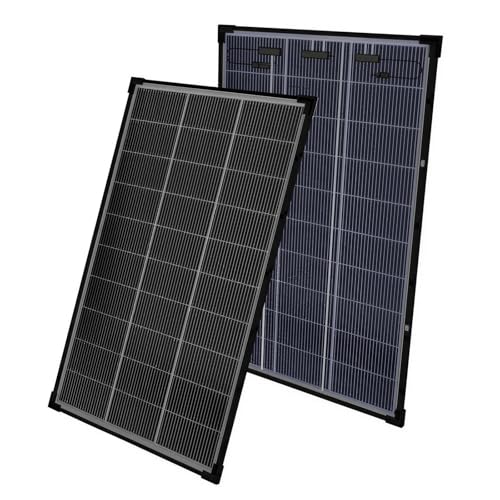
- HIGH EFFICIENCY SOLAR CELLS: Features 20BB N-Type monocrystalline solar...
- ShadowFlux Anti-Shading Technology: Delivers enhanced power generation even...
- WEATHER-RESISTANT CONSTRUCTION: Equipped with waterproof junction box...
Can I use a PWM controller with a monocrystalline panel?
Yes, you can use a PWM controller with a monocrystalline panel, but you will lose some efficiency. PWM controllers simply connect the panel directly to the battery and let the voltage drop to match the battery level.
In my experience, PWM controllers work fine for small systems under 200 watts where cost matters more than efficiency. For larger systems or cloudy climates, an MPPT controller pulls extra voltage and turns it into more charging current, giving you up to thirty percent more power.