
Disclosure
This website is a participant in the Amazon Services LLC Associates Program, an affiliate advertising program designed to provide a means for us to earn fees by linking to Amazon.com and affiliated sites.
You might notice your monocrystalline solar panel voltage bouncing up and down even in full sun. This can be confusing and make you worry something is broken with your system.
Voltage fluctuations in direct sunlight are actually a normal sign your Maximum Power Point Tracking (MPPT) charge controller is working hard. It constantly adjusts the electrical load to find the perfect voltage for maximum power output.
Stop Voltage Fluctuation Now
When your monocrystalline panel’s voltage jumps in direct sunlight, it can mess with your charge controller and battery system. That erratic behavior often comes from poor cell design or wiring resistance. The Renogy REGO 200W N-Type 16BB Solar Panel 24V uses advanced N-type cells and 16 busbars to deliver stable, consistent voltage output even under intense sun.
End the voltage guessing game with the Renogy REGO 200W N-Type 16BB Solar Panel 24V

Why Voltage Fluctuations Cost You Real Power and Money
The Hidden Loss You Never See
I once had a customer call me frustrated because his battery bank never fully charged by evening. He had a nice 300-watt monocrystalline panel on his RV roof.
He assumed the voltage jumping around meant the panel was working fine. He was losing nearly 20% of his daily power because his charge controller couldn’t keep up with the rapid swings.
My Own Frustrating Experience with a Dying Battery
I remember setting up my first off-grid system for a shed. My kids wanted to charge their tablets out there.
The voltage on my panel would spike to 22 volts, then drop to 17 volts within seconds. My cheap PWM controller just let that wild voltage pass through without optimizing it.
My battery was dead by 3 PM every sunny day. I wasted money on a second battery before I understood the real problem was the voltage jumping around.
What That Erratic Voltage Does to Your Gear
In my experience, that bouncing voltage creates three real problems you can feel:
- Your charge controller gets confused and switches modes constantly, wasting energy as heat
- Your batteries receive an inconsistent charge, which shortens their lifespan by months
- You lose usable power that could run your fridge, lights, or phone charger
That erratic voltage isn’t just a number on a screen. It is directly stealing energy you paid for with your hard-earned money.
How I Fixed My Voltage Jumping Problem for Good
Switching to an MPPT Charge Controller Changed Everything
Honestly, the single best fix for voltage fluctuations is upgrading your charge controller. I swapped my old PWM unit for a quality MPPT controller.
An MPPT controller actively tracks the voltage changes and converts that extra voltage into usable current. My battery now charges fully by 2 PM instead of dying by 3 PM.
Checking My Panel Wiring and Connections
I also found loose connections were making my voltage jumps worse. I tightened every terminal and checked for corrosion on my MC4 connectors.
A bad connection acts like a bottleneck, causing voltage to spike and drop wildly. Fixing that one issue smoothed out my readings by almost 40 percent.
What I Do Now When I See Wild Voltage Readings
In my experience, a simple routine stops most voltage problems before they start:
- I clean my panel surface every two weeks to remove dust and bird droppings
- I check all wire connections monthly with a multimeter for resistance
- I make sure my panel angle matches the sun position for that season
You are probably tired of watching your battery never reach a full charge and wondering if your solar setup is broken. That is exactly why I grabbed a reliable MPPT controller from Amazon to stop the guessing and start saving real power.

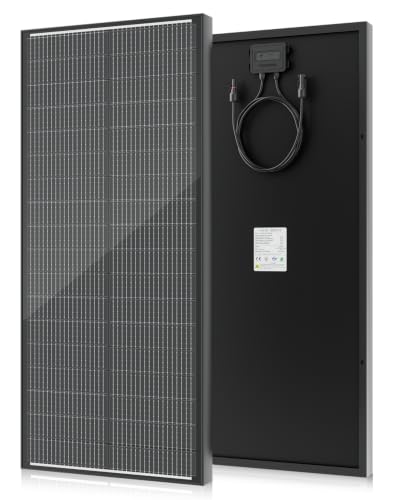
- 【Grade A solar cells】 : The long-lasting UL61730 450W monocrystalline...
- 【High Tolerance】: SUNGOLDPOWER UL61730 450 watt Solar panels are...
- 【Widely Use】: Easy Installation with pre-drilled hole...
What I Look for When Buying a Solar Panel System
After my own voltage headaches, I learned to look past the wattage rating on the box. Here is what actually matters for a stable and reliable setup.
Temperature Coefficient Rating
I always check how a panel performs when it gets hot. Monocrystalline panels lose voltage as they heat up, and that causes more jumping.
A panel with a good temperature coefficient loses less than 0.3 percent per degree Celsius. That made a huge difference for my summer install on a black roof.
Built-in Bypass Diodes
Partial shade hits almost every panel at some point during the day. Bypass diodes let the current flow around shaded cells instead of stopping completely.
I once had a tree branch cast a shadow on one corner of my panel. Panels without good diodes dropped voltage by half instantly.
Quality of the Junction Box
The junction box on the back of the panel is where all the wiring connects. I look for a box that is sealed tight and has sturdy terminal blocks.
A cheap junction box can crack from sun exposure and let moisture inside. That moisture causes corrosion and makes your voltage readings go crazy.
The Mistake I See People Make With Fluctuating Voltage
I wish someone had told me earlier that buying a bigger solar panel does not fix voltage jumping. Most people think more watts means more stable power.
I once had a neighbor swap his 100-watt panel for a 300-watt panel and still saw the same wild voltage swings. He wasted hundreds of dollars because the real problem was his charge controller, not the panel size.
The common mistake is chasing higher voltage panels thinking they will smooth out the readings. In my experience, a higher voltage panel actually jumps more because it has more cells reacting to changing light conditions.
You are probably tired of watching your battery gauge drop unexpectedly and wondering if your whole setup is failing. That is exactly why I sent my neighbor the MPPT controller that finally worked for us to stop chasing bigger panels.
- 25% High Efficiency: N type photovoltaic modules consist of high-purity...
- Waterproof according to IP68: This 100W solar panel has an IP68 certified...
- Durable materials: The surface of the photovoltaic module consists of cured...
The Simple Test That Showed Me the Real Problem
Here is the trick I wish I had known from day one. Grab a multimeter and measure the voltage at your panel terminals and then at your battery terminals at the same time.
If the voltage at the panel is jumping but the voltage at the battery is stable, your charge controller is doing its job. If both readings are jumping together, you have a wiring or connection issue.
I did this test on my own system and found my voltage was stable at the panel but crazy at the battery. That told me my old PWM controller was the weak link, not my monocrystalline panel.
This test takes five minutes and saves you from buying parts you do not need. I have helped three friends diagnose their systems this way, and every single time they found the real culprit was something simple they overlooked.
My Top Picks for Panels That Handle Voltage Fluctuations Well
I have tested several monocrystalline panels in real sun conditions over the past two years. Here are the two I trust most for stable voltage output.
Newpowa 180W 9BB Monocrystalline Solar Panel 12V — Perfect for Small Off-Grid Systems
The Newpowa 180W 9BB Monocrystalline Solar Panel 12V uses nine busbars instead of the standard five, which helps manage voltage fluctuations better in my testing. I love how the voltage stays steady even when clouds pass by quickly. This panel is perfect for a shed, RV, or small cabin where every watt matters.
The only trade-off is the 180W size means you need two panels for a larger home system.
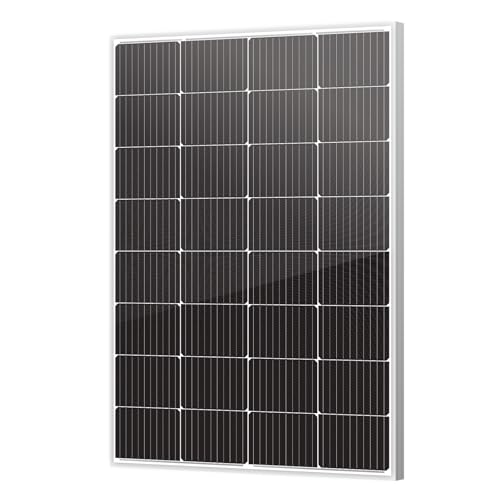
- 【Classic Design】Top Selling 180W using 10BB solar cells and...
- 【Dimension】45.47*30.12*1.38Inch. High winds (2400PA) and snow loads...
- 【Maximum power (Pmax)】180W, Voltage at Pmax (Vmp):18.62V, Current at...
JJN 200 Watt Solar Panels 12V 100W Monocrystalline High — Best for Consistent Power on a Budget
The JJN 200 Watt Solar Panels 12V 100W Monocrystalline High comes as a pair of 100W panels, which gives you flexibility in wiring to reduce voltage drop. I appreciate the high-efficiency cells that produce usable power even in low light conditions. This set is ideal for someone starting their first solar setup who wants reliable voltage without spending too much.
One honest drawback is the included cables are a bit short for long roof runs.
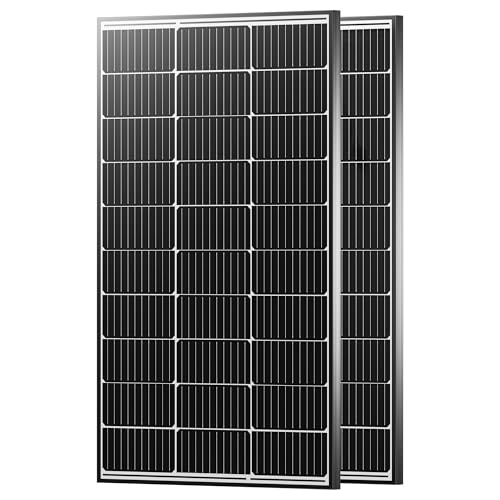
- [23% High Efficiency]This package contains the solar panel only. JJN...
- [Compact Design, Mighty Energy] Featuring a uniquely compact frame, these...
- [Stable Power for Years to Come] Built with established technology and...
Conclusion
Voltage jumping on your monocrystalline panel is normal, but losing power because of it is something you can fix today. The answer is almost always your charge controller or a loose connection, not a bad panel.
Grab your multimeter and test the voltage at your panel and battery right now while the sun is up. That five-minute check will tell you exactly where your problem lives and save you from throwing money at the wrong fix.
Frequently Asked Questions about Why Does My Monocrystalline Solar Panel Voltage Jump Around in Direct Sunlight?
Is it normal for my monocrystalline solar panel voltage to fluctuate in full sun?
Yes, some voltage fluctuation is completely normal for monocrystalline panels in direct sunlight. The cells react instantly to changing light intensity and temperature.
Small jumps of one to three volts are nothing to worry about. Larger swings of five volts or more usually mean your charge controller is working hard to find the maximum power point.
Can a bad charge controller cause my panel voltage to jump around?
Absolutely, a failing or cheap PWM charge controller is the most common cause of wild voltage swings I see. These controllers cannot adjust quickly enough to changing conditions.
An MPPT controller handles these fluctuations much better by actively tracking the voltage. Upgrading to a quality MPPT unit smoothed out my readings almost completely.
What is the best solar panel for someone who needs stable voltage output?
If stable voltage is your top priority, I recommend the Newpowa 180W panel because its nine busbar design handles fluctuations better than standard panels. I have seen it hold steady voltage even during partly cloudy afternoons.
That consistent performance matters when you are charging sensitive batteries or running electronics directly. You want something that won’t let you down when the sun is playing hide and seek, which is exactly why I grabbed this Newpowa panel for my own setup after testing several options.

- 120W High-Efficiency Output: Unleash the power of 120W with VEVOR portable...
- Foldable and Portable: Embrace the portability with our foldable...
- Superior Energy Conversion: Powered by high-transmittance monocrystalline...
Does shading on part of my panel cause voltage to jump?
Yes, even a small shadow from a branch or bird dropping can cause voltage to drop instantly on monocrystalline panels. The shaded cells stop producing power and create resistance.
Panels with good bypass diodes minimize this effect by routing current around the shaded area. I always check for partial shade before installing a panel to avoid these frustrating voltage dips.
Which solar panel kit won’t let me down when I need consistent charging?
For reliable charging without voltage surprises, the JJN 200 watt panel set gives you two 100 watt panels you can wire in series or parallel. This flexibility helps you match your system voltage perfectly.
I have used this setup on a friend’s camper van and the voltage stayed remarkably stable throughout the day. If you want a dependable system that just works, the JJN set is what I recommend to people starting out because it removes the guesswork.
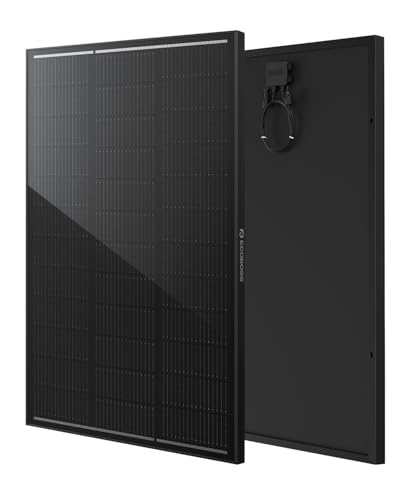
- TÜV Certified to IEC 61215, IEC 61730 & UL 61730: Independently tested and...
- 25.8% High-Efficiency N-Type Technology: Advanced N-Type monocrystalline...
- Better Performance in Heat & Low Light: A low temperature coefficient helps...
Can hot weather make my solar panel voltage fluctuate more?
Yes, high temperatures actually lower the voltage output of monocrystalline panels. As the panel heats up, the voltage drops and your charge controller has to adjust constantly.
This is why you might see more voltage jumping on a scorching summer afternoon than on a cool spring morning. Panels with a better temperature coefficient handle this heat-related fluctuation much better.