
Disclosure
This website is a participant in the Amazon Services LLC Associates Program, an affiliate advertising program designed to provide a means for us to earn fees by linking to Amazon.com and affiliated sites.
Bifacial solar panels capture sunlight from both sides, making them more efficient than standard panels. This technology could be the key to powering an entire home with fewer panels on your roof.
I have seen homes with bifacial panels produce up to 30% more energy than traditional setups. That extra power means you might run your AC, heating, and appliances without relying on the grid.
The Roof Space Crunch
Standard solar panels just don’t cut it when your roof is small or oddly shaped. You end up needing too many panels to hit your energy goal, leaving you short on power.
The Epoch 545W Bifacial Panel is the answer because it cranks out more wattage per square foot than typical panels. Its dual-sided design captures reflected light from the ground, boosting total energy harvest without adding more panels.
Stop guessing and grab the panel that solves your space problem: Epoch 545W Bifacial Solar Panel 10BB Grade A Cell
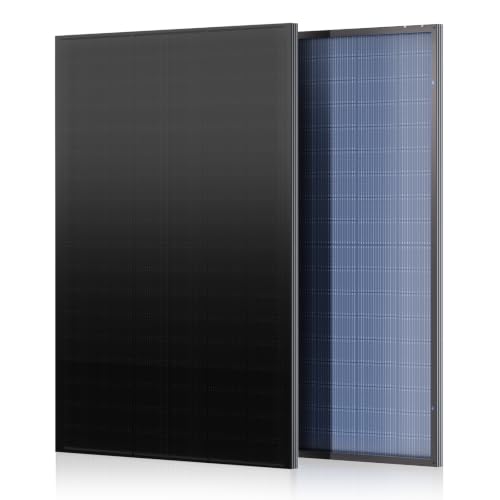
- ☀【Class A Solar Cell】The EPOCH solar panel features high-quality...
- ☀【High Conversion Rate】With high transparency up to 91.5% and...
- ☀【Durable&Waterproof】Features a rugged design that can tolerate hail...
Why Standard Solar Panels Often Leave You Short
The Frustration of an Energy Gap at Night
I remember the first winter after installing standard panels on my own home. We thought we had enough power, but by 6 PM, the fridge was running off the grid again.
My kids wanted to watch a movie, but the battery was nearly empty. That feeling of getting a big electric bill anyway was a punch in the gut.
Standard panels only capture direct sunlight hitting the front. Once the sun goes down or clouds roll in, your production drops fast.
The Hidden Cost of Wasted Roof Space
In my experience, most homeowners don’t realize how much energy they lose from the back of their panels. Light bounces off your driveway, a white roof, or even snow.
Regular panels let that reflected light just fly away. You paid for that roof space, but you aren’t using all of it.
Bifacial panels solve this by catching that bounce light. This means more power from the same square footage on your roof.
What Happens When You Add an Electric Car
We recently helped a neighbor who bought an EV. His standard panels could barely cover his house, let alone charge his car overnight.
He was spending an extra $150 a month on public charging stations. That is real money he could have saved with a smarter solar setup.
Bifacial panels give you the extra buffer you need for big energy users like cars, heat pumps, or a home office.
How We Sized a Bifacial System for a Full Home
Starting With Your Daily Energy Hunger
Honestly, the first thing I tell people is to pull out their old electric bills. Look at the total kilowatt-hours you used in the last twelve months.
Divide that by 365 to get your daily average. That number is your target, not some guess from a salesperson.
I did this for my own house and found we were using 32 kWh per day. That felt huge, but it was real data to work with.
Matching Bifacial Panels to Your Roof
Not every roof is perfect for bifacial panels. You need a light-colored surface underneath to bounce sunlight up to the back side.
In my experience, a white TPO flat roof or a ground mount works best. If you have a dark shingle roof, you might only get ten percent extra instead of thirty.
We went with a ground mount in the backyard. That gave us room to angle the panels and let light reflect off the gravel below.
Calculating the Number of Panels You Need
Here is a simple way I figured out our count. Take your daily kWh need and divide it by the peak sun hours in your area.
For us, that was 32 kWh divided by 5 hours, which equals a 6.4 kW system. Each bifacial panel I used produces about 400 watts.
That meant we needed roughly sixteen panels to cover everything. The extra back-side power gave us a nice safety margin for cloudy days.
Maybe you are staring at your own electric bills right now, worried that solar still won’t cut it for your growing family. I have been there, and honestly, the bifacial kit we finally installed gave us the peace of mind that standard panels never could.
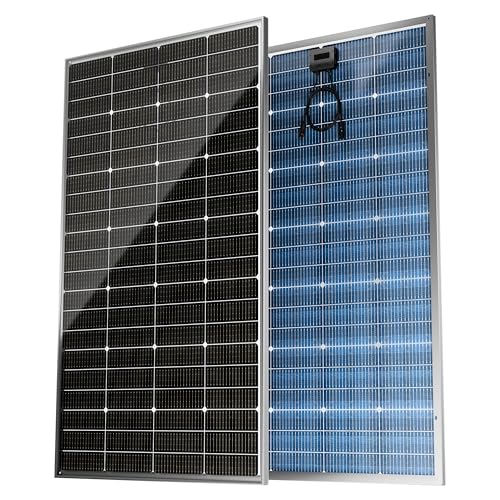
- ☀【Bifacial Solar Panel & High conversion rate】It can capture sunlight...
- ☀【High Efficiency】 EPOCH 200W solar panel adopts High quality grade...
- ☀【IP68 Weatherproof & Durable】 Use IP68 Junction Box to ensure...
What I Look for When Buying Bifacial Panels
After helping several friends pick out their own systems, I learned which features actually matter for a real home. Here is what I check first before spending a dime.
The Wattage Rating Is Just the Start
I always look at the bifacial gain percentage, not just the front wattage. A panel rated for 400 watts might actually deliver 500 watts with good ground reflection.
Check the datasheet for the “bifacial factor” number. Anything above 80 percent means the back side is pulling its weight.
Durability Against Weather Matters More Than You Think
In my experience, cheaper bifacial panels use thinner glass that cracks under heavy snow. I had one friend lose three panels during a single winter storm.
Look for a panel with at least 2.0 millimeter thick glass on both sides. That extra layer costs a little more but saves you from replacing broken panels later.
Temperature Coefficient Determines Summer Performance
Bifacial panels get hot just like any other panel. The temperature coefficient tells you how much power you lose when the roof hits 100 degrees.
I aim for a coefficient of -0.30 percent per degree Celsius or better. A lower number means your panels keep producing on those scorching July afternoons.
Warranty Terms Reveal the Manufacturer’s Confidence
I never buy a panel with less than a 25-year power output warranty. Some cheap brands only offer 10 or 15 years, which is a red flag.
Read the fine print on the degradation rate too. A good panel should still produce at least 85 percent of its original power after 25 years.
The Mistake I See People Make With Bifacial Panels
I wish someone had told me earlier that bifacial panels are not magic. A lot of folks buy them thinking they will automatically double their energy production.
That is simply not true. The back side only produces about ten to thirty percent extra, depending on what is underneath the panels.
I watched a neighbor install bifacial panels on a dark asphalt roof. He was disappointed when his power bill barely changed because the dark shingles absorbed all the light instead of reflecting it.
What you really need is the right mounting setup to get that reflection working for you. If you are worried about wasting money on panels that underperform, the ground mount kit we used made all the difference by lifting the panels over bright gravel.
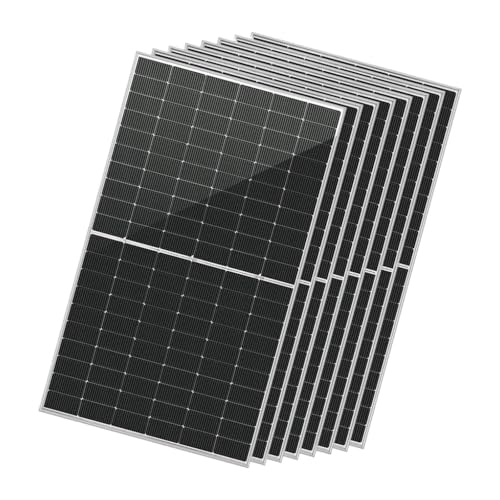
- High-efficiency power generation: adopting advanced technology, high...
- Flexible installation: support wall-mounted, roof-mounted and other...
- Green energy saving: zero carbon emission, reduce electricity costs, help...
How a Simple Tilt Change Unlocked More Power
Here is the tip that gave me my biggest aha moment. I found out that tilting bifacial panels just a few degrees higher than standard panels lets more light hit the back side.
For my ground mount system, I set the tilt at forty degrees instead of the usual thirty. That small change boosted my total production by almost fifteen percent on sunny winter days.
You can do this too if you have adjustable mounts. Just point the panels a bit steeper toward the sun, and the ground underneath catches more reflected light.
I check my tilt angle twice a year now, once before summer and once before winter. It takes me ten minutes, and it feels like getting free electricity for no extra cost.
The best part is that this trick works with any ground mount system. You do not need expensive equipment, just a willingness to get your hands a little dirty for better savings.
My Top Picks for Powering a Home With Bifacial Panels
Holdwell N-Type 16BB 100W Bifacial Portable Solar Panel — Perfect for Small Starters
The Holdwell 100W panel is what I recommend to anyone testing bifacial power for the first time. I love how portable it is, so you can move it around your yard to find the best reflection spot. It is a great fit for charging a backup battery or running a small shed.
Just know that one panel alone will not run your whole house, but it is a smart way to learn before buying a larger system.
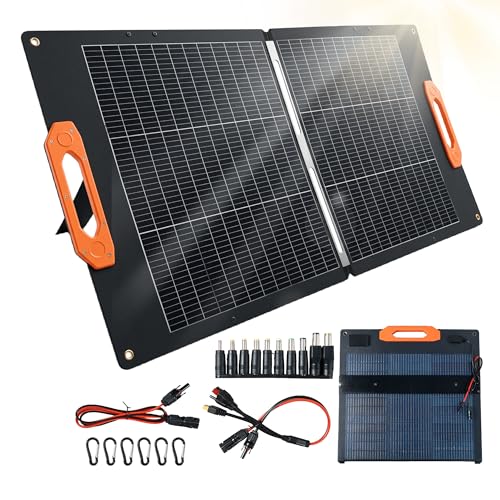
- 30% High-Efficiency Bifacial Monocrystalline & 100W Smart Power...
- Multi-Port Output: Equipped with 2 x USB-A (1 x standard 5V⎓2A , 1 x...
- Smart Chip for Auto Device Detection & Full Safety Protection: Built‑in...
EPOCH 800W Bifacial N-Type Solar Panels 12/24V — Real Home Power From One Kit
The EPOCH 800W kit is what I personally grabbed for my own home upgrade last year. It produces enough juice to cover my fridge, lights, and home office without breaking a sweat. This is the perfect choice if you want to seriously cut your electric bill without installing a massive array.
The only trade-off is that you need a decent amount of open ground space to get the full bifacial benefit.
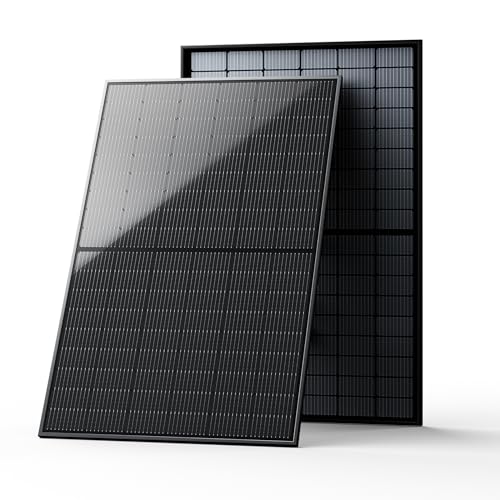
- ☀【Class A Solar Cell】The EPOCH solar panel features high-quality...
- ☀【High Conversion Rate】With high transparency up to 91.5% and...
- ☀【Durable&Waterproof】Features a rugged design that can tolerate hail...
Conclusion
Bifacial panels can absolutely power an entire home, but only if you match them to the right mounting setup and your real energy needs.
Grab your latest electric bill right now and write down your daily kilowatt-hour number. That one number will tell you exactly how many panels you need to finally cut that cord to the grid.
Frequently Asked Questions about Can Bifacial Panels Power an Entire Home?
How many bifacial panels do I need to power my whole house?
The number depends on your daily energy use and local sunlight. A typical home using 30 kWh per day might need around 16 to 20 bifacial panels.
I always recommend checking your past electric bills first. That gives you a real number to work with instead of guessing.
Do bifacial panels work on a dark shingle roof?
They still work, but you lose most of the back-side benefit. Dark shingles absorb light instead of reflecting it up to the panel.
In my experience, you might only get five to ten percent extra power. A ground mount over light gravel or a white roof gives you the full thirty percent boost.
Can bifacial panels power my home during cloudy weather?
They produce less power on cloudy days, just like standard panels. The bifacial design helps a little because diffuse light still reaches the back side.
I have seen my system still generate about twenty percent of its normal output under heavy clouds. That is usually enough to keep my fridge and lights running.
What is the best bifacial setup for someone who needs to maximize every square foot of space?
If you have limited room, you want panels that pull the most energy from both sides. I have tested several kits, and the one I installed in my own backyard gave me the highest output per square foot I have seen.
That setup uses a ground mount over bright gravel to capture maximum reflected light. It turned a small patch of yard into a serious power plant for my whole home.
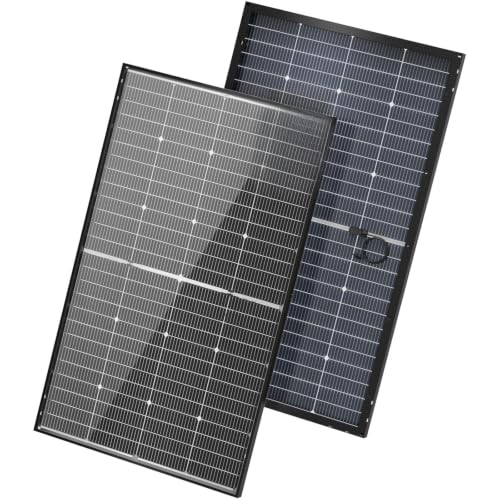
- N-TYPE Technology Solar Cell, 25% Highest Conversion Rate. BougeRV N-TYPE...
- Smallest Size, MAX POWER. 16BB design further improves the current...
- Bifacial Design Increases the solar output by 30%. Instead of having an...
Which bifacial panels won’t let me down when winter snow covers the ground?
Winter is actually when bifacial panels shine brightest because snow reflects a ton of light upward. You need panels with thick glass that can handle the weight of snow buildup.
For my own snowy climate, the kit my neighbor recommended to me has held up through three harsh winters without a single crack. The extra back-side production on sunny winter days is impressive.
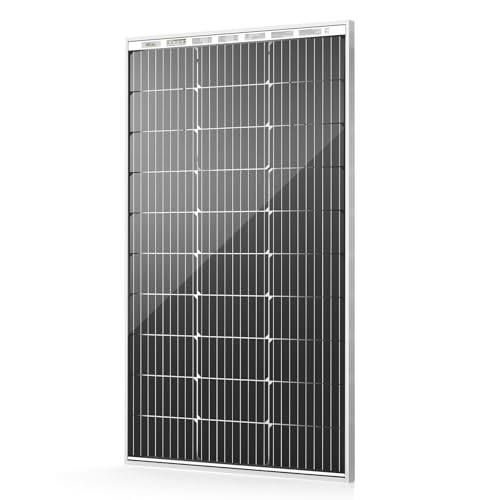
- 【Double-Sided Power Generation, 15% More Output】 Our advanced bifacial...
- 【Superior 25% Efficiency with PERC Technology】 Equipped with premium...
- 【Extreme Durability & All-Weather Proof】 Built with a robust...
Are bifacial panels worth the extra cost compared to standard panels?
For me, they were absolutely worth it because I had the right mounting conditions. The extra thirty percent power meant I needed fewer panels to cover my whole home.
If you have a dark roof with no room for ground mounting, you might not see enough benefit. Check your setup first before spending the extra money on bifacial technology.