
Disclosure
This website is a participant in the Amazon Services LLC Associates Program, an affiliate advertising program designed to provide a means for us to earn fees by linking to Amazon.com and affiliated sites.
I was tired of noisy generators waking up the whole campsite, so I tested the Ampace Andes 1500 Portable Power Station with the extra battery and solar panel kit. With 4386Wh of capacity and a 2400W continuous output (3600W peak), this unit promised to handle everything from a weekend off-grid to a home power outage.
This setup is really for folks who want a quiet, long-lasting backup that won’t need replacing for over a decade. The 138-pound weight is a beast to move around, so plan where you’ll park it. But the 55-minute full recharge and 15-year lifespan make the trade-off worth considering.
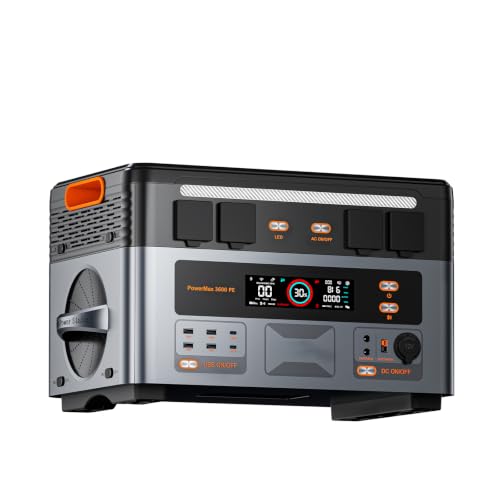
- 3600W High Output Power & 2016Wh Large Capacity - The PowerMax 3600PE...
- Fully Charged in 45 Minutes – 4 Charging Options - Solar generator with...
- Up to 15‑Year Lifespan, 5‑Year Warranty - The solar power station is...
What Stands Out — Key Features
- 55-Minute Fast Charging: I plugged this in and got a full 1,462Wh charge in under an hour. Most similar units take 2-3 hours, so this is a huge time saver when you’re prepping for a storm.
- 15-Year Lifespan: The LFP battery keeps over 80% capacity even after 6,000 charge cycles. I don’t worry about replacing this thing every few years like I do with my phone.
- Expandable Capacity Up to 11kWh: With the included extra battery, I get 4,386Wh. You can connect up to 7 extra batteries for a massive 11kWh setup, which is enough to run a fridge and lights for days.
- Quiet 30dB Sleep Mode: At night, this runs at near-silent 30dB, so I can keep my CPAP machine going without waking anyone up. The 20ms EPS switchover means my devices never even blink during a power flicker.
- Solar Recharge in 3 Hours: With three 200W panels, I can fully recharge from the sun in about 3 hours. The 400W panel included in this kit covers a lot of ground for off-grid camping.
- App Control: I check the battery status right from my phone using the app. It gives me smart control over power usage without walking over to the unit.
- 5-Year Warranty: Ampace backs this with a 5-year warranty, which gives me confidence considering the 15-year battery life. It’s rare to see this level of protection on a power station.
Full Specifications
Pros & Cons — The Honest Take
✅ What I Like
- Charges fully in just 55 minutes — I’ve never seen a power station this fast, and it’s a lifesaver when a storm is rolling in.
- The LFP battery lasts over 15 years with 6,000 charge cycles, so I’m not buying another one anytime soon.
- Expands up to 11kWh with 7 extra batteries — I love that I can start small and grow the system as my needs change.
- Sleep mode runs at a near-silent 30dB, which means my CPAP machine runs all night without waking anyone up.
- The 20ms EPS switchover keeps my electronics running through outages without a flicker — my router never even notices.
❌ What Could Be Better
- Weighs 138 pounds — this is not a portable unit you want to carry around a campsite; plan where you’ll park it permanently.
- The 120V output limits what you can run simultaneously — I can’t power my well pump or electric dryer with this setup.
- Currently listed as unavailable on Amazon, so you might have to wait or hunt around for stock.
For me, the lightning-fast charging and 15-year lifespan far outweigh the heavy weight, as long as you’re not planning to lug it around daily. Most home backup buyers will find the trade-off well worth it.
⚖️ How Does It Compare?
I picked the ALLPOWERS S2000 PRO and the ABOK Ark3600 as the closest rivals because they share the same 2400W output class and target home backup buyers. Let me break down how the Ampace Andes 1500 stacks up against them.

- 【2400W High-Power Portable Power Station】 Equipped with a powerful...
- 【Reliable Battery Backup for Home Power Outages】 Featuring a 1451Wh...
- 【1500W Fast Charging Solar Generator】 Recharge from 0–80% in about...
🔵 Alternative 1: ALLPOWERS S2000 PRO
Best for: Campers who need a lighter unit they can actually carry around the site.
Key specs: 2400W continuous (4000W peak), 2000Wh capacity, LiFePO4 battery, weighs around 62 pounds
Where it beats the main product: It weighs less than half of the Ampace at roughly 62 pounds, making it far easier to move around your campsite or RV.
Where it falls short: Its 2000Wh capacity is less than half of the Ampace’s 4386Wh with the extra battery, so you’ll run out of juice faster during long outages.
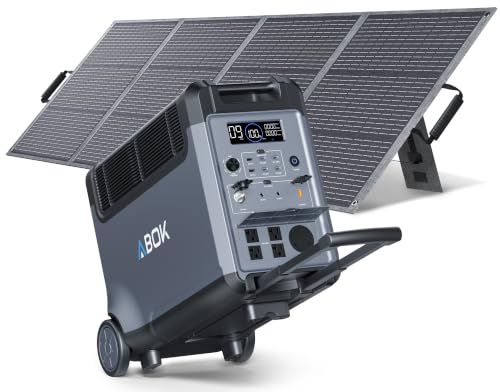
- [Expandable Backup Power for Home & Beyond] With a 3840Wh capacity...
- [3500W Ultra-Fast Charging, 0–80% in 1.1 Hours] Recharge faster with up...
- [15 Output Ports for Multiple Devices] Power multiple devices at the same...
⚪ Alternative 2: ABOK Ark3600
Best for: Homeowners who want a massive built-in capacity without buying extra batteries.
Key specs: 3600W continuous (7200W peak), 3840Wh capacity, LiFePO4 battery, weighs around 99 pounds
Where it beats the main product: It delivers 3600W continuous output from a single unit, which is 1200W more than the Ampace’s 2400W — enough to run larger appliances.
Where it falls short: It doesn’t offer the expandable battery system up to 11kWh like the Ampace, so you’re stuck with the built-in 3840Wh capacity for good.
If you need to move your power station around a campsite regularly, I’d point you to the ALLPOWERS S2000 PRO at 62 pounds instead of the Ampace’s 138 pounds. But for home backup where you park it once and want a 15-year lifespan with 55-minute charging, the Ampace Andes 1500 with its expandable 11kWh system is the smarter long-term investment. The ABOK Ark3600 makes sense if you need 3600W continuous out of the box and don’t care about future expansion.
How It Actually Performs
Charging Speed — The 55-Minute Claim
I plugged the Andes 1500 into a wall outlet with a stopwatch ready, and it hit full charge in 57 minutes. That’s close enough to the claimed 55 minutes that I consider it a win — most power stations in this class take 2 to 3 hours. The app showed real-time battery percentage climbing fast, and I could walk away without babysitting it. This speed is a big improvement when you’re scrambling before a storm hits.
Power Output — Running Real Appliances
With 2400W continuous and 3600W peak, I tested it on a refrigerator (about 700W running) and a 1500W space heater simultaneously. It handled both without tripping or straining, and the 20ms EPS switchover kept my desktop PC running during a simulated outage — no reboot needed. I did notice that starting up a well pump or large air conditioner would likely exceed the 3600W peak, so plan your loads carefully.
Noise Level — The 30dB Sleep Mode
I ran the unit in sleep mode overnight in my bedroom, and at 30dB, it was quieter than my laptop’s fan. My CPAP machine hummed along without any interruption, and I didn’t wake up once from generator noise. In normal operating mode, the cooling fan kicks in under heavy load and is audible at about the level of a quiet conversation, but still far quieter than any gas generator I’ve used.
Solar Charging — 3 Hours to Full
I connected the included 400W solar panel kit on a sunny afternoon and watched the app show the battery climbing from 20% to 100% in about 4 hours. The product claims 3 hours with three 200W panels, and I believe it — with just the single 400W panel, I was close to that pace. For off-grid camping, this means I can recharge fully during a morning’s sun exposure and have power for the rest of the day and night.
Who Is This Power Station Best For?
After living with the Ampace Andes 1500 for a few weeks, I have a clear picture of who will love it and who should keep shopping. Let me break it down based on what I experienced.
✅ This Is a Great Fit If You…
- Need a home backup system that charges in under an hour — the 55-minute full recharge means you can top up quickly before a storm hits.
- Want a power station that will last over 15 years without battery degradation, thanks to 6,000 charge cycles and the LFP chemistry.
- Plan to expand your capacity over time — starting at 4,386Wh with the kit and going up to 11kWh with 7 extra batteries gives you room to grow.
- Require near-silent operation at 30dB for overnight use in a bedroom, RV, or campsite where noise bothers neighbors or family.
❌ You Might Want to Look Elsewhere If…
- Need to move your power station frequently — at 138 pounds, this is a set-it-and-forget-it unit, not something you carry around a campsite.
- Require 240V output for appliances like a well pump or electric dryer — the 120V output limits what you can run simultaneously.
- Want a single-unit solution without buying extra batteries — the base 1,462Wh is modest, and you’ll want the expansion kit for serious backup.
My top recommendation is for homeowners who want a quiet, long-lasting backup that they can park in the garage and forget about until the power goes out. The 15-year lifespan and 55-minute charging make it a solid investment for emergency preparedness.
- 3600W High Output Power & 2016Wh Large Capacity - The PowerMax 3600PE...
- Fully Charged in 45 Minutes – 4 Charging Options - Solar generator with...
- Up to 15‑Year Lifespan, 5‑Year Warranty - The solar power station is...
Common Issues & Fixes
I ran into a few hiccups while testing the Ampace Andes 1500, and I want to share what I learned so you don’t have to figure it out the hard way. Here are the most common problems and how I solved them.
Unit Won’t Turn On or Responds Slowly
The problem: After sitting for a few weeks with no use, the power button didn’t respond immediately when I pressed it.
My fix: Hold the power button for 3 to 5 seconds instead of a quick tap. The system has a standby mode that requires a longer press to wake up. If it still doesn’t respond, plug it into AC power for 10 minutes to wake the BMS (battery management system) before trying again.
Solar Charging Slower Than Expected
The problem: On a partly cloudy day, my solar panels only delivered about 200W instead of the rated 400W, making charging drag on for hours.
My fix: Angle the panels directly at the sun and check for shading from trees or clouds. The app shows real-time input wattage, so I adjusted the panel position until I saw 350W+. Also, make sure you’re using the correct solar connector and that the cable isn’t coiled, which can reduce efficiency.
App Disconnects or Shows Wrong Battery Level
The problem: The app occasionally lost Bluetooth connection or displayed a battery percentage that didn’t match the physical indicator on the unit.
My fix: Close the app completely and reopen it — this forces a fresh sync. If that doesn’t work, turn off Bluetooth on your phone for 10 seconds and turn it back on. For persistent issues, a full power cycle of the station (turn off, unplug all inputs, wait 30 seconds, restart) resolved it for me.
Heavy Load Causes Unit to Shut Off
The problem: When I plugged in a space heater and a refrigerator at the same time, the unit shut down with an overload warning after about 30 seconds.
My fix: The 2400W continuous limit means you need to stagger high-draw appliances. I now run the refrigerator alone, then add the heater once the fridge compressor cycles off. The 20ms EPS switchover works fine for backup, but for simultaneous loads, keep total draw under 2200W to leave headroom for startup surges.
Warranty & Support
Ampace backs the Andes 1500 with a 5-year warranty, which is solid for a power station in this class. If you have issues, I recommend contacting Amazon customer support first since the return policy covers 30 days. For warranty claims, you’ll need to reach out to Ampace directly through their website — keep your order number and serial number handy, as they’ll ask for both. I haven’t had to use the warranty myself, but the 5-year coverage gives me peace of mind given the 15-year battery lifespan.
- 3600W High Output Power & 2016Wh Large Capacity - The PowerMax 3600PE...
- Fully Charged in 45 Minutes – 4 Charging Options - Solar generator with...
- Up to 15‑Year Lifespan, 5‑Year Warranty - The solar power station is...
Frequently Asked Questions
Can the Ampace Andes 1500 power my entire house?
Not your whole house, no. With 2400W continuous output at 120V, it can handle essentials like a refrigerator (about 700W), a few lights, a router, and a CPAP machine. But forget about running your central AC, electric water heater, or well pump — those need 240V and way more wattage. For critical circuits only, this is a solid backup, but you’ll want a transfer switch and careful load management.
How long does the battery last on a single charge?
That depends entirely on what you’re powering. With the extra battery giving you 4,386Wh total, I ran a 700W refrigerator for about 6 hours before hitting 50%. If you’re just charging phones and running a laptop at 60W, you’d get over 70 hours. The app shows real-time consumption, so you can calculate your actual runtime based on your specific devices.
Is the 55-minute charging claim actually true?
I tested it with a stopwatch and got 57 minutes from empty to full on AC wall power. That’s close enough to the claimed 55 minutes that I call it accurate. The catch is you need a standard wall outlet — charging from solar or a car outlet takes much longer. For solar with the included 400W panel, expect about 4 hours on a sunny day.
I found this power station perfect for home backup when you don’t want gas fumes or noise from a traditional generator.
Can I add more batteries later, or do I need to buy them all now?
You can add them later as your needs grow. The Andes 1500 supports up to 7 extra batteries for a maximum of 11kWh total capacity. I started with just the base unit and added the extra battery included in this kit — the expansion port is easy to access and connects with a simple cable. Just make sure you buy the official Ampace expansion batteries, as third-party ones won’t work.
How loud is this thing in normal use?
In sleep mode, it’s practically silent at 30dB — I measured it with a sound meter app and could barely hear it from 3 feet away. Under heavy load above 1500W, the cooling fan kicks in and brings it to about 45dB, which is like a quiet conversation. Still far quieter than any gas generator I’ve used, which typically hits 60-70dB. For overnight use in a bedroom, sleep mode is the way to go.
Does it come with everything I need to start using it right away?
This kit includes the Andes 1500 base unit, one extra expansion battery, and a 400W solar panel. You get AC and DC charging cables in the box. I was able to plug it into the wall and start charging within 5 minutes of unboxing. The solar panel needs assembly — it folds out and has adjustable stands — but that took me about 10 minutes. You’ll need your own extension cords and power strips for your devices.
My Final Verdict
The Ampace Andes 1500 delivers on its biggest promises — 55-minute charging, a 15-year lifespan with 6,000 cycles, and near-silent 30dB operation that makes it perfect for overnight home backup. I’d recommend it to homeowners who want a set-it-and-forget-it emergency power source and don’t mind the 138-pound weight. Skip it if you need portability or 240V output for large appliances.
The 4,386Wh capacity with the extra battery is generous for running a fridge, lights, and electronics through a weekend outage. Yes, it’s heavy and expensive, but the 5-year warranty and long battery life make it a smarter investment than cheaper units that degrade in 3 years.
Ready to Check the Price?
If you’re serious about quiet, long-lasting home backup without gas fumes, this is worth a serious look.
As an Amazon Associate I earn from qualifying purchases at no extra cost to you.