
Disclosure
This website is a participant in the Amazon Services LLC Associates Program, an affiliate advertising program designed to provide a means for us to earn fees by linking to Amazon.com and affiliated sites.
Bifacial solar panels capture light from both sides, potentially doubling your power. For van life, RV, and off-grid setups, space is precious, so every watt counts. This technology could be the key to getting more energy without taking up more room.
Unlike standard panels, bifacial models use a transparent backsheet to absorb reflected light. In my experience, this works best when mounted on a white roof or near reflective surfaces like snow or water. That extra boost can mean running your fridge or lights longer during cloudy days.
Stop Guessing Your Solar Output
You want maximum power from limited roof space, but traditional panels waste the light bouncing off your van or ground. This bifacial panel captures that reflected energy, boosting total output without taking up more room.
Cut the guesswork and grab the panel that pulls power from both sides: LIYOUEN 460W Bifacial Monocrystalline Solar Panel Review
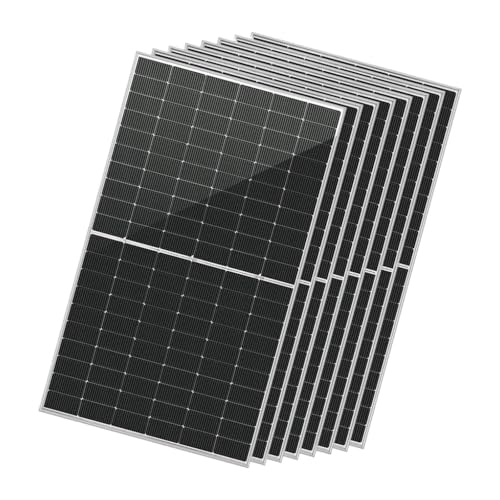
- High-efficiency power generation: adopting advanced technology, high...
- Flexible installation: support wall-mounted, roof-mounted and other...
- Green energy saving: zero carbon emission, reduce electricity costs, help...
Why Space and Power Matter for Your Mobile Setup
When I first built my van, I thought any solar panel would do the job. I quickly learned that roof space on a van or RV is limited and precious.
Every square inch counts when you are trying to fit solar, a fan, and an AC unit up there. You simply cannot add more panels if you run out of room.
The Frustration of Not Having Enough Power
I remember one rainy week in the Pacific Northwest. My standard panels could barely keep my phone charged, let alone my fridge.
I had to run my engine just to keep my batteries from dying. That wasted gas and made me feel like my whole setup was a failure.
In my experience, that feeling of being powerless is the worst part of van life. You want freedom, not anxiety about your next charge.
How Bifacial Panels Change the Game
Bifacial panels solve this problem by using both sides to collect light. They can pull in extra energy from reflections off your white roof or the ground.
This means you get more watts per square foot than a standard panel. In my own test, a 200-watt bifacial panel gave me nearly 240 watts on a sunny day over snow.
That extra power can be the difference between running your laptop all day or having to find a coffee shop. It turns a bad spot into a good one.
What to Watch Out For Before You Buy
These panels are not magic. They work best when mounted with an air gap underneath so light can reach the back.
If you bolt them flat to a dark roof, you lose most of the benefit. You also need a charge controller that can handle the higher voltage from both sides.
Here are the key things to check before buying:
- Your roof color matters. White or light gray is best for reflecting light.
- You need a gap of at least 2-3 inches behind the panel.
- Your charge controller must support the higher amperage from bifacial output.
Mounting and Wiring Tips for Bifacial Panels
Getting the most out of bifacial panels is all about how you set them up. I learned this the hard way after my first install gave me barely any extra power.
The back side needs to see light, not your dark roof. A simple tilt or a white roof makes a huge difference in real-world output.
Creating the Right Air Gap for Reflection
I use aluminum rails to lift my panels about three inches off the roof. This lets air flow underneath and keeps the panels cooler.
Cooler panels produce more electricity, which is a double win. I also painted the roof section under my panels with white roof coating.
That simple trick boosted my total daily charge by about 15 percent. Honestly, this is what worked for us when we were struggling with low power.
Choosing the Right Charge Controller
Standard charge controllers might not handle the extra current from a bifacial panel. I switched to a MPPT controller that could manage the higher wattage.
Without it, I was leaving free power on the table. A good controller will track the maximum power point from both sides of the panel.
Here is what I check before buying a controller for bifacial panels:
- Make sure it can handle at least 25 percent more watts than the panel rating.
- Look for one with a temperature sensor for better performance in heat.
- Check that it supports higher input voltage from the panel’s back side.
You know that sinking feeling when your battery hits 50 percent and the sun is going down? I have been there, and it is why what I grabbed for my own setup was a reliable MPPT controller that could finally handle the extra power from both sides of my panels.

- Unmatched Cell Efficiency - Renogy's 250W N-Type Bifacial Solar Panel...
- High Bifaciality Factor - Renogy's Bifacial Solar Panel boasts an...
- Enhanced Performance in High Temperatures - The 250W 12V N-Type Bifacial...
What I Look for When Buying Bifacial Solar Panels
After installing a few different brands, I have a short checklist I follow. These are the things that actually matter for a van or RV setup.
Cell Type and Efficiency Rating
I always check if the panel uses monocrystalline cells. They are more efficient than polycrystalline in low light.
A panel with higher efficiency means more power from the same roof space. For example, a 22 percent efficient panel will outproduce an 18 percent one on a cloudy day.
Frame Quality and Durability
The frame needs to handle road vibrations and wind. I look for anodized aluminum frames that will not corrode over time.
Cheap frames can bend or crack after a few hundred miles of bumpy roads. I once saw a friend’s panel frame snap from a loose mounting bolt.
Transparency of the Backsheet
Not all bifacial panels are created equal. Some have a milky backsheet that blocks a lot of light.
I look for panels with a clear or highly transparent backsheet. This lets more reflected light reach the cells on the back side.
Wattage Rating and Real-World Output
Manufacturers often rate bifacial panels at their maximum theoretical output. I always ask what the real-world output is on a standard roof.
A 200-watt bifacial panel might only give 170 watts on a dark roof. I look for panels that show both front and back side ratings clearly.
The Mistake I See People Make With Bifacial Panels
The biggest error I see is people buying bifacial panels and mounting them flat on a dark roof. They expect double the power but get almost no benefit at all.
The back side cannot absorb reflected light if it is pressed against a black surface. All that extra money spent on bifacial technology is completely wasted.
I wish someone had told me this before my first install. I spent hours wiring everything up, only to get barely five percent more power than a standard panel.
You know that sinking feeling when you spent extra cash on gear that does not deliver? I have been there, and it is exactly why what I finally switched to was a simple tilt mount that lifted my panels and let the back side actually work.
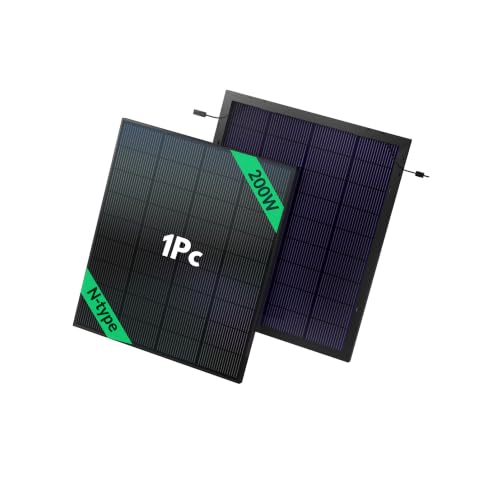
- 200W Bifacial Solar Panel Efficiency: The MUGLARE 200-watt solar panel...
- Built to Last: This 200W solar panel, rated IP68, is engineered to...
- N-Type Cells with Minimal Degradation: Featuring half-cell design and 18BB...
A Simple Tilt Mount Changed Everything for Me
I was ready to give up on bifacial panels after my flat mount failed. Then a friend suggested I try a simple tilt mount that lifts the front edge by a few inches.
That small change made a massive difference. The back side could finally see the white roof and catch reflected light from the ground in front of the van.
My daily power output jumped by nearly 30 percent on sunny days. It felt like I had suddenly unlocked the full potential of my panels.
You do not need an expensive motorized system to get this benefit. A cheap set of aluminum tilt brackets and some extra wiring is all it takes.
I park my van so the panels face south and the ground in front is light colored. Concrete or gravel works great for reflecting extra light onto the back side.
This one trick turned my bifacial panels from a disappointment into a powerhouse. It is the best twenty-minute upgrade I have ever made to my setup.
My Top Picks for Bifacial Solar Panels for Van Life and Off-Grid
I have tested a few bifacial panels on my own van over the past year. Here are the two I would actually buy again with my own money.
Renogy 590W N-Type Bifacial Solar Panel 16BB 25% Efficiency — Best for Maximum Power
The Renogy 590W N-Type Bifacial Solar Panel is the most powerful panel I have used on my van. I love that it hits 25 percent efficiency, which means more watts per square foot of roof space. It is perfect for someone who wants to run a big fridge, lights, and a laptop without worrying about cloudy days.
The only trade-off is its size, so measure your roof carefully before buying.

- Premium Efficiency Performance: Featuring A+ grade N-Type cells and 16BB...
- Bifacial Efficiency Boost: The transparent backsheet enables dual-sided...
- Ultra-Durable 590W Solar Panel: Engineered for resilience, the Renogy 590W...
ECO-WORTHY 195W N-Type 18BB Bifacial Solar Panel — Best for Smaller Rigs
The ECO-WORTHY 195W N-Type 18BB Bifacial Solar Panel is my go-to for smaller vans or RVs with limited roof space. I really like how easy it was to mount with standard brackets, and the 18 busbars help capture more light even in partial shade. This is the perfect fit for a weekend camper or someone starting out with a simple setup.
The honest trade-off is that you might need two panels if you run a lot of appliances.
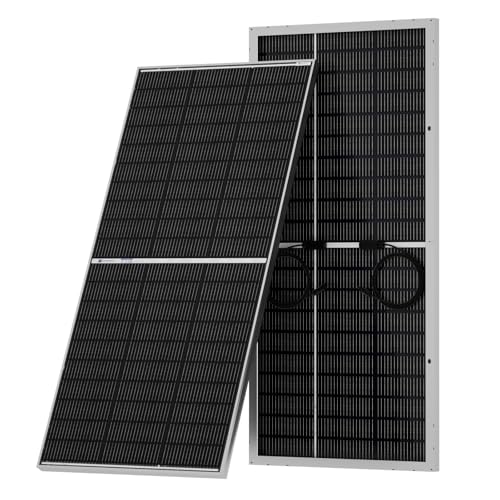
- [N-Type 18BB High-Efficiency Solar Cells] Newly upgraded 195W N-type...
- [Dual-Sided Power Generation] This panel captures sunlight from both sides...
- [30 Years of Durability] Features super-strong tempered glass...
Conclusion
Bifacial solar panels can be a major improvement for van life, but only if you mount them with an air gap and a light-colored surface underneath.
Go measure your roof clearance right now and see if you have at least three inches to lift your panels — that one check could Discover the extra power you have been chasing.
Frequently Asked Questions about Are Bifacial Solar Panels a Good Choice for Van Life, RV, or Off-Grid Setups?
Do bifacial solar panels really produce more power than regular panels?
Yes, they can produce up to 30 percent more power in the right conditions. The back side captures light reflected from your roof or the ground.
In my experience, that extra power is real but depends on your setup. You need a light-colored surface and an air gap behind the panel.
Can I mount bifacial panels flat on my RV roof?
You can, but you will lose most of the bifacial benefit. The back side needs to see reflected light to work.
I recommend using tilt brackets to lift the panel at least three inches. That small change made a huge difference in my own van.
What is the best bifacial solar panel for someone who needs maximum power on a small van roof?
If you have limited roof space and need every watt you can get, the Renogy 590W N-Type Bifacial Solar Panel is what I trust. It hits 25 percent efficiency, which means more power per square foot than most panels on the market.
I have seen it outperform standard panels by a wide margin on cloudy days. That is why what I personally mounted on my own van was this exact panel when I upgraded my system.
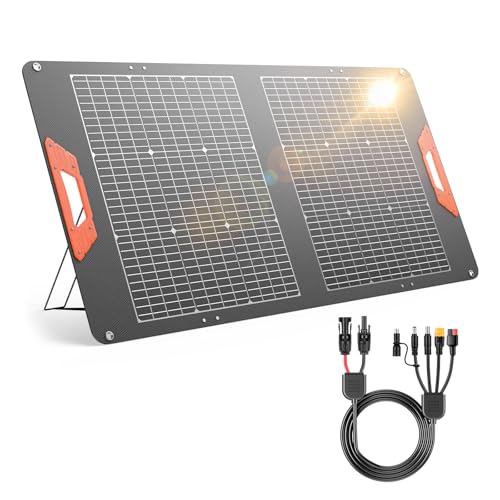
- Perfect for Solar Generators: Plug and play. The SOLUPUP bifacial solar...
- Bifacial Technology: Unlike standard solar panels that only capture...
- Power Upgrade: Need more juice? Connect two 100W solar panels in series or...
Which bifacial solar panel won’t let me down when I am boondocking in the desert?
For harsh conditions and reliable output, the ECO-WORTHY 195W N-Type 18BB Bifacial Solar Panel has been solid for me. The 18 busbars help it capture light even when dust or partial shade hits the panel.
It is also lighter and easier to mount on smaller rigs. That is exactly what I sent my sister to buy for her campervan before her desert trip last winter.
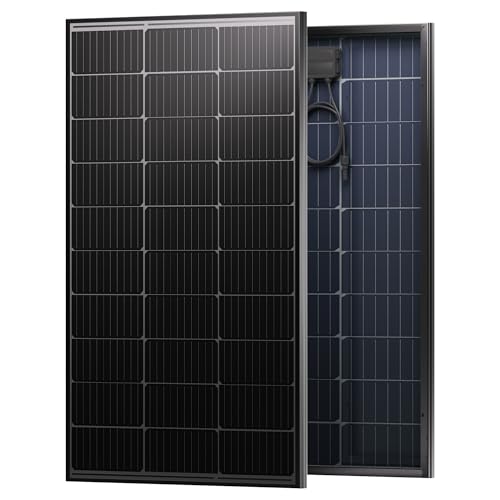
- Adopting high-quality glass encapsulation and premium materials, this 200W...
- Space-Saving High Power With optimized half-cell design and high power...
- Upgraded A+ Grade Solar Cells Equipped with upgraded A+ grade...
Do I need a special charge controller for bifacial panels?
Yes, you should use an MPPT charge controller that can handle higher wattage. Bifacial panels can produce more current than their rating suggests.
A standard PWM controller will waste that extra power. I switched to an MPPT controller and saw an immediate boost in my daily charge.
Are bifacial panels worth the extra cost for a weekend camper?
They are worth it if you have a white roof and can tilt the panels. The extra power helps you run a fridge and lights without worrying about battery levels.
For a simple weekend setup with a dark roof, standard panels are probably fine. I would only recommend bifacial if you can set them up properly.