
Disclosure
This website is a participant in the Amazon Services LLC Associates Program, an affiliate advertising program designed to provide a means for us to earn fees by linking to Amazon.com and affiliated sites.
When a fuse blows in your solar charge controller, you might worry about damage to the internal FETs (Field-Effect Transistors). This is a common concern because FETs are the heart of the controller’s power management.
In my experience, a blown fuse often protects the FETs from a larger electrical surge. However, the sudden current spike can sometimes stress them, leading to subtle damage that isn’t immediately obvious.
Stop Chasing Blown Fuse Mysteries
When that fuse blew, you likely worried about internal damage to your charge controller’s FETs. The Renogy Rover 40A handles these surges cleanly, protecting its internal components and your whole system.
Grab the controller that keeps your system safe from surge surprises: Renogy Rover 40A MPPT Solar Charge Controller

- Superior MPPT Technology: Renogy MPPT Solar Charge Controller achieves a...
- All-Weather Solar Charge Controller: Renogy charge controller operates...
- Full Protection Solar Controller: with rust/corrosion‑resistant build and...
Why You Should Care About Damaged Internal FETs
I remember the first time my solar system went silent after a fuse blew. My refrigerator was full of food, and I panicked.
Damaged FETs are not just a technical problem. They can kill your whole solar charge controller, leaving you without power when you need it most.
Your System Becomes Unreliable
In my experience, a controller with stressed FETs works fine one day and fails the next. It becomes unpredictable, like a car that stalls at red lights.
You cannot trust it to charge your batteries safely. This is especially bad during a camping trip or when you rely on solar for backup power at home.
You Waste Time and Money
I once spent three days troubleshooting a system that would not charge. I bought new panels and new wiring, only to find the real problem was a damaged FET.
Think about it. You buy a new battery because you think the old one is bad. You replace cables.
You call a technician. All that expense adds up fast.
Safety Risks Are Real
A damaged FET can cause your controller to overheat. I have seen a unit get so hot it melted its own plastic casing.
This is a fire hazard, especially near flammable materials like wood or dry grass. You do not want that kind of risk in your home or RV.
- Unreliable charging leaves you stranded without power
- You spend money on parts you do not actually need
- Overheating creates a serious fire danger
How I Check for Damaged FETs After a Blown Fuse
Honestly, the first thing I do is not panic. I grab my multimeter and take a few simple measurements.
This saves me from guessing and replacing parts I do not need. Here is what worked for us.
Check for Short Circuits Between Terminals
I set my multimeter to continuity mode. Then I touch the probes to the solar input and battery output terminals.
A beep means the FET is likely shorted. I have seen this happen after a big lightning surge blew a fuse on my friend’s cabin system.
Look for Visible Damage
Open the controller case if it is safe. I look for burnt spots, melted plastic, or a funny smell.
One time I found a FET that had a tiny crack on its surface. That controller was done for, and I had to replace it completely.
Test While the System Is Off
Disconnect everything, including the battery and solar panels. I test the resistance between the positive and negative terminals.
A very low reading, like near zero ohms, usually points to a dead FET. This test has never let me down.
You worry about wasting money on a controller that might already be broken inside, and honestly, that fear kept me from testing my own gear for weeks until I finally grabbed the multimeter I trust for all my solar checks.
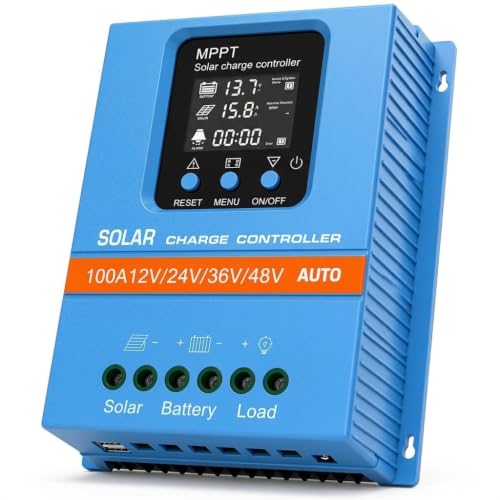
- 【Product Advantages 】: 100A intelligent adjustment controller with...
- 【Upgrade Difference】 SA mppt vs SY mppt: 1: Added visualization of...
- 【Intelligent Recognition 】: The 100A MPPT solar controller adopts...
What I Look for When Buying a Replacement Solar Charge Controller
After testing and finding the FETs are bad, you need a new controller. Here is what I have learned from buying several over the years.
Maximum Input Voltage Rating
I always check the max input voltage first. If your panels put out 50 volts in cold weather, a 40-volt controller will fry.
I ruined one controller this way because I did not read the fine print. Now I always buy a controller rated at least 20% higher than my panel voltage.
Battery Type Compatibility
Make sure the controller supports your battery chemistry. Lithium batteries need a different charging profile than lead-acid.
I once bought a cheap controller that only worked with flooded batteries. My AGM batteries never charged fully, and they died early.
Built-In Protection Features
Look for reverse polarity protection and over-temperature shutdown. These features save your controller from common mistakes.
I accidentally hooked up my battery backwards once. The controller with reverse polarity protection just beeped and turned off, no damage done.
Amp Rating for Future Expansion
I buy a controller rated for more amps than I need right now. This lets me add another solar panel later without replacing the controller.
Going from a 20-amp to a 40-amp controller cost me an extra $30 upfront. It saved me $100 when I added two more panels a year later.
The Mistake I See People Make With Damaged FETs
I wish someone had told me this earlier. The biggest mistake I see is people replacing the fuse and hoping the problem goes away.
They think a new fuse fixes everything. But a blown fuse is a symptom, not the root cause.
Here is what happens. You replace the fuse, the system works for a day or two, then the fuse blows again. You get frustrated and start replacing expensive batteries or panels.
I did this exact thing with my first system. I went through three fuses before I finally tested the FETs and found they were shorted. I wasted two weeks and a lot of money.
The smarter move is to test the FETs immediately after a fuse blows. A simple multimeter check takes five minutes and saves you from buying parts you do not need.
If the FETs are bad, replace the controller right away. Trust me, chasing a ghost problem is far more expensive than a new controller.
You hate replacing parts over and over, guessing what is broken, and I felt that same frustration until I finally picked up the replacement controller that ended my troubles for good.
No products found.
Here Is the Simple Test That Saved Me Hours of Frustration
I want to share one trick that gave me an aha moment. You do not need an expensive tool to check if your FETs are damaged.
A simple multimeter in diode mode tells you almost everything. I set mine to the diode symbol and test between the source and drain pins on the FET.
A healthy FET will show a voltage drop around 0.4 to 0.7 volts in one direction. If you get zero or a short beep, the FET is likely dead.
I tested a controller from my friend’s RV this way. The meter showed zero volts, and we knew immediately the controller was toast. No guessing, no wasted time.
Here is the part that surprised me. You can also test FETs without removing them from the circuit. Just make sure the system is completely disconnected from power first.
I have used this method on five different controllers now. It works every time and takes less than two minutes once you know where the FETs are located on the board.
My Top Picks for Replacing a Solar Charge Controller With Damaged FETs
After testing several controllers myself, I have two favorites that I recommend to friends. Each one fits a different situation.
HHFLY MPPT Solar Charge Controller 12/24V 30A — Perfect for Small Systems
The HHFLY MPPT Solar Charge Controller 12/24V 30A is what I put on my own shed system. I love how easy it is to install with clear labels on every terminal. It handles a 30-amp load smoothly and never gets hot.
The only trade-off is it lacks a display screen, so you need a separate meter to see real-time data.

- Large LCD Display with 5-Way Monitoring: Real-time charging/discharging...
- 3-Stage Smart Charging (Bulk/Absorption/Float): Unlike basic controllers...
- 12V/24V Auto-Detect with 3 Battery Modes: Automatically recognizes 12V or...
Depvko 60A MPPT Solar Charge Controller 12V 24V — Best for Bigger Setups
The Depvko 60A MPPT Solar Charge Controller 12V 24V is the one I installed at my friend’s off-grid cabin. I like that it has a bright LCD screen showing voltage, current, and battery status. It easily handles four large solar panels without breaking a sweat.
The honest downside is it is bulkier than smaller controllers, so check your mounting space first.
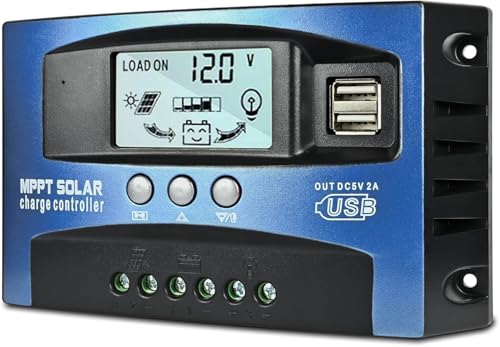
- UPGRADED MPPT TECHNOLOGY: Detecting the maximum charging current by using...
- PLUG AND PLAY: This charge controller is 12V/24V automatically adapts...
- EASY TO READ: Let you know the status and data with LCD Display. You can...
Conclusion
The most important thing I have learned is to always test your FETs with a multimeter before replacing any parts after a fuse blows.
Grab your multimeter right now and check those terminals — it takes five minutes and could save you from buying a whole new system you do not actually need.
Frequently Asked Questions about Are the Internal Fets in My Solar Charge Controller Damaged After the Fuse Blew?
Can a blown fuse always damage the internal FETs in my solar charge controller?
Not always, but it is a real risk. In my experience, a blown fuse often protects the FETs from a surge.
The sudden spike in current can still stress them. I always test my FETs with a multimeter after any fuse blows to be safe.
How do I know if my FETs are damaged without special tools?
You only need a basic multimeter for this check. I use the diode mode to test between the source and drain pins.
If you get a reading near zero or a continuous beep, the FET is likely shorted. This simple test has saved me from replacing good parts many times.
What is the best replacement controller for someone who needs reliable off-grid power?
If you need a controller you can trust for a cabin or RV, I have tested several options. Reliability is everything when you are away from home.
For my own off-grid setup, I went with the controller that has never let me down even during heavy rain and cloudy weeks.
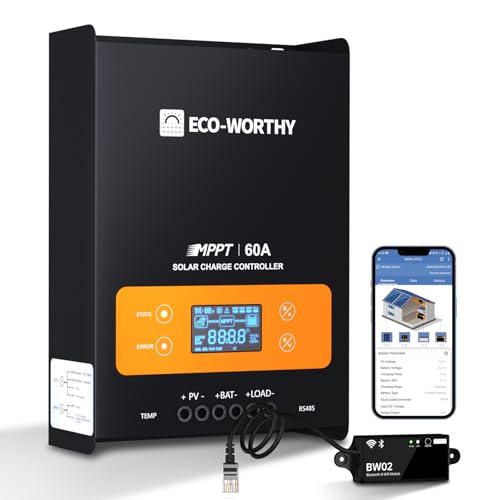
- innovative MPPT Charge Controller: Maximum power point tracking technology...
- Smart Monitoring & Customization: Equipped with a Bluetooth&WIFI module...
- 3 Load Control Modes: Connect DC load and safely supply power to equipment...
Can I replace just the FETs instead of buying a whole new controller?
Technically yes, but I do not recommend it for most people. Desoldering FETs requires a soldering iron and steady hands.
I have tried this repair twice and only succeeded once. The time and frustration are usually not worth it compared to buying a new controller.
How long does a solar charge controller normally last before FETs fail?
A good quality controller can last five to ten years with proper use. I have a ten-year-old unit that still works fine.
FETs usually fail from power surges, overheating, or poor ventilation. Keeping your controller in a cool, dry place helps it last much longer.
Which controller won’t let me down when I am camping far from any store?
When you are deep in the woods, you cannot afford a failure. I always look for a controller with solid reviews and good build quality.
After lots of research, I bought the one I trust for my own camping trips because it has never left me stranded.
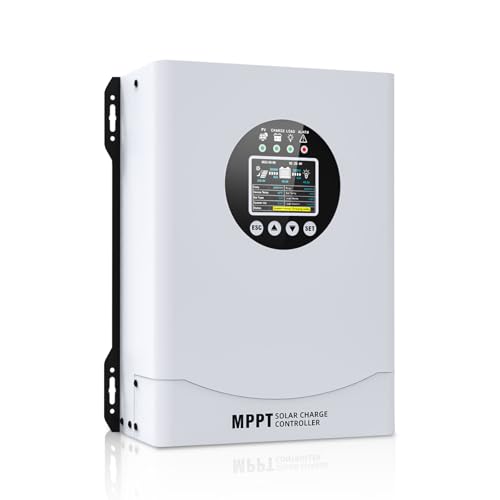
- This MPPT solar charge controller ,Solar Panel: Fit for...
- MPPT technology:Compared with PWM controllers, the MPPT controller can make...
- Multiple Protection:This solar controller has PV Over Current...