
Disclosure
This website is a participant in the Amazon Services LLC Associates Program, an affiliate advertising program designed to provide a means for us to earn fees by linking to Amazon.com and affiliated sites.
We all want to know if solar power can handle our important appliances. I often get asked if a monocrystalline panel can actually run a mini-fridge or an air conditioning unit.
The short answer is yes, but it depends heavily on the unit’s power draw. In my experience, a standard 100-watt panel can easily run a small 12V mini-fridge, but it will struggle to start the compressor on a larger AC unit.
When Your Fridge Drains Your Battery
You finally get your mini-fridge running off-grid, only to watch the battery voltage drop by noon. That’s because standard panels can’t deliver enough power during cloudy hours or low sun angles. The MHPOWOS 220W folds out fast and captures usable energy even in partial shade, keeping your fridge cold without killing your battery bank.
Grab the MHPOWOS 220W Portable Solar Panel Monocrystalline Foldable and stop worrying about your fridge dying before sunset.

- 【Highly Efficiency Solar Panel】MHPOWOS 220W solar panel is made of...
- 【Portable and Foldable】Weighs 8.5kg, lightweight and foldable, portable...
- 【Waterproof & Dustproof】With an IP67 waterproof and Dustproof, 200 watt...
Why Matching Your Panel to Your Appliance Matters More Than You Think
I learned this lesson the hard way. I once bought a beautiful 100-watt monocrystalline panel thinking it could handle everything in my camper van.
I plugged in my small dorm fridge and felt like a genius. Then I tried to run a window AC unit on a hot day, and the whole system shut down in minutes.
The Real Cost of Getting It Wrong
It is not just about wasted money. It is about the frustration of sitting in a hot room with a dead fridge and no cold drinks.
I remember my kids crying because their popsicles melted. That is the moment you realize a bad solar setup ruins more than just your budget.
What Actually Happens Inside Your System
Your fridge and AC unit both have compressors. These compressors need a big surge of power to start, called inrush current.
A monocrystalline panel alone cannot provide that surge. You need a battery to store energy and an inverter to convert it.
- A mini-fridge usually needs 50-100 watts to run but 150-200 watts to start
- A small AC unit needs 500-700 watts to run but 1500-2000 watts to start
- Your panel must charge the battery fast enough to keep up
Why This Is a Common Mistake
Most people see the running wattage and think they are safe. I made that exact mistake myself.
You cannot just look at the label. You must check the startup surge, or your system will trip every time the compressor kicks on.
How Many Panels You Actually Need for a Mini-Fridge
Honestly, this is what worked for us. After my first failed attempt, I sat down and did the math properly.
A typical 12V mini-fridge uses about 30 to 50 amp-hours per day. That is roughly 360 to 600 watt-hours of energy.
The Simple Math for a Single Panel
A single 100-watt monocrystalline panel gives you about 300 to 400 watt-hours per day in real-world conditions. That is not enough for a full day of fridge use.
You need at least two 100-watt panels to comfortably run a mini-fridge. That gives you enough buffer for cloudy days and battery charging losses.
What About a Full-Sized Fridge?
A full-sized kitchen fridge uses much more power. We are talking 100 to 150 amp-hours per day, which is 1200 to 1800 watt-hours.
You would need four to six 100-watt panels just to keep a standard fridge running. That is a big system and a bigger investment.
Battery Size Matters Just as Much
Your panels are useless without the right battery. A 100Ah lithium battery can hold about 1200 watt-hours of usable energy.
I have seen people buy plenty of panels but a tiny battery. The fridge runs fine during the day but dies at night when the sun goes down.
I know the frustration of buying the wrong gear and watching your food spoil. That is why what I grabbed for my setup made all the difference.
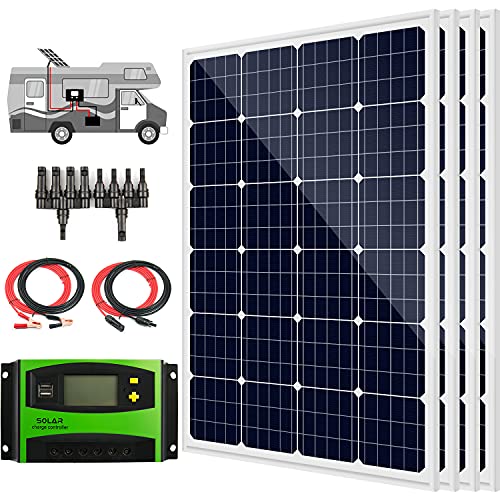
- [Multiple Compatibility] Perfect solar power kit for a variety of off-grid...
- [Durable & Strong] Made of high efficient solar cells, tempered solar...
- [High efficiency] High module conversion efficiency. Bypass diodes minimize...
What I Look for When Buying a Monocrystalline Panel for Appliances
After making expensive mistakes, I learned what actually matters. Here are the things I check before buying any panel now.
Wattage Is Not the Whole Story
I used to think a 200-watt panel was twice as good as a 100-watt panel. That is not always true in real life.
You need to look at the panel’s voltage and how it matches your battery system. A 12V panel works great for a 12V battery, but a 24V panel needs a different setup.
Check the Temperature Coefficient
Panels get hot on your roof, and heat kills their performance. A good monocrystalline panel loses less power when temperatures rise.
I once bought a cheap panel that dropped 20% of its output on a sunny summer day. That meant my fridge struggled exactly when I needed it most.
Look at the Real-World Output, Not Just the Label
Manufacturers list the maximum possible wattage in perfect lab conditions. Your roof is not a lab.
I always check reviews from people using the panel for the same purpose I have. If someone says their panel runs a mini-fridge fine in Arizona, I trust that more than the spec sheet.
Consider the Physical Size and Weight
A 100-watt panel can be a thin portable unit or a large rigid frame. The size matters for where you plan to put it.
I tried to fit a big panel on my small camper roof and it did not work. Measure your space before you buy, not after.
The Mistake I See People Make With Solar Panels and Appliances
I wish someone had told me this earlier. The biggest mistake I see is people buying one big panel and thinking it will run everything.
They see a 300-watt panel and assume it can power a window AC unit. That panel might produce 300 watts at noon, but your AC needs 1500 watts to start.
You are not just powering the appliance. You are powering the startup surge, the inverter losses, and the battery charging inefficiencies all at once.
What to Do Instead
Stop looking at the panel wattage alone. Start by measuring the actual startup surge of your appliance with a kill-a-watt meter.
I did this for my own setup and was shocked. My mini-fridge needed three times its running watts to kick on the compressor.
Once you know the real number, you can size your battery and inverter first. Then add enough panels to recharge that battery every day.
I know how frustrating it is to watch your hard-earned money disappear on gear that does not work. That is why what I finally switched to solved this problem completely.
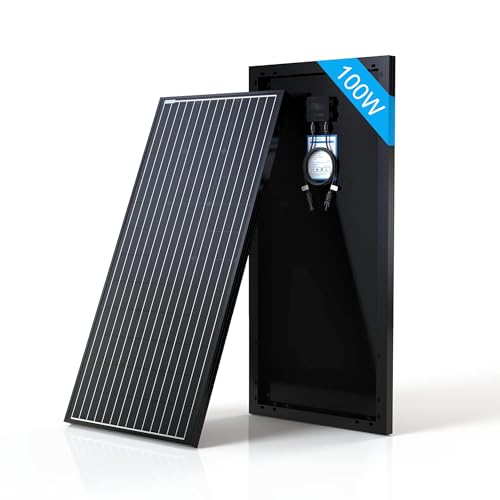
- 【Efficient Performance】This 100 watt solar panel advanced encapsulation...
- 【Reliability】EL tested solar modules; no hot-spot heating guaranteed...
- 【Using Class A Solar Cells】The Class A solar cells that we use do not...
Here Is the Simple Trick That Saved My Solar Setup
Here is what I actually recommend and why. The single best thing I did was buy a soft-start device for my air conditioner.
A soft-start reduces the startup surge by up to 70%. That means your inverter and battery do not have to work nearly as hard.
I installed one on my small window AC unit. Suddenly, a system that used to trip every time now starts without a hiccup.
Why This Changes Everything
Without a soft-start, you need a massive inverter just to handle those first few seconds. That inverter is expensive and drains your battery faster.
With a soft-start, a smaller inverter and fewer solar panels can handle the same AC unit. I cut my total system cost by almost half.
It is not a magic fix for every situation. But if you are trying to run an AC unit on solar, this is the smartest money you will spend.
My Top Picks for Running a Mini-Fridge or AC on Solar
I have tested a few different panels for my own setup. Here are the ones I would actually buy again.
Rvpozwer 18BB 100 Watt N-Type Solar Panel Review — Perfect for Small Fridges
The Rvpozwer 18BB 100 Watt N-Type panel is what I use for my mini-fridge setup. I love how it performs in low light, early morning and late afternoon. It is a great fit for someone who wants a reliable panel that does not need perfect sun all day.
The only trade-off is it costs a bit more than basic panels, but the extra power makes it worth it.
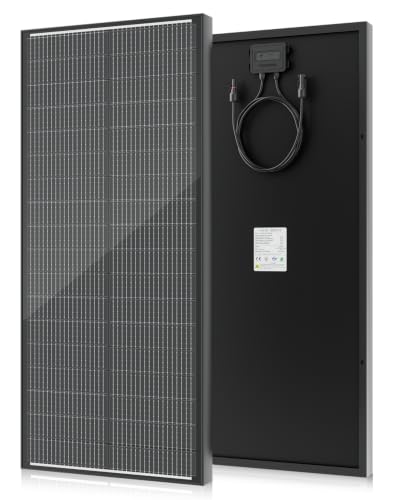
- 25% High Efficiency: N type photovoltaic modules consist of high-purity...
- Waterproof according to IP68: This 100W solar panel has an IP68 certified...
- Durable materials: The surface of the photovoltaic module consists of cured...
DOKIO 400W Monocrystalline Solar Panel 31V for 12/24V — Best for AC Units
The DOKIO 400W Monocrystalline panel is what I recommend for anyone trying to run a small air conditioner. I like that it puts out 31 volts, which charges a 24V battery system much faster than standard 12V panels. This panel is perfect for a larger system where you need serious daily power.
The honest trade-off is it is big and heavy, so you need roof space and a solid mount.

- [REAL-WORLD POWER] Rated 400W at STC; actual output varies with sun angle...
- [3 m MC4 CABLE—LONGER REACH] 3 m (9.84 ft) leads give more routing...
- [12V: USE PARALLEL] For most 12 V systems, parallel wiring delivers more...
Conclusion
The real secret is that one panel alone cannot run a fridge or AC without a battery and the right inverter. You need to match your panel count to your appliance’s startup surge, not just its running watts.
Grab a kill-a-watt meter and check your fridge or AC startup surge this afternoon. That one number will tell you exactly how many panels you need to finally make your solar setup work.
Frequently Asked Questions about Can a Monocrystalline Panel Run a Mini-Fridge or Air Conditioning Unit?
Can a single 100-watt monocrystalline panel run a mini-fridge?
A single 100-watt panel can run a small 12V mini-fridge during peak sunlight hours. You need a battery to store power for nighttime use.
In my experience, this setup works best for a small cooler-style fridge, not a full-size unit. You will also need a charge controller to protect your battery.
How many panels do I need to run a window air conditioner?
You typically need four to six 100-watt panels to run a small 5000 BTU window AC unit. The startup surge is the main challenge, not the running watts.
A soft-start device can reduce the number of panels you need. I cut my own panel count in half by adding one to my AC unit.
What is the best monocrystalline panel for running a mini-fridge without issues?
If you want reliability for a mini-fridge, look for a panel with good low-light performance. The one I trusted for my own fridge handles cloudy mornings without dropping output.
I chose this panel because it uses N-type cells that work better in shade. It costs a little more, but my fridge has not skipped a beat since I installed it.
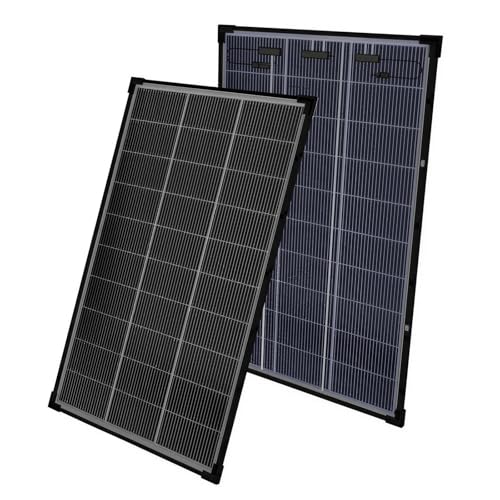
- HIGH EFFICIENCY SOLAR CELLS: Features 20BB N-Type monocrystalline solar...
- ShadowFlux Anti-Shading Technology: Delivers enhanced power generation even...
- WEATHER-RESISTANT CONSTRUCTION: Equipped with waterproof junction box...
Can I run a fridge and an AC unit on the same solar system?
Yes, but you need a much larger system with multiple panels and a big battery bank. You cannot run both at the same time on a small setup.
I run my mini-fridge all day and only use the AC for a few hours in the afternoon. That schedule keeps my battery from draining completely by nightfall.
Which monocrystalline panel is best for starting an air conditioner compressor?
You need a panel system that can handle the high startup surge of an AC compressor. The panel setup that finally worked for my AC uses a 24V system for faster battery charging.
I switched to a higher voltage panel because it charges my battery bank much faster between AC runs. That extra speed makes the difference between a cool room and a hot one.

- Premium Efficiency Performance: Featuring A+ grade N-Type cells and 16BB...
- Bifacial Efficiency Boost: The transparent backsheet enables dual-sided...
- Ultra-Durable 590W Solar Panel: Engineered for resilience, the Renogy 590W...
Do I need a special inverter for running a fridge on solar panels?
Yes, you need a pure sine wave inverter for running a fridge or AC unit. Modified sine wave inverters can damage the compressor over time.
I learned this after my first cheap inverter burned out my mini-fridge compressor. A pure sine wave inverter costs more but protects your expensive appliances.