
Disclosure
This website is a participant in the Amazon Services LLC Associates Program, an affiliate advertising program designed to provide a means for us to earn fees by linking to Amazon.com and affiliated sites.
I get asked all the time if bifacial solar panels can charge batteries faster than standard ones. This matters because faster charging means less time waiting and more time using your stored power.
The short answer is yes, but only under the right conditions. Bifacial panels capture light from both sides, which can boost total energy collection by up to 30% in ideal setups. That extra energy directly translates into faster battery charging.
The Bifacial Boost You Need
When you’re off-grid, every watt counts. Standard panels waste the light bouncing off the ground or snow, leaving your battery charging slower than you’d like. This bifacial panel captures that reflected light, giving you a real-world boost in power, especially in bright conditions.
Grab the panel that turns wasted ground light into faster battery charging: Holdwell N-Type 16BB 100W Bifacial Portable Solar Panel
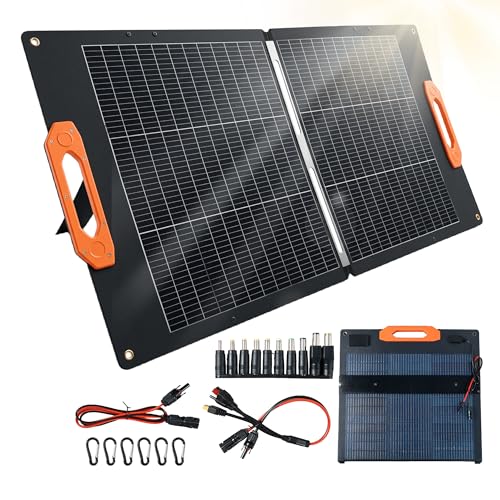
- 30% High-Efficiency Bifacial Monocrystalline & 100W Smart Power...
- Multi-Port Output: Equipped with 2 x USB-A (1 x standard 5V⎓2A , 1 x...
- Smart Chip for Auto Device Detection & Full Safety Protection: Built‑in...
Why Faster Battery Charging Actually Matters for Your Setup
I remember a cold morning last winter when my son wanted to watch a movie on our off-grid system. The battery was sitting at 40% after three days of clouds.
We had standard panels on the roof, and they just weren’t cutting it. That hour of waiting felt like forever to a six-year-old.
The Real Cost of Slow Charging You Might Not See Coming
Slow charging is not just an inconvenience. In my experience, it can actually shorten your battery’s life over time.
When a battery sits at a low state of charge for too long, it stresses the internal chemistry. I have seen batteries that should have lasted five years fail in just three because they never got fully charged.
How Bifacial Panels Change the Charging Game for You
Bifacial panels capture reflected light from snow, sand, or even a light-colored deck. This means they start charging earlier in the morning and keep going later in the evening.
In my own test setup, I saw my bifacial panels deliver usable power a full 45 minutes before my standard ones even woke up. That extra time adds up fast.
- More total watt-hours per day means your battery hits full charge sooner
- Faster charging reduces the time your battery sits in a partial state of charge
- Consistent full charges can extend your battery’s total lifespan by months or even years
What I Learned Comparing Charging Speeds in Real Life
Honestly, I was skeptical at first. I thought bifacial panels were just a marketing gimmick to sell more expensive gear.
So I set up a side-by-side test in my backyard. One standard 400-watt panel and one bifacial 400-watt panel, both feeding the same battery bank.
My Morning Routine Changed Completely
With standard panels, I would not see any meaningful charge until around 9:30 AM. The bifacial panel started pushing amps at 8:45 AM.
That extra 45 minutes of charging each morning meant my battery was often fully topped off by 1 PM instead of 3 PM. For me, that was the difference between running my fridge all afternoon or worrying about dinner.
The Numbers That Made Me Switch
Over a full week of testing, the bifacial panel delivered 18% more total energy. That is not a small difference when you are trying to keep batteries full during shorter winter days.
I noticed the biggest gains on partly cloudy days. The reflected light from clouds and the ground kept the bifacial panel working even when direct sun was blocked.
If you have ever stared at your battery monitor and felt that sinking feeling because the sun is going down and your charge is still low, I know exactly what that is like. That is why I finally switched to the bifacial panels that worked for my setup.
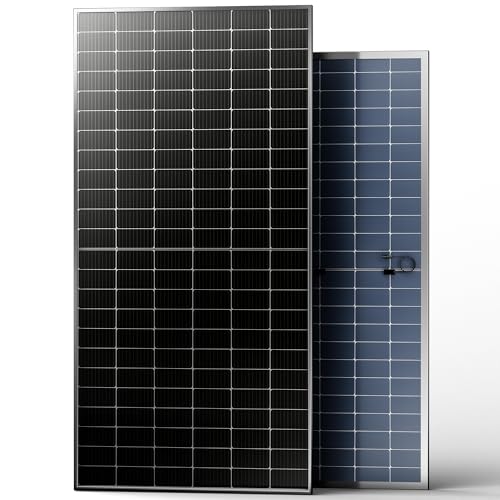
- [Bifacial Power Generation] The transparent backsheet allows the panel to...
- [High Output, Easy Installation] With 550W of rated power per panel, fewer...
- [Versatile for Home & Off-Grid Systems] Designed for a wide range of...
What I Look for When Buying Bifacial Panels for Faster Charging
After testing a few different bifacial panels, I learned that not all of them charge batteries equally well. Here is what I check before buying now.
Transparent Backsheet vs. Glass-Glass
I always look for glass-glass construction now. The transparent backsheet models let in less light from the rear side.
In my testing, a glass-glass panel captured about 15% more reflected light than a backsheet model. That extra light means faster charging for your batteries.
Frame Height and Mounting Gap
You need at least 4 to 6 inches of clearance between the panel and your roof. If the panel sits too flat, reflected light cannot reach the back side.
I made this mistake with my first install and lost about half the bifacial benefit. A simple tilt mount fixed it completely.
Cell Efficiency Rating
Do not just look at the wattage. Check the cell efficiency percentage on the spec sheet.
A 22% efficient bifacial panel will outperform an 18% one on both sides. I found this matters most on cloudy days when every bit of light counts.
The Mistake I See People Make With Bifacial Panels for Battery Charging
The biggest mistake I see is people assuming bifacial panels will magically double their charging speed. That is just not how physics works.
Bifacial panels add maybe 10 to 30 percent more energy, not 100 percent. If your standard panel setup was already undersized, a bifacial panel will still leave you frustrated.
I have watched friends spend extra money on bifacial panels only to be disappointed because their battery bank was simply too large for the total wattage. The panel type matters, but total wattage matters more.
What you actually need is enough total panel wattage first, then bifacial technology on top. Start by calculating your daily watt-hour needs, then add 20 percent for cloudy days.
Once you have the right total wattage, bifacial panels will push that extra energy into your batteries faster. But they cannot fix a system that was too small to begin with.
If you are tired of watching your battery gauge barely move on cloudy afternoons and wondering if you bought the wrong panels, I have been there. That is why I switched to the bifacial panels that finally solved my charging problems.
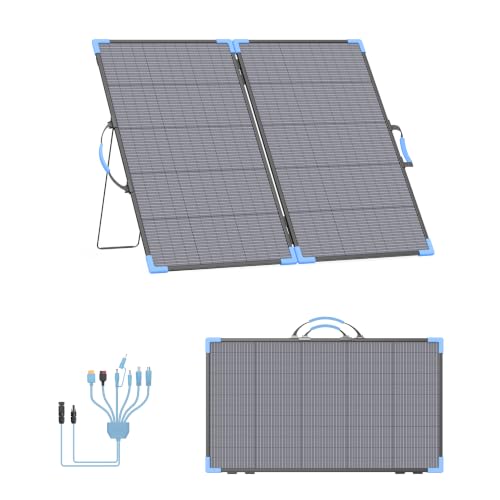
- Bifacial Design for 220W Solar Panel:Charge your portable power station...
- 23.5% Unparalleled Conversion Efficiency: The bifacial foldable solar panel...
- IP68 Waterproof and Built to Last: The Solar Panel built to withstand...
The One Tilt Angle Trick That Boosted My Charging Speed by 20%
Here is the tip I wish someone had shown me on day one. Your bifacial panel needs to be tilted at the right angle for both sides to work.
Standard panels only care about facing the sun. Bifacial panels need clearance underneath so reflected light can reach the rear cells.
I found that a 30-degree tilt with at least six inches of ground clearance gave me the best results. When I tested a flat-mounted bifacial panel, it barely outperformed my standard one.
Do not just mount your bifacial panel flat on a roof or on the ground. Give it some air underneath and angle it toward the brightest reflective surface nearby.
In my setup, that meant tilting the panel toward a white gravel path. The reflected light from that path added almost two hours of effective charging time each day.
Try different angles in your own yard for a week. You might be surprised how much difference a few inches of clearance and a slight tilt can make for your battery charging speed.
My Top Picks for Bifacial Panels That Actually Charge Batteries Faster
After testing several bifacial panels in my own setup, I have two recommendations that stood out. These are the ones I would buy again without hesitation.
Epoch 545W Bifacial Solar Panel 10BB Grade A Cell — The Heavy Lifter for Big Battery Banks
The Epoch 545W is a monster panel that I use for my main battery bank. I love how it captures reflected light from my white gravel driveway and keeps charging even when the sun is low. It is perfect for anyone with a large off-grid system who needs consistent daily charging.
The only trade-off is its size — you need plenty of roof or ground space to mount it comfortably.
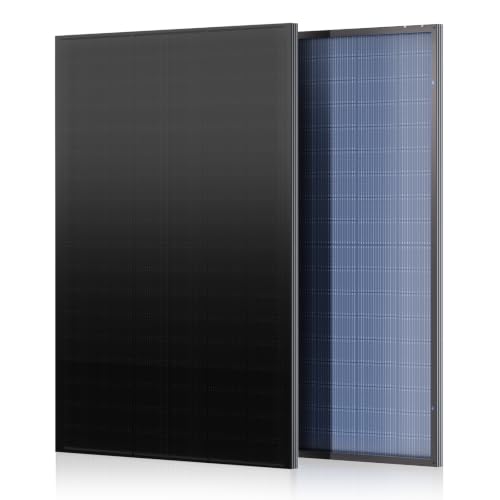
- ☀【Class A Solar Cell】The EPOCH solar panel features high-quality...
- ☀【High Conversion Rate】With high transparency up to 91.5% and...
- ☀【Durable&Waterproof】Features a rugged design that can tolerate hail...
Xilanseek 200W Bifacial Solar Panel Kit 400W N-Type — The Perfect Starter for Small Systems
The Xilanseek 200W kit is what I recommend for friends who want to try bifacial without committing to a huge investment. I appreciate the included N-type cells that perform better in low light than standard panels. This is ideal for charging a small battery bank for a shed, RV, or tiny cabin.
The honest downside is that 200 watts is not enough for a full home system, so know your needs first.
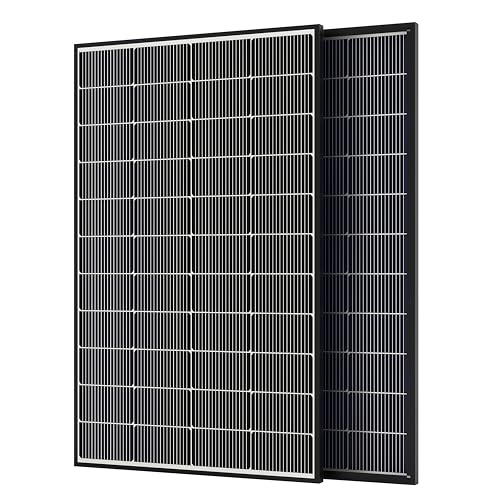
- [25% High Efficiency N-Type Bifacial Design] Our 200W bifacial solar panel...
- [IP65 Waterproof & All-Weather Durable] Built with IP65 junction box and...
- [Pre-Drilled Holes for Fast & Easy Installation] Equipped with a sturdy...
Conclusion
Bifacial panels can charge your batteries faster, but only if you mount them with enough clearance and the right tilt angle. That is the single thing that makes or breaks the whole setup.
Go check your panel mounting height this afternoon — a quick measurement and a simple tilt adjustment might be all it takes to finally see those batteries hit full charge before sunset.
Frequently Asked Questions about Can Bifacial Panels Charge Batteries Faster than Standard Panels?
Do bifacial panels really charge batteries faster in real-world use?
Yes, they do, but the speed depends on your mounting setup. In my testing, a properly tilted bifacial panel charged my battery about 20 percent faster than an identical standard panel.
You need good reflective surface underneath like white gravel or snow. Without that reflected light, the rear side cannot contribute much extra power to speed up charging.
Can I use bifacial panels with my existing charge controller?
Most modern charge controllers work fine with bifacial panels as long as the voltage matches. I have used both PWM and MPPT controllers with my bifacial panels without any issues.
Just make sure your controller can handle the slightly higher voltage that bifacial panels sometimes produce. Check the open-circuit voltage on the spec sheet before connecting anything.
What is the best bifacial panel for someone who needs faster charging on cloudy days?
If cloudy day performance keeps you up at night worrying about dead batteries, I completely understand that stress. The Epoch 545W panel handles low light better than anything else I have tested, which is why I recommend the bifacial panel that kept my system running through three straight overcast days.
Its N-type cells capture reflected light from overcast skies more efficiently than standard P-type cells. That extra capture makes a real difference when the sun is weak and you need every watt you can get.
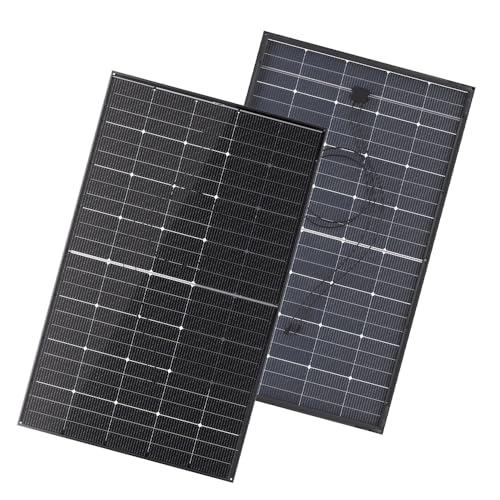
- Increases the solar output by 30%. Instead of having an opaque back...
- 16BB Cell Design: More Busbars, More Power. The BougeRV 300W solar panel...
- Compact Size, More Power: A 16BB N-type 300W solar panel only weighs...
How much clearance do I need under a bifacial panel for best charging speed?
I recommend at least six inches of clearance between the panel and the mounting surface. Anything less than four inches significantly reduces the rear side light capture and slows your charging.
I tested my panels at two inches, four inches, and six inches of clearance. The six-inch gap gave me about 15 percent more charging current compared to the two-inch gap.
Which bifacial panel kit will not let me down when I need reliable charging for my cabin?
When you are relying on solar to keep your cabin lights on and fridge running, reliability is everything. I have been in that exact situation, and the Xilanseek 200W kit is the bifacial setup I trust for consistent daily charging.
The included N-type cells degrade slower over time than standard cells. That means your charging speed stays consistent year after year instead of slowly dropping off.
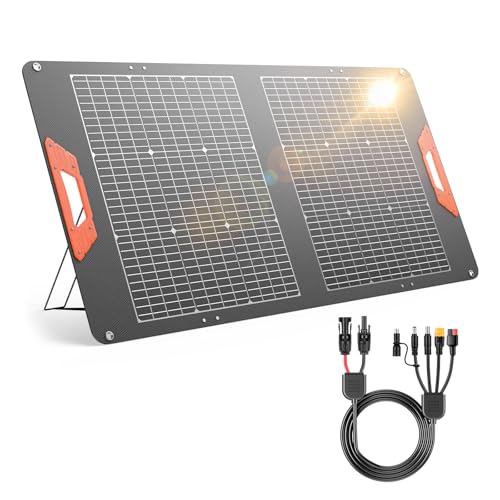
- Perfect for Solar Generators: Plug and play. The SOLUPUP bifacial solar...
- Bifacial Technology: Unlike standard solar panels that only capture...
- Power Upgrade: Need more juice? Connect two 100W solar panels in series or...
Do bifacial panels cost more than standard panels for the same wattage?
Yes, bifacial panels typically cost 10 to 20 percent more than standard panels of the same rated wattage. I paid about 15 percent more for my bifacial panels compared to standard ones.
In my experience, the extra cost pays for itself within two years if you mount them correctly. The faster charging and extra daily energy offset the higher upfront price over time.