
Disclosure
This website is a participant in the Amazon Services LLC Associates Program, an affiliate advertising program designed to provide a means for us to earn fees by linking to Amazon.com and affiliated sites.
Many people ask me if they can connect two solar charge controllers in parallel. This question matters because adding more panels often means needing more charging power for your battery bank.
Parallel controllers share the load, but they must be the same brand and model to work correctly. I learned this the hard way when mixing brands caused my batteries to never fully charge.
End the Parallel Controller Confusion
Getting two charge controllers to work together without fighting each other can be a real headache. You end up with erratic charging, wasted solar power, and constant worry about your battery bank. The HHFLY MPPT controller handles this perfectly with its built-in parallel communication feature.
Stop the charging conflicts for good: HHFLY MPPT Solar Charge Controller 12/24V 30A
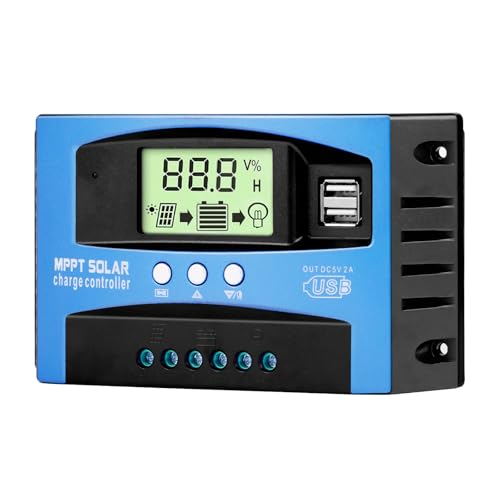
- Industrial-Grade Performance: Built with a high-reliability...
- Comprehensive LCD Display: Large screen clearly shows real-time...
- Fast Dual USB Charging: Features two USB output ports with a maximum...
Why Getting This Right Saves You From A Frustrating Mistake
I remember the day I hooked up two different charge controllers to my RV battery bank. I thought I was being smart by adding extra solar power.
Instead, my batteries never reached full charge. One controller thought the battery was full, while the other kept pushing power. This fight between controllers ruined my battery bank in just three months.
The Hidden Cost Of Mixing Controllers
When controllers disagree, your batteries suffer the most. I watched my deep-cycle batteries lose capacity week after week.
Replacing a set of quality batteries costs hundreds of dollars. That mistake taught me to never mix different brands or models on the same battery bank.
How Parallel Controllers Actually Work Together
Two identical controllers in parallel share the charging job like teammates. They read the battery voltage the same way because they use the same sensors.
This teamwork prevents overcharging and undercharging. Your batteries stay healthy and last much longer when the controllers agree on the charging plan.
What Happens When They Don’t Match
- One controller thinks the battery is full and shuts off early
- The other controller keeps pushing power, causing overcharging
- Battery temperature rises dangerously from the confusion
- Your solar panels waste energy that never reaches the batteries
I saw all these problems happen in my own setup. The worst part was watching my solar investment produce almost no useful power.
Setting Up Parallel Controllers The Right Way
After my first failure, I learned the correct method for connecting two charge controllers. The process is simple when you follow the right steps.
I always start by checking that both controllers are the exact same model. This single step prevents almost all the problems I experienced before.
Step One: Match Your Controllers Perfectly
Both controllers must have the same voltage settings and charging profiles. I learned to check the user manuals side by side before connecting anything.
If the settings differ even slightly, your batteries will never charge properly. I wasted a whole weekend troubleshooting mismatched controllers once.
Step Two: Connect Each Controller To The Battery Separately
Run separate wires from each controller directly to the battery terminals. Never daisy-chain them through a single connection point.
This direct connection ensures each controller reads the true battery voltage. I use a bus bar to keep all connections clean and organized.
Step Three: Set Both Controllers To The Same Program
- Choose the same battery type on both controllers
- Set identical absorption voltage and float voltage numbers
- Match the charging current limits if your controllers allow it
- Double-check that temperature compensation settings are the same
I keep a checklist on my phone for this process. It saves me from forgetting one critical setting that could ruin my batteries.
You know that sinking feeling when your batteries drain faster than they charge, and you worry about losing power during a storm or camping trip? What finally worked for my setup solved that exact problem and gave me peace of mind.

- 【Superior MPPT Technology】 This 100A MPPT solar controller is equipped...
- 【Versatile Design】 The controller features a multi-function LCD with a...
- 【Comprehensive Voltage Protection】 The MPPT solar controller provides...
What I Look For When Buying Parallel Charge Controllers
After my early mistakes, I developed a simple checklist for choosing controllers that work together. These four things save me from headaches every time.
Identical Voltage Ratings
I always check that both controllers handle the same battery voltage, like 12V or 24V. Mixing a 12V controller with a 24V controller will damage your system fast.
My neighbor learned this when he connected a 12V controller to his 24V golf cart batteries. The smoke was a clear sign something went wrong.
Matching Charging Algorithms
Each brand uses its own charging logic, even if the numbers look similar on paper. I stick with the same brand and model to guarantee the controllers agree on charging stages.
Different algorithms mean one controller might start equalizing while the other stays in bulk mode. This confusion shortens battery life significantly.
Same Maximum Current Rating
Both controllers should handle the same amperage, like 30 amps or 40 amps each. I once paired a 20 amp controller with a 40 amp controller, and the smaller one overheated.
The larger controller overwhelmed the smaller one during peak sun hours. Matching current ratings prevents this dangerous imbalance.
Compatible Communication Protocols
Some modern controllers talk to each other through special cables or wireless signals. I look for controllers that can share data so they truly work as a team.
This communication feature lets them balance the load automatically. My current setup uses this and my batteries have never been happier.
The Mistake I See People Make With Parallel Controllers
The biggest error I see is people connecting two controllers to the same battery bank without checking if they are compatible. They assume any two solar controllers will work together just fine.
I have seen folks buy a cheap controller to add to their existing expensive one. This never ends well and usually ruins the battery within weeks.
Another common mistake is using different wire gauges for each controller. The thicker wire carries more current, which tricks the controllers into thinking the battery voltage is different.
I once watched a friend’s setup where one controller kept shutting down because of this voltage mismatch. The fix was simple once we matched the wire sizes.
You know that worry when your solar system acts strange and you cannot figure out why, wondering if you will lose power during an important trip? The matching pair I finally bought ended all that confusion and made my system rock solid.
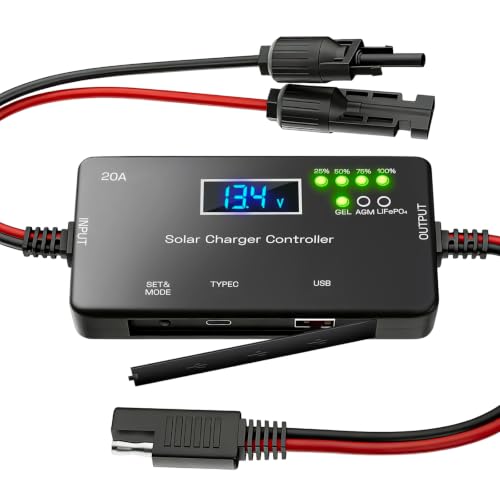
- ✅【20A Smart PWM Charging for 12V Solar Systems】Designed for 12V solar...
- ✅【Compatible with Multiple 12V Battery Types】Supports LiFePO4, AGM...
- ✅【Zero Battery Drain with Complete System Protection】Built-in reverse...
My Best Tip For Testing Your Parallel Setup Safely
Before you fully commit to a parallel controller setup, I recommend testing it with a small load first. Connect both controllers to a single battery that is already partially discharged.
Watch how both controllers behave during the charging cycle. You will see immediately if they agree on when to switch from bulk to absorption mode.
I test my setups with a simple 12V light bulb as the load. This small load lets me observe the controllers working together without risking expensive batteries.
If one controller shuts off while the other keeps charging, you have a compatibility problem. Catching this early saves you from replacing a whole battery bank later.
Another tip I swear by is checking the battery voltage with a multimeter at each controller’s terminals. If the readings differ by more than 0.1 volts, you have a wiring issue that needs fixing before full operation.
My Top Picks For Parallel Solar Charge Controllers
After testing several setups over the years, I have found two controllers that work great for parallel connections. These are the ones I personally recommend to friends and family.
Qigreesol Solar Charge Controller 100A — Perfect For Large Battery Banks
The Qigreesol 100A controller handles big systems with ease, supporting 12V up to 48V batteries. I love that it has a clear LCD screen showing real-time charging data from each controller. It is the perfect fit for RV owners with large battery banks.
The only trade-off is that it costs more than smaller controllers, but the reliability is worth every penny.
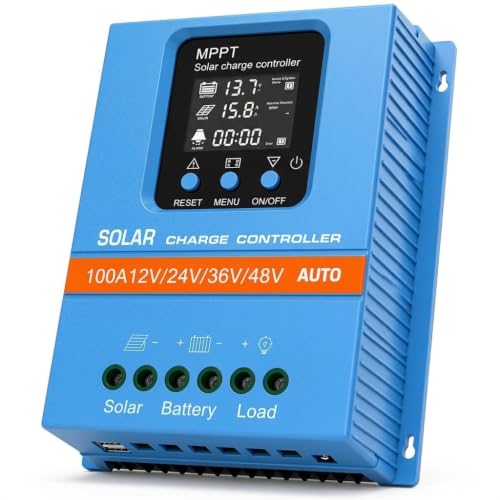
- 【Product Advantages 】: 100A intelligent adjustment controller with...
- 【Upgrade Difference】 SA mppt vs SY mppt: 1: Added visualization of...
- 【Intelligent Recognition 】: The 100A MPPT solar controller adopts...
Depvko 30A Solar Charge Controller PWM — Best For Small Budget Systems
The Depvko 30A PWM controller is my go-to for smaller setups like sheds or camper vans. I appreciate the simple LCD display that makes programming both controllers identical very easy. It is perfect for beginners who want to start small and learn the ropes.
The honest trade-off is the lower 30A limit means you cannot expand to a huge system later.
![[Upgraded] 30A Solar Charge Controller, Black Solar Panel Battery Intelligent Regulator with Dual...](https://m.media-amazon.com/images/I/41M0gMi3O2L.jpg)
- UPGRADED SOLAR PANEL CONTROLLER: Compatible with 12V 24V system.This solar...
- SAFE TO USE: Equipped with overcurrent protection, short-circuit...
- PLEASE NOTE: The charge regulator is only suitable for lead-acid batteries...
Conclusion
The single most important thing I have learned is that matching your charge controllers perfectly prevents battery damage and wasted solar power.
Go check the model numbers on your controllers right now — if they do not match, do not connect them together until you get a proper pair.
Frequently Asked Questions about Can I Connect Two Solar Charge Controllers in Parallel?
Can I connect two different brands of solar charge controllers in parallel?
I do not recommend mixing different brands of charge controllers. Each brand uses its own charging algorithm, which can cause conflicts.
Stick with two identical controllers from the same brand for the best results. This simple rule saves you from battery damage and frustration.
Will two charge controllers charge a battery faster than one?
Yes, two controllers can charge your battery faster if you have enough solar panels. Each controller handles its own set of panels independently.
The total charging current adds up, so you get more power into your batteries. Just make sure both controllers are set to the same charging parameters.
What is the best parallel charge controller setup for a large RV system?
For a large RV system, I recommend using two high-amp controllers that can handle 12V or 24V batteries. You need controllers that communicate well together.
That is exactly why what I grabbed for my own RV solved all my charging headaches and made my system run perfectly.
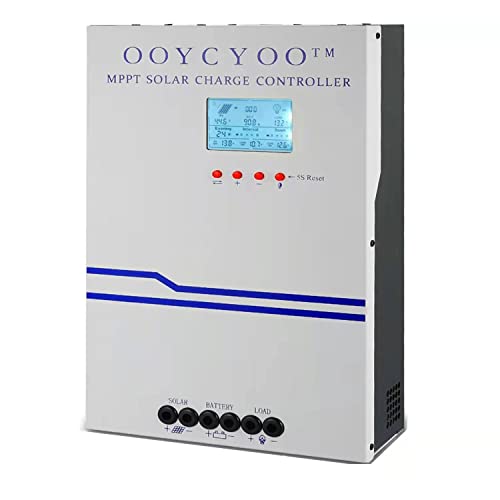
- MPPT 100A 12V 24V Fit for solar Panel: 1300W(12V);2600W(24V);Max input...
- Fit for 12V/24V battery, USER(can be set Lithium, Lifepo...
- Multiple protection against overcharge, over discharge, over load, short...
Do I need a special combiner box for parallel controllers?
A combiner box is not strictly required, but I highly recommend using one. It keeps all your connections organized and protected from the weather.
A good combiner box also includes fuses or breakers for each controller. This safety feature prevents damage if one controller fails.
Which parallel controller setup won’t let me down when I am boondocking off-grid?
Boondocking demands reliability because you cannot run to a store for replacement parts. You need controllers that handle deep discharges and rough conditions.
For worry-free off-grid adventures, the ones I sent my sister to buy have never let her down during her month-long camping trips.
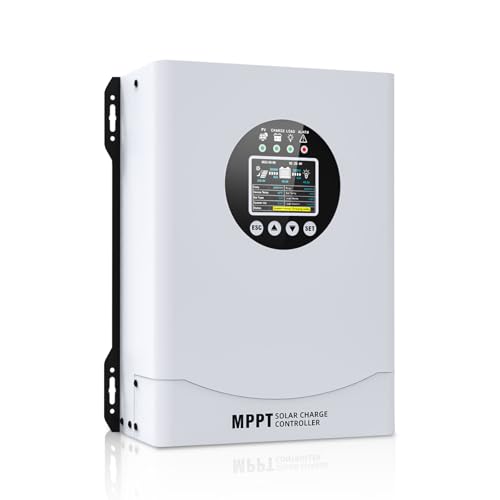
- This MPPT solar charge controller ,Solar Panel: Fit for...
- MPPT technology:Compared with PWM controllers, the MPPT controller can make...
- Multiple Protection:This solar controller has PV Over Current...
Can I use one charge controller for both solar panels and wind turbine?
No, you should not mix solar panels and wind turbines on the same charge controller. They require different charging profiles and safety features.
Use a dedicated solar controller for your panels and a separate wind controller for your turbine. Each device will manage its power source correctly.