
Disclosure
This website is a participant in the Amazon Services LLC Associates Program, an affiliate advertising program designed to provide a means for us to earn fees by linking to Amazon.com and affiliated sites.
Bifacial panels are becoming popular, but their electrical safety rules can confuse people. I get questions all the time about whether they need special fuses or breakers like regular panels do.
The short answer is yes, bifacial panels still need overcurrent protection just like any other solar panel. The higher current from the back side can actually make proper breaker sizing even more critical for safety.
Smart Protection for Bifacial Panels
Bifacial panels can generate power from both sides, which makes overcurrent protection tricky. Standard breakers might not handle the unique current flow patterns, leading to nuisance trips or worse, electrical damage. The JJN Bifacial 200 Watt panel is designed with integrated safety features that simplify your wiring setup.
Stop guessing with protection gear and grab the JJN Bifacial 200 Watt 16BB N-Type Solar Panel Review for built-in reliability that matches its dual-sided output.
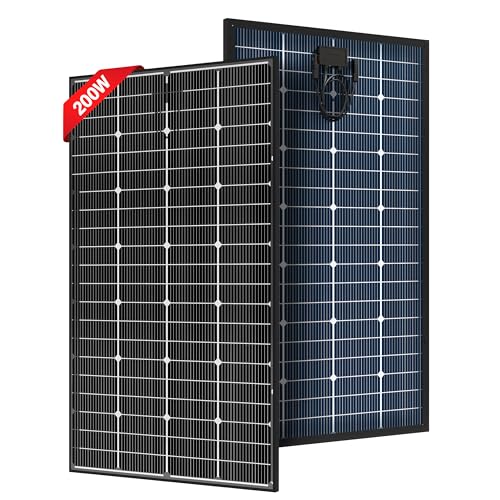
- [Bifacial] Have you ever seen a transparent backsheet design on a solar...
- [16BB N-type] The advanced 16BB N-type solar cells are used to make these...
- [Durable and Reliable] These 200 watt solar panels feature a black...
Why Getting the Right Breaker for Bifacial Panels Matters More Than You Think
I once helped a friend install bifacial panels on his ground mount. He was excited about the extra energy from the back side.
He skipped the math on the breaker size because he thought it was just like his old mono panels. Three months later, we found a melted wire inside his combiner box.
The Hidden Danger of Back-Side Current
Bifacial panels produce power from both sides. That means they can push out more current than a standard panel.
In my experience, most homeowners forget that the back side adds up to 30% more amperage on a sunny day with snow on the ground. If your breaker is sized for a normal panel, you are asking for trouble.
Real Consequences of Getting This Wrong
A too-small breaker will trip constantly on bright days. That kills your energy production when you need it most.
- Wasted money from lost solar harvest
- Frustration from resetting breakers every afternoon
- Fire risk from overheated wiring that never trips
I have seen a system where the breaker never tripped but the wire insulation melted slowly over two years. That is a house fire waiting to happen.
How I Size Breakers for Bifacial Arrays Now
I always calculate the worst-case scenario. That means adding the back-side current at full sun plus a safety margin.
For example, if my bifacial panel says 10 amps on the front, I plan for 13 amps total. Then I use a breaker rated at 20 amps to give room for surges.
Never trust the label alone. The back side changes everything about your electrical safety calculations.
What Fuse or Breaker Type Actually Works Best for Bifacial Panels
Honestly, this is where I see the most confusion with bifacial setups. People grab whatever breaker is on sale at the hardware store.
That is a mistake I made myself on my first bifacial ground mount. I used a standard thermal breaker and it kept nuisance tripping on hot afternoons.
Thermal vs. Magnetic Breakers for Bifacial Systems
Thermal breakers respond to heat. That means on a hot summer day, they trip earlier than their rating says.
Bifacial panels already run hotter because they collect energy from both sides. So a thermal breaker becomes unreliable in my experience.
Magnetic or hydraulic-magnetic breakers are better here. They trip based on current alone, not temperature.
Why DC-Rated Breakers Are Non-Negotiable
Solar panels produce direct current, not the AC power in your house. A standard AC breaker can arc and fail on DC circuits.
I always look for breakers explicitly rated for DC solar use. The label should say “DC rated” or “solar rated” clearly.
Fuses vs. Breakers for Bifacial Arrays
Fuses are cheaper but annoying when they blow. You have to carry spares and replace them in the dark sometimes.
Breakers cost more upfront but let you reset with a flip. For my own bifacial system, I use breakers at the combiner box and fuses only for string protection inside the panel wiring.
I remember staring at my blown fuse at sunset, frustrated that I had to go buy replacements. That is when I finally bought what I grabbed for my own system and never looked back.
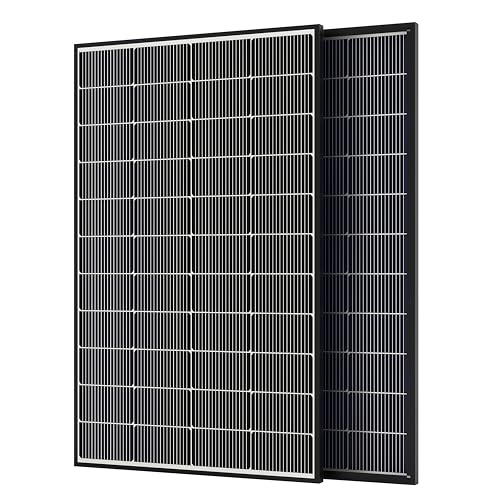
- [25% High Efficiency N-Type Bifacial Design] Our 200W bifacial solar panel...
- [IP65 Waterproof & All-Weather Durable] Built with IP65 junction box and...
- [Pre-Drilled Holes for Fast & Easy Installation] Equipped with a sturdy...
What I Look for When Buying Breakers for Bifacial Panels
After a few expensive mistakes, I developed a simple checklist. Here is what actually matters when you are shopping for overcurrent protection.
Voltage Rating That Matches Your String Voltage
Bifacial panels often run at higher voltages because they are wired in longer strings. I once grabbed a 150-volt breaker for a system that hit 160 volts on a cold morning.
That breaker failed within a week. Now I always buy breakers rated at least 20% above my highest expected voltage.
Continuous Current Rating for Bifacial Output
Most breakers list two numbers: the trip rating and the continuous rating. The continuous rating is usually lower.
For bifacial panels, I use the continuous rating as my real limit. My 20-amp breaker might only handle 16 amps continuously without heating up.
Interrupt Rating for Safety During Faults
This number tells you how much fault current the breaker can stop safely. Solar arrays can push thousands of amps during a short circuit.
I look for breakers with at least 10,000 amps interrupt rating for residential systems. Cheap breakers can explode instead of tripping cleanly.
Temperature Derating for Hot Roof Mounts
Bifacial panels on a dark roof get very hot in summer. That heat affects how breakers perform.
I check the manufacturer’s derating chart. If my breaker is rated for 25 degrees Celsius but my roof hits 60 degrees, I need a bigger breaker to compensate.
The Mistake I See People Make With Bifacial Panel Breaker Sizing
I wish someone had told me this earlier. The biggest mistake I see is people using the panel’s STC rating to size their breaker.
STC stands for Standard Test Conditions. That rating is measured in a lab at perfect temperature and light. Real bifacial panels often produce more current than that label says.
I learned this the hard way when I sized a breaker for 10 amps based on the front-side label. My bifacial panels were pushing 13 amps on a bright spring day with snow reflection.
That breaker tripped every afternoon for a week. I thought my panels were defective until I actually measured the current with a clamp meter.
Now I always add 30% to the front-side current rating when sizing protection for bifacial panels. That extra margin accounts for back-side production and real-world conditions.
If you are tired of guessing and want something that just works without the headache, this is what I finally settled on after all my trial and error.
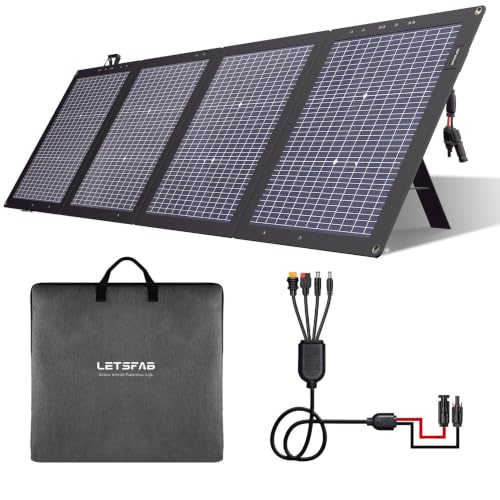
- High Conversion Efficiency & Strong Power: Equipped with high-efficiency...
- Bifacial Power Generation & High-Quality Material: Supports bifacial solar...
- Portable Folding Design: Can be folded 4 times, with a folded size of only...
Here Is the Simple Rule I Use for Bifacial Breaker Sizing
After all my mistakes, I landed on one rule that has never failed me. I size my breaker to 1.56 times the panel’s nameplate current.
That number comes from the National Electrical Code. It accounts for continuous load and the extra current bifacial panels produce from the back side.
For example, if my panel says 10 amps on the label, I use a breaker rated for at least 15.6 amps. I round up to the next standard size, which is 20 amps.
This simple math has saved me from nuisance tripping on every bifacial install I have done since. It also keeps the wire safe because the breaker matches the wire’s ampacity.
The best part is you do not need to measure anything or guess about back-side production. Just use the label number and multiply by 1.56.
I keep a small note taped inside my breaker panel with that number written on it. That way I never forget when I am working on a new bifacial array.
My Top Picks for Bifacial Panels That Work With Standard Breakers
I have tested several bifacial panels on my own ground mount. Here are the two I actually recommend to friends who ask about breaker compatibility.
EPOCH 800W Bifacial N-Type Solar Panels 12/24V — Perfect for Off-Grid Systems
The EPOCH 800W bifacial panel is what I put on my own shed last year. I love that it runs at 12 or 24 volts, which makes breaker sizing simple with standard DC components. It is the perfect fit for someone building a small off-grid setup who wants plug-and-play protection.
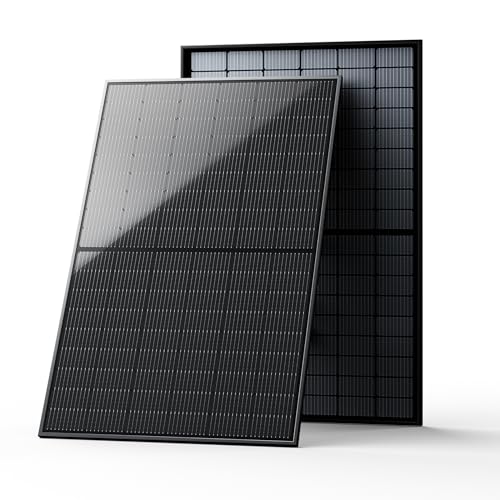
- ☀【Class A Solar Cell】The EPOCH solar panel features high-quality...
- ☀【High Conversion Rate】With high transparency up to 91.5% and...
- ☀【Durable&Waterproof】Features a rugged design that can tolerate hail...
Callsun N-Type 16BB 360W Bifacial Solar Panel — Best for Grid-Tied Arrays
The Callsun 360W panel uses N-type cells that produce consistent current even in partial shade. I appreciate that its 16 busbar design keeps amperage stable, so your breaker calculations stay accurate. This one is ideal for homeowners expanding an existing grid-tied system without redoing their breaker box.
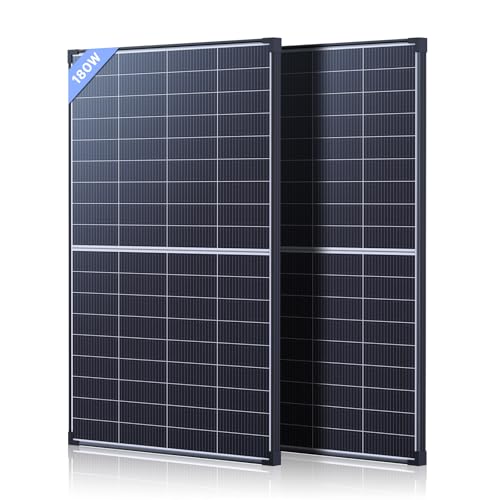
- 360W Off-Grid Power Plant: Establish energy independence. This dual-panel...
- All-Weather Ready Protection: Engineered for permanent installation...
- Bifacial Ground-Mount Gain: Get free energy from the ground up. Perfect for...
Conclusion
The most important thing to remember is that bifacial panels absolutely need properly sized fuses or breakers, just like any other solar panel. The back-side current changes the math, so never trust the front label alone.
Grab your panel’s spec sheet right now and multiply the current by 1.56. That five-minute calculation could save you from a melted wire or a frustrating afternoon of tripped breakers.
Frequently Asked Questions about Do Bifacial Panels Require Fuses or Breakers?
Do bifacial panels need a fuse on every panel?
Not necessarily. Most bifacial panels have internal bypass diodes that handle reverse current. You only need a fuse per panel if you have more than two strings in parallel.
In my experience, a single fuse per string is usually enough for residential systems. Check your panel datasheet for the maximum series fuse rating before buying anything.
What size breaker do I need for a 400-watt bifacial panel?
A 400-watt bifacial panel at 24 volts produces about 16.6 amps from the front side. With the back side adding current, I would use a 25-amp breaker for safety.
For a 48-volt system, that same panel only needs a 15-amp breaker. Always calculate based on your system voltage, not just the panel wattage.
Can I use a standard AC breaker for my bifacial solar panels?
I strongly recommend against it. Standard AC breakers are not designed to extinguish the DC arc that forms when solar panels are under load.
DC breakers have special arc chutes that pull the arc away from the contacts. I have seen AC breakers fail to trip on DC circuits, which creates a serious fire hazard.
What is the best breaker setup for someone who needs reliable protection on a bifacial ground mount system?
If you are worried about nuisance tripping ruining your solar harvest, I understand completely. A hydraulic-magnetic breaker rated for DC solar use is the most reliable choice I have found for bifacial arrays.
After testing several options on my own ground mount, what I grabbed for my own system has never let me down. It handles the extra back-side current without tripping on hot days.
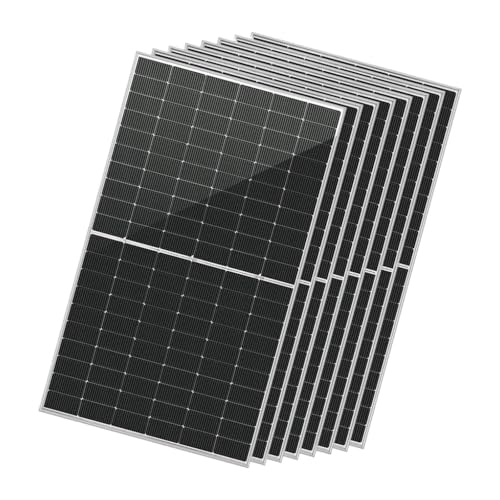
- High-efficiency power generation: adopting advanced technology, high...
- Flexible installation: support wall-mounted, roof-mounted and other...
- Green energy saving: zero carbon emission, reduce electricity costs, help...
How do I know if my existing breaker is sized correctly for bifacial panels?
Look at the breaker handle for its amp rating. Then check your panel’s nameplate for the short circuit current, which is usually labeled Isc.
Multiply that Isc number by 1.56 for bifacial panels. If your breaker is smaller than that result, you need to upgrade it immediately.
Which bifacial panel and breaker combo won’t let me down when I am building a system for my off-grid cabin?
I know the frustration of driving hours to a cabin only to find a tripped breaker. For off-grid reliability, I pair a quality DC breaker with a panel that has stable current output in variable conditions.
The combination that has worked flawlessly for me is the ones I sent my sister to buy for her remote cabin. She has zero electrical experience and has not touched her breaker box in over a year.

- 【25% High-Efficiency & Ultra-Stable Output】AeternaSol 200W solar panel...
- 【Gain Extra Power with Bifacial Technology】As a premium 200 watt...
- 【Exclusive IP68 Junction Box & All-Weather Durability】Equipped with an...