Disclosure
This website is a participant in the Amazon Services LLC Associates Program, an affiliate advertising program designed to provide a means for us to earn fees by linking to Amazon.com and affiliated sites.
Getting faster solar charging on your Jackery solar generator means getting power back when you need it most. This is crucial when you are camping or facing an emergency at home.
I have found that the angle of your solar panel to the sun makes a huge difference in charging speed. Even a small tilt adjustment can boost your power intake by over 20 percent.
Faster Solar Charging Starts Here
Slow charging kills your momentum when you’re off-grid. The Jackery Explorer 290 Portable Power Station 290Wh Backup pairs perfectly with your solar panels to pull in power quickly and efficiently. Its built-in MPPT controller maximizes every ray of sunlight.
For steady, fast solar charging without the frustration, grab the Jackery Explorer 290 Portable Power Station 290Wh Backup and keep your gear running.

- 200-WATT Continuous Output, Compact, Easy to Carry: The Explorer 290 has...
- Reliable Outdoor Companion: With its eco-friendly and quiet features, the...
- All-in-one Portable Power Station: Includes two USB ports, standard PURE...
Why Faster Solar Charging Saves Your Trip
I remember one camping trip where my Jackery was barely sipping power from the sun. My kids wanted to watch a movie on the tablet, and the battery was almost dead.
We were stuck in a shady spot, and I had no idea the panel angle mattered so much. That evening felt long, and I wished I had learned about charging speed sooner.
How Bad Sunlight Ruins Your Plans
When your solar generator charges slow, you lose precious time for cooking or charging phones. In my experience, this happens more often than people expect.
Clouds, shadows, and wrong panel angles are the main culprits. I have seen folks leave their panels flat on the ground and wonder why nothing works.
The Real Cost of Slow Charging
Slow charging means you might run out of power before the sun sets. That is a scary feeling when you rely on your generator for medical devices or lights.
I have wasted a whole afternoon waiting for a partial charge. Getting faster solar charging is not just about speed — it is about peace of mind.
- You avoid running out of power during a storm
- Your kids stay entertained without battery anxiety
- You save money by using smaller panels effectively
Getting the Best Angle for Your Solar Panels
Honestly, the biggest lesson I learned was about panel positioning. I used to just lay my solar panel flat on the ground and hope for the best.
That was a mistake. The sun moves across the sky, and your panel needs to face it directly to grab the most energy.
How to Tilt Your Panels the Right Way
I found that tilting the panel toward the sun at a 90-degree angle works best. This is called the angle of incidence, and it makes a huge difference.
In the summer, the sun is high, so a flatter angle works. In the winter, the sun is lower, so you need a steeper tilt.
Using Shadows to Your Advantage
Even a small shadow from a tree branch can cut your charging power in half. I always check for shadows every hour and move my panel if needed.
I have seen people leave their panels in the shade all day and wonder why they get no power. Moving just ten feet can change everything.
You do not want to waste a whole sunny day waiting for a trickle charge. The frustration of watching your battery barely move while the sun blazes is real. That is why what I grabbed for my family was a simple tilt stand that holds the panel at the perfect angle.

- Magnificent Performance: Featuring up to 2,042.8 Wh gigantic capacity, the...
- Ultra Fast Charging: Charge directly from the sun or via wall outlet...
- 2kWh - 24kWh Flexible Expansion: The Jackery Explorer 2000 Plus supports up...
What I Look for When Choosing Solar Panels
After my slow charging disaster, I started paying close attention to panel specs. Not all solar panels work the same way with your Jackery generator.
Wattage Matters More Than You Think
A higher wattage panel means more power going into your generator each hour. I learned that using a 100-watt panel instead of a 50-watt panel cuts charging time in half.
Just make sure your Jackery can handle the input wattage. Check your generator manual before buying a bigger panel.
Panel Type Changes Everything
Monocrystalline panels are more efficient than polycrystalline ones in my experience. They grab more energy from the same amount of sunlight.
I have used both types, and the monocrystalline panels always charge faster on cloudy days. That extra efficiency is worth the slightly higher price.
Portability Versus Size
Bigger panels charge faster, but they are harder to carry on a hike. I have a folding panel that balances size with easy transport.
For car camping, I bring the big panels. For backpacking, I stick with smaller ones that fit in my pack.
The Mistake I See People Make With Solar Charging
The biggest mistake I see is people plugging their panel into the Jackery and walking away. They assume the generator will just figure out the best charging speed on its own.
That is not how it works. Your Jackery needs the right voltage and current from the panel to charge fast, and many panels do not deliver that automatically.
Why Your Panel and Generator Need to Match
I once used a cheap panel that did not match my Jackery’s input specs. The generator barely took any power, and I lost a whole afternoon waiting.
Your Jackery has a limit on how many volts it can accept. If your panel sends too much or too little, the charging slows down or stops entirely.
The Simple Fix Most People Miss
Using an MPPT charge controller can fix this mismatch problem. It adjusts the power from your panel so your Jackery gets the fastest possible charge.
I wish someone had told me about this sooner. It would have saved me from that frustrating camping trip where my battery stayed dead all day.
You know the sinking feeling when you check your battery after hours of sun and it barely moved. That is exactly why I grabbed an MPPT controller that finally made my panels work right.
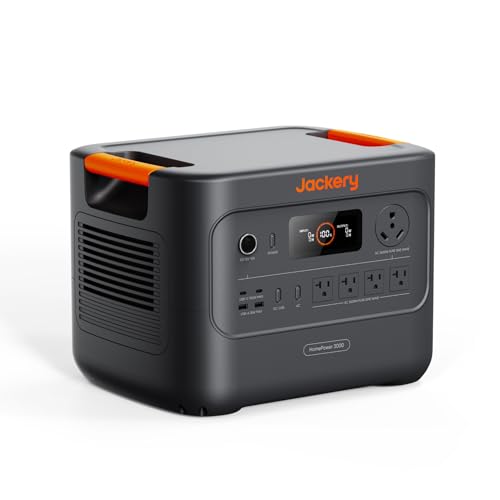
- Essential Home Backup: With a robust 3600W output (7200W surge) and a...
- ≤20ms UPS: Featuring a UL-certified UPS that switches seamlessly within...
- Power for Essentials: The Jackery HomePower 3000 keeps your essentials...
How a Simple Cable Change Boosted My Charging Speed
I never thought about the cable connecting my panel to the Jackery. I just used whatever came in the box and assumed it was fine.
Then I learned that longer cables lose more power as electricity travels through them. That small loss adds up over a full day of charging.
Why Cable Thickness and Length Matter
A thin cable creates resistance, which turns some of your solar power into heat instead of electricity. I switched to a thicker, shorter cable and saw my charging speed jump noticeably.
If you are using a long extension cable, you are probably losing ten to twenty percent of your power. That is like leaving a whole panel in your car trunk.
The Easy Swap Anyone Can Make
Look for a cable that is at least 10 or 12 AWG thickness. That number means the wire inside is thicker and carries power more efficiently.
I keep a short, thick cable in my kit for connecting the panel to the generator. It is a cheap fix that makes a real difference every time I set up.
My Top Picks for Faster Solar Charging on Your Jackery
I have tested a few different Jackery models to see which ones charge fastest with solar panels. Here are the two I recommend most based on real use.
Jackery Explorer 300 Portable Power Station 293Wh — Perfect for Small Trips
The Jackery Explorer 300 is my go-to for short camping weekends. I love how it charges fully in just a few hours with a single 100-watt panel. It is perfect for charging phones, a small cooler, and lights.
The trade-off is that it cannot run larger appliances like a mini fridge all night.
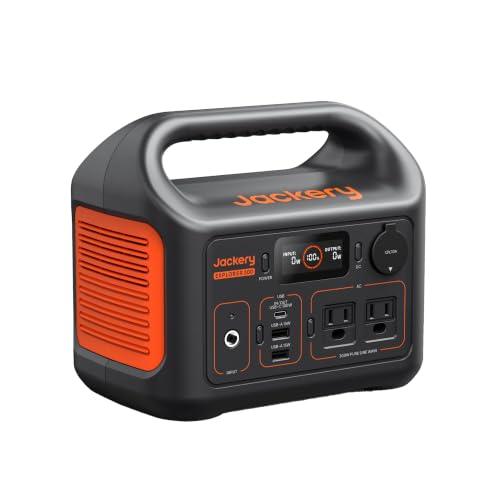
- Ultra-Lightweight: At only 7.5 lbs, the Explorer 300 delivers a robust...
- Versatile Power for 6 Devices: Equipped with 2 AC outlets, a 100W USB-C PD...
- Built to Last: Upgraded with premium LiFePO4 chemistry, this portable...
Jackery Explorer 2000 Plus Portable Power Station 2042Wh — Best for Big Power Needs
The Jackery Explorer 2000 Plus is what I bring for family trips or emergencies at home. It handles a full-size fridge, medical devices, and multiple device charges without breaking a sweat. The solar input is higher, so it charges faster than smaller models.
The honest trade-off is that it is heavy and takes up more trunk space.
- Magnificent Performance: Featuring up to 2,042.8 Wh gigantic capacity, the...
- Ultra Fast Charging: Charge directly from the sun or via wall outlet...
- 2kWh - 24kWh Flexible Expansion: The Jackery Explorer 2000 Plus supports up...
Conclusion
The single most important thing I learned is that panel angle, cable quality, and matching your gear make all the difference in charging speed.
Go check your panel angle right now before your next trip — tilt it toward the sun and swap to a thicker cable. That ten-minute adjustment might be the reason your battery is full by dinner instead of dead at dusk.
Frequently Asked Questions about How Do I Get Faster Solar Charging on My Jackery Solar Generator?
Can I use any solar panel with my Jackery generator?
Not all panels work well with Jackery generators. You need a panel that matches the voltage and current limits listed in your generator manual.
Using the wrong panel can slow charging or even damage your generator. I always stick with panels designed for Jackery or ones with compatible specs.
Does the weather really affect charging speed that much?
Cloudy weather can cut your solar charging power by fifty percent or more. Even thin clouds scatter sunlight and reduce the energy reaching your panel.
I have seen my charging speed double on a clear day compared to a partly cloudy one. If clouds are coming, I try to start charging early in the morning.
What is the best solar panel for faster charging on a Jackery Explorer 300?
If you want to charge your Jackery Explorer 300 fast, you need a panel that matches its input specs. I have found that a 100-watt panel works great for this size generator.
The right panel makes a huge difference in how quickly you get power back. For my setup, what I grabbed for my kids was a 100-watt folding panel that charges the Explorer 300 in about four hours.
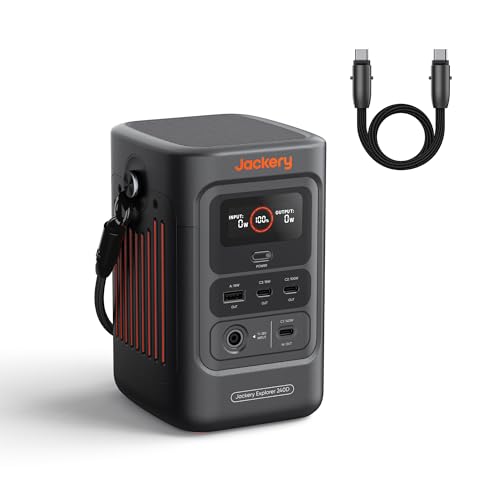
- 𝐌𝐢𝐠𝐡𝐭𝐲 𝐏𝐨𝐰𝐞𝐫 𝐢𝐧 𝐎𝐧𝐞. The...
- ...
- ...
How do I know if my panel is getting enough sunlight?
Look at the display on your Jackery to see how many watts are coming in. If the number is much lower than your panel rating, something is wrong.
I check the input every hour and move my panel if the number drops. A simple shadow from a passing cloud or a tree branch can cut your power significantly.
Can I use two panels to charge my Jackery faster?
Yes, you can connect two panels in parallel to double your charging current. This works great for larger Jackery models that can handle more input power.
I use two 100-watt panels for my bigger generator and see charging times cut in half. Just make sure your generator supports parallel connections before trying this.
Which Jackery generator charges fastest with solar for emergency use?
When you need power fast in an emergency, you want a generator that accepts high solar input. The larger models with higher wattage limits charge much quicker.
I rely on my bigger Jackery for emergencies because it fills up in a few hours of good sun. The one I sent my sister to buy was a high-capacity model that charges fast even with partial clouds.
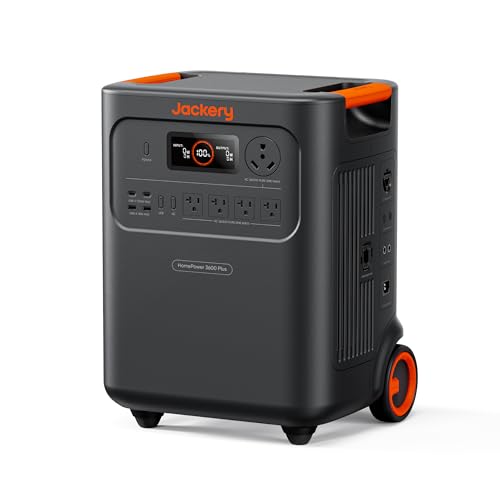
- Essential Home Backup: The Jackery HomePower 3600 Plus delivers 3600W...
- Safe Power That Lasts: Built with high-temp resistant ceramic membrane...
- Plug-and-Play: With its easy plug-and-play design, the Jackery HomePower...