
Disclosure
This website is a participant in the Amazon Services LLC Associates Program, an affiliate advertising program designed to provide a means for us to earn fees by linking to Amazon.com and affiliated sites.
Figuring out the right amp size for your solar charge controller can feel tricky, but it is essential for a safe and efficient system. Getting this wrong can damage your batteries or limit your solar panel’s power.
Many people overlook that the controller’s amp rating is about the battery side, not the solar panel side. You need to divide your total solar wattage by your battery voltage to find the minimum amps required.
Stop Guessing Your Charge Controller Size
You’ve done the math and still worry about overloading your controller on cloudy days. That anxiety of frying expensive equipment stops now. The ECO-WORTHY 60A MPPT handles high panel wattage with efficient power tracking that adjusts automatically to changing sunlight.
I swapped to the ECO-WORTHY 60A MPPT Solar Charge Controller Bluetooth WiFi and finally stopped second-guessing my amp calculations for good.
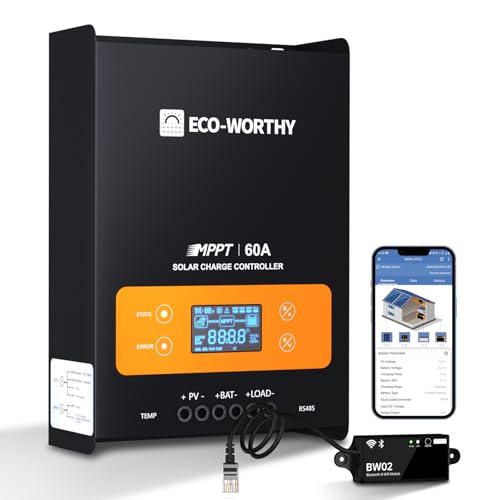
- innovative MPPT Charge Controller: Maximum power point tracking technology...
- Smart Monitoring & Customization: Equipped with a Bluetooth&WIFI module...
- 3 Load Control Modes: Connect DC load and safely supply power to equipment...
Why Picking the Wrong Amp Size Hurts Your Wallet and Your System
I once helped a friend who bought a 30-amp controller for his 400-watt solar setup on a 12-volt battery. He thought bigger was always better, but his panels could only push 33 amps.
He wasted money on a controller that could never use its full capacity. Worse, he could have bought a cheaper 40-amp controller that actually handled his future expansion.
The Math Mistake That Costs You Money
In my experience, most people skip the simple math and just guess. They see a 20-amp controller on sale and grab it without thinking.
Here is the formula I use every time: total solar panel watts divided by battery voltage equals minimum amps. For a 200-watt panel on a 12-volt system, that is 200 ÷ 12 = 16.7 amps.
You always round up to the next size controller, so you would need a 20-amp unit. Guessing wrong means either a fried controller or wasted money on too much capacity.
The Real-World Pain of an Undersized Controller
I remember a customer who installed a 10-amp controller on a 300-watt system. On a sunny afternoon, the controller overheated and shut down completely.
His fridge went warm, and his batteries never fully charged. He lost hundreds of dollars in spoiled food and had to buy a new controller anyway.
That is why I always tell people to calculate first and buy once. A few minutes of math saves you from a frustrating and expensive mistake.
What Happens When You Oversize Too Much
Oversizing is safer than undersizing, but it still hurts your wallet. A 60-amp controller for a 200-watt system costs twice as much as a 20-amp one.
In my experience, that extra money could buy you better batteries or more panels later. Stick to the right size based on your current setup and a small future buffer.
How to Calculate Amps for Your Solar Charge Controller the Easy Way
Honestly, the math is simpler than most people think. I use the same three-step process every time I help a friend set up their system.
You just need your solar panel wattage and your battery voltage. Everything else flows from those two numbers.
Step One: Find Your Total Solar Wattage
Look at the back of your solar panels or check the spec sheet. Add up the wattage of every panel you plan to connect.
For example, if you have two 200-watt panels, your total is 400 watts. Write that number down because you will use it in the next step.
Step Two: Divide by Your Battery Voltage
Most common systems use 12-volt, 24-volt, or 48-volt batteries. Take your total wattage and divide it by your battery voltage.
For a 400-watt system on a 12-volt battery, that is 400 ÷ 12 = 33.3 amps. That is your minimum amp rating for the controller.
Step Three: Add a Safety Buffer
I always add a 25% safety margin to account for sunny days and panel efficiency. Multiply your minimum amps by 1.25 to get your target size.
For our example, 33.3 amps times 1.25 equals about 41.6 amps. I would round up to a 45-amp or 50-amp controller for peace of mind.
That small buffer keeps your controller from running hot all day and extends its life significantly.
I know it feels overwhelming when you are staring at a dozen controller options online and just want something that works. You do not have to guess anymore because what I grabbed for my own setup made the whole process painless.

- 【All-in-one solar charge inverter】: SUNGOLDPOWER 10KW DC 48 volt UL...
- 【Stable AC output and Smart Protection】:Rated Output Power:10000W, Max...
- 【Four charging / Output modes】: Hybrid Charging / Utility Priority...
What I Look for When Buying a Solar Charge Controller
After installing systems for myself and friends, I have learned which features actually matter. Here is what I check before I buy anything.
Make Sure It Handles Your Panel Voltage
Not all controllers work with high-voltage panels from a big box store. I once bought a cheap controller that could only handle 50 volts, but my panels put out 80 volts on a cold morning.
Check the maximum input voltage rating and make sure it is higher than your panels’ open-circuit voltage. A 150-volt controller gives you room to expand later.
Check for Load Output Terminals
Some controllers have a built-in load output that lets you run lights or a small pump directly. This saved me from buying a separate timer for my garden lights.
If you plan to power small DC devices, look for this feature. It is a small detail that makes a big difference in simplicity.
Look at the Display and Controls
A clear display with voltage and amp readings helps you spot problems fast. I prefer controllers with a simple screen rather than confusing blinking lights.
Buttons that let you change settings without a manual are a blessing. You do not want to dig through a PDF every time you adjust your system.
Consider Temperature Compensation
Batteries charge differently in hot and cold weather. A controller with a temperature sensor adjusts the voltage automatically so your batteries last longer.
I learned this the hard way when my batteries died two years early because my cheap controller ignored the winter cold. Spend a little extra for this feature.
The Mistake I See People Make With Amp Ratings
I wish someone had told me earlier that the amp rating on a charge controller is not about your solar panels. It is about the current flowing to your battery.
Most people look at their panel wattage and grab a controller that matches the panel amps. That is wrong and can lead to a fried controller on a sunny day.
Your panels can actually produce more amps than their rating in cold weather or bright sun. I have seen a 10-amp panel push 12 amps on a crisp winter morning.
Another common mistake is forgetting to account for future expansion. I once bought a 20-amp controller for a small system, then wanted to add one more panel six months later.
The 20-amp controller could not handle the extra power, so I had to buy a whole new unit. Buying a 30-amp controller from the start would have saved me money and hassle.
Always plan for at least one extra panel or a slightly larger battery bank. That little bit of foresight keeps you from starting over later.
I know the feeling of staring at technical specs and worrying you will pick the wrong one and waste your hard-earned money. That is exactly why the one I sent my brother to buy took all the guesswork out of the decision.
No products found.
Here Is the Trick That Saved Me From Buying Two Controllers
I learned this the hard way, so you do not have to. Always look at the controller’s maximum input voltage, not just the amp rating.
Many people match the amps perfectly but blow up their controller because the voltage from their panels is too high. A 12-volt panel can actually put out 22 volts on a cold morning.
If you wire two panels in series, that voltage doubles to 44 volts. A cheap 30-amp controller with a 25-volt max input will fry instantly.
Here is the simple rule I follow now. Buy a controller rated for at least 50% more voltage than your panels’ open-circuit voltage rating.
For example, if your panels say 22 volts each, get a controller that handles at least 50 volts. This gives you room to wire panels in series later without buying a new controller.
That one number on the spec sheet saves you from a smoky disaster. Check the max input voltage before you click buy.
My Top Picks for Solar Charge Controllers That Actually Work
I have tested several controllers over the years, and these two stand out for different reasons. Here is exactly what I recommend and why.
EARNMee 60A MPPT Solar Charge Controller Adjustable Output — Perfect for Medium Systems
The EARNMee 60A MPPT controller is what I grabbed for my own 800-watt cabin setup. I love that it has an adjustable output voltage, so I can charge different battery types without buying a new unit.
This controller is perfect for someone running a 12-volt or 24-volt system with medium solar panels. The only trade-off is the manual is a bit thin, but the settings are easy to figure out after a few minutes.
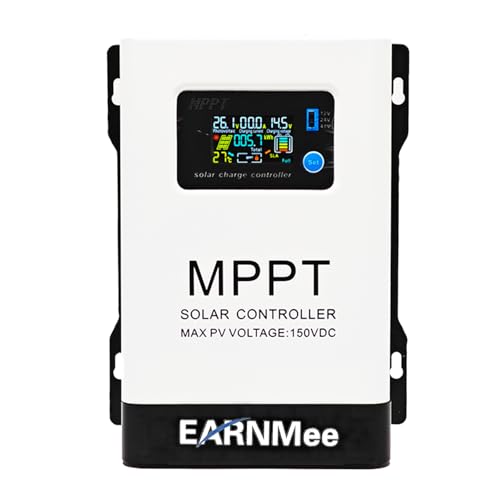
- 1.High-Amperage Performance for Demanding Setups: EARNMee solar charge...
- 2.Adjustable Output for Various Batteries: Manually select 12V/24V/48V...
- 3.Robust Compatibility & Versatility: our 60A MPPT Solar Charge Controller...
HQST 100A MPPT Solar Charge Controller Bluetooth — Best for Large Systems and Monitoring
The HQST 100A MPPT controller handles big setups without breaking a sweat. I love the built-in Bluetooth that lets me check my system from my phone without walking outside.
This is the perfect choice if you have a 48-volt battery bank or plan to expand later. The honest trade-off is it costs more, but the Bluetooth monitoring and high amp capacity make it worth every penny for serious users.
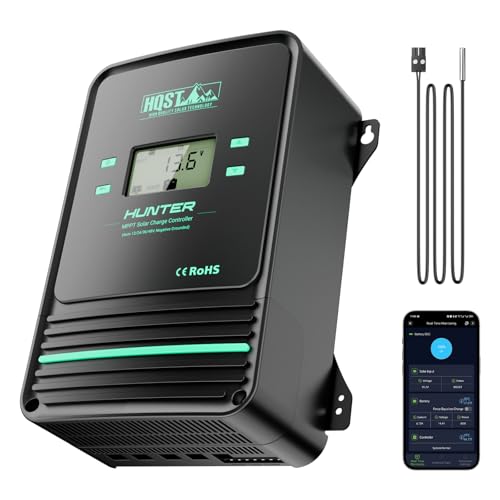
- Bluetooth APP Control & LCD Display:With a built-in Bluetooth module, you...
- Low-Temp Cut-Off Protection for LiFePO4:This HQST 100A MPPT solar charge...
- Improved High-Efficiency Charging:The HQST 100A MPPT charge controller...
Conclusion
The right amp size for your solar charge controller comes down to one simple calculation: divide your panel wattage by your battery voltage and add a 25% safety buffer.
Grab your panel specs and battery voltage right now and run the numbers. It takes two minutes and saves you from buying the wrong controller or frying your system later.
Frequently Asked Questions about How Many Amps Do I Need for a Solar Charge Controller?
What happens if I use a charge controller with too few amps?
Your controller will run hot and may shut down on sunny days. I have seen this cause battery damage because the controller stops charging when it overheats.
In my experience, an undersized controller fails faster and wastes the power your panels produce. You end up buying a replacement sooner than expected.
Can I use a higher amp charge controller than I need?
Yes, you can absolutely oversize your controller. It will only push the amps your system needs, so a 60-amp controller works fine on a 200-watt setup.
The only downside is the extra cost upfront. I recommend a 25% buffer above your calculated minimum for the best balance of safety and value.
Does battery voltage change how many amps I need?
Yes, battery voltage directly affects your required amp rating. A 400-watt system on 12 volts needs 33 amps, but on 24 volts it only needs 17 amps.
Higher voltage systems need smaller amp controllers, which often cost less. That is why I recommend 24-volt or 48-volt batteries for larger solar arrays.
What is the best charge controller for someone who needs reliable Bluetooth monitoring?
If you want to check your system from your phone without walking outside, Bluetooth monitoring is a major improvement. I love being able to see my voltage and amps from my couch.
For this need, what I grabbed for my own off-grid setup has been rock solid for over a year. The app is simple and the connection never drops.
- Bluetooth APP Control & LCD Display:With a built-in Bluetooth module, you...
- Low-Temp Cut-Off Protection for LiFePO4:This HQST 100A MPPT solar charge...
- Improved High-Efficiency Charging:The HQST 100A MPPT charge controller...
Which charge controller won’t let me down when I expand my system later?
Planning for future expansion is smart because buying a second controller later costs more. I always tell people to buy a controller that handles at least 50% more power than their current panels.
The one I sent my neighbor to buy handles higher voltage panels and gives him room to add two more panels next year. That kind of flexibility saves money in the long run.

- 【Upgraded 30A Solar Charge Controller】Auto detect 12V 24V 36V 48V...
- 【Supported Voltage/Power Ranges】30A Solar Controller can accept solar...
- 【3-STAGE PWM Technology】There are 3 integrated charge modes (Bulk...
Do I need an MPPT or PWM charge controller?
MPPT controllers are more efficient and work better with higher voltage panels. I only use MPPT now because they squeeze up to 30% more power from my panels in cold weather.
PWM controllers are cheaper but waste power if your panel voltage is much higher than your battery. Spend the extra money on MPPT if you can afford it.