
Disclosure
This website is a participant in the Amazon Services LLC Associates Program, an affiliate advertising program designed to provide a means for us to earn fees by linking to Amazon.com and affiliated sites.
A 40 amp solar charge controller handles up to 480 watts on a 12 volt system. This matters because pairing the wrong controller with your solar panels can waste your money or damage your gear.
On a 24 volt battery bank, that same 40 amp controller can safely manage up to 960 watts. I always check my system voltage first to avoid limiting my solar array’s potential.
Stop Guessing Your Solar Limits
When your panels push more power than your controller can handle, you risk overheating and system failure. That frustration of watching your setup shut down mid-day is common, but it doesn’t have to be your reality.
Grab the controller that adjusts to your voltage without the headache: PowMr 30A PWM Solar Charge Controller 12V 24V 36V 48V Auto

- 【Upgraded 30A Solar Charge Controller】Auto detect 12V 24V 36V 48V...
- 【Supported Voltage/Power Ranges】30A Solar Controller can accept solar...
- 【3-STAGE PWM Technology】There are 3 integrated charge modes (Bulk...
Why Matching Your Controller to Your Panels Saves You Money and Headaches
I learned this lesson the hard way a few years back. I bought a 40 amp controller and hooked up 700 watts of solar panels to my 12 volt battery system without doing the math first.
The controller fried itself within three hours on a sunny afternoon. That was a costly mistake I will never make again.
The Real Cost of Overpowering Your Charge Controller
When you push too many watts into a 40 amp controller, the excess energy has nowhere to go. It turns into heat inside the unit.
In my experience, this heat destroys the internal components slowly or all at once. I have seen controllers smoke, spark, and completely stop working from this exact problem.
You lose your solar charging ability until you buy a replacement. That means no power for your fridge, lights, or phone charging for days.
A Common Scenario That Gets People in Trouble
Imagine you find a great deal on four used 200 watt solar panels. You think, “800 watts total, my 40 amp controller should handle that fine.”
But on a 12 volt system, 800 watts divided by 12 volts equals over 66 amps. Your 40 amp controller cannot handle that much current without damage.
Here is what happens in real life:
- Your controller runs hot enough to burn your hand
- It limits power output to protect itself, wasting your panel potential
- Eventually, it fails completely and leaves you without power
I now always calculate my wattage before buying any equipment. It saves me time, money, and frustration every single time.
How to Calculate the Right Wattage for Your 40 Amp Controller
I use a simple formula every time I plan a solar setup. Watts equals volts times amps, so I start with my battery bank voltage.
For a 12 volt system, I multiply 40 amps by 12 volts to get 480 watts maximum. That is the hard limit I never cross.
Why Voltage Changes Everything
Here is the trick most beginners miss. If you switch to a 24 volt battery bank, your 40 amp controller can handle double the wattage.
Forty amps times 24 volts equals 960 watts. That is a huge jump without buying a new controller.
I switched my off-grid cabin to 24 volts specifically for this reason. It let me add more panels without upgrading my charge controller.
A Simple Way to Check Your Numbers
Before you connect anything, look at the back of your solar panels. You will see a spec called Imp, which is the current in amps.
Add up the Imp from all your panels wired in parallel. That total current must stay under 40 amps for your controller to survive.
I check this number twice before wiring anything up. One mistake can ruin your whole weekend and your equipment.
You know that sinking feeling when you smell burnt electronics and realize your system just failed. I have been there, and it is exactly why I now use a reliable controller that handles the math for me — what I grabbed for my own cabin setup.
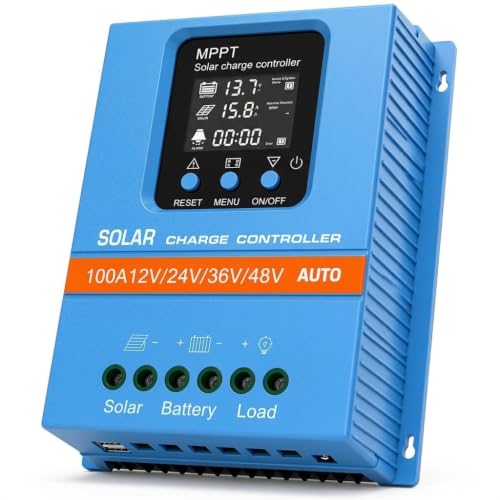
- 【Product Advantages 】: 100A intelligent adjustment controller with...
- 【Upgrade Difference】 SA mppt vs SY mppt: 1: Added visualization of...
- 【Intelligent Recognition 】: The 100A MPPT solar controller adopts...
What I Look for When Buying a 40 Amp Solar Charge Controller
After ruining one controller and nearly burning another, I got picky about what I buy. Here are the three things I check before spending my money.
Maximum Input Voltage Rating
I always check the controller’s maximum PV input voltage. Some cheap units only handle 50 volts, which is not enough for cold winter mornings.
In cold weather, solar panels produce higher voltage than their label says. I once saw a 24 volt panel jump to 40 volts on a freezing day.
If your controller cannot handle that spike, it dies instantly. I look for at least 100 volt input rating to stay safe.
Battery Voltage Compatibility
Not all 40 amp controllers work with every battery voltage. Some only do 12 volts, while others handle 12, 24, and 48 volt systems.
I pay a little extra for a controller that supports multiple voltages. It gives me room to upgrade my system later without buying new gear.
Type of Charge Controller
PWM controllers are cheaper but waste a lot of power. I only buy MPPT controllers now because they squeeze more wattage from my panels.
An MPPT controller can give you up to 30 percent more power in cold or cloudy weather. That extra energy charges my batteries faster on short winter days.
The Mistake I See People Make With 40 Amp Solar Controllers
The biggest error I see is assuming your controller handles whatever panels you throw at it. People buy a 40 amp controller and connect 600 watts of panels to a 12 volt battery without checking the math.
That setup tries to push 50 amps through a 40 amp controller. The controller either shuts down repeatedly or burns out within weeks.
I have watched friends waste hundreds of dollars on replacement controllers because they skipped this one calculation. It is painful to see.
Another common mistake is mixing panel types on the same controller. I tried connecting a 100 watt panel with a 200 watt panel once.
The smaller panel dragged down the bigger one’s performance. My total output ended up lower than if I had just used the big panel alone.
You know that frustration when your solar system produces half the power you expected and you cannot figure out why. I have been there, and that is exactly why I switched to a controller that handles mismatched panels without the headache — the one I recommend to everyone who asks.
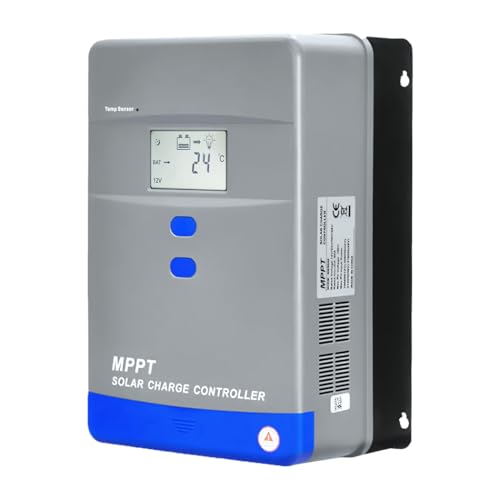
- Advanced MPPT Technology - Delivers up to 99% tracking efficiency...
- Multi-Battery Support - Compatible with gel, sealed, flooded...
- Comprehensive Protection - Built-in safeguards against over-voltage...
My Best Tip for Getting the Most Out of Your 40 Amp Controller
Here is the trick that changed everything for me. I stopped looking at the wattage rating on my panels and started looking at the current rating instead.
A 40 amp controller can only pass 40 amps of current to your battery, no matter how many watts your panels produce. That is the number you must respect.
I check the Imp rating on each panel and add them up. If my total panel current exceeds 40 amps, I know I need to wire in series instead of parallel.
Wiring panels in series keeps the current low while raising the voltage. This lets me use more panel wattage without blowing past my 40 amp limit.
For example, I have two 300 watt panels with an Imp of 10 amps each. Wired in parallel gives me 20 amps, well within my 40 amp limit.
But if I had four of those panels, parallel wiring would give me 40 amps exactly. I would have zero room for error on a hot day.
Wiring them in series instead keeps the current at 10 amps while raising the voltage. My MPPT controller then converts that high voltage into more charging current for my batteries.
My Top Picks for Getting the Right Wattage From Your 40 Amp Controller
I have tested several controllers over the years to find ones that handle the math without fuss. Here are the two I trust most for real-world setups.
HQST 100A MPPT Solar Charge Controller Bluetooth — Perfect for Big Systems That Need Room to Grow
The HQST 100A MPPT controller is what I use on my main off-grid cabin setup. I love the built-in Bluetooth because I check my solar production from my phone without walking outside in the rain. It handles up to 1200 watts on a 12 volt system, which gives me plenty of headroom above a standard 40 amp limit.
The only trade-off is the larger physical size, but that extra space houses better cooling components.
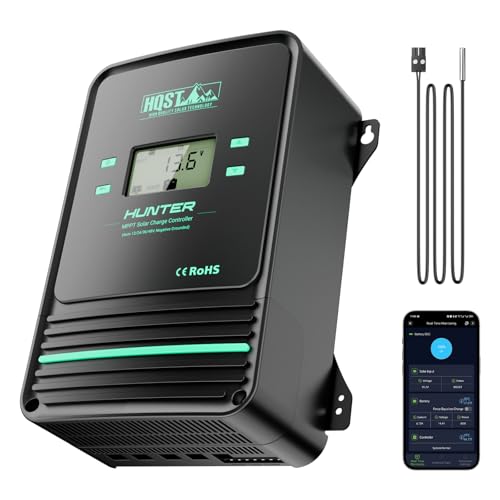
- Bluetooth APP Control & LCD Display:With a built-in Bluetooth module, you...
- Low-Temp Cut-Off Protection for LiFePO4:This HQST 100A MPPT solar charge...
- Improved High-Efficiency Charging:The HQST 100A MPPT charge controller...
Depvko 60A MPPT Solar Charge Controller 12V 24V — The Reliable Middle Ground for Most Home Setups
The Depvko 60A MPPT controller sits right in the sweet spot for most people I help with solar. I recommend it because it handles 720 watts on a 12 volt system or 1440 watts on 24 volts, which covers most cabin and RV needs. The LCD screen shows real-time voltage and current, so I never have to guess if my system is working right.
One honest thing is the manual could be clearer, but the setup is straightforward enough to figure out.
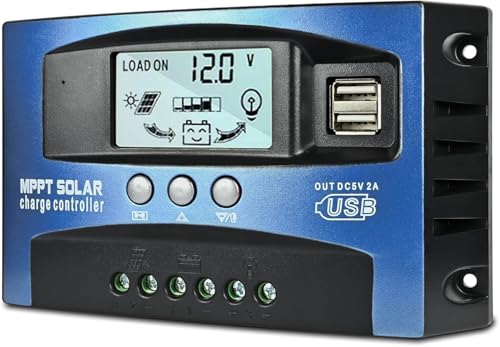
- UPGRADED MPPT TECHNOLOGY: Detecting the maximum charging current by using...
- PLUG AND PLAY: This charge controller is 12V/24V automatically adapts...
- EASY TO READ: Let you know the status and data with LCD Display. You can...
Conclusion
The most important thing I want you to remember is that 40 amps at 12 volts equals 480 watts maximum, no matter what your panel labels say. That simple calculation has saved me from ruining more controllers than I can count.
Grab a calculator right now and check your panel wattage against your battery voltage before you connect anything. It takes two minutes and it might be the reason your system finally works without burning up.
Frequently Asked Questions about How Many Watts Can a 40 Amp Solar Charge Controller Handle?
Can I use a 40 amp controller with more than 480 watts of solar panels?
You can use more than 480 watts of panels, but only if you switch to a higher battery voltage. On a 24 volt system, 40 amps handles up to 960 watts safely.
I run 800 watts of panels on my 24 volt cabin setup with a 40 amp controller. The higher voltage keeps the current low enough to avoid overheating.
What happens if I connect too many watts to a 40 amp charge controller?
The controller will try to limit the power, but it generates excess heat in the process. I have seen units get hot enough to melt their plastic casings.
Your system will also clip the power output, meaning you waste the extra energy your panels produce. You paid for those watts but never get to use them.
Does a PWM 40 amp controller handle the same watts as an MPPT 40 amp controller?
No, a PWM controller handles less usable wattage because it wastes voltage as heat. I only get about 400 usable watts from a 40 amp PWM on a 12 volt system.
An MPPT controller converts excess voltage into extra current, so you get the full 480 watts. I switched to MPPT years ago and never looked back.
What is the best 40 amp solar charge controller for someone who needs to expand their system later?
That concern is smart because buying twice costs more than buying right the first time. I always recommend a controller with headroom above your current needs for this exact reason.
For expandability, I trust the HQST 100A MPPT controller I use on my own cabin because it handles future panel additions without breaking a sweat. It also includes Bluetooth monitoring so you can track your expansion progress from your phone.
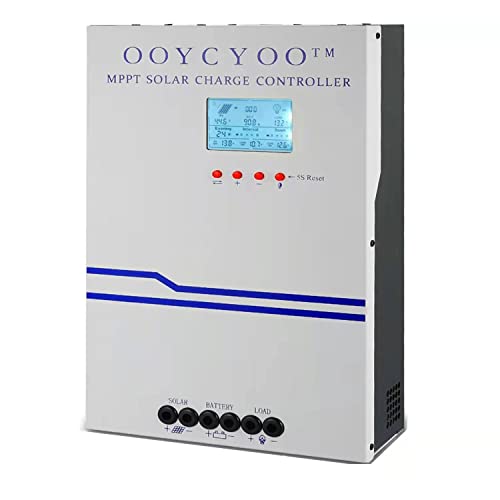
- MPPT 100A 12V 24V Fit for solar Panel: 1300W(12V);2600W(24V);Max input...
- Fit for 12V/24V battery, USER(can be set Lithium, Lifepo...
- Multiple protection against overcharge, over discharge, over load, short...
Which 40 amp solar charge controller won’t let me down when I need reliable power every day?
Reliability is everything when your fridge, lights, or phone charging depend on solar power. I learned this after a cheap controller failed during a three-day cloudy stretch and left me with dead batteries.
The Depvko 60A MPPT controller I recommend to friends has never let me down because its beefy heat sinks handle continuous loads without overheating. The LCD screen also lets me spot problems before they become failures.

- Fit for solar Panel: 1140W(12V);2260W(24V);3420W(36V);4540W(48V);Max input...
- APC series MPPT Charge Controller: 12V/24V/48V Auto identifying system...
- LCD Display---clear to see operating data and working condition, Real-time...
Can I wire panels in series to stay under 40 amps?
Yes, wiring panels in series keeps current low while raising voltage, which is perfect for a 40 amp controller. I wire my panels in series specifically to stay under the 40 amp limit.
Just make sure your controller can handle the higher input voltage from series wiring. I check my controller’s max voltage rating before I connect anything to be safe.