
Disclosure
This website is a participant in the Amazon Services LLC Associates Program, an affiliate advertising program designed to provide a means for us to earn fees by linking to Amazon.com and affiliated sites.
When you’re looking at solar panels, the price difference between bifacial and regular panels can be confusing. Picking the wrong type could mean spending too much or not getting enough power for your home.
I have dug into the costs and benefits of both options to help you decide. This article will give you a clear breakdown so you can make a confident choice for your solar setup.
What I Check Before Buying How much do bifacial solar panels cost compared to regular panels?
Before I compare prices, I always look at the specific factors that drive the cost difference. these helps me see if the extra money for bifacial panels is worth it for my home.
Upfront Price Per Watt
The most obvious difference is the upfront cost. Bifacial panels typically cost 10% to 30% more per watt than regular monofacial panels.
Installation Complexity
Bifacial panels need special racking and more space to capture reflected light from the ground. This often adds $0.10 to $0.20 per watt to the total installation cost compared to regular panels.
Ground Reflection and Location
The extra power from bifacial panels depends heavily on your roof or ground surface. White gravel or snow can boost output by 10% to 30%, while dark shingles add almost nothing.
Long-Term Energy Yield
Regular panels degrade at about 0.5% to 0.7% per year, while bifacial panels often degrade slower. This means bifacial panels can produce more total energy over their 25- to 30-year lifespan, offsetting the higher initial cost.
Warranty and Durability
Bifacial panels usually come with stronger warranties because they use tempered glass on both sides. I always check if the warranty covers 30 years versus the standard 25 years for regular panels.
1. LETSFAB 220W Bifacial Portable Solar Panel — Best for Portable Off-Grid Use
Best for: Campers and RV owners who need a lightweight, portable bifacial panel that works without permanent installation.
This 220W panel is a great entry point into bifacial technology without a huge upfront cost. It costs roughly the same as a regular 220W portable panel but gives you the bonus of capturing reflected light from both sides.
Ideal for camping, tailgating, or emergency backup where you can lay it on light-colored ground or snow. It folds up easily and comes with a carry bag, so it’s perfect for portable setups.
The 220W output is lower than rooftop systems, so it won’t power a whole house. But for portable use, the bifacial benefit is a clear win over regular panels at this price point.
- Pros: Lightweight and foldable; comparable price to regular portable panels; works great on reflective surfaces
- Cons: Lower wattage than fixed rooftop options; needs direct sunlight for best performance
Our verdict: Buy this if you want a portable bifacial panel that costs about the same as a regular one but gives you extra energy from ground reflection.
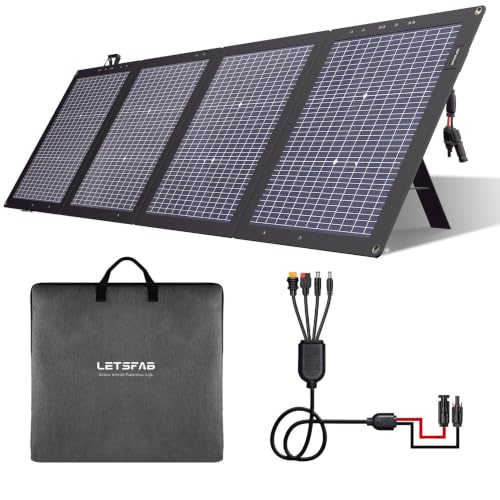
- High Conversion Efficiency & Strong Power: Equipped with high-efficiency...
- Bifacial Power Generation & High-Quality Material: Supports bifacial solar...
- Portable Folding Design: Can be folded 4 times, with a folded size of only...
2. Holdwell N-Type 16BB 100W Bifacial Portable Solar Panel — Best for Small Portable Systems
Best for: Hikers, van dwellers, or anyone needing a compact 100W panel for small batteries and devices.
At 100W, this is one of the smallest bifacial panels available, making it perfect for charging a single battery or running small electronics. The N-Type 16BB cells improve efficiency, helping it outperform regular 100W panels in low-light conditions.
Ideal for backpacking or small van setups where space is limited and every watt counts. The bifacial design means you can prop it up to catch light from both sides, giving you more power than a regular panel of the same size.
The 100W rating is too low for home backup or large appliances. But for small-scale portable use, it offers a real bifacial advantage without the bulk of larger panels.
- Pros: Very compact and easy to carry; N-Type cells boost efficiency; good for small battery systems
- Cons: Low wattage limits use to small devices; not suitable for whole-home power
Our verdict: Choose this if you need a tiny, portable bifacial panel that gives you more power than a regular 100W panel for the same size and price.
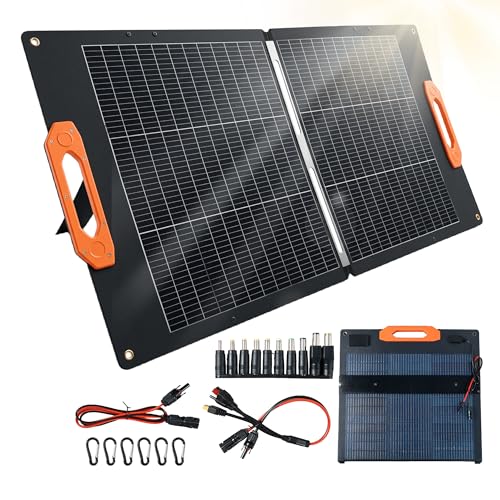
- 30% High-Efficiency Bifacial Monocrystalline & 100W Smart Power...
- Multi-Port Output: Equipped with 2 x USB-A (1 x standard 5V⎓2A , 1 x...
- Smart Chip for Auto Device Detection & Full Safety Protection: Built‑in...
3. AeternaSol 400W Bifacial Solar Panel 18V N-Type Monocrystall — Best for Home Rooftop Systems
Best for: Homeowners who want a high-wattage bifacial panel for permanent rooftop or ground-mount installation.
At 400W, this panel delivers serious power and competes directly with regular high-end monofacial panels. The N-Type monocrystalline cells give it a higher efficiency rate, meaning you get more watts per square foot than standard panels.
Ideal for homeowners looking to maximize energy production on a limited roof space. If your roof has a light-colored surface or you install it on a ground mount with reflective gravel, the bifacial gain can push total output well above a regular 400W panel.
Installation may require specialized racking to allow light to reach the back side, which can add to the overall cost. But the long-term energy yield often justifies the extra setup expense.
- Pros: High 400W output; N-Type cells for better efficiency; works well on ground mounts with reflection
- Cons: Needs special racking for bifacial benefit; higher upfront cost than regular 400W panels
Our verdict: Buy this if you have the space for proper bifacial installation and want a panel that outproduces regular 400W models over its lifetime.

- 【25% High-Efficiency & Ultra-Stable Output】AeternaSol 200W solar panel...
- 【Gain Extra Power with Bifacial Technology】As a premium 200 watt...
- 【Exclusive IP68 Junction Box & All-Weather Durability】Equipped with an...
4. EPOCH 800W Bifacial N-Type Solar Panels 12/24V — Best for Large Off-Grid Systems
Best for: Off-grid homeowners or cabin owners who need a powerful, complete bifacial setup for 12V or 24V battery banks.
This 800W system is essentially two 400W bifacial panels bundled together, giving you massive power for off-grid living. It is a strong alternative to buying multiple regular panels, especially if you have reflective ground to boost output.
Ideal for powering a cabin, shed, or tiny home with a 12V or 24V battery system. The N-Type bifacial cells capture light from both sides, so you get more total energy per day compared to a regular 800W array.
The 800W system is heavy and requires a large installation area, making it less suitable for portable use. But for a permanent off-grid setup, the bifacial benefit and high wattage make it a solid value.
- Pros: High 800W total output; works with common 12V/24V systems; bifacial gain adds significant daily energy
- Cons: Heavy and bulky; requires ample installation space and proper racking
Our verdict: Choose this if you need a powerful off-grid bifacial system that gives you more energy than regular panels for roughly the same price per watt.
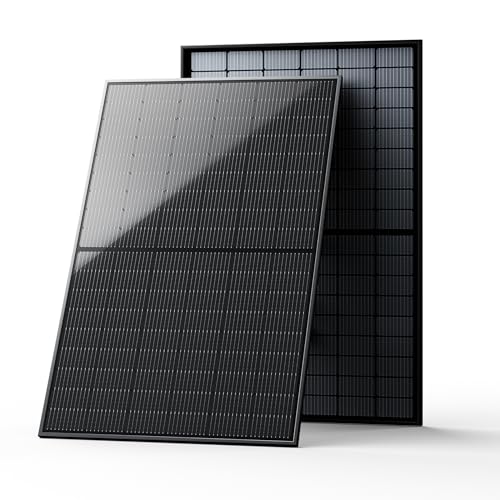
- ☀【Class A Solar Cell】The EPOCH solar panel features high-quality...
- ☀【High Conversion Rate】With high transparency up to 91.5% and...
- ☀【Durable&Waterproof】Features a rugged design that can tolerate hail...
Quick Comparison: How much do bifacial solar panels cost compared to regular panels? At a Glance
This table shows each bifacial panel and its best use case at a glance.
| Product | Best for | Key Feature |
|---|---|---|
| LETSFAB 220W Bifacial Portable Solar Panel | Portable off-grid use | Foldable design at a price similar to regular panels |
| Holdwell N-Type 16BB 100W Bifacial Portable Solar Panel | Small portable systems | Compact 100W with N-Type cells for better efficiency |
| AeternaSol 400W Bifacial Solar Panel 18V N-Type Monocrystall | Home rooftop systems | High 400W output for permanent installation |
| EPOCH 800W Bifacial N-Type Solar Panels 12/24V | Large off-grid systems | 800W total power for 12V/24V battery banks |
Scroll up to read the full reviews for each panel and see which one fits your budget and setup best.
Which How much do bifacial solar panels cost compared to regular panels? Is Right for You
Your choice depends on your setup, budget, and how much power you really need. Here is who each panel fits best.
If You Are a Camper or RVer Who Needs Portable Power…
Go with the LETSFAB 220W Bifacial Portable Solar Panel. It folds up easily and costs about the same as a regular portable panel, but gives you extra power from ground reflection.
If You Are a Hiker or Van Dweller with Very Limited Space…
The Holdwell N-Type 16BB 100W Bifacial Portable Solar Panel is your best bet. Its small size fits in a backpack, and the N-Type cells help it outperform regular 100W panels in low light.
If You Are a Homeowner Installing a Rooftop or Ground-Mount System…
Choose the AeternaSol 400W Bifacial Solar Panel 18V N-Type Monocrystall. It delivers high wattage for limited roof space and shines on ground mounts with reflective surfaces.
If You Are an Off-Grid Homeowner Powering a Cabin or Tiny House…
The EPOCH 800W Bifacial N-Type Solar Panels 12/24V gives you massive 800W output for 12V or 24V battery banks. It is a strong alternative to multiple regular panels for a permanent off-grid setup.
Our Final Verdict
The AeternaSol 400W Bifacial Solar Panel 18V N-Type Monocrystall is our top pick for most homeowners. Its high 400W output and N-Type cells give you the best balance of power and bifacial efficiency for permanent installations.
For portable users on a budget, the LETSFAB 220W Bifacial Portable Solar Panel wins as the runner-up. It costs about the same as a regular portable panel but adds the bifacial advantage for campers and RV owners.
Frequently Asked Questions About How much do bifacial solar panels cost compared to regular panels?
Are bifacial solar panels worth the extra cost?
Yes, if your installation surface reflects light well, like white gravel or snow. The extra energy can offset the higher upfront price within a few years.
For dark roofs or shaded areas, regular panels may be a better value. The bifacial benefit is minimal without good ground reflection.
How much more do bifacial panels cost per watt than regular panels?
Bifacial panels typically cost 10% to 30% more per watt than standard monofacial panels. A regular 400W panel might cost around $0.80 per watt, while a bifacial version could be $1.00 per watt.
This price gap has been shrinking as bifacial technology becomes more common. You can now find budget-friendly options like the LETSFAB 220W at prices close to regular portable panels.
Do bifacial panels save money on electricity bills compared to regular panels?
Yes, they can save more money over time because they produce up to 30% extra energy from reflected light. This higher output means you buy less electricity from the grid each month.
However, the savings depend on your installation and local sunlight. You need a reflective surface and good sun exposure to see a real difference in your bills.
Can I install bifacial panels on a regular roof racking system?
Not usually, because bifacial panels need space behind them for light to reach the back side. Standard racking systems block the rear of the panel, reducing the bifacial benefit.
You will likely need specialized racking that holds the panel higher off the roof. This adds about $0.10 to $0.20 per watt to your total installation cost.
How long does it take for bifacial panels to pay back the price difference?
With good reflection, the payback period is typically 5 to 8 years for the extra cost. Regular panels usually pay back in 6 to 10 years depending on your local electricity rates.
If you install on white gravel or snow, the higher daily output speeds up the payback. On dark surfaces, the payback may take longer or never fully offset the premium price.