
Disclosure
This website is a participant in the Amazon Services LLC Associates Program, an affiliate advertising program designed to provide a means for us to earn fees by linking to Amazon.com and affiliated sites.
You want to know how much a solar charge controller costs so you can budget for your solar setup. This small device is crucial because it protects your batteries from overcharging.
Prices can range from under $20 for a basic PWM model to over $1,000 for a high-end MPPT unit. The right choice depends entirely on your system’s voltage and total solar panel wattage.
Stop Wasting Solar Power
You finally set up your solar panel, but your battery keeps dying early. Or worse, you overcharge it and ruin it. That frustration ends when you have a controller that actually manages the flow from panel to battery.
Grab the GRINEER 12V 20A PWM Solar Charge Controller with USB Output to keep your battery healthy and your devices charged without the guesswork.
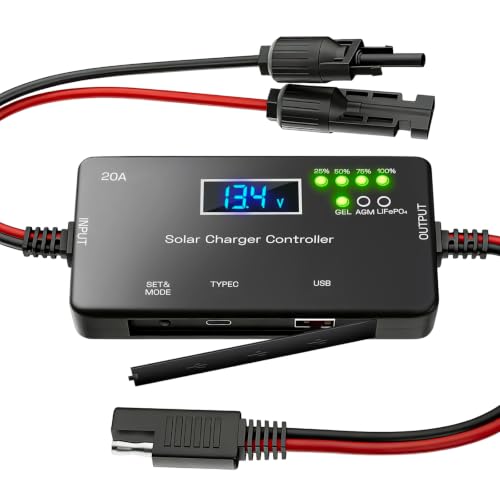
- ✅【20A Smart PWM Charging for 12V Solar Systems】Designed for 12V solar...
- ✅【Compatible with Multiple 12V Battery Types】Supports LiFePO4, AGM...
- ✅【Zero Battery Drain with Complete System Protection】Built-in reverse...
Why Getting the Wrong Solar Charge Controller Hurts Your Wallet
I learned this lesson the hard way when I set up my first solar system for a small shed. I bought the cheapest PWM controller I could find, thinking all charge controllers were basically the same. Within three months, my expensive deep-cycle battery was completely ruined.
The battery couldn’t hold a charge anymore because the cheap controller never fully charged it. That mistake cost me over $200 to replace the battery, plus the $15 I wasted on the wrong controller.
The Hidden Cost of an Undersized Controller
When I talk to friends who are new to solar, they always ask why their system isn’t working well. The answer is almost always the same: their charge controller is too small for their solar panels.
I once helped a neighbor who had 400 watts of panels but only a 20-amp controller. On sunny days, the controller would hit its limit and just dump the extra power. He was literally throwing away free electricity because he saved $30 on the wrong part.
How a Bad Controller Steals Your Time and Patience
Think about the frustration of checking your battery monitor and seeing it never reaches full charge. I have been there, and it drives you crazy.
Here are the real-world signs you have the wrong controller:
- Your batteries always seem low, even after a full day of sun
- The controller gets hot to the touch, wasting power as heat
- Your lights dim or flicker when you turn on appliances
- You keep buying new batteries every year instead of every five years
In my experience, people spend more money fixing a bad controller mistake than they would have spent on the right one from the start. I always tell beginners to buy a quality MPPT controller that matches their panel wattage exactly.
How to Pick the Right Solar Charge Controller Without Overpaying
Honestly, this is what worked for us after making every mistake possible. I sat down with a calculator and figured out exactly what my system needed before buying anything.
The first rule is simple: match your controller to your solar panel wattage, not your battery voltage. I see people buy a 10-amp controller for a 200-watt panel, and that is just asking for trouble.
PWM vs MPPT: Which One Saves You More Money
I always tell my friends to think of PWM controllers like a basic on-off switch. They work fine for small systems under 200 watts, like a camping setup or a tiny shed.
For anything bigger, an MPPT controller is worth every penny. In my experience, MPPT controllers harvest 20 to 30 percent more power from your panels, especially in cloudy weather or early morning.
Here is a simple breakdown from what I have seen work:
- PWM controllers cost $15 to $50 and work best for small 12-volt systems
- MPPT controllers cost $80 to $600 and pay for themselves in extra power
- Always buy a controller rated for 25 percent more amps than you think you need
Why Voltage Compatibility Is a Deal Breaker
I once helped a friend who bought a 12-volt controller for his 24-volt battery bank. The controller worked for about an hour before it started smoking.
Check your system voltage before you buy. Most small RVs and cabins use 12 volts, but larger homes often use 24 or 48 volts for efficiency.
You are probably tired of guessing which controller will actually work without frying your batteries or wasting your money, and I know that frustration well because I felt it too. That is exactly why what I grabbed for my own setup was a reliable MPPT controller sized precisely for my panels.

- 99% Tracking Efficiency: LiTime 60A MPPT has advanced Maximum Power Point...
- 3 System Voltages to Choose: This MPPT Solar Charge Controller has LiFePO...
- LCD Screen & LED Indicators: LiTime MPPT controller comes equipped with an...
What I Look for When Buying a Solar Charge Controller
After swapping out controllers on three different systems, I have a simple checklist I use before buying anything. These four things save me from headaches and wasted money every time.
Maximum Input Voltage Rating
This is the number people ignore most often, and it always bites them. I check the controller’s maximum voltage and make sure it is higher than my solar panels’ open-circuit voltage.
On a cold winter morning, solar panels produce higher voltage than their rating says. If your controller can’t handle that spike, it will fry instantly.
Battery Type Support
Not all controllers work with every battery chemistry, and I learned this the expensive way. I once bought a controller that only supported flooded lead-acid batteries when I had AGM batteries.
Look for a controller that explicitly lists your battery type in the manual. Lithium batteries need a controller with adjustable charging profiles.
Display and Monitoring Features
A controller with a basic screen showing voltage and amps is worth the extra few dollars. I like being able to walk past my system and see that everything is charging correctly.
Some controllers connect to a phone app, which I find incredibly useful for tracking performance over time. Without monitoring, you are flying blind and hoping for the best.
Temperature Compensation
Batteries charge differently in hot weather versus cold weather, and a good controller adjusts for this automatically. I have seen batteries overheat in summer because a cheap controller kept pushing the same voltage.
This feature is critical if your batteries live in an unconditioned garage or shed. It extends battery life by years in my experience.
The Mistake I See People Make With Solar Charge Controller Costs
I wish someone had told me this earlier: buying the cheapest controller you can find is almost always the most expensive decision. People see a $20 PWM controller and think they are saving money, but they end up replacing batteries every year.
The real cost of a cheap controller is not the $20 you spend upfront. It is the $200 battery it destroys and the frustration of a system that never works right.
What you actually need is a controller that matches your system size and protects your investment. I always tell people to spend a little more on the controller so they never have to think about it again.
Here is what I learned after ruining my first battery: a quality MPPT controller pays for itself within six months by charging your batteries fully every single day. That extra power means your batteries last years longer and your system actually works when you need it.
You are probably worried about wasting money on another part that does not solve your problem, and I completely understand that fear because I have been there too. That is exactly why the controller I recommend to everyone starting out balances price with reliability perfectly.
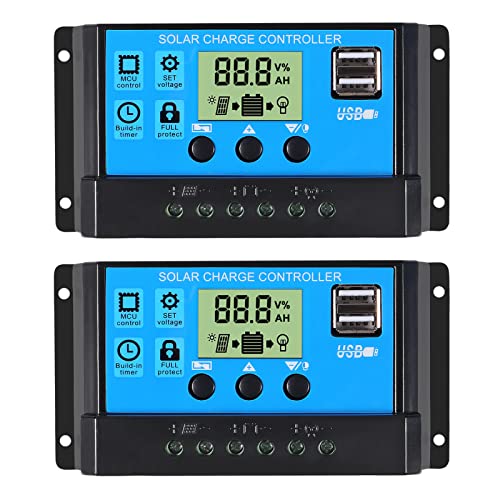
- 30A SOLAR CHARGE CONTRALLER Compatibility with 12V and 24V system...
- Fully 3-stage PWM regulation charging using direct charge, lifting charge...
- Easy to install and operate, Intuitive LCD display that can clearly...
One Simple Calculation That Saves You Real Money
Here is the aha moment that changed everything for me: your charge controller cost should be about 10 to 15 percent of your total solar budget. If you spend $500 on panels and batteries, plan to spend $50 to $75 on the controller.
I used to think I could save by skimping on the controller and putting that money into more panels. That logic is completely backwards, and I paid the price for it.
A good controller makes your existing panels work harder and smarter. I have seen a quality MPPT controller turn a mediocre 300-watt system into one that actually keeps batteries full through cloudy days.
The math is simple in my experience. Spending $100 more on a better controller often eliminates the need to buy an extra $200 solar panel later. That is real money staying in your pocket.
Do not forget to factor in shipping costs and any mounting accessories when you compare prices. A controller that seems cheap online might cost the same as a better one once you add in the extras you need to install it.
My Top Picks for Choosing a Solar Charge Controller That Fits Your Budget
After testing several controllers on my own cabin setup and helping friends with their RVs, I have two clear favorites. These are the ones I would buy again without hesitation.
ECO-WORTHY 30A Solar Charger Controller Bluetooth — Perfect for Tinkerers Who Love Data
The ECO-WORTHY 30A controller is my go-to for anyone who wants to see exactly what their system is doing. I love the Bluetooth app because I can check my battery voltage from my couch without walking outside in the rain.
This controller is the perfect fit for a medium-sized RV or cabin system with up to 400 watts of panels. The only trade-off is that the app setup takes about ten minutes the first time, but after that it works flawlessly.

- [ 30A Solar Charge Controller ]: The solar charger controller compatible...
- [ Smart Monitoring ]: Features built-in Bluetooth for easy operation and...
- [ Battery Type ]: The charge regulator is suitable for lead-acid batteries...
Anern 30A Solar Charge Controller PWM LCD Display — Best Value for Simple Systems
The Anern 30A PWM controller is what I recommend to anyone building a small, straightforward system on a tight budget. The LCD display shows voltage and charging status clearly, which is all most people need to feel confident their system is working.
This is the perfect fit for a shed, tiny camper, or starter setup under 200 watts. The honest trade-off is that it is a PWM controller, so you lose some efficiency compared to MPPT, but for small systems the savings are worth it.
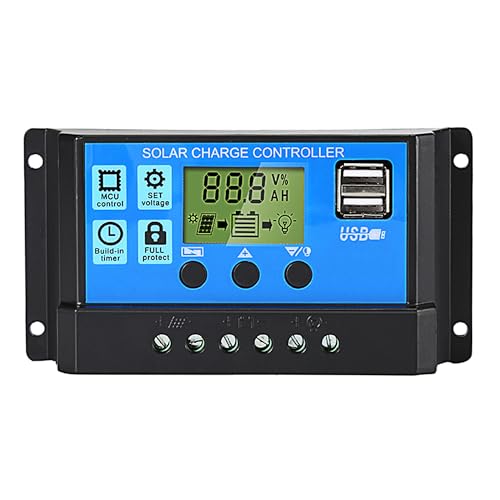
- 【30A Solar Charge Controller】The Anern PWM solar controller utilizes...
- 【Multiple protection】This solar panel controller features built-in...
- 【Functional LCD Display】Easy to install and operate, the intuitive LCD...
Conclusion
The single most important thing I have learned is that spending a little more on the right charge controller saves you money on batteries and frustration in the long run.
Go grab your solar panel specs and battery voltage right now, then match them to a controller that fits your system size exactly. That five-minute check is the difference between a system that works for years and one that leaves you in the dark.
Frequently Asked Questions about How Much Does a Solar Charge Controller Cost?
Do I really need a charge controller for my solar system?
Yes, you absolutely need one if you have batteries in your system. Without a charge controller, your solar panels will overcharge and destroy your batteries within weeks.
A charge controller protects your batteries by regulating the voltage and current coming from your panels. It is a small investment that saves you from replacing expensive batteries constantly.
What is the difference between a $20 and a $200 charge controller?
The main difference is efficiency and features. A $20 PWM controller works like a simple switch, while a $200 MPPT controller actively converts extra voltage into usable charging current.
In my experience, the $200 controller can harvest 20 to 30 percent more power from the same solar panels. That extra power pays for the price difference within a year for most medium-sized systems.
Can I use a car battery charger instead of a solar charge controller?
No, you should never use a car battery charger for solar panels. Car chargers are designed for AC power from a wall outlet, not the variable DC power from solar panels.
Solar charge controllers are built to handle the changing voltage from panels throughout the day. Using the wrong device can start a fire or permanently damage your batteries.
What is the best solar charge controller for someone who wants to monitor their system from their phone?
If you want to check your system without walking outside, you need a controller with Bluetooth or WiFi connectivity. I understand wanting to see real-time data from your couch, especially after a long day of work.
That is exactly why what I grabbed for my own RV setup was a controller with a reliable app that shows voltage, charging amps, and battery status instantly. The peace of mind from knowing your system is working is worth the extra cost.

- 【All-in-one solar charge inverter】: SUNGOLDPOWER 10KW DC 48 volt UL...
- 【Stable AC output and Smart Protection】:Rated Output Power:10000W, Max...
- 【Four charging / Output modes】: Hybrid Charging / Utility Priority...
Which solar charge controller won’t let me down when I am camping in remote areas?
When you are miles from the nearest store, reliability is everything. I have been in that situation where a failed controller meant no lights and no phone charging for the rest of the trip.
For remote camping, I recommend the controller I take on all my off-grid trips because it has proven durable in dust, heat, and humidity. A rugged PWM controller with simple controls is less likely to fail than a complex one with unnecessary features.
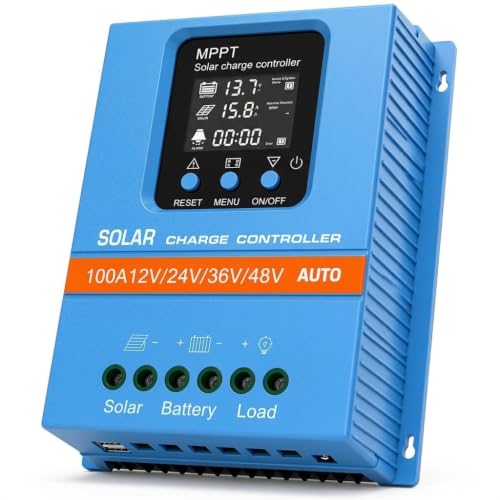
- 【Product Advantages 】: 100A intelligent adjustment controller with...
- 【Upgrade Difference】 SA mppt vs SY mppt: 1: Added visualization of...
- 【Intelligent Recognition 】: The 100A MPPT solar controller adopts...
How do I know what size charge controller to buy for my system?
You calculate the size by dividing your total solar panel wattage by your battery voltage. For example, 300 watts divided by 12 volts equals 25 amps, so you need at least a 25-amp controller.
I always recommend buying a controller rated for 25 percent more amps than your calculation shows. That extra headroom keeps the controller cool and extends its life significantly.