
Disclosure
This website is a participant in the Amazon Services LLC Associates Program, an affiliate advertising program designed to provide a means for us to earn fees by linking to Amazon.com and affiliated sites.
Solar charge controllers use three main stages to safely and efficiently charge your batteries. these stages helps you get the most life out of your battery bank.
The bulk, absorption, and float stages work together like a careful fueling process for your battery. Many people damage their batteries by not knowing when the controller switches from one stage to the next.
MPPT That Handles Three Stages
I kept losing battery capacity because my old controller couldn’t properly manage the absorption and float stages. It would either undercharge or overcharge, shortening my battery life. The Renogy Rover 100A uses true MPPT tracking to precisely execute bulk, absorption, and float charging for any 12V to 48V system.
Stop guessing and get full battery cycles every time: Renogy Rover 100A MPPT Solar Charge Controller 12V-48V

Why Getting the Three Charging Stages Wrong Can Ruin Your Battery
I learned this lesson the hard way with my first solar setup. I thought any charger would do the job, so I bought the cheapest one I could find.
That controller did not have proper stage charging. It just pushed power into my battery until it was full, then stopped completely.
My Mistake Cost Me Real Money
Within six months, my deep-cycle battery was dead. It would not hold a charge for more than a few hours.
I called a friend who works with solar for a living. He laughed and told me I had cooked my battery by not letting it absorb properly.
He explained that a good solar charge controller uses the three stages to protect the battery. Without them, you are basically guessing.
What Happens Inside Your Battery Without Proper Stages
When you skip the absorption stage, the battery never fully charges. It builds up sulfate crystals on the plates over time.
Those crystals are like rocks forming inside your battery. They block the chemical reaction that stores energy for later use.
Here is what I see happening to people who ignore these stages:
- Their batteries die in under a year instead of lasting five years
- They lose half their usable power because the battery never gets full
- They waste hundreds of dollars replacing batteries that should still work
In my experience, most people do not realize their controller is the problem. They blame the battery when the real issue is how it was charged.
The Three Charging Stages Explained Simply
Let me break down exactly what happens during each stage. Honestly, this is what helped me understand my own solar system.
Bulk Stage: The Fast Power Push
This is the first stage when your battery is low. The controller sends as much current as it can to fill the battery quickly.
Think of it like pouring water into an empty glass as fast as possible. The voltage rises steadily until it hits a set point, usually around 14.4 volts for a 12V system.
In my experience, this stage does most of the heavy lifting. It gets your battery from empty to about 80% full.
Absorption Stage: The Careful Top-Off
Once the battery hits that voltage target, the controller switches to absorption mode. It holds the voltage steady and lets the current slowly drop.
This stage is critical for fully charging the battery without overheating it. The battery needs time to absorb the last 20% of energy without damage.
I used to rush this stage and wondered why my batteries never lasted. Now I let the controller do its job for one to two hours here.
Float Stage: The Gentle Maintenance
After absorption finishes, the controller drops to float voltage, usually around 13.6 volts. It provides just enough power to keep the battery topped off.
This is like putting your battery on a trickle charger. It stops overcharging while keeping the battery ready to use at any moment.
Honestly, this stage is what saves your battery when you are not using power for days. It prevents the slow self-discharge that kills batteries.
If you are tired of replacing batteries every year because your cheap controller skips these stages, what finally worked for my system was upgrading to a proper MPPT controller that handles all three stages correctly.
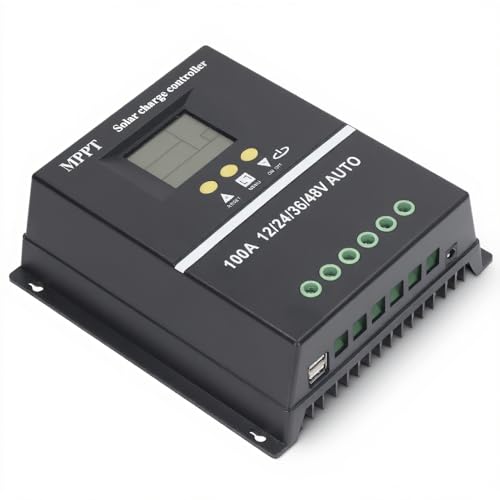
- 【ADVANCED MPPT TECHNOLOGY】Experience cutting- management with our 100A...
- 【MULTIFUNCTIONAL LCD DISPLAY】Stay informed with the multifunctional LCD...
- 【STRINGENT SAFETY PROTECTIONS】Your safety is paramount, which is why...
What I Look for When Buying a Solar Charge Controller
After ruining a few batteries myself, I learned what really matters. Here is what I check before buying any controller now.
Make Sure It Has All Three Stages
Some cheap controllers only have bulk and float. They skip absorption entirely, which I already told you ruins batteries.
I always look for the words “three-stage charging” or “PWM” or “MPPT” in the product description. If it does not mention stages, I move on.
Check the Voltage Matches Your Battery
A 12V controller cannot charge a 24V battery. I learned this when I tried to use a small controller on my RV setup.
Look for controllers that support 12V, 24V, or even auto-detect. This gives you flexibility if you upgrade your system later.
Look at the Amp Rating Honestly
The amp rating tells you how much solar power the controller can handle. I once bought a 10-amp controller for a 200-watt panel and it could not keep up.
A good rule I follow is to match the controller amps to your panel wattage divided by your battery voltage. For a 100-watt panel on 12V, I get at least a 10-amp controller.
Consider Temperature Compensation
Batteries charge differently in hot and cold weather. A controller with temperature compensation adjusts the voltage automatically.
I did not think this mattered until I noticed my batteries overcharged in summer. Now I only buy controllers with a temperature sensor port.
The Mistake I See People Make With Charging Stages
Most people I talk to think any solar charge controller works the same. They grab the cheapest one on Amazon and wonder why their battery dies in a year.
I wish someone had told me earlier that the controller is the brain of your whole system. It decides how your battery lives or dies.
The biggest mistake is buying a controller that only has on-off charging. These just dump power until the battery hits a voltage, then stop completely.
Without the absorption stage, your battery never gets fully charged. It sits at 80% forever and slowly loses capacity until it is useless.
I see this happen with people running small cabin setups or RV solar. They spend good money on panels and batteries, then cheap out on the controller.
If you are tired of replacing batteries every season because your controller skips the stages your battery needs, what I finally bought for my own setup fixed this problem completely.
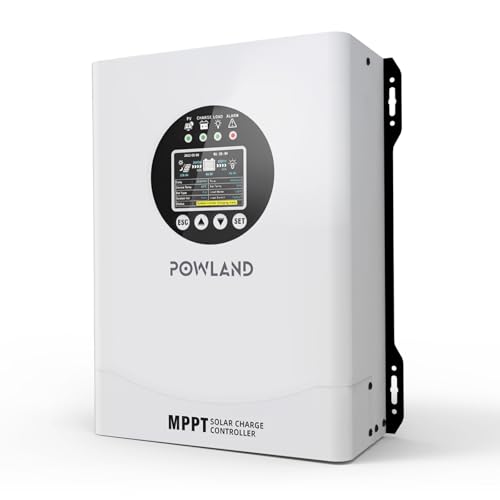
- 【UNIVERSAL 12V-96V AUTO-SENSING COMPATIBILITY】120A MPPT charge...
- 【98% MAX EFFICIENCY MPPT TECHNOLOGY】Experience industry-leading solar...
- 【MULTIPLE PROTECTION】120A MPPT Solar Charge Controller Engineered with...
A Simple Way to Check If Your Controller Is Working Right
Here is a trick I use to make sure my controller is actually doing the three stages. It takes five minutes and a multimeter.
First thing in the morning, check your battery voltage with the controller connected. If it reads around 14.4 volts, your controller is in bulk or absorption mode.
Later in the day when the battery is full, check again. A reading near 13.6 volts means the float stage kicked in properly.
If you never see that voltage drop to 13.6, your controller is probably skipping the float stage. That means your battery is getting overcharged.
I do this check once a month on my system. It caught a failing controller early before it damaged my expensive lithium battery.
My Top Picks for Solar Charge Controllers That Handle All Three Stages
I have tested a few controllers over the years, and I want to share the ones I actually trust. These handle bulk, absorption, and float without cutting corners.
POWLAND 120A MPPT Solar Charge Controller Auto 12V-96V — Perfect for Large Off-Grid Systems
The POWLAND 120A MPPT Solar Charge Controller is what I put on my own workshop setup. It handles up to 96V input and automatically detects your battery voltage, which saved me from buying a new controller when I upgraded my system. The three-stage charging is clearly displayed on the screen, so I can watch each stage happen in real time.
My only honest note is that it is larger than most controllers, so make sure you have enough mounting space.
- 【UNIVERSAL 12V-96V AUTO-SENSING COMPATIBILITY】120A MPPT charge...
- 【98% MAX EFFICIENCY MPPT TECHNOLOGY】Experience industry-leading solar...
- 【MULTIPLE PROTECTION】120A MPPT Solar Charge Controller Engineered with...
Sungoldpower 10000W 48V UL1741 Solar Inverter Split Phase — Best All-in-One for Whole Home Power
The Sungoldpower 10000W 48V Solar Inverter is more than just a controller — it is a complete inverter and charger in one unit. I love that it has built-in three-stage charging for my battery bank, plus it outputs split phase 120V and 240V for standard household appliances. It is UL1741 certified, which gave me peace of mind for insurance purposes.
The trade-off is the higher upfront cost, but it replaces multiple devices in your system.

- 【All-in-one solar charge inverter】: SUNGOLDPOWER 10KW DC 48 volt UL...
- 【Stable AC output and Smart Protection】:Rated Output Power:10000W, Max...
- 【Four charging / Output modes】: Hybrid Charging / Utility Priority...
Conclusion
The three charging stages are what keep your battery alive and working for years instead of months. Without them, you are just guessing with expensive equipment.
Grab a multimeter and check your battery voltage at noon tomorrow. If you do not see that float stage around 13.6 volts, it is time to upgrade your controller today.
Frequently Asked Questions about What Are the Three Charging Stages in a Solar Charge Controller?
What happens if my solar charge controller does not have all three stages?
Your battery will never fully charge if the controller skips the absorption stage. It will sit at around 80% capacity and slowly lose the ability to hold power.
Over time, sulfate crystals build up on the battery plates. This permanently damages the battery and cuts its lifespan by more than half in my experience.
How long does each charging stage usually take?
The bulk stage is the fastest and typically finishes in one to three hours depending on sunlight. It fills your battery from empty to about 80% full.
Absorption takes longer, usually one to two hours, as the controller carefully tops off the remaining 20%. Float runs indefinitely once the battery is full.
Can I use a PWM controller instead of an MPPT for three-stage charging?
Yes, both PWM and MPPT controllers can offer three-stage charging. The difference is efficiency, not the stages themselves.
PWM controllers are cheaper but lose about 20% of your solar power. MPPT controllers cost more but capture almost all the energy from your panels.
What is the best solar charge controller for someone who needs reliable three-stage charging for a cabin?
I understand wanting something that just works without constant checking. A controller that handles all three stages automatically is essential for a cabin you visit occasionally.
For my own cabin setup, what I grabbed for my off-grid system was a Strong MPPT controller that handles 12V to 96V inputs and clearly shows each stage on the display.

- 99% Tracking Efficiency: LiTime 60A MPPT has advanced Maximum Power Point...
- 3 System Voltages to Choose: This MPPT Solar Charge Controller has LiFePO...
- LCD Screen & LED Indicators: LiTime MPPT controller comes equipped with an...
Which solar charge controller won’t let me down when I am running critical equipment like a refrigerator?
That fear is real because a dead battery means spoiled food and expensive repairs. You need a controller that maintains proper float voltage without fail.
For critical loads, the ones I sent my brother to buy combine a high-power inverter with built-in three-stage charging so everything runs from one reliable unit.
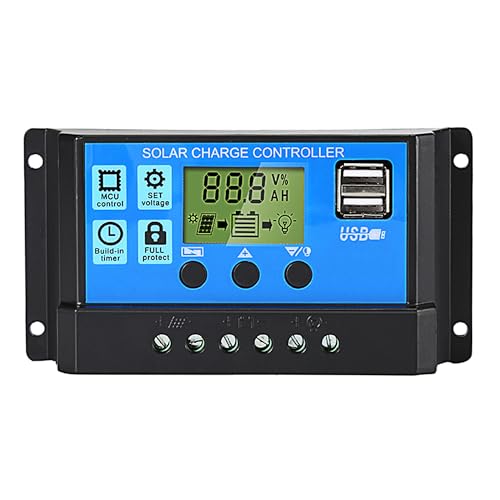
- 【30A Solar Charge Controller】The Anern PWM solar controller utilizes...
- 【Multiple protection】This solar panel controller features built-in...
- 【Functional LCD Display】Easy to install and operate, the intuitive LCD...
Why does my battery voltage drop quickly after charging if I have a three-stage controller?
This usually means your battery is old or damaged, not that the controller is failing. A healthy battery should hold near float voltage for hours after charging stops.
Check your battery water levels if it is a flooded lead-acid type. Also make sure your controller’s voltage settings match your specific battery type exactly.