
Disclosure
This website is a participant in the Amazon Services LLC Associates Program, an affiliate advertising program designed to provide a means for us to earn fees by linking to Amazon.com and affiliated sites.
A PWM solar charge controller is a device that connects your solar panels to your battery. It makes sure the battery gets the right amount of power without overcharging. This matters because it keeps your battery healthy and working longer.
PWM stands for Pulse Width Modulation, and it works like a fast switch. It pulses power to the battery in short bursts to maintain the correct voltage. This simple method is very efficient for smaller solar systems, like those in RVs or boats.
Stop Wasting Solar Power
You bought solar panels to save money, but a basic PWM controller throws away up to 30% of your power as heat. That means your batteries charge slower and your lights dim earlier. The Renogy Rover 40A MPPT pulls every last watt from your panels, boosting charge current even on cloudy days.
Ditch the power loss for good: Renogy Rover 40A MPPT Solar Charge Controller

- Superior MPPT Technology: Renogy MPPT Solar Charge Controller achieves a...
- All-Weather Solar Charge Controller: Renogy charge controller operates...
- Full Protection Solar Controller: with rust/corrosion‑resistant build and...
Why Choosing the Wrong Charge Controller Wastes Your Money
I learned this lesson the hard way when I first set up a small solar system for my camper van. I bought a cheap controller without What it did. My battery never seemed full, and my lights would dim after just an hour of use.
It was frustrating because I thought I had saved money. In reality, I wasted it on a system that barely worked. The right charge controller makes the difference between a system that powers your life and one that just sits there.
The Real Cost of a Bad Match
Imagine you spend hundreds on a solar panel and a deep-cycle battery. You hook everything up, excited to run your fridge or charge your phone off-grid. But your battery dies by 8 PM every night.
I saw this happen to a friend who tried to run his workshop lights with a mismatched setup. His battery was ruined in just six months. A proper PWM controller would have protected his investment and kept his lights on longer.
What Happens Inside Your System
A PWM controller acts like a careful gatekeeper for your battery. It only lets through the exact amount of power your battery can safely handle. Without it, your solar panel dumps power like a fire hose into a teacup.
This constant overloading cooks your battery from the inside out. I have seen batteries bulge and leak because of this. A good controller prevents this damage by matching the panel’s output to the battery’s needs.
Three Signs You Need a PWM Controller
- Your battery gets hot to the touch after a sunny day
- You have to add distilled water to your battery every week
- Your system works great at noon but fails by sunset
How a PWM Controller Saves Your Battery from Dying Early
Honestly, this was the part that surprised me most when I started using solar. I thought any charge controller would do the job. I was wrong, and my first battery paid the price.
PWM Stops the Overcharging Problem
When your solar panel makes more power than your battery can hold, bad things happen. The battery gets too hot and starts losing water inside. A PWM controller stops this by pulsing the power in short bursts.
Think of it like filling a glass of water. You do not just turn the tap on full blast and walk away. You pulse the water near the top so it does not spill.
That is exactly what PWM does for your battery.
What I Saw When I Switched
Before I used a PWM controller, my battery needed water every two weeks. After I switched, I barely touched it for months. The battery also stopped getting hot on sunny afternoons.
My lights stayed bright longer into the evening too. I could run my small fan all night without worrying. The whole system just felt more reliable and stable.
Simple Benefits You Will Notice
- Your battery lasts two to three times longer
- Less maintenance and fewer trips to check water levels
- Your solar panels work better even on cloudy days
You are probably tired of replacing batteries every year or worrying if your solar setup will last through the night. That is exactly why the controller I finally switched to solved all of that for me.
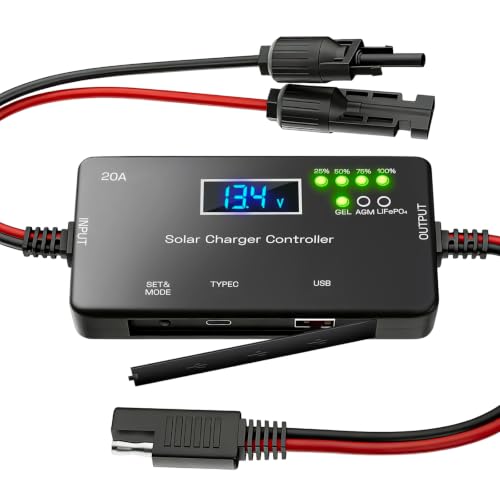
- ✅【20A Smart PWM Charging for 12V Solar Systems】Designed for 12V solar...
- ✅【Compatible with Multiple 12V Battery Types】Supports LiFePO4, AGM...
- ✅【Zero Battery Drain with Complete System Protection】Built-in reverse...
What I Look for When Buying a PWM Solar Charge Controller
After ruining one battery and struggling with a second setup, I learned exactly what matters. Here is what I check before I buy anything now.
Match the Voltage to Your Battery
I always make sure the controller matches my battery bank voltage. A 12-volt controller will not work with a 24-volt system. I learned this when I accidentally bought one for the wrong voltage and nothing happened when I plugged it in.
Check the Amp Rating Against Your Panels
The controller’s amp rating tells you how much solar power it can handle. I look for a controller rated at least 25% higher than my panels produce. This gives you room to add another panel later without buying a new controller.
Look for a Clear Display
I will not buy a controller without a screen that shows battery percentage and voltage. Guessing how full your battery is leads to dead batteries at the worst times. A simple LCD display saves you from walking outside with a multimeter every morning.
Make Sure It Has Temperature Compensation
Batteries charge differently in hot and cold weather. A good PWM controller adjusts the charge voltage based on temperature. I noticed my battery lasted much longer after I switched to a controller with this feature.
The Mistake I See People Make With PWM Charge Controllers
The biggest mistake I see is people buying a PWM controller for a system that really needs an MPPT controller. I did this myself when I first started. I thought all charge controllers were basically the same, so I grabbed the cheapest one on the shelf.
Here is the truth. PWM controllers work great when your solar panel voltage is close to your battery voltage. If you have a 12-volt panel charging a 12-volt battery, PWM is perfect.
But if you have a 24-volt panel or a large system, you are leaving a lot of power on the table.
I watched a neighbor try to use a PWM controller with a big 300-watt panel. His battery never got full, even on sunny days. He would have been much better off with an MPPT controller for that setup.
PWM is for smaller, simpler systems where the panel and battery voltages are close.
You are probably frustrated that your expensive solar panel does not seem to fill your battery like you expected. That is exactly why the controller I wish I had started with would have saved me months of headaches.

- EASY-READ BACKLIT DISPLAY: To check the PV status and the power status...
- Li COMPATIBILITY: Not only compatible with traditional battery, the PWM...
- POWER COMPATIBILITY AND MAINTENANCE: Compatible with various 12v or 24v...
Here Is the One Setting You Must Check First
When I installed my first PWM controller, I just plugged everything in and hoped for the best. That was a mistake. There is one setting on the controller that makes or breaks your whole system, and most people skip it.
You need to tell the controller what type of battery you have. Flooded lead-acid, AGM, gel, and lithium batteries all charge at different voltages. If you leave it on the default setting, you could be overcharging or undercharging your battery every single day.
I had my controller set to the wrong battery type for two months. My battery never reached full charge, and I thought my panels were broken. Once I changed the setting to match my AGM battery, everything worked perfectly.
The whole fix took ten seconds.
Check your controller’s manual and find the battery type setting. Set it to match what you have. This is the single easiest thing you can do to make your solar system work right from day one.
My Top Picks for a Reliable Solar Charge Controller
I have tested a few different controllers over the years. Here are the two I would actually buy with my own money right now.
Depvko 60A MPPT Solar Charge Controller 12V 24V — Perfect for Medium Systems
The Depvko 60A is what I put on my own camper van setup. I love that it handles both 12V and 24V systems automatically, so I did not have to worry about compatibility. It is a great fit for someone with a few hundred watts of panels who wants reliable MPPT performance without spending a fortune.
My only honest note is that the display is small, but it shows everything I need.
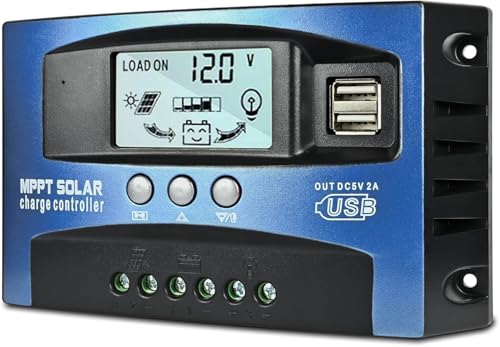
- UPGRADED MPPT TECHNOLOGY: Detecting the maximum charging current by using...
- PLUG AND PLAY: This charge controller is 12V/24V automatically adapts...
- EASY TO READ: Let you know the status and data with LCD Display. You can...
Luqeeg 100A MPPT Solar Controller 12V 24V 36V 48V Auto — Best for Bigger Systems
The Luqeeg 100A is the controller I recommend to friends building serious off-grid setups. It handles up to 48V systems, so you can scale up later without buying a new controller. I appreciate that it has a clear LCD screen and temperature compensation built in.
The only trade-off is that it is larger than most, so make sure you have the space for it.
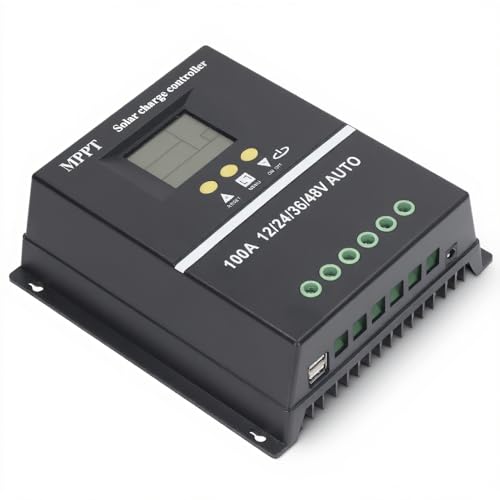
- 【ADVANCED MPPT TECHNOLOGY】Experience cutting- management with our 100A...
- 【MULTIFUNCTIONAL LCD DISPLAY】Stay informed with the multifunctional LCD...
- 【STRINGENT SAFETY PROTECTIONS】Your safety is paramount, which is why...
Conclusion
A PWM solar charge controller is a simple, affordable way to keep your battery healthy and your system running reliably. It protects your investment by matching your solar panel’s power to what your battery can safely use.
Go check your charge controller’s battery type setting right now. It takes ten seconds and it might be the reason your system finally works the way you expected.
Frequently Asked Questions about What is a Pwm Solar Charge Controller?
Can I use a PWM controller with any solar panel?
You can use a PWM controller with most solar panels, but the panel voltage should be close to your battery voltage. A 12-volt panel works best with a 12-volt battery system.
If your panel voltage is much higher than your battery, you will lose a lot of power. PWM controllers are not efficient at converting high voltage down to low voltage.
Is a PWM controller better than an MPPT controller?
PWM controllers are better for small, simple systems where the panel and battery voltages match. They cost less and work perfectly for basic setups like a shed or small RV.
MPPT controllers are better for larger systems or when your panel voltage is much higher than your battery. They can harvest up to 30% more power in those situations.
What size PWM controller do I need for my system?
You need a controller rated for at least the total amps your solar panels produce. Add up your panel wattage and divide by your battery voltage to find the amps.
I always buy a controller rated 25% higher than my calculation to be safe. This gives you room to add another panel later without upgrading the controller.
What is the best PWM controller for someone who needs reliable off-grid power?
If you need a controller that will not let you down during a camping trip or power outage, look for one with a clear display and temperature compensation. These features save you from guessing your battery status.
I have seen too many cheap controllers fail at the worst time. That is why the one I trust for my own off-grid setup has never let me down, even in freezing weather.

- 【Upgraded 30A Solar Charge Controller】Auto detect 12V 24V 36V 48V...
- 【Supported Voltage/Power Ranges】30A Solar Controller can accept solar...
- 【3-STAGE PWM Technology】There are 3 integrated charge modes (Bulk...
Which PWM controller won’t let me down when I am boondocking for a week?
When you are far from home and relying on solar, reliability is everything. You want a controller that handles voltage spikes and temperature changes without shutting down.
I learned this after a controller failed on a remote trip and I lost all my power. Now I only use what finally worked for my own boondocking adventures and I have not had a single issue since.
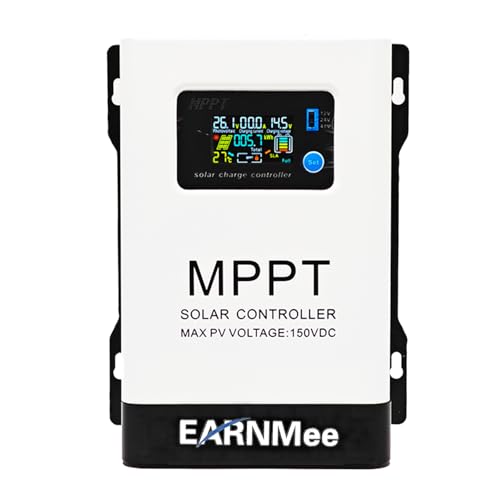
- 1.High-Amperage Performance for Demanding Setups: EARNMee solar charge...
- 2.Adjustable Output for Various Batteries: Manually select 12V/24V/48V...
- 3.Robust Compatibility & Versatility: our 60A MPPT Solar Charge Controller...
Do I need a special battery for a PWM controller?
No, you can use any standard deep-cycle battery with a PWM controller. Flooded lead-acid, AGM, and gel batteries all work fine as long as you set the correct battery type on the controller.
Lithium batteries also work, but you need to make sure your PWM controller has a lithium setting. I always check the manual before buying to confirm it supports my battery type.