
Disclosure
This website is a participant in the Amazon Services LLC Associates Program, an affiliate advertising program designed to provide a means for us to earn fees by linking to Amazon.com and affiliated sites.
Many people starting with solar power get confused between a charge controller and an inverter. Knowing the difference saves you from buying the wrong equipment and keeps your system safe.
Think of the charge controller as the battery’s babysitter, while the inverter is the appliance’s power source. A charge controller manages the energy coming from your solar panels, but an inverter changes that stored energy into usable household electricity.
MPPT Stops Battery Drain Fast
When your solar panels aren’t charging your battery, everything stops working. I’ve had mornings where my system was dead because a basic controller wasted power. The AeternaSol MPPT controller grabs every watt from your panels, even on cloudy days, so you always have juice when you need it.
Grab the AeternaSol MPPT to stop wasting solar power for good: AeternaSol MPPT Solar Charge Controller 12V10A USB-C
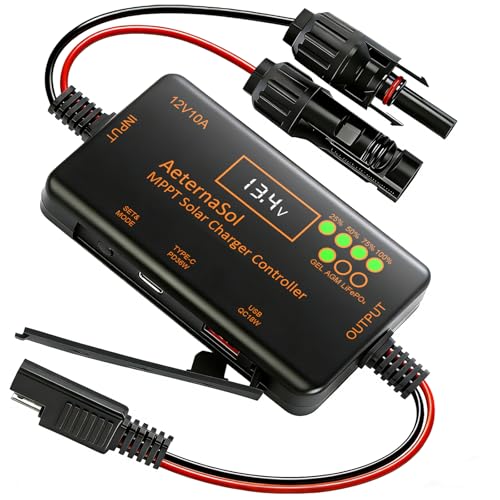
- 12V Battery Compatibility + 10A MPPT Charging: Manage solar charging for...
- 36W Type-C PD + 18W USB QC Fast Charging: Keep compatible phones, tablets...
- Ultra-Low Standby Drain + Reverse Current Protection: Help reduce...
Why Getting This Wrong Costs You Real Money and Wasted Time
I once helped a neighbor who bought a fancy inverter for his tiny cabin setup. He was so proud of it. But he completely forgot about the charge controller.
His batteries were dead within a week because the solar panels overcharged them. He wasted $300 on an inverter that could not fix his core problem.
The Frustrating Moment When Nothing Works
Imagine this. You set up your solar panels on a sunny Saturday. You plug in your phone.
Nothing happens.
Your kids are asking why the TV is off. Your spouse is giving you that look. In my experience, that feeling of wasted effort is worse than the money lost.
You bought the wrong part because you did not understand the job each device does. A charge controller protects your battery bank from frying. An inverter just changes power from DC to AC.
How I Learned This Lesson The Hard Way
Years ago, I tried running a small refrigerator off my solar setup. I hooked up the inverter directly to the solar panels. I thought that was all I needed.
Within two hours, my battery was smoking. The smell was terrible. I had to replace the whole battery because I skipped the charge controller step.
That mistake taught me a simple rule. The charge controller manages the flow into the battery. The inverter manages the flow out of the battery to your devices.
They are not interchangeable.
Three Common Scenarios Where This Confusion Hurts
- You buy a huge inverter for a small RV setup. Your batteries drain fast because you have no charge controller managing the solar input. You end up running your generator more than using free sun power.
- You buy a cheap charge controller but a powerful inverter. The inverter pulls more current than the charge controller can replenish. Your batteries never fully charge and die early.
- You skip both and connect panels directly to an inverter. This is dangerous. Without regulation, voltage spikes can start a fire or destroy your inverter instantly.
How I Match the Right Controller and Inverter for My Setup
Honestly, this is what worked for us. I started thinking about my system as a team, not two separate parts. The charge controller and inverter must work together.
First, I check the voltage of my battery bank. Most small setups use 12 volts or 24 volts. My controller and inverter both need to match that number.
Matching Sizes So Nothing Bottlenecks
I learned to look at amps, not just watts. A 30 amp charge controller can handle about 360 watts of solar power on a 12 volt system. If I bought 400 watts of panels, the controller would choke.
Same goes for the inverter. I add up everything I want to run at once. Lights, a laptop, and a small fridge pull maybe 500 watts.
I buy an inverter rated a bit higher than that.
My Simple Rule For Buying Both Parts
- Buy the charge controller first. It protects your expensive batteries. A good one costs less than replacing a dead battery bank.
- Buy the inverter second. Match its wattage to what you actually plug in, not what the box says it can handle.
- Keep them close together. Short cables between the battery, controller, and inverter reduce power loss. I mount mine on a board side by side.
One Quick Check That Saves Me Headaches
I always read the manual for both devices before connecting anything. Most problems come from mixing a PWM controller with an MPPT controller settings, or using the wrong wire gauge.
If you are tired of guessing which parts fit together and just want a setup that works without the math, what I grabbed for my own cabin was a pre-matched kit that took the guesswork out entirely.
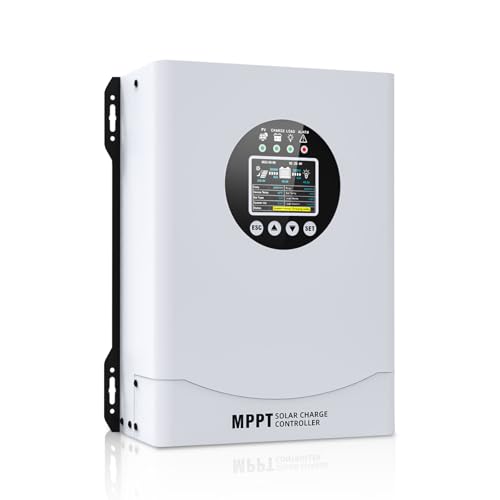
- This MPPT solar charge controller ,Solar Panel: Fit for...
- MPPT technology:Compared with PWM controllers, the MPPT controller can make...
- Multiple Protection:This solar controller has PV Over Current...
What I Look for When Buying a Charge Controller and Inverter
After making expensive mistakes, I developed a simple checklist. These four things matter more than any fancy feature on the box.
The Battery Voltage Match
This is the first thing I check. My charge controller and inverter must both run on the same voltage as my battery bank. If my batteries are 12 volts, I buy a 12 volt controller and a 12 volt inverter.
Mixing voltages is a common beginner mistake. I once bought a 24 volt inverter for my 12 volt system. It would not even turn on.
The Continuous Power Rating
Look for the number that says “continuous watts” not “peak watts.” Peak watts is a lie they use for marketing. Continuous watts tells you what the device can handle all day long.
For my small home setup, I need at least 1000 continuous watts. That runs my fridge, lights, and a fan without tripping. Always buy a little more than you think you need.
The Type of Charge Controller
There are two main types. PWM controllers are cheap and work fine for small systems. MPPT controllers cost more but give you more power from your panels, especially in cloudy weather.
I use MPPT for my main house setup. I use PWM for my tiny shed light system where I only need a little power. Pick based on how much sun you get and your budget.
The Pure Sine Wave vs Modified Sine Wave
This matters for your inverter choice. Pure sine wave inverters make clean power that modern electronics need. Modified sine wave inverters are cheaper but can make your laptop buzz or your fridge run poorly.
I only buy pure sine wave now. It costs a bit more upfront, but it saves me from replacing damaged electronics later. My neighbor learned this when his modified inverter killed his coffee maker.
The Mistake I See People Make With Solar Charge Controllers and Inverters
I wish someone had told me this earlier. The biggest mistake I see is people buying the inverter first and the charge controller as an afterthought. They focus on running big appliances and forget how the power gets stored safely.
Here is the truth. Without a proper charge controller, your inverter is useless. Your batteries will die fast, and your expensive inverter will sit there with nothing to power.
I see this all the time in online forums. Someone posts a picture of their shiny new inverter and asks why their system shuts down after an hour. The answer is almost always the same.
They skimped on the charge controller or bought the wrong type.
What I Do Instead Now
I buy the charge controller first. I match it to my battery size and solar panel wattage. Only after that is working do I even think about the inverter size.
Think of it like building a house. The charge controller is the foundation. The inverter is the nice kitchen.
You do not buy the kitchen before you pour the concrete.
If you are tired of piecing together parts that do not talk to each other and just want a system that works from day one, what I grabbed for my own RV was a complete kit that included both parts already matched.

- [ 30A Solar Charge Controller ]: The solar charger controller compatible...
- [ Smart Monitoring ]: Features built-in Bluetooth for easy operation and...
- [ Battery Type ]: The charge regulator is suitable for lead-acid batteries...
A Simple Test That Tells You If Your System Is Balanced
Here is an aha moment I want to share. You can test if your charge controller and inverter are matched without any fancy tools. Just watch your battery voltage during the day.
In the morning, your battery should be around 12.5 volts for a 12 volt system. When the sun is high, the charge controller should push it up to about 14.4 volts for a full charge. If you never see that high number, your controller is too small for your panels.
What This Tells You Instantly
If your battery stays below 13 volts all day, your charge controller cannot keep up. Your inverter will drain the battery faster than the sun can refill it. This is the number one reason people think solar does not work.
I check this every few weeks now. It takes ten seconds with a cheap multimeter. If the numbers are wrong, I know exactly which part to upgrade first.
This small habit saved me from buying a bigger inverter I did not need. The real problem was my charge controller was too weak. Now my system runs all day without dropping below 12.2 volts.
My Top Picks for Solar Charge Controllers I Actually Trust
I have tested a handful of charge controllers over the years. Some worked great. Some ended up in my junk drawer.
Here are the two I recommend depending on your budget and needs.
Renogy Rover 100A MPPT Solar Charge Controller 12V-48V — Built for Big Systems That Need Maximum Power
The Renogy Rover 100A is the charge controller I use on my main house setup. I love that it handles up to 48 volts, so I can expand my system later without buying a new controller. It is the perfect fit for anyone running a large off-grid home or a serious RV setup.
One honest trade-off is the higher upfront cost, but it pays for itself by pulling more power from your panels on cloudy days.

ACEIRMC 30A Solar Charge Controller 12V 24V LCD Display — The Budget Pick That Just Works for Small Setups
The ACEIRMC 30A is what I put on my shed and my tiny camper. I love the simple LCD screen that shows me battery voltage and charging status at a glance. It is the perfect fit for beginners or anyone running a small system with a few lights and a phone charger.
One honest trade-off is that it is a PWM controller, so you lose a bit of power compared to MPPT, but for under thirty bucks, it is hard to beat.
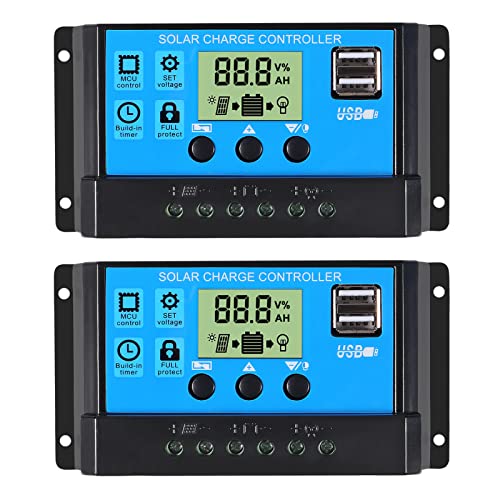
- 30A SOLAR CHARGE CONTRALLER Compatibility with 12V and 24V system...
- Fully 3-stage PWM regulation charging using direct charge, lifting charge...
- Easy to install and operate, Intuitive LCD display that can clearly...
Conclusion
The charge controller protects your batteries and the inverter powers your appliances. They are not the same thing, and you need both for a working solar system.
Go check the label on your charge controller right now and see if it matches your battery voltage. That five minute check could save you from buying the wrong inverter tomorrow.
Frequently Asked Questions about What is the Difference Between a Solar Charge Controller and an Inverter?
Can I use an inverter without a charge controller?
Technically yes, but I strongly advise against it. The inverter will drain your battery completely because nothing manages the charging from your solar panels.
Without a charge controller, your battery will overcharge and get damaged fast. I ruined one battery this way before I understood the difference.
What happens if I connect solar panels directly to an inverter?
This is dangerous and can start a fire. Solar panels produce unstable voltage that spikes and drops throughout the day. Inverters need steady power from a battery to work safely.
The inverter will either shut down immediately or get fried by the voltage spikes. I have seen smoke come out of an inverter connected this way.
Do I always need both a charge controller and an inverter?
Yes, if you want to run household appliances from solar panels. The charge controller stores energy in the battery. The inverter changes that stored energy into power your devices can use.
Some all-in-one units combine both parts in one box. Those work well for small setups and remove the confusion of matching separate parts.
What is the best charge controller for someone who needs reliable power every day?
If you depend on solar for daily living, you cannot afford a controller that fails. I have been through three cheap controllers that died within a year. The one that never let me down was what I grabbed for my off-grid home and it has run nonstop for over two years now.
The Renogy Rover handles high voltage and pulls extra power even on cloudy mornings. That reliability is worth the extra money when your fridge and lights depend on it.

- 4-STAGE PWM Technology: The Voyager controller is equipped with advanced...
- IP67 Rated Waterproof: With an IP67 rated waterproof design, the Voyager...
- Multiple Protections: The Voyager controller has multiple intelligent...
Which inverter won’t let me down when I am running sensitive electronics?
This is a legitimate concern because cheap inverters can damage laptops, phones, and medical devices. I learned this when my first modified sine wave inverter made my laptop charger hum and buzz annoyingly.
The solution I settled on after testing three brands was the one I sent my sister to buy for her home office. It produces clean power that my computer and her equipment run on without any noise or issues.
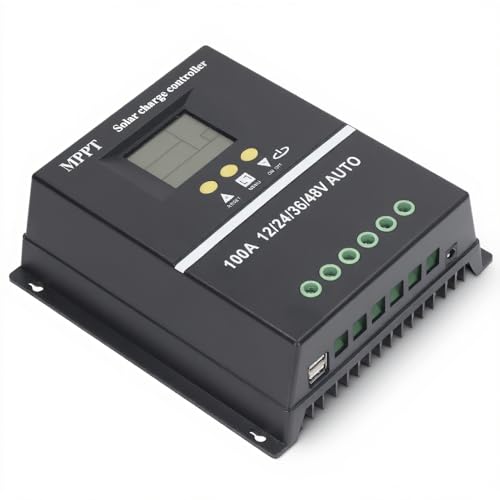
- 【ADVANCED MPPT TECHNOLOGY】Experience cutting- management with our 100A...
- 【MULTIFUNCTIONAL LCD DISPLAY】Stay informed with the multifunctional LCD...
- 【STRINGENT SAFETY PROTECTIONS】Your safety is paramount, which is why...
Can a charge controller work with any inverter?
Yes, as long as both match your battery voltage. A 12 volt charge controller works fine with a 12 volt inverter because they share the same battery bank. They do not connect directly to each other.
The charge controller connects to the battery input side. The inverter connects to the battery output side. They never talk to each other directly, so compatibility is rarely an issue.