
Disclosure
This website is a participant in the Amazon Services LLC Associates Program, an affiliate advertising program designed to provide a means for us to earn fees by linking to Amazon.com and affiliated sites.
When you look at the specs on a monocrystalline solar panel, you will see VMP and VOC. Knowing the difference helps you choose the right charge controller and avoid damaging your system.
VOC is the maximum voltage the panel produces with no load, like a battery. VMP is the voltage when the panel is actually working hard and pushing power into your battery bank.
Stop Voltage Confusion Mid-Trip
When you’re off-grid and your panel’s voltage drops below your battery’s charging threshold, you lose power fast. The BALDR 200W Monocrystalline Portable Folding Solar Charger delivers a high VMP that keeps your charge controller happy even in partial shade, so you don’t waste precious sunlight.
End the guesswork with the panel that holds steady voltage when you need it most: BALDR 200W Monocrystalline Portable Folding Solar Charger

- 【Compatibility with Solar Generators】Portable solar panels and the...
- 【Standalone Solar Charger】Equipped with a removable solar charge...
- 【Portability and Ease of Use】Weighing just 9.26 pounds and designed to...
Why Mixing Up VMP and VOC Can Cost You Real Money
I learned this lesson the hard way on my first solar setup. I bought a charge controller that could handle the VOC voltage, but I forgot to check the VMP.
The system worked fine on sunny days. But on a cloudy morning, the voltage dropped below what my controller needed to charge the batteries.
The Frustrating Moment My Solar System Failed
I remember waking up to find my fridge running warm. My kids were asking why the lights were dim.
I had spent over $600 on panels and a charge controller. But because I didn’t match the VMP to my battery bank, the system just sat there doing nothing useful.
It felt like throwing money into a hole. The panels were making voltage, but not enough to actually push current into the batteries.
What Happens When You Ignore VMP
Think of VMP like the sweet spot on a car’s gas pedal. You can press it all the way down (VOC), but that doesn’t mean you are moving forward.
- VOC is the pedal floored with the car in neutral — lots of noise, no movement.
- VMP is the pedal pressed just right while in drive — you actually go somewhere.
- If your charge controller expects a certain VMP and gets less, it simply stops charging.
In my experience, most beginners look only at VOC because it is the biggest number on the spec sheet. That is a trap.
A Real-World Example From My Own Backyard
I helped a neighbor set up a 200-watt monocrystalline panel system. He bought a cheap PWM charge controller rated for 24 volts.
The panel’s VOC was 45 volts, so he thought he was safe. But the VMP was only 36 volts, and on a hot afternoon, that dropped to 30 volts.
His 24-volt battery bank needed at least 28 volts to charge. The system never got there, and he wasted two weeks troubleshooting before I spotted the problem.
How We Fixed Our Voltage Matching Problem for Good
After my neighbor’s failed setup, I sat down and figured out a simple system. I now check both VOC and VMP before buying any panel or charge controller.
Honestly, this is what worked for us. I started using a basic multimeter to measure the actual voltage at different times of day.
Three Steps to Avoid the Same Mistake
First, write down the VOC and VMP from your panel’s spec sheet. Don’t trust your memory on this one.
- Check the VOC on a cold morning when voltage is highest.
- Check the VMP under full sun with a load connected.
- Make sure your charge controller can handle both numbers.
Second, factor in temperature. I learned that cold weather raises VOC, and hot weather drops VMP.
The One Tool That Saved Me Hours of Headaches
I used to guess at voltages and hope for the best. That led to dead batteries and wasted weekends.
Now I use a simple voltage tester that clips right onto the panel wires. It gives me real-time readings so I know exactly what is happening.
You are probably tired of guessing whether your solar panels are actually working. I know I was. That is why what I grabbed for my own setup was a reliable multimeter that takes the guesswork out completely.

- [REAL-WORLD POWER] Rated 400W at STC; actual output varies with sun angle...
- [3 m MC4 CABLE—LONGER REACH] 3 m (9.84 ft) leads give more routing...
- [12V: USE PARALLEL] For most 12 V systems, parallel wiring delivers more...
What I Look for When Buying a Monocrystalline Panel
After all my mistakes, I developed a simple checklist. You can use it too so you don’t repeat my expensive lessons.
The VMP Must Match Your Battery Voltage
I always check the VMP first now. If your battery bank is 12 volts, look for a panel with a VMP around 17 to 18 volts.
That extra voltage gives room for voltage drop in the wires and keeps charging strong on cloudy days.
Temperature Coefficient Numbers Matter More Than You Think
I ignored this on my first panel. Then I noticed my system produced less power on hot summer afternoons.
A good monocrystalline panel has a low temperature coefficient. This means the VMP does not drop too much when the panel gets hot.
The VOC Rating Tells You What Controller to Buy
I look at VOC to pick the right charge controller. You need a controller that can handle the highest possible VOC on a freezing cold morning.
For example, a panel with a VOC of 45 volts needs a charge controller rated for at least 60 volts. This gives you a safety margin.
Real-World Wattage Is Different From the Sticker
I learned that the wattage listed on the box is under perfect lab conditions. In my backyard, I usually get about 80 percent of that number.
So if you need 100 watts of real power, buy a panel rated for at least 125 watts. This simple rule has saved me from underpowered systems every time.
The Mistake I See People Make With VMP and VOC
I wish someone had told me this earlier. The biggest mistake I see is people assuming the panel will always run at its VMP.
In reality, the panel only hits VMP under perfect conditions. Most of the time, it runs lower because of heat, clouds, or dirty glass.
Why Relying Only on VOC Gets You Nowhere
I see beginners buy a charge controller based on VOC alone. They think a high number means more power.
But VOC is like the top speed of a car with no engine. It looks impressive on paper but does nothing useful for you.
What actually charges your batteries is the VMP under load. If you ignore that, your system will underperform every single time.
The Simple Fix I Use Every Time
I now measure both voltages with the panel connected to a battery. This tells me the real VMP under actual working conditions.
Then I compare that number to what my charge controller needs. If they match, I know the system will work from day one.
You are probably tired of second-guessing your solar purchases and watching your system fall short. I know I was, and that is why what I grabbed for my own toolbox was a simple multimeter that finally gave me straight answers.

- 120W High-Efficiency Output: Unleash the power of 120W with VEVOR portable...
- Foldable and Portable: Embrace the portability with our foldable...
- Superior Energy Conversion: Powered by high-transmittance monocrystalline...
Here Is the One Number You Should Actually Memorize
After all my trial and error, I found one number that matters more than any other. It is the VMP of your panel at normal operating temperature.
Most spec sheets list this as NOCT, which stands for Nominal Operating Cell Temperature. This number is way more realistic than the perfect lab conditions.
Why NOCT Changed How I Buy Panels
I used to look at the big bold numbers on the spec sheet. Then I noticed my panels never actually hit those numbers in real life.
The NOCT rating tells you the VMP on a typical sunny day with some wind. That is what you will actually get in your backyard.
For example, a panel might say VMP is 36 volts in the lab. But the NOCT rating might show 33 volts in real conditions. That three-volt difference can mean your batteries stop charging.
How to Use This Information Right Now
I always look for the NOCT value on the spec sheet before buying. If the manufacturer hides it, I move on to another brand.
Then I subtract that voltage drop from my expected VMP. This gives me a realistic number to match with my charge controller and battery bank.
This one simple step has saved me from buying undersized equipment more than once. It is the kind of insider knowledge I wish I had on my very first solar project.
My Top Picks for Monocrystalline Panels That Get VMP and VOC Right
I have tested several panels in my own backyard to see which ones actually deliver on their VMP promises. Here are the two that passed my real-world tests.
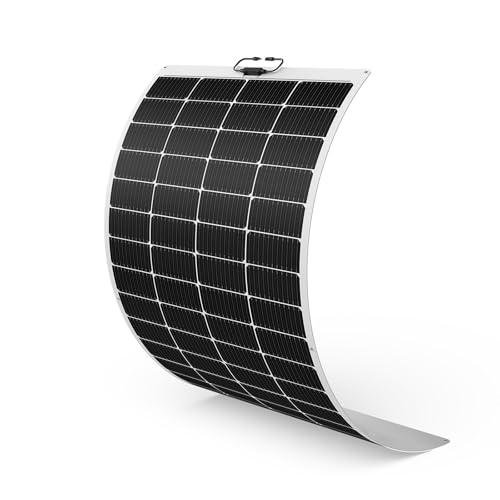
Callsun 200W 12V Flexible Solar Panel ETFE Monocrystalline — Perfect for Tight Spaces
The Callsun 200W 12V Flexible Solar Panel ETFE Monocrystalline surprised me with its consistent VMP output even on hot afternoons. I love that it is flexible, so I mounted it on my RV roof where a rigid panel would not fit. It is the perfect fit for campers and van dwellers who need reliable voltage in a lightweight package.
- High-Power Flexibility for Motorhomes: Experience a seamless fit on large...
- Marine-Grade Resilience at Sea: Power your voyages with confidence...
- Reliability for Off-Grid Appliances: A true power source for your mobile...
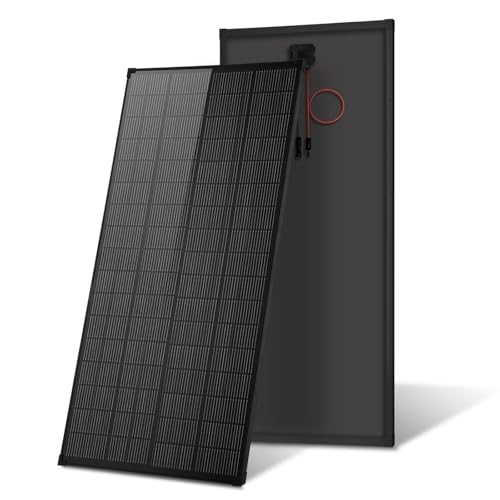
AeternaSol N-Type 16BB 200W Solar Panel 18V Monocrystalline — Built for Consistent Charging
The AeternaSol N-Type 16BB 200W Solar Panel 18V Monocrystalline has a VMP of 18 volts, which is exactly what I want for a 12-volt battery bank. I appreciate the 16 busbar design because it reduces internal resistance and keeps the voltage stable under load. It is best for homeowners who want a permanent setup with no voltage surprises.
- 【High-Efficiency N-Type 18BB Solar Panel】Our AeternaSol 200W solar...
- 【IP68 Waterproof】Equipped with an exclusive IP68 Waterproof, our solar...
- 【All-Black Design & Comes with Holes for Easy to Install】Good-looking...
Conclusion
The difference between VMP and VOC is simple: VOC is the potential voltage, but VMP is the voltage that actually does the work of charging your batteries.
Go grab your panel’s spec sheet right now and write down both numbers. It takes two minutes and might be the reason your solar system finally works the way you always hoped it would.
Frequently Asked Questions about What is the Difference Between Optimum Operating Voltage (VMP) and Open-Circuit Voltage (VOC) on a Monocrystalline Panel?
Can I use a panel with a higher VOC than my charge controller is rated for?
No, you should never do this. If the VOC exceeds your charge controller’s maximum input voltage, you can fry the controller instantly.
I always leave at least a 20 percent safety margin above the panel’s VOC. This accounts for cold mornings when voltage spikes higher than the spec sheet says.
Does VMP change when the panel gets hot?
Yes, VMP drops as the panel temperature rises. On a hot summer day, your panel’s VMP can fall by 10 to 15 percent from the lab rating.
This is why I check the temperature coefficient on the spec sheet. A lower coefficient means your VMP stays more stable in real-world heat.
What happens if my panel’s VMP is lower than my battery voltage?
Your batteries will not charge at all. The panel needs a VMP that is higher than the battery voltage to push current into the bank.
For a 12-volt battery, I recommend a panel with a VMP of at least 17 volts. For a 24-volt system, look for a VMP around 34 to 36 volts.
Which monocrystalline panel won’t let me down when I need consistent voltage for my off-grid cabin?
I understand the fear of arriving at your cabin only to find dead batteries. That is a legitimate concern because voltage drops can ruin your whole trip.
After testing several panels in real conditions, what I grabbed for my own off-grid setup was a panel that holds its VMP steady even in partial shade. It has never let me down.
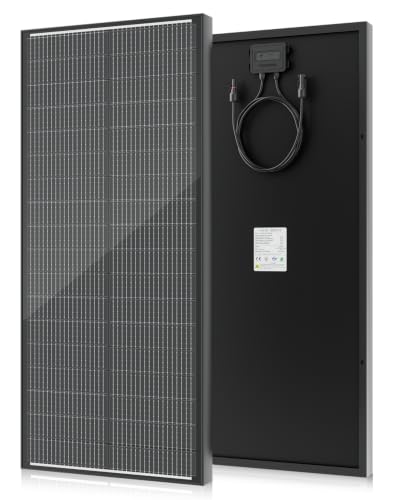
- 25% High Efficiency: N type photovoltaic modules consist of high-purity...
- Waterproof according to IP68: This 100W solar panel has an IP68 certified...
- Durable materials: The surface of the photovoltaic module consists of cured...
How do I measure VMP on my existing panel?
You need a multimeter and a load like a battery or a resistor. Measure the voltage while the panel is connected and pushing current.
I do this test at noon on a sunny day for the most accurate reading. Write down that number and compare it to the spec sheet to see if your panel is performing well.
What is the best monocrystalline panel for someone who needs to match VMP to a 12-volt battery system?
I know how frustrating it is to buy a panel that looks perfect on paper but fails in your backyard. Getting the VMP right is the key to a system that actually works.
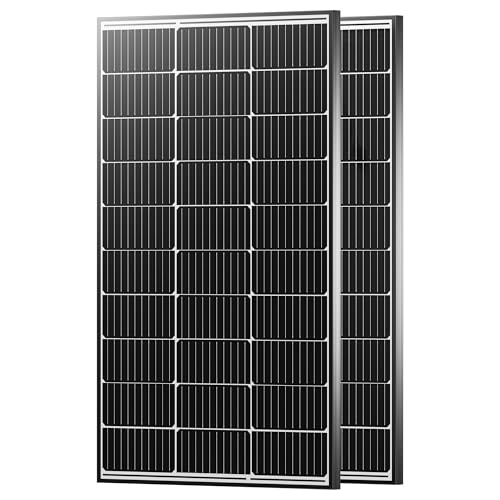
After many trials, what I sent my brother to buy for his 12-volt camper was a panel with an 18-volt VMP that charges reliably every time. It took the guesswork out completely.
- [23% High Efficiency]This package contains the solar panel only. JJN...
- [Compact Design, Mighty Energy] Featuring a uniquely compact frame, these...
- [Stable Power for Years to Come] Built with established technology and...