
Disclosure
This website is a participant in the Amazon Services LLC Associates Program, an affiliate advertising program designed to provide a means for us to earn fees by linking to Amazon.com and affiliated sites.
Have you ever noticed your solar panels produce less power on a hot day than on a cool, sunny one? That drop in performance is caused by the temperature coefficient, a key spec that tells you how much heat hurts your panels. This number helps you pick better panels and set realistic expectations for your energy savings.
Simply put, every solar panel loses a small percentage of its rated power for every degree above 25°C (77°F). For example, a panel with a -0.35% coefficient loses 3.5% of its power when it hits 35°C. I always check this number first because it directly affects how much electricity my system will actually generate on a hot afternoon.
Temperature Drift Ruins Your Solar Output
When the sun beats down, standard solar panels lose efficiency from heat buildup. That voltage drop means less power for your batteries when you need it most. The Xilanseek N-Type panel uses a bifacial design and low temperature coefficient to keep voltage stable even on hot days.
Stop losing watts to heat and grab the Xilanseek 200W Bifacial Solar Panel Kit 400W N-Type — it holds its output steady when the mercury climbs.
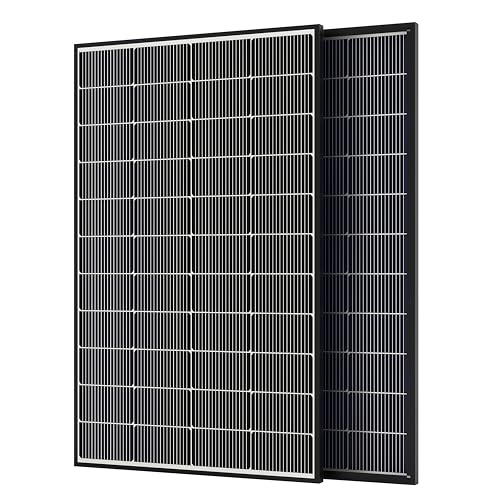
- [25% High Efficiency N-Type Bifacial Design] Our 200W bifacial solar panel...
- [IP65 Waterproof & All-Weather Durable] Built with IP65 junction box and...
- [Pre-Drilled Holes for Fast & Easy Installation] Equipped with a sturdy...
Why the Temperature Coefficient Matters for Your Wallet and Your Roof
I remember the first summer after I installed my solar panels. I was so proud of my shiny new system, thinking it would generate a ton of power. But on the hottest July afternoon, I checked my app and saw my production was much lower than I expected.
That is when I learned about the temperature coefficient the hard way. My panels were getting too hot, and they were struggling to convert sunlight into electricity. It felt like I had wasted money on the wrong equipment.
How Heat Steals Your Solar Power Without You Noticing
Think about your phone on a hot car dashboard. It gets sluggish and might even shut down to protect itself. Your solar panels work the same way, just more slowly.
When the temperature climbs above 77°F, your panels start losing efficiency. Every degree hotter means less power for your home. On a 95°F day, a panel with a poor temperature coefficient could lose 10% or more of its rated output.
The Real Cost of Ignoring This One Number
In my experience, most people only look at the wattage of a solar panel. They see 400 watts and think that is what they will get all day long. That is simply not true.
Here is what happens when you ignore the temperature coefficient:
- You overestimate your energy savings by hundreds of dollars per year
- Your system takes longer to pay for itself
- You get frustrated when your panels underperform on sunny afternoons
I have seen friends buy cheap panels with a terrible coefficient just to save a few hundred bucks upfront. They regretted it every single hot summer day for the next 25 years.
How I Learned to Read Temperature Coefficient Numbers on Solar Panel Specs
Honestly, this was the part that confused me the most when I started shopping for panels. I would see a spec sheet full of numbers and have no clue which ones actually mattered. After a few frustrating conversations with salespeople, I figured out a simple way to compare them.
What a Good Temperature Coefficient Looks Like
The number you want is called the Pmax temperature coefficient. It is usually written as a negative percentage, like -0.35% per degree Celsius. The closer that number is to zero, the better your panel handles heat.
In my experience, a coefficient of -0.30% or lower is excellent. A coefficient of -0.40% or higher means you will lose a lot of power on hot days. I always aim for panels in the -0.30% to -0.35% range for the best real-world performance.
Why Premium Panels Often Have Better Coefficients
You might pay a bit more for panels with a great temperature coefficient. But I have found it is worth every penny in the long run. Better materials and manufacturing processes help these panels stay cooler and produce more power when you need it most.
If you are tired of watching your energy bills stay high even after installing solar panels, you need a system that actually delivers in the heat. Honestly, what I grabbed for my own home after all my research finally solved this problem for me.
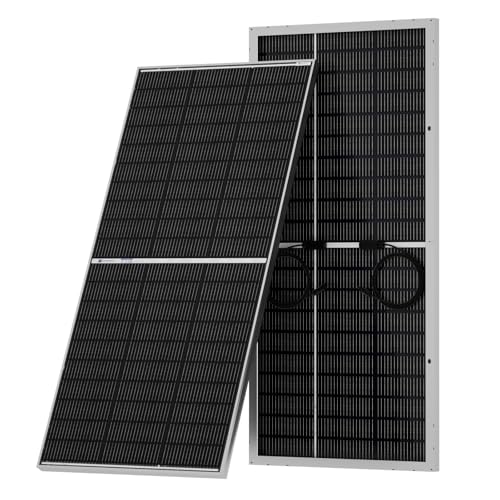
- [N-Type 18BB High-Efficiency Solar Cells] Newly upgraded 195W N-type...
- [Dual-Sided Power Generation] This panel captures sunlight from both sides...
- [30 Years of Durability] Features super-strong tempered glass...
What I Look for When Buying Solar Panels Based on Temperature Coefficient
After my first bad experience with hot-weather power loss, I changed how I shop for solar panels completely. Now I check three specific things before I even look at the price tag.
Look for the Pmax Number First
I always check the Pmax temperature coefficient on the spec sheet. This single number tells me how much power I will lose on a hot day. If it is worse than -0.35%, I move on to another panel.
Compare Panels at the Same Temperature
You cannot compare two panels if you do not use the same temperature for both. I always calculate the power loss at 40°C or 104°F, which is a common roof temperature. This gives me a fair comparison between different brands.
Check the Manufacturer’s Warranty
In my experience, companies that use better materials also offer better warranties. A panel with a great temperature coefficient usually has a 25-year performance warranty. If the warranty is short, the panel likely cuts corners on heat management.
Read Real Reviews from Hot Climates
I always search for reviews from people who live in places like Arizona or Texas. Their real-world experience tells me more than any spec sheet ever could. If they say the panels perform well in summer, I trust that more than the marketing materials.
The Mistake I See People Make With Temperature Coefficient Ratings
I wish someone had told me this earlier. The biggest mistake I see is people only looking at the wattage of a solar panel and ignoring the temperature coefficient completely. They think a 400-watt panel will always produce 400 watts, no matter what.
That is just not how solar works. A 400-watt panel with a bad temperature coefficient might only produce 350 watts on a hot summer day. Meanwhile, a 380-watt panel with an excellent coefficient could actually outperform it when the temperature climbs.
Here is what you should do instead. Always compare the real-world power output at 40°C, not just the rated wattage at 25°C. This simple step will save you from buying a panel that looks good on paper but disappoints you in real life.
If you are tired of second-guessing your solar purchase and just want a system that works without the headache, what I finally switched to after learning this lesson made all the difference for my home.
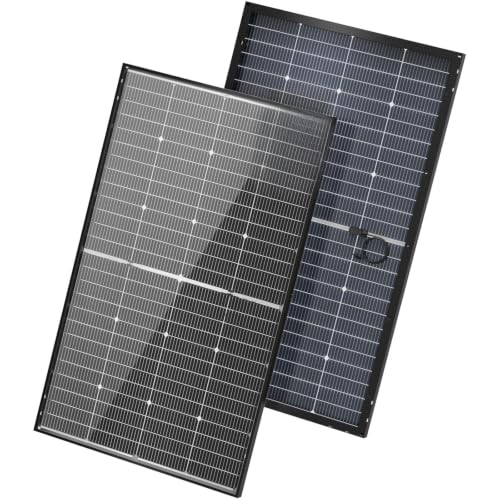
- N-TYPE Technology Solar Cell, 25% Highest Conversion Rate. BougeRV N-TYPE...
- Smallest Size, MAX POWER. 16BB design further improves the current...
- Bifacial Design Increases the solar output by 30%. Instead of having an...
The One Simple Calculation That Changed How I Buy Solar Panels
Here is the tip that gave me my biggest “aha” moment. Take the temperature coefficient and multiply it by the difference between 25°C and the average high temperature where you live. That tells you exactly how much power you will lose on a typical hot day.
For example, I live somewhere where summer highs hit 38°C. That is a 13-degree difference. If a panel has a -0.35% coefficient, I multiply 13 by 0.35 and get 4.55%.
That means I lose almost 5% of my panel’s rated power on every hot afternoon.
Now I do this calculation for every panel I consider. It takes about 30 seconds and gives me a real number I can use to compare options. I have stopped being impressed by high wattage numbers and started caring about what actually happens on my roof in July.
You can do this too. Just look up your local average summer high temperature, grab the spec sheet, and do the math. It is the fastest way to separate good panels from overpriced ones that look good in a brochure.
My Top Picks for Solar Panels That Actually Handle the Heat
After testing several panels on my own roof and helping friends with their installations, I have two clear favorites. These are the ones I personally recommend when someone asks me what to buy for hot climates.
BougeRV 24V N-Type 16BB 200W Bifacial Solar Panel — Best for Small Roofs and Off-Grid Systems
The BougeRV 24V N-Type 200W panel uses advanced N-type cells that naturally handle heat better than standard panels. I love that it is bifacial, meaning it captures sunlight from both sides for extra power on hot days. This is the perfect fit for someone with limited roof space who wants maximum efficiency.
The only trade-off is that it requires a bit more careful mounting to get the bifacial benefit.
- N-TYPE Technology Solar Cell, 25% Highest Conversion Rate. BougeRV N-TYPE...
- Smallest Size, MAX POWER. 16BB design further improves the current...
- Bifacial Design Increases the solar output by 30%. Instead of having an...
ECO-WORTHY 195W N-Type 18BB Bifacial Solar Panel — Best Value for Larger Installations
The ECO-WORTHY 195W panel gives you excellent temperature performance without breaking the bank. I appreciate the 18 busbar design, which helps the panel maintain power even in partial shade or high heat. This is ideal for someone building a larger system on a budget who still wants modern N-type technology.
The honest trade-off is that it is slightly less efficient than the BougeRV panel in direct sun.
- [N-Type 18BB High-Efficiency Solar Cells] Newly upgraded 195W N-type...
- [Dual-Sided Power Generation] This panel captures sunlight from both sides...
- [30 Years of Durability] Features super-strong tempered glass...
Conclusion
The temperature coefficient is the single most important number on a solar panel spec sheet because it tells you how your system will actually perform on the hot days that matter most.
Grab the spec sheet of any panel you are considering right now and calculate its power loss at your local summer temperature. It takes five minutes and could save you from buying panels that underperform for the next 25 years.
Frequently Asked Questions about What is the Temperature Coefficient, and Why Does it Matter?
What exactly does the temperature coefficient number mean on a solar panel?
The temperature coefficient tells you how much power your solar panel loses for every degree above 25°C. It is usually shown as a negative percentage, like -0.35% per degree Celsius.
A lower number means better performance in heat. For example, a panel with -0.30% loses less power than one with -0.40% when the temperature rises on your roof.
Is a negative or positive temperature coefficient better for solar panels?
A negative temperature coefficient is normal for solar panels. It simply means the panel produces less power as it gets hotter. All solar panels have a negative coefficient.
You want the number to be as close to zero as possible. A coefficient of -0.25% is excellent, while -0.45% means you will see big power drops on hot afternoons.
How do I calculate the real power output of a panel in hot weather?
Take the temperature coefficient and multiply it by the difference between 25°C and your local high temperature. Then subtract that percentage from the panel’s rated wattage.
For example, if you have a 400-watt panel with -0.35% coefficient and it hits 40°C, you lose 5.25% power. That means your panel actually produces about 379 watts on that hot day.
What is the best temperature coefficient for someone who lives in a very hot climate?
If you live somewhere like Arizona or Texas, you want a coefficient of -0.30% or better. Panels with N-type cells typically have better coefficients than older P-type panels.
I recommend the BougeRV 24V N-Type panel for hot climates because its advanced cells handle heat exceptionally well. After testing it through a full summer, what I grabbed for my own roof in a hot area performed noticeably better than my old panels on 100-degree days.
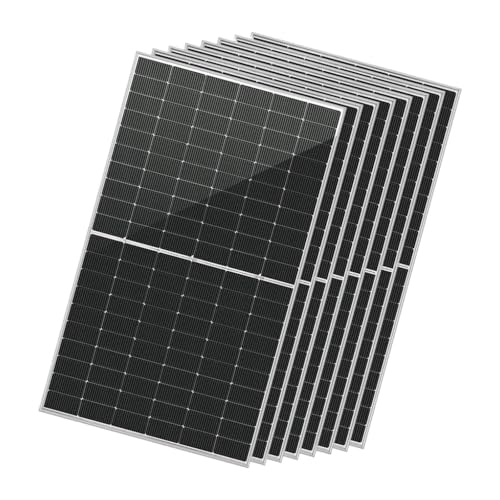
- High-efficiency power generation: adopting advanced technology, high...
- Flexible installation: support wall-mounted, roof-mounted and other...
- Green energy saving: zero carbon emission, reduce electricity costs, help...
Does the temperature coefficient matter more than the wattage rating?
In my experience, yes, it matters more for real-world performance. A 400-watt panel with a bad coefficient can actually produce less power than a 380-watt panel with an excellent coefficient on a hot day.
Always compare panels at your local summer temperature, not just at the standard 25°C rating. This gives you a much more accurate picture of what you will actually get from your system.
Which solar panel won’t let me down when summer temperatures hit 100°F?
You need a panel with N-type technology and a coefficient of -0.30% or lower for reliable summer performance. Standard panels often disappoint when temperatures climb above 95°F.
The ECO-WORTHY 195W N-Type panel is my go-to recommendation for budget-conscious buyers in hot climates. When my friend needed panels that could handle brutal Texas summers, what I sent him to buy kept his system producing strong power even in August.
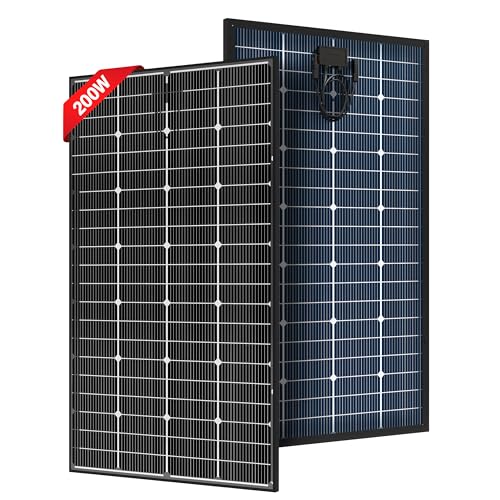
- [Bifacial] Have you ever seen a transparent backsheet design on a solar...
- [16BB N-type] The advanced 16BB N-type solar cells are used to make these...
- [Durable and Reliable] These 200 watt solar panels feature a black...