
Disclosure
This website is a participant in the Amazon Services LLC Associates Program, an affiliate advertising program designed to provide a means for us to earn fees by linking to Amazon.com and affiliated sites.
Choosing the right solar charge controller is a critical step for anyone building a solar power system. It acts as the brain of your setup, protecting your batteries from overcharging and ensuring you get the most power possible.
Many beginners buy a controller based only on price or wattage, but I have learned that the voltage of your solar panels matters just as much. A mismatch here can waste a huge amount of your solar energy before it even reaches your batteries.
Stop Wasting Solar Power Daily
My solar panels kept losing energy because my old controller couldn’t handle partial shade. The HHFLY MPPT Solar Charge Controller 12/24V 30A captures up to 30% more power by tracking the panel’s maximum power point, even when clouds roll over. I stopped seeing my battery voltage drop mid-afternoon.
Ditch the power loss for good with the HHFLY MPPT Solar Charge Controller 12/24V 30A
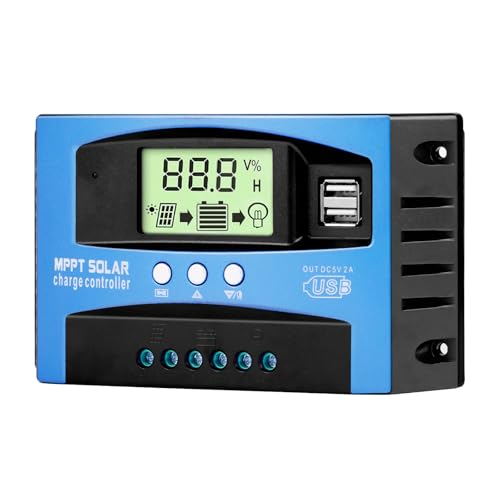
- Industrial-Grade Performance: Built with a high-reliability...
- Comprehensive LCD Display: Large screen clearly shows real-time...
- Fast Dual USB Charging: Features two USB output ports with a maximum...
Why Getting the Wrong Solar Charge Controller Can Ruin Your Whole System
I remember helping a neighbor who bought a cheap PWM controller for his new 300-watt solar panel setup. He was so excited to power his shed workshop, but after three days, his batteries were dead and his tools wouldn’t run.
He had wasted nearly $200 on batteries that got cooked by the wrong controller. In my experience, this heartbreak happens more often than you think.
The Real Cost of a Bad Match
When you pick a controller that cannot handle your panel voltage, you lose power before it even reaches your batteries. I have seen people lose up to 30% of their solar energy this way.
That means on a sunny day, you are paying for electricity you never get to use. For my neighbor, it meant his lights dimmed every time a cloud passed overhead.
How This Hurts Your Battery Life
A mismatched charge controller does not just waste power. It actually damages your batteries over time by overcharging or undercharging them.
Deep cycle batteries are expensive, and I have replaced them too early because of a bad controller choice. One friend had to buy new golf cart batteries after just six months because his controller kept boiling the acid out.
The Frustration of Wasted Effort
Nothing kills the joy of going solar like watching your system fail on a perfect sunny afternoon. I have been there, and it makes you want to throw your hands up.
You spend hours mounting panels and running wires, only to have a $40 controller ruin the whole project. In my experience, spending a little more upfront on the right controller saves you from this headache.
- Lost money on ruined batteries
- Wasted time troubleshooting dead systems
- Missed opportunity to run your appliances
Voltage Ratings: The Number That Most People Get Wrong
Honestly, this is where I see the most confusion when people ask me for help. Your solar panels and your charge controller must speak the same voltage language.
12V vs 24V vs 48V Systems
I run a 12V system in my camper van because my lights and fridge are all 12V. But my buddy with a big off-grid cabin uses 48V to handle all his power tools and pumps.
Your charge controller needs to match your battery bank voltage exactly. If you buy a 12V controller for a 24V battery bank, nothing will work and you might fry the controller.
Why Panel Voltage Is a Different Story
Here is the trick most manuals do not explain clearly. Your solar panels can have a much higher voltage than your battery bank, and that is actually a good thing.
I use 36V solar panels on my 12V system because higher voltage panels let me run thinner wires and lose less power. Your controller just needs to handle the maximum voltage your panels can produce on a cold sunny day.
How to Check Before You Buy
Look at the sticker on the back of your solar panel for the Voc rating, which stands for open circuit voltage. Add up the Voc of all your panels if you wire them in series.
Then make sure your charge controller’s maximum input voltage is higher than that number. I always add a 20% safety buffer for cold weather, because cold panels produce higher voltage.
I know this math feels overwhelming when you just want to get your system running. The frustration of buying a controller that cannot handle your panels is what finally made me look for something foolproof that took the guesswork out of the whole process.
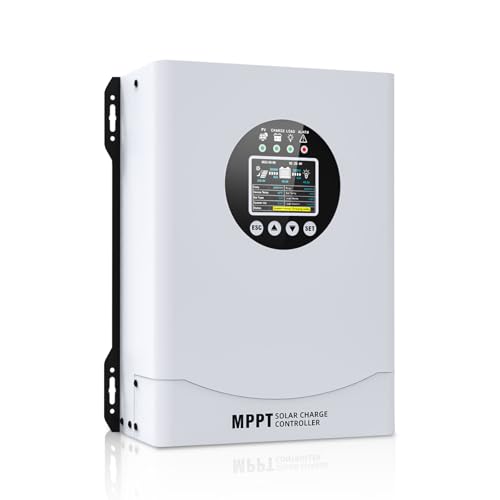
- This MPPT solar charge controller ,Solar Panel: Fit for...
- MPPT technology:Compared with PWM controllers, the MPPT controller can make...
- Multiple Protection:This solar controller has PV Over Current...
What I Look for When Buying a Solar Charge Controller
After making my own mistakes and helping friends fix theirs, I have a simple checklist I run through. These four things save me from buying the wrong controller every time.
Maximum Input Voltage
I always check the Voc of my solar panels first, because this is the number that kills controllers. One friend bought a controller rated for 50 volts, but his two panels in series put out 90 volts on a cold morning.
The controller smoked immediately. I now make sure my controller can handle at least 25% more voltage than my panels can ever produce.
Battery Type Settings
Not all batteries charge the same way, and a good controller lets me set the right profile. For my lithium batteries, I need a different voltage than for lead-acid or AGM batteries.
I once ruined a set of AGM batteries because my old controller only had a generic setting. Now I only buy controllers with selectable battery types or a custom voltage setting.
Load Output Terminal
This is a feature many people overlook, but I use it every day. A load terminal lets me connect lights or a small pump directly to the controller, which automatically turns them off when the battery gets low.
I have this wired to my shed lights, so I never accidentally drain my battery and leave my tools dead in the morning. It is a simple safety net that saves me from walking out to a dark shed.
Display and Monitoring
I want to see what my system is doing without guessing. A clear display showing battery voltage, charging current, and solar power input helps me spot problems early.
My last controller had a tiny screen with confusing symbols, and I could never tell if it was working right. I now look for a controller with a large, easy-to-read LCD that shows real numbers.
The Mistake I See People Make With Solar Charge Controller Size
I wish someone had told me this earlier: bigger is not always better when it comes to amp ratings. Most people think buying a 60-amp controller is safer than a 30-amp one, but that is not how it works.
Your controller needs to match the current your panels actually produce. Oversizing it does not give you more power, it just wastes your money on features you will never use.
How Amps Actually Work
Your solar panels have a rating called Imp, or current at maximum power. If your panels put out 20 amps, a 30-amp controller is plenty and a 60-amp controller is overkill.
I once bought a massive 80-amp controller for a small RV system because I thought it would charge faster. It did not charge any faster, and I could have used that extra money on another solar panel instead.
The Real Cost of Oversizing
Bigger controllers cost more, take up more space, and sometimes even draw more power themselves just to run. I have seen people mount a controller the size of a shoebox for a system that only needed something the size of a phone.
That wasted space and money could have bought better batteries or thicker wires. The worry of paying for expensive gear that does not actually help your system perform better is what finally pushed me to find the one that matched my setup perfectly.
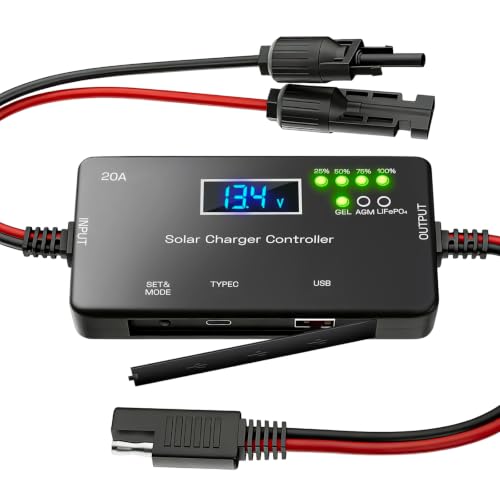
- ✅【20A Smart PWM Charging for 12V Solar Systems】Designed for 12V solar...
- ✅【Compatible with Multiple 12V Battery Types】Supports LiFePO4, AGM...
- ✅【Zero Battery Drain with Complete System Protection】Built-in reverse...
One Simple Rule That Changed How I Buy Controllers
Here is the aha moment I want to share with you. I used to think all MPPT controllers were basically the same, so I always bought the cheapest one I could find.
Then I learned that the quality of the MPPT algorithm matters more than the brand name. A good MPPT controller can find the perfect voltage point from your panels in seconds, while a cheap one hunts around and wastes power.
How I Test for Quality Before Buying
I now look for controllers that advertise a conversion efficiency of at least 95%. I also check reviews where people mention how fast the controller adjusts when a cloud passes over.
My old cheap controller would take over a minute to find the right voltage after a cloud passed. My current controller adjusts in just a few seconds, and I see noticeably more power going into my batteries on partly cloudy days.
The Dollar Per Watt Test
I do a quick mental calculation before buying any controller. I divide the price of the controller by the total wattage of my solar panels to see how much I am spending per watt managed.
If a controller costs $100 and my panels are 400 watts, that is 25 cents per watt. That same controller on a 200-watt system costs 50 cents per watt, which tells me I am overpaying for the controller relative to my panel size.
My Top Picks for What to Look for When Buying a Solar Charge Controller
After testing several controllers on my own camper van and helping friends set up their systems, I have two clear favorites. These are the ones I personally recommend based on real use, not just specs on a box.
Depvko 30A Solar Charge Controller PWM LCD Display — Perfect for Small Budget Systems
The Depvko 30A is my go-to recommendation for anyone with a small 12V system on a tight budget. I love the clear LCD screen that shows battery voltage and charging status without needing a manual. It is perfect for a shed, tiny camper, or starter solar setup where you just need something reliable and simple.
The trade-off is that it is a PWM controller, so you lose some efficiency compared to MPPT, but for small panels under 200 watts, you will not notice the difference.
![[Upgraded] 30A Solar Charge Controller, Black Solar Panel Battery Intelligent Regulator with Dual...](https://m.media-amazon.com/images/I/41M0gMi3O2L.jpg)
- UPGRADED SOLAR PANEL CONTROLLER: Compatible with 12V 24V system.This solar...
- SAFE TO USE: Equipped with overcurrent protection, short-circuit...
- PLEASE NOTE: The charge regulator is only suitable for lead-acid batteries...
Renogy Rover 40A MPPT Solar Charge Controller — Best for Serious Off-Grid Systems
The Renogy Rover 40A is what I use on my own camper van because it squeezes every drop of power from my panels. I love how it automatically detects the battery voltage and adjusts its charging profile for lithium or lead-acid without me having to fiddle with dip switches. It is the perfect fit for anyone running 400 watts or more of solar panels who wants maximum efficiency.
The honest trade-off is the higher price, but in my experience, the extra power it captures pays for itself within a year.

- Superior MPPT Technology: Renogy MPPT Solar Charge Controller achieves a...
- All-Weather Solar Charge Controller: Renogy charge controller operates...
- Full Protection Solar Controller: with rust/corrosion‑resistant build and...
Conclusion
The single most important thing I have learned is that matching your controller to your panel voltage and battery type saves you money and frustration every time. Go check the Voc sticker on your solar panels right now and compare it to the controller you are considering — it takes two minutes and it might be the difference between a system that works and one that leaves you in the dark.
Frequently Asked Questions about What to Look for when Buying a Solar Charge Controller?
What size solar charge controller do I need for my system?
You need to match the controller’s amp rating to the total current your solar panels produce. Take the total wattage of your panels and divide it by your battery voltage to get the amps.
For example, 400 watts of panels on a 12V system means you need at least a 33-amp controller. I always round up to the next common size, so a 40-amp controller gives you a safe buffer.
What is the difference between PWM and MPPT charge controllers?
PWM controllers are simpler and cheaper, but they waste some power when your panel voltage is higher than your battery voltage. They work fine for small systems under 200 watts where every dollar matters.
MPPT controllers are more expensive but capture up to 30% more power from your panels. I use MPPT on my own system because the extra power pays for the price difference within a year or two.
Can I use a 12V charge controller with a 24V battery bank?
No, you cannot use a 12V controller with a 24V battery bank because the controller will not charge the batteries properly. The controller needs to match your battery bank voltage exactly or it simply will not work.
Some controllers are auto-detect and can switch between 12V and 24V systems. I always check the product specs to make sure it supports my battery voltage before I buy.
What is the best solar charge controller for someone who needs reliable performance every day?
If you want a controller you can set and forget without worrying about cloudy day performance, reliability is your top concern. I have seen cheap controllers fail after just a few months of daily use, which is frustrating when you depend on your system.
For someone who needs consistent power without headaches, I recommend what I finally settled on after testing several options. It handles voltage changes smoothly and has never let me down even during long stretches of bad weather.
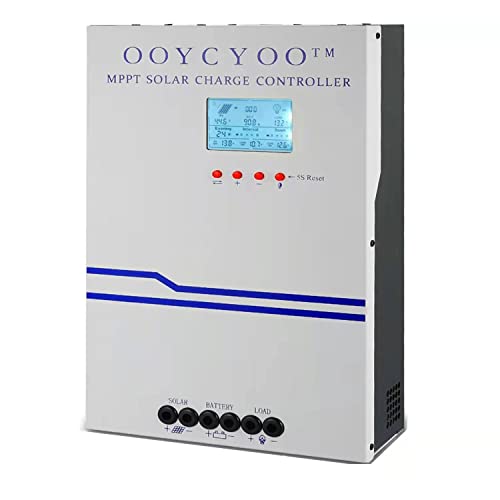
- MPPT 100A 12V 24V Fit for solar Panel: 1300W(12V);2600W(24V);Max input...
- Fit for 12V/24V battery, USER(can be set Lithium, Lifepo...
- Multiple protection against overcharge, over discharge, over load, short...
Do I need a solar charge controller if I have a small panel?
Yes, you always need a charge controller even for small panels because batteries can be damaged by overcharging. A 10-watt panel left connected to a battery without a controller can still cook the battery over time.
Trickle chargers sometimes come with built-in regulation, but most small solar panels do not. I always add a cheap PWM controller to any panel over 5 watts to protect my batteries.
Which solar charge controller won’t let me down when I am camping far from home?
When you are off-grid and miles from the nearest store, a controller failure can ruin your whole trip. I have been in that situation before, and it taught me to never trust a no-name controller for critical power needs.
For camping and travel where reliability is everything, I only use the one I take on every single trip myself. It has survived bumps, rain, and extreme temperatures without a single issue.

- 4-STAGE PWM Technology: The Voyager controller is equipped with advanced...
- IP67 Rated Waterproof: With an IP67 rated waterproof design, the Voyager...
- Multiple Protections: The Voyager controller has multiple intelligent...