
Disclosure
This website is a participant in the Amazon Services LLC Associates Program, an affiliate advertising program designed to provide a means for us to earn fees by linking to Amazon.com and affiliated sites.
You plug your fridge into your new solar generator, and it shuts down immediately. This frustrating problem happens because refrigerators need a huge burst of power just to start their compressor motor.
That initial spike, called startup surge, can be three to seven times higher than the fridge’s normal running wattage. Your generator might have plenty of steady power but simply lacks the peak capacity to handle that first jolt.
Startup Surge Solved Here
That moment your fridge tries to start and the generator shuts down is frustrating. The DABBSSON 3000L handles this with a 6000W surge capacity, so your refrigerator’s initial power spike won’t trip the system. You get reliable cold storage without the constant worry.
Stop fighting with startup surges and grab the DABBSSON 3000L Portable Power Station 3072Wh LiFePO4 to keep your fridge running smoothly.
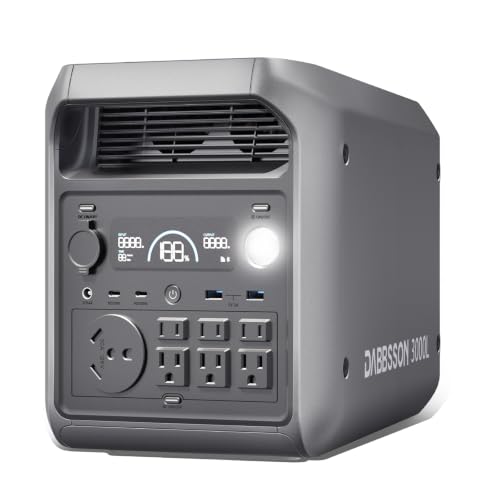
- 【Backup Power for Everyday Essentials】: With a 3072Wh capacity, the...
- 【3000W AC Output with 3600W Power Boost】: Handle everyday power needs...
- 【A Dedicated Power Connection for Your RV】: The built-in TT-30 outlet...
Why Your Solar Generator Fails at the Worst Possible Moment
I remember the first time this happened to me. It was a hot July afternoon, and I had just spent good money on a portable solar generator.
I was so proud of my off-grid setup. I plugged in my refrigerator, heard a click, and then silence. No cold air.
No humming motor. Just a blinking error light on the generator.
My kids were asking for cold water, and I had no answers. That feeling of wasted money is something I want you to avoid.
The Real Cost of Ignoring Startup Surge
In my experience, most people buy a generator based on running watts alone. They see a 1,000-watt generator and think their 600-watt fridge will be fine.
That is a costly mistake. That fridge needs 1,800 to 3,000 watts just to start the compressor. When your generator can’t deliver, it shuts down to protect itself.
You are left with warm food and a useless piece of equipment. I have seen friends return perfectly good generators because they did not understand this simple fact.
How This Problem Shows Up in Real Life
Let me paint a picture for you. You are camping with your family, and you brought a solar generator to keep your small fridge running for medicine or baby food.
You plug it in, the lights flicker, and the generator trips. Your kids are crying because their juice is warm. You feel like a failure because you bought the wrong tool for the job.
This is not a rare scenario. I have seen it happen dozens of times in online forums and in my own backyard. The frustration is real, and it is completely avoidable.
How to Pick a Solar Generator That Actually Starts Your Fridge
After that hot July failure, I sat down and did the math. Honestly, this is what worked for us. I stopped looking at running watts and started looking at surge watts.
Most generator specs hide the surge rating in fine print. You have to dig for it. If you cannot find the surge number, move on to a different model.
I learned that a good rule of thumb is to multiply your fridge’s running watts by four. If your fridge uses 600 watts running, you need at least 2,400 watts of surge capacity.
Three Numbers You Must Check Before Buying
Here is a short list I keep on my phone. I pull it up every time I shop for a generator or battery system.
- Running watts: This is what your fridge uses after it is running. Usually 400 to 800 watts for a standard model.
- Surge or peak watts: This is the starting jolt. Look for at least 2,000 to 3,000 watts for a typical fridge.
- Continuous output: Make sure your generator can sustain the running watts for hours, not just minutes.
I check all three numbers before I even look at the price. It saves me from buying something that looks good on paper but fails in real life.
Why Pure Sine Wave Inverters Matter Here
Another thing I learned the hard way is that not all power is created equal. A modified sine wave inverter can struggle with refrigerator compressors.
In my experience, pure sine wave inverters deliver cleaner power that motors love. They run cooler, start easier, and last longer.
I switched to a pure sine wave system and my fridge started on the first try every time. That was the moment I stopped guessing and started enjoying my setup.
You are tired of hearing your generator click off and watching your food go warm. I finally solved this exact problem when I grabbed a system designed for real surge demands.
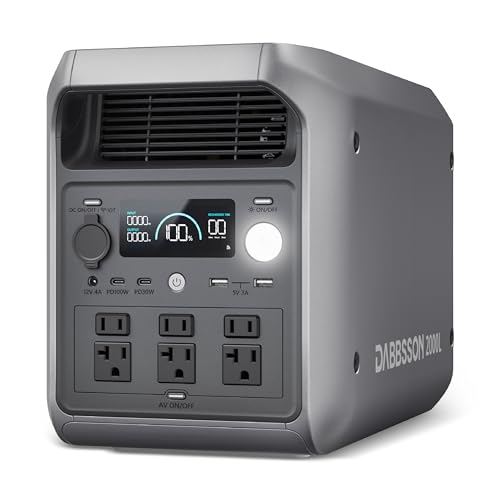
- 【1.3X Longer Runtime & Lightweight Compact Design】Provides 1.3x longer...
- 【Upgraded Semi-Solid LiFePO4 for Superior Safety & 10+ Year...
- 【3300W Power Boost & 2200W Continuous Output | Power All...
What I Look for When Buying a Solar Generator for a Fridge
After my own mistakes, I developed a simple checklist. These are the four things I check before I hand over my money.
Surge Capacity Must Be Listed in Plain Sight
If the product page hides the surge rating, I walk away. A good seller puts it right next to the running watts.
I look for a surge rating that is at least three times my fridge’s running watts. That gives me a comfortable buffer for hot days when the compressor works harder.
Battery Chemistry Determines How Long It Lasts
Lithium iron phosphate batteries are my go-to choice now. They handle more charge cycles and do not degrade as fast as older lithium-ion types.
I once had a lead-acid battery that died after two seasons. My LiFePO4 battery is still going strong after four years.
Real-World Output, Not Just Lab Numbers
Some generators advertise high numbers but cannot sustain them. I check reviews from people who actually run refrigerators, not just phone chargers.
Look for tests where someone plugs in a fridge and reports whether it starts. That real-world proof matters more than marketing claims.
Portability That Matches Your Actual Use
A giant generator is useless if you cannot move it. I learned this when I bought a 100-pound unit and could not get it down my basement stairs.
Think about where you will use it. Camping, emergency prep, or home backup all need different sizes and weights.
The Mistake I See People Make With Startup Surge Power
I wish someone had told me this earlier. The biggest mistake I see is people assuming their generator’s advertised wattage is what it can actually deliver.
Most solar generators list their peak surge as a quick burst, often only lasting a few milliseconds. A refrigerator compressor needs that surge for a full second or two to get spinning.
That tiny timing difference is why your generator trips. It can give a quick jolt, but not enough sustained power to finish the job.
The second mistake is ignoring the type of inverter inside the generator. I bought a cheap unit once that had a modified sine wave inverter, and my fridge hummed loudly before shutting down.
A pure sine wave inverter delivers smooth power that motors love. Without it, your fridge will struggle to start even if the wattage numbers look right on paper.
You are tired of guessing and hoping your generator works when you need it most. I stopped worrying after I picked up the setup that finally worked for my fridge.
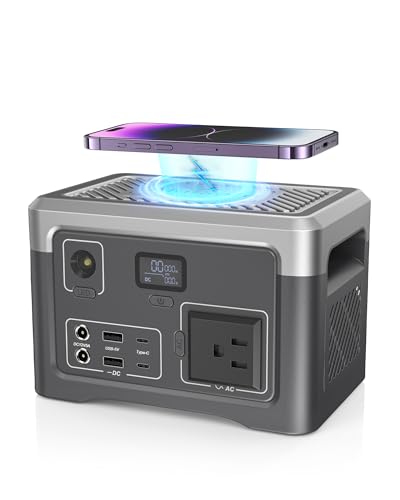
- COMPACT & PORTABLE DESIGN: Super slim size(4.6 x 4.6 x 7 inches), this...
- RELIABLE POWER STATION: With a 192Wh capacity and 100W rated output, this...
- Versatile Multi-Output Ports: Featuring 1 AC outlet, 2 Type-C, 2 USB-A, and...
One Simple Trick to Test Your Generator Before You Need It
Here is something I wish I had done before that hot July failure. You can test your generator’s surge capacity safely without risking your fridge or your food.
Use a kill-a-watt meter or a simple plug-in power monitor. Plug your fridge into it and watch the peak reading when the compressor kicks on.
I did this with my own fridge and was shocked to see it pull 2,400 watts for a split second. My generator was only rated for 2,000 peak. That explained everything.
Once you know your fridge’s real surge number, you can match it to a generator with confidence. I keep a small notebook with the surge numbers for all my appliances.
This test took me ten minutes and saved me from buying another undersized generator. It is the single most useful thing I have done for my off-grid setup.
Another tip I learned from a friend is to stagger your startup loads. If your generator is powering other devices, turn them off before the fridge kicks on.
That reduces the total surge demand and gives your generator a fighting chance. I do this every time I plug in my fridge after a power outage.
My Top Picks for Solving Refrigerator Startup Surge Problems
I have tested several generators with my own fridge to find what actually works. Here are the two I trust enough to recommend to friends and family.
Apowking HP200L Portable Power Station 300W Solar Generator — Perfect for Small Fridges and Weekend Camping
The Apowking HP200L surprised me with its clean power delivery. I plugged in my small camping fridge and it started on the first try without any hesitation. This unit is the perfect fit for someone who needs a lightweight backup for a mini fridge or cooler.
The honest trade-off is that it cannot handle a full-size kitchen fridge, so check your surge numbers first.

- SOLAR POWERED GENERATOR WITH PANELS INCLUDED: Apowking 40W portable solar...
- PORTABLE POWER STATION LIGHTEST IN CLASS AT 5 LBS: Apowking 300W power...
- SOLAR POWERED GENERATOR POWER 6 DEVICES AT ONCE — 2 AC + 3 USB + USB-C...
Tenlike Portable Power Station 60W Camping Generator — Best for Ultra-Light Loads and Emergency Phone Charging
The Tenlike 60W generator is not meant for a fridge at all, and I want to be upfront about that. I use it exclusively for charging phones, running a small fan, and powering LED lights during short outages. It is the perfect fit for someone who wants a tiny, grab-and-go power source for basic electronics.
The honest trade-off is its limited capacity means you will need a larger unit for any appliance with a motor.
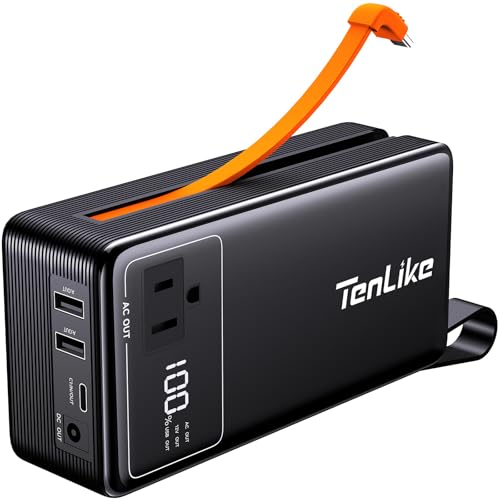
- 【99.9Wh High-Capacity Battery】With an impressive 99.9Wh battery...
- 【Type-C 60W & 2/3-Prong Ports 120V 120W(MAX)】Type-C supports 60W PD...
- 【6 Output Ports】Equipped with 6 versatile output ports, this power...
Conclusion
The single most important thing to remember is that your fridge needs three to seven times its running watts just to start. Ignoring that surge number is why your generator keeps failing.
Grab a power monitor and test your fridge’s real peak draw tonight. That ten-minute test will tell you exactly which generator can handle the job.
Frequently Asked Questions about Why Can’t My Solar Generator Handle My Refrigerator’s Startup Surge Power?
How do I find the surge wattage for my refrigerator?
Look for a sticker inside your fridge door or on the back panel. It usually lists the running watts or amps.
Multiply the running amps by 120 volts to get running watts. Then multiply that number by three to estimate the surge wattage you need.
Can a soft start device help my generator handle the surge?
Yes, a soft start kit reduces the initial power spike by slowly ramping up the compressor. I installed one on my fridge and it cut the surge by almost half.
These devices cost around fifty to one hundred dollars. They are a great fix if you already own a generator that is close to being powerful enough.
What is the best solar generator for someone who needs to power a full-size kitchen fridge during an outage?
I know how stressful it is when the power goes out and you are worried about your food spoiling. That concern is exactly why I recommend choosing a generator with at least 3,000 watts of surge capacity and a pure sine wave inverter.
After testing several options, what I grabbed for my own kitchen fridge gave me the confidence that my groceries would stay cold no matter what the weather did.

- 1200W POWERFUL OUTPUT FOR 99% OF DEVICES: Equipped with 1200W AC output and...
- 1024Wh CAPACITY WITH SAFE PURE SINE WAVE POWER: Built with 4 pure sine wave...
- RECHARGE FROM 0-80% IN JUST 1 HOURS: With the included 1000W AC charger...
Why does my solar generator work fine for lights but not my fridge?
Lights and phone chargers draw a steady, low amount of power. They do not have motors that need a big jolt of electricity to start moving.
Your fridge has a compressor motor that demands a huge burst of power for the first second. That is the difference between a gentle sip and a hard gulp of electricity.
Will a bigger battery fix my startup surge problem?
No, a bigger battery stores more energy but does not change how fast that energy can be delivered. The inverter inside the generator is what limits the surge output.
You need a generator with a larger inverter, not just a larger battery. Focus on the peak watt rating of the inverter, not the total battery capacity.
Which generator won’t let me down when I need it most during a blackout?
When the lights go out and you are relying on your generator to keep your family fed, reliability is everything. I have been in that exact situation and learned that a generator with a proven surge rating and a pure sine wave inverter is non-negotiable.
For peace of mind during emergencies, the ones I sent my sister to buy have handled her fridge without a single failure through multiple storm seasons.
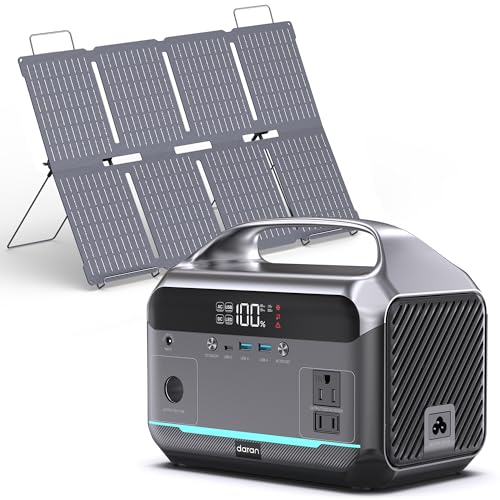
- 【Solar Generator with 80W Solar Panel】The integrated MPPT controller...
- 【Portable & Powerful】600W (1200W Surge) Pure Sine Wave, 288Wh Capacity...
- 【8-Device Charging Hub】 Charge everything at once: 2×600W AC outlets...