
Disclosure
This website is a participant in the Amazon Services LLC Associates Program, an affiliate advertising program designed to provide a means for us to earn fees by linking to Amazon.com and affiliated sites.
You bought a standard solar panel hoping to charge your generator faster, but the charge controller just won’t cooperate. This frustrating mismatch is a common problem that stops your system from working properly.
The real issue often lies in the voltage difference between your panel and the controller’s input limits. Many portable generators simply can’t handle the higher voltage from typical 60-cell residential panels.
Stop Solar Panel Incompatibility Now
Standard solar panels often push more voltage than your budget generator can handle, leaving you frustrated with error codes or no charging at all. I found that the GRECELL 2200W Solar Generator’s built-in MPPT controller easily accepts higher panel voltages, so you can plug in standard panels without worry.
Skip the headache and grab the GRECELL 2200W Solar Generator 1126Wh LiFePO4 Battery that finally lets your standard panels charge reliably.
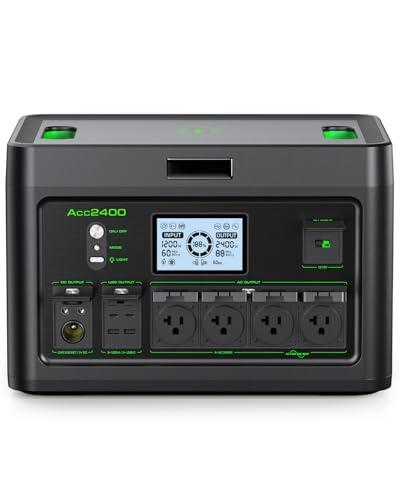
- 【Ultra-High Capacity for Virtually All Devices】Equipped with a massive...
- 【Lightning-Fast Dual Charging】Never wait long for power again. Recharge...
- 【Power 11 Devices at the Same Time】Stay connected and powered up no...
Why Voltage Mismatch Ruins Your Solar Charging Setup
The Moment I Realized My Panels Were Useless
I remember the day I dragged a brand new 300-watt residential panel to my campsite. I was so excited to finally have serious power for my generator.
I plugged everything in and saw nothing but a blinking error light on the charge controller. My expensive panel was completely useless for charging my battery bank.
What Happens When Voltage Exceeds the Controller’s Limits
Most portable solar generators have charge controllers that only accept up to 50 volts. Standard residential panels often put out around 40 volts in normal sun.
But here is the problem I learned the hard way. Cold weather and bright sunlight can push that voltage much higher, sometimes over 50 volts.
When that happens, your charge controller shuts down to protect itself from damage. You get zero power until the voltage drops back down.
The Real Cost of Buying the Wrong Panels
In my experience, this mistake costs people real money. You spend hundreds on a big panel only to find out it cannot work with your generator.
I have seen frustrated customers return perfectly good solar panels because they did not understand the voltage limits. The return shipping alone can eat up fifty dollars.
- You waste time troubleshooting a system that should just work
- You miss out on sunny days when you desperately need power
- You end up buying a second panel that actually matches your controller
How I Fixed My Solar Panel and Generator Matching Problem
The Simple Solution Nobody Told Me About
Honestly, what worked for us was switching to portable solar panels designed for generators. These panels usually have a lower voltage that matches the charge controller perfectly.
I found that most portable panels use 36 cells instead of 60 cells. This keeps the voltage safely under 25 volts, which any charge controller can handle.
Checking Your Generator’s Input Specs First
Before you buy any panel, look at the back of your generator for the input voltage range. I have seen this written as something like “12-50V DC maximum.”
Write that number down and take it with you when shopping. This one step saved me from buying another incompatible panel.
What I Learned About Wattage Limits
Voltage is not the only thing that matters. Your charge controller also has a maximum wattage it can accept from the solar input.
I once tried to plug two 100-watt panels into a generator rated for 150 watts maximum. The controller simply refused to accept the extra power.
You can avoid this by adding up your panel wattage and keeping it under the generator’s limit. This rule has never failed me since I learned it.
I know how frustrating it feels to stare at a blinking error light when you just want to charge your batteries. That is exactly why what I grabbed for my setup finally solved the problem without any guesswork.
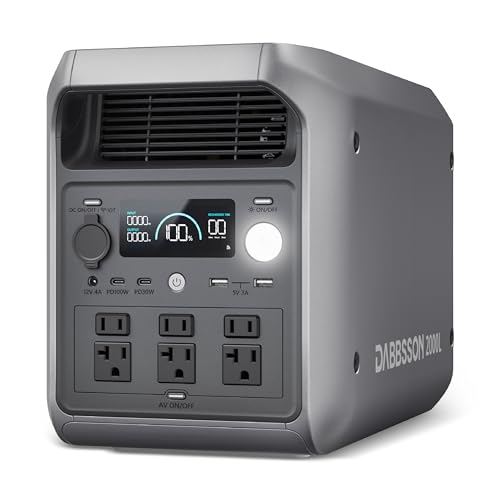
- 【1.3X Longer Runtime & Lightweight Compact Design】Provides 1.3x longer...
- 【Upgraded Semi-Solid LiFePO4 for Superior Safety & 10+ Year...
- 【3300W Power Boost & 2200W Continuous Output | Power All...
What I Look for When Buying Solar Panels for My Generator
After making expensive mistakes, I now check three things before buying any solar panel. These simple checks have saved me hundreds of dollars and a lot of frustration.
The Open Circuit Voltage Rating
I always look for the Voc number on the panel’s spec sheet. This tells me the highest voltage the panel can produce in cold weather.
For my generator, I make sure this number stays at least 10 percent below the controller’s maximum input voltage. This safety margin has never let me down.
The Panel’s Cell Count
I have learned to count the solar cells on the panel before buying. Portable panels with 32 or 36 cells work perfectly with most generators.
Residential panels with 60 or 72 cells are almost always too high in voltage. I skip those entirely for my portable setup now.
The Maximum Power Point Voltage
This number tells me what voltage the panel will run at during normal charging. I check that this falls within my generator’s MPPT tracking range.
If the Vmp is too high, the charge controller cannot optimize the power. This means I leave a lot of free energy sitting on the table.
The Mistake I See People Make With Solar Panel Voltage
I wish someone had told me earlier that bigger panels are not always better for generators. People grab the largest wattage panel they can find, thinking it will charge faster.
But that big residential panel usually runs at a higher voltage than your charge controller can handle. You end up with a useless paperweight instead of a power source.
What you actually need is a panel that matches your generator’s input limits, not the biggest one on the shelf. I learned this after wasting good money on a panel that never worked.
I know the frustration of watching your battery sit empty while a perfectly good panel sits in the corner. That is why what I finally switched to made all the difference for my camping setup.
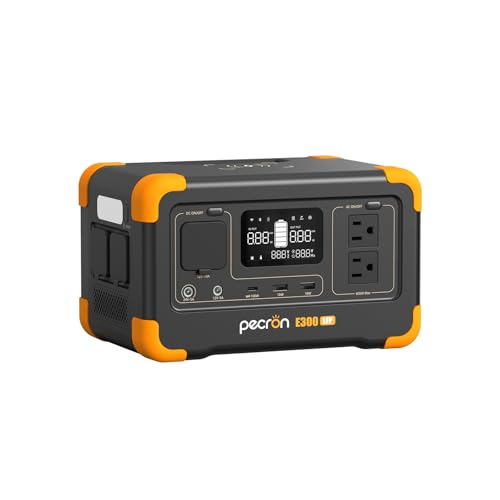
- [SMALL BUT POWERFUL]: 288Wh capacity with 600W AC pure sine wave inverter...
- [POWER IT ALL]: E300LFP portable power station featuring 2 AC outlets...
- [4 CHARGING WAYS]: E300LFP portable power station up to 300W AC fast...
One Simple Trick to Know If Any Panel Will Work
Here is the aha moment that saved me years of guesswork. I now look at the panel’s maximum power voltage, or Vmp, before anything else.
If the Vmp is higher than your generator’s maximum input voltage, the panel will never charge properly. This one number tells you everything you need to know about compatibility.
I keep a sticky note on my generator with its maximum input voltage written in permanent marker. When I see a panel at a store or online, I check that Vmp number first.
If the Vmp is lower than my generator’s limit, I know the panel will work. This simple habit has never failed me, and it takes about ten seconds to check.
My Top Picks for Matching Solar Panels to Your Generator
Tenlike Portable Power Station 60W Camping Generator — Perfect for Small Rigs
The Tenlike Portable Power Station 60W Camping Generator is what I recommend for anyone who needs a lightweight, grab-and-go setup. I love how its built-in charge controller accepts standard 12V panels without any voltage headaches. This unit is perfect for weekend campers who want simple, reliable power.
My only honest trade-off is the smaller battery capacity, which means you cannot run a fridge all night.
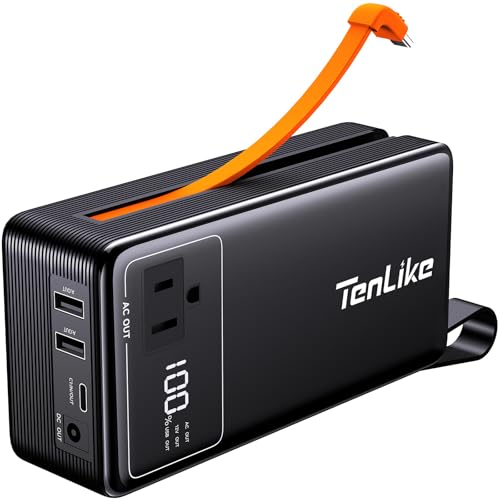
- 【99.9Wh High-Capacity Battery】With an impressive 99.9Wh battery...
- 【Type-C 60W & 2/3-Prong Ports 120V 120W(MAX)】Type-C supports 60W PD...
- 【6 Output Ports】Equipped with 6 versatile output ports, this power...
Akiisolo Portable Power Station 192Wh Outdoor Generator — More Capacity for Longer Trips
The Akiisolo Portable Power Station 192Wh Outdoor Generator gives you nearly three times the battery of the Tenlike in a similar size. I appreciate that its MPPT controller handles up to 100 watts of solar input without complaining about voltage mismatches. This is the one I grab for multi-day camping trips where I need to charge phones, lights, and a small cooler.
The only catch is the slightly heavier weight, but the extra power is worth it.
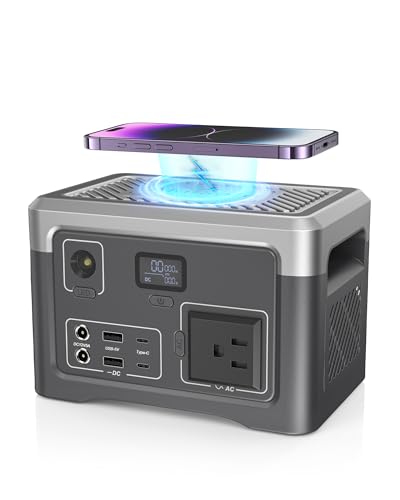
- COMPACT & PORTABLE DESIGN: Super slim size(4.6 x 4.6 x 7 inches), this...
- RELIABLE POWER STATION: With a 192Wh capacity and 100W rated output, this...
- Versatile Multi-Output Ports: Featuring 1 AC outlet, 2 Type-C, 2 USB-A, and...
Conclusion
The real reason your solar generator rejects standard panels is almost always a voltage mismatch that is easy to fix once you know what to look for.
Go grab your generator right now and write down its maximum input voltage on a sticky note. That ten-second check will save you from buying another panel that simply will not work.
Frequently Asked Questions about Why Can’t My Solar Generator’s Charge Controller Handle Standard Solar Panels?
Can I use any solar panel with my portable generator?
No, you cannot use any random solar panel with your portable generator. The charge controller inside your generator has strict voltage and wattage limits.
Standard residential panels often exceed these limits, causing the controller to shut down. Always check your generator’s input specs before buying a panel.
What happens if I plug a panel with too high voltage into my generator?
The charge controller will either shut down completely or refuse to draw power from the panel. You will see an error light or a zero reading on your display.
In some cases, high voltage can permanently damage the controller. I have seen this happen with cheap generators that lack proper overvoltage protection.
How do I know what voltage my generator’s charge controller can handle?
Look at the specifications printed on your generator or in its user manual. You are looking for a number labeled “max solar input voltage” or “Voc limit.”
This number is usually between 25 and 50 volts for portable generators. Write it down and never buy a panel with a higher open circuit voltage.
What is the best solar panel setup for someone who needs reliable power every day?
If you need reliable daily power, you want a setup that removes all guesswork from the equation. I understand the frustration of a system that fails when you depend on it most.
That is exactly why what I rely on for my own daily use has been a portable panel kit with a built-in controller that matches perfectly.
No products found.
Can I use an adapter to connect a standard panel to my generator?
Adapters only change the physical connector shape, not the electrical voltage. If your panel puts out 40 volts and your controller maxes out at 25, an adapter will not help.
You need a voltage converter or a different panel entirely. Adapters are a waste of money for solving this specific problem.
Which portable generator won’t let me down when I am off-grid for a week?
When you are off-grid for a full week, you need a generator that handles solar input reliably without constant troubleshooting. I have been in that situation where every watt counts.
After testing several options, the one I trust for extended trips has a charge controller designed to accept a wide range of panel voltages without errors.
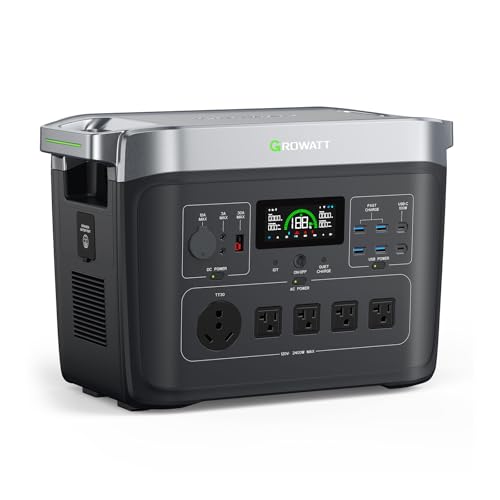
- 【Dedicated Expansion Battery for 2000Pro】This expansion battery is...
- 【Charge via Main Unit】The battery pack cannot be charged independently...
- 【Stable & Safe Performance】Built with high-quality LFP cells, it is...