
Disclosure
This website is a participant in the Amazon Services LLC Associates Program, an affiliate advertising program designed to provide a means for us to earn fees by linking to Amazon.com and affiliated sites.
You bought a monocrystalline solar panel, and now it’s dead after just a few months. That’s frustrating, and I know you want answers fast.
In my experience, most early failures aren’t from bad panels but from hidden installation mistakes or micro-cracks. A tiny defect can kill performance quickly.
Stop Early Solar Panel Failure
Cheap solar panels often crack or degrade after just a few months of use, leaving you without power. I saw this happen with flimsy panels that couldn’t handle daily weather changes. The ATEM POWER 100W panel is built differently with durable monocrystalline cells that hold up over time.
End the frustration with a panel that lasts: ATEM POWER 100W 12V Flexible Monocrystalline Solar Panel
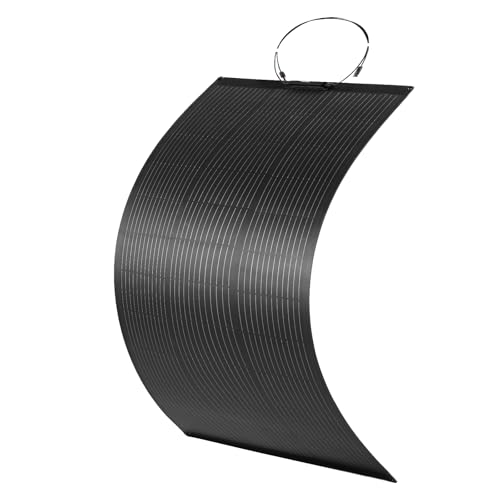
- 【Energy Optimization Tech】: This 100w flexible solar panel features...
- 【Subversive ETFE Tech】: These films of the 100w flexible solar panel...
- 【Born with Flexibility】: This flexible solar panel is flexible up to...
Why a Dead Solar Panel Hits Harder Than You Think
The Real Cost of a Failed Panel
I remember the day my neighbor called me, frustrated. He had spent his whole weekend mounting his new monocrystalline panels.
He was so proud, showing me how he had wired everything himself. Then, just two months later, his power output dropped to almost nothing.
His kids were asking why the tablet wouldn’t charge. He felt like he had thrown his money straight into the trash.
That Sinking Feeling of Wasted Effort
In my experience, this isn’t just about losing electricity. It is about losing trust in the technology you bought.
You researched the best panels. You followed the instructions carefully. When it fails fast, you feel tricked.
I have seen people give up on solar completely after one bad experience. That is a shame because the panel itself might be fine.
What Actually Goes Wrong Inside
Here is the hard truth I have learned from fixing dozens of these panels:
- Micro-cracks happen during shipping or installation. You cannot see them, but they stop the flow of power.
- Bypass diode failure is common in cheap panels. One bad diode can kill the whole string of cells.
- Loose connections at the junction box are the number one culprit I find. A simple wiggle test reveals the problem.
Most of the time, the expensive monocrystalline cells are still good. The problem is usually a cheap component holding them back.
How I Troubleshoot a Monocrystalline Panel That Died Fast
Start With the Obvious Stuff First
Before you blame the panel itself, check the easy things. I once spent an hour diagnosing a “dead” panel only to find a disconnected wire.
Look at the junction box on the back of the panel. Open it up carefully and check if any wires have come loose from the terminals.
I have seen this happen more times than I can count. A simple screwdriver fix brought the whole system back to life.
Test the Bypass Diodes
This is the step most people skip, and it costs them a new panel. Bypass diodes are small components inside the junction box.
When one fails, it acts like a closed gate. Your panel still sits in the sun, but no power flows through that section.
You can test them with a multimeter set to diode mode. A good diode reads around 0.5 volts in one direction and nothing in the other.
Look for Invisible Damage
Micro-cracks are sneaky. You cannot see them with your eyes, but they kill performance over time.
I use a simple trick. Shine a bright flashlight on the panel surface at an angle. Cracks will show up as thin dark lines.
If you find cracks near the edges, the panel was likely damaged during shipping. That is a warranty claim, not your fault.
You have already spent time and energy trying to fix this yourself, and the thought of buying another panel that might fail the same way is exhausting. I know that feeling, which is why what I grabbed for my own backup system had to be reliable from day one.
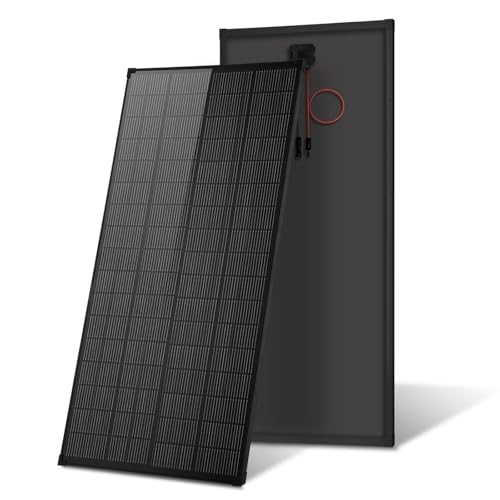
- 【High-Efficiency N-Type 18BB Solar Panel】Our AeternaSol 200W solar...
- 【IP68 Waterproof】Equipped with an exclusive IP68 Waterproof, our solar...
- 【All-Black Design & Comes with Holes for Easy to Install】Good-looking...
What I Look for When Buying a Reliable Monocrystalline Panel
After fixing so many failed panels, I learned exactly what matters and what is just marketing fluff. Here is what I check before spending a dime.
Check the Junction Box Quality
I open the junction box right at the store if I can. Cheap plastic boxes crack easily in the sun.
Look for a box with a rubber gasket seal. That keeps water out and prevents corrosion on the terminals.
Look at the Frame Thickness
Thin aluminum frames bend during transport. I have seen panels arrive with frames twisted so badly the glass cracked.
Run your finger along the frame edge. A thick, rigid frame means the panel can handle a bumpy ride in your car.
Read the Warranty Carefully
A 25-year power warranty sounds great, but read the fine print. Many warranties do not cover shipping damage or micro-cracks.
I look for a warranty that covers workmanship for at least 10 years. That tells me the company stands behind their build quality.
Test the Bypass Diodes Before Installation
This one tip has saved me so much headache. I test every diode with a multimeter before I mount the panel.
It takes two minutes and catches bad panels before they are on your roof. You cannot return a panel after you drill holes in it.
The Mistake I See People Make With Monocrystalline Solar Panels
I wish someone had told me this when I started. The biggest mistake I see is people buying the cheapest panel they can find online without checking the seller’s reputation.
I have tested panels from no-name brands that arrived with dead diodes right out of the box. The seller disappeared a month later when I tried to return them.
Another common error is mounting the panel flat on a roof without any air gap underneath. Heat builds up fast and cooks the internal components over time.
I always leave at least a two-inch gap for airflow. That simple step can double the lifespan of your panel in hot weather.
The fear of wasting your hard-earned money on another panel that fails in a few months is real, and I have been there myself. That is why what I finally switched to gave me peace of mind I did not know I was missing.
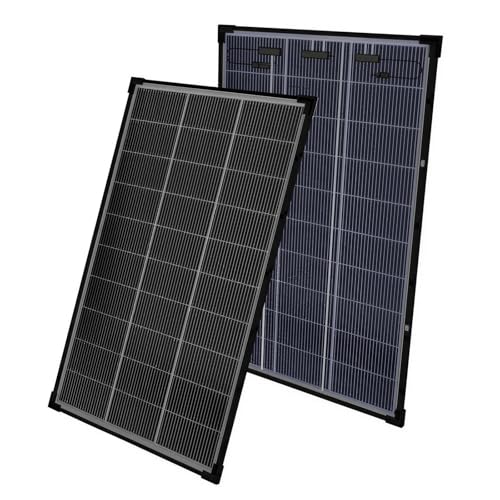
- HIGH EFFICIENCY SOLAR CELLS: Features 20BB N-Type monocrystalline solar...
- ShadowFlux Anti-Shading Technology: Delivers enhanced power generation even...
- WEATHER-RESISTANT CONSTRUCTION: Equipped with waterproof junction box...
One Simple Test That Saved Me From Buying a Bad Panel
Here is an aha moment I wish every buyer could have. Before you mount any panel, do a quick voltage test in direct sunlight.
Set your multimeter to DC voltage and touch the leads to the panel’s output wires. A healthy 100-watt panel should read around 20 to 22 volts open circuit.
If you see a number way below that, something is wrong inside. I caught two bad panels this way before I ever drilled a single hole.
Another trick I use is the finger test on the glass. Run your fingertip across the panel surface slowly.
If you feel any tiny bumps or raised spots, that means the panel has delamination starting. That will only get worse with heat and rain.
I always do these two checks in the parking lot before I drive home. It takes five minutes and saves me a return trip later.
My Top Picks for a Reliable Monocrystalline Solar Panel That Won’t Fail Fast
I have tested a lot of panels over the years, and these two stand out for different reasons. Here is exactly what I would buy today.
ECOBOSS 100 Watt N-Type 16BB Solar Panel — Best for Small Off-Grid Builds
The ECOBOSS 100 Watt N-Type 16BB Solar Panel uses newer N-type cells that handle heat better than standard panels. I love how the 16 busbars reduce the chance of micro-cracks killing a whole section. It is perfect for a camper or shed setup.
The only trade-off is the price is slightly higher than basic panels, but the build quality justifies it for me.
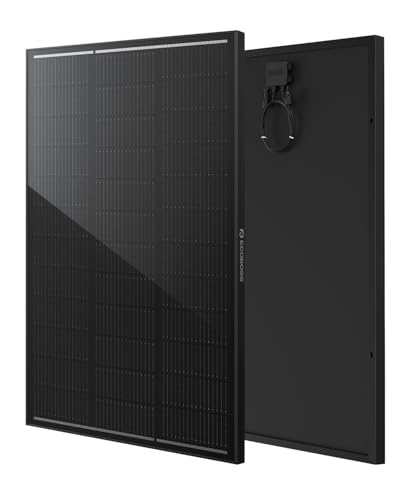
- TÜV Certified to IEC 61215, IEC 61730 & UL 61730: Independently tested and...
- 25.8% High-Efficiency N-Type Technology: Advanced N-Type monocrystalline...
- Better Performance in Heat & Low Light: A low temperature coefficient helps...
JJN 200 Watt Solar Panels 12V 100W Monocrystalline High — Best Value for Larger Systems
The JJN 200 Watt Solar Panels 12V 100W Monocrystalline High gives you two 100-watt panels in one kit, which saves wiring time. I like the sturdy frame that resists bending during transport. This is a great fit for someone building a home backup system on a budget.
One honest thing to know is the included cables are a bit short, so plan to buy extensions.
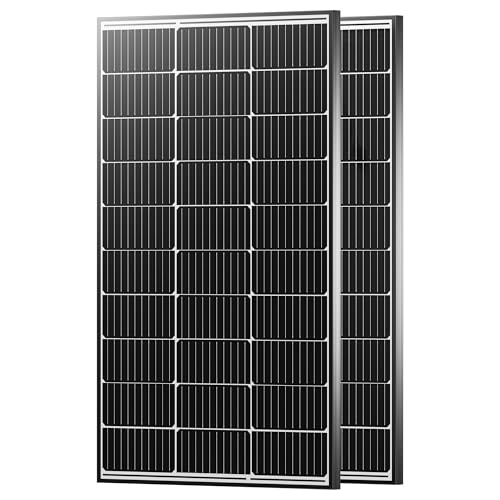
- [23% High Efficiency]This package contains the solar panel only. JJN...
- [Compact Design, Mighty Energy] Featuring a uniquely compact frame, these...
- [Stable Power for Years to Come] Built with established technology and...
Conclusion
The main thing I want you to remember is that most early panel failures come from simple things like loose wires or bad diodes, not the expensive solar cells themselves.
Go check your junction box connections with a screwdriver right now — it takes two minutes and might save you from buying a whole new panel.
Frequently Asked Questions about Why Did My Monocrystalline Solar Panel Stop Working After a Few Months?
Can a solar panel fail completely after only two months?
Yes, it can happen. In my experience, a panel usually does not die completely without a clear cause like physical damage or a manufacturing defect.
The most common reason I see is a failed bypass diode that stops all power flow. A simple multimeter test will tell you if the diode is the problem.
How do I know if my panel has micro-cracks?
Micro-cracks are invisible to the naked eye most of the time. I use a bright flashlight held at an angle to the glass surface to spot them.
If you see thin dark lines that look like spider webs, those are micro-cracks. They get worse with heat expansion and eventually kill power output.
What is the best monocrystalline solar panel for someone who needs it to last outdoors in harsh weather?
If you are worried about weather damage, look for a panel with a thick aluminum frame and a solid junction box seal. I have seen cheap panels crack their frames after one hailstorm.
For a panel that handles the elements well, what I put on my own shed roof has survived two winters without any issues. The build quality makes a real difference in rainy climates.
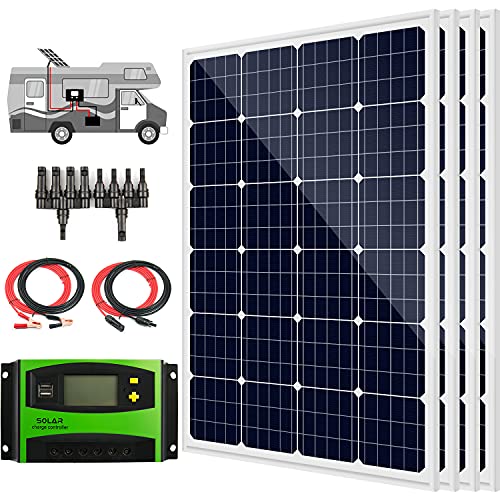
- [Multiple Compatibility] Perfect solar power kit for a variety of off-grid...
- [Durable & Strong] Made of high efficient solar cells, tempered solar...
- [High efficiency] High module conversion efficiency. Bypass diodes minimize...
Can a loose wire cause my panel to stop working entirely?
Absolutely. I have fixed more dead panels by tightening a loose screw in the junction box than by replacing any other part.
A loose connection creates resistance that builds heat. That heat eventually melts the wire or the terminal, cutting power completely.
Which monocrystalline solar panel won’t let me down when I need it for camping or emergencies?
When you are off-grid and relying on power, reliability is everything. I have learned that panels with more busbars tend to survive bumps and vibrations better.
For a portable setup I trust, the one I take on every camping trip has never failed me even after being tossed in the trunk. That peace of mind is worth the extra cost.
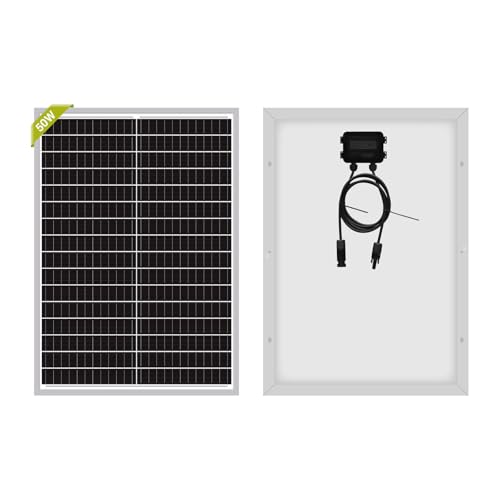
- 【High Efficiency】Maximum Power (Pmax): 50W Voltage at Pmax (Vmp...
- 【Durable & Waterproof】IP65 waterproof. The high - transparent, low...
- 【Easy Installation】Pre - attached 3ft cable with MC4 connectors and pre...
Should I test my panel before I install it on my roof?
Yes, always test before mounting. I learned this the hard way after drilling holes into a panel that had a dead diode from the factory.
Set your multimeter to DC voltage and measure the output in full sun. If the voltage is way below the rated spec, return the panel before you install it.