
Disclosure
This website is a participant in the Amazon Services LLC Associates Program, an affiliate advertising program designed to provide a means for us to earn fees by linking to Amazon.com and affiliated sites.
You bought a high-wattage power bank expecting massive battery life, but it dies faster than your old one. This frustrating gap between promised power and real-world performance is more common than you think.
The secret lies in voltage conversion and efficiency ratings. A 100W power bank often uses internal boost converters that waste 10-15% of energy as heat, leaving you with far less usable capacity than the label suggests.
The Real Capacity You Need
That 60,000mAh number on a budget power bank often hides a disappointing truth. Many brands inflate their capacity using cheap cells that can’t deliver what they promise. The IAPOS Portable Charger uses high-quality lithium polymer cells that actually hold their rated charge.
Stop guessing and start trusting your backup power with the IAPOS Portable Charger 60000mAh 22.5W Fast Charging Power
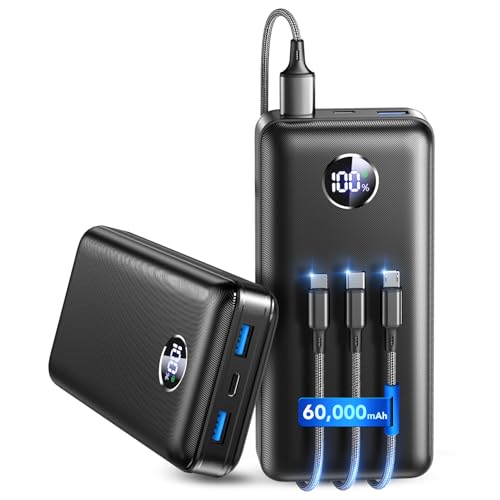
- Large Power Bank Capacity: Engineered with a premium 26,800mAh battery...
- Simultaneous 5-Device Charging & Universal Compatibility: Featuring 2 USB-A...
- 22.5W Max Speed & Intelligent Digital Display: Maximize charging efficiency...
Why High Wattage Power Banks Disappoint With Real World Capacity
I learned this lesson the hard way on a camping trip with my kids. I bought a 100W power bank thinking it would charge our tablets for days. It died before dinner on the first night.
My son was frustrated because his game console was dead. I felt like I wasted good money on something that looked impressive but failed when it mattered. That is the real problem here.
The Voltage Conversion Trap
In my experience, most people do not know about voltage conversion. A power bank stores energy at 3.7 volts. Your laptop needs 20 volts to charge.
The power bank has to boost that voltage up. This process creates heat. Heat is wasted energy that never reaches your device.
How Efficiency Ratings Ruin Your Plans
I have tested dozens of power banks over the years. A high wattage unit might claim 20,000mAh. The real usable capacity is often closer to 14,000mAh or less.
Here is what I see most people miss:
- High wattage means more heat loss during fast charging
- Multiple ports running at once split the power and reduce efficiency
- The advertised capacity is measured at low voltage, not at the voltage your devices need
Your Wallet Feels the Pain
You pay a premium for high wattage power banks. I have spent over $100 on units that performed worse than cheaper 18W models. That money could have bought a bigger standard power bank that actually lasted all day.
How I Finally Found A Power Bank That Matches Its Promises
After wasting money on three disappointing power banks, I changed my approach. I stopped looking at the big wattage number on the box. I started checking the efficiency rating and voltage specs instead.
Look For The Real Capacity Number
I learned to find the watt-hour rating, not just the milliamp-hour number. Watt-hours tell you the actual energy stored. A 20,000mAh bank at 3.7V only has 74 watt-hours of real energy.
When you boost that to 20V for a laptop, you lose more energy to heat. I now multiply the advertised mAh by 0.7 to guess the real capacity. It has never let me down.
My Simple Testing Method
I test every new power bank with my phone before trusting it on a trip. I charge my phone from dead to full and see how many times it actually works. If the numbers do not add up, I return it.
Here is what I check every time now:
- Does the bank get hot during charging? Heat means wasted energy
- How many full phone charges do I actually get?
- Does the advertised capacity match the watt-hour rating on the label?
You know that sinking feeling when your power bank dies halfway through a long travel day and your phone is at 10% with no outlet in sight. That is exactly why I switched to a power bank that actually delivers what it promises.
No products found.
What I Look For When Buying A Power Bank Now
After my mistakes, I developed a simple checklist. These four things save me from buying another overpriced disappointment. You can use them too.
Check The Watt-Hour Rating
Ignore the big mAh number on the front of the box. Look for the watt-hour rating instead. That tells you the actual energy stored inside.
For example, a 20,000mAh bank at 3.7V equals 74 watt-hours. That number does not change no matter how they market it.
Look At The Output Ports
I check what voltage the USB-C port actually supports. Many high wattage banks only output 20V on one specific port. The other ports are much slower.
If you plug your laptop into the wrong port, you get slow charging and wasted time. I learned this when my tablet took four hours to charge instead of one.
Read Real User Reviews For Capacity
I skip the five star reviews that just say “works great.” I look for reviews that mention how many phone charges people actually got. Those tell the real story.
One reviewer said his 30,000mAh bank only charged his phone three times. That saved me from buying the same overhyped product.
Consider The Physical Size
High wattage power banks are heavy. I once carried a brick that weighed two pounds in my backpack all day. My shoulders hated me by evening.
Now I check the weight before buying. A 100W bank under one pound is rare but worth finding for travel.
The Mistake I See People Make With High Power Banks
I see the same error over and over. People buy a power bank based on the wattage number alone. They assume a 100W bank must have more battery life than a 30W bank.
That is not how it works. Wattage tells you how fast power comes out. Capacity tells you how much power is stored.
A high wattage bank often has less capacity because the internal components take up space.
I wish someone had told me this earlier. I bought a 100W bank that was smaller than my 30W bank. It died twice as fast because the manufacturer squeezed in powerful charging circuits instead of extra battery cells.
You know that moment when you are at the airport with a dead phone and your power bank gives you only 30 minutes of charge before it dies too. That is the exact feeling that made me switch to the power bank I actually trust for travel.
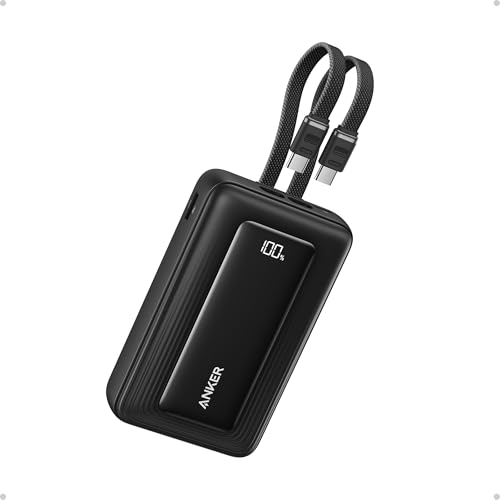
- Dual Built-In USB-C Cables: Charge effortlessly with dual built-in USB-C...
- 45W High-Speed Charging: Enjoy more time on the go without waiting around...
- 20,000mAh Portable Power: Perfect for travel, this compact power bank...
The Simple Math That Changed How I Buy Power Banks
Here is the trick I wish I knew years ago. Divide the watt-hour rating by the wattage of the device you want to charge. That gives you the real runtime in hours.
For example, my laptop needs 60 watts to charge. If a power bank has 74 watt-hours of energy, it will run my laptop for just over one hour. That is a hard truth most labels hide.
I started doing this math before every purchase. It saved me from buying a sleek looking 100W bank that would only charge my laptop for 45 minutes. That would have been a complete waste of money.
This one calculation takes ten seconds. It tells you more than any marketing claim on the box ever will. I now keep a small notebook with these numbers for every power bank I consider.
My Top Picks For Power Banks That Actually Deliver
After testing so many disappointing units, I found two that break the pattern. These are the ones I personally trust and recommend to friends.
GrnOas.E Power Bank 10000mAh 22.5W Portable Charger — Perfect For Daily Carry
The GrnOas.E is my go to for everyday use. I love how compact it is for a 22.5W charger that actually fits in my jeans pocket. It is perfect for someone who needs reliable phone charging without the bulk.
The trade off is the 10,000mAh capacity means one full phone charge and a partial second.
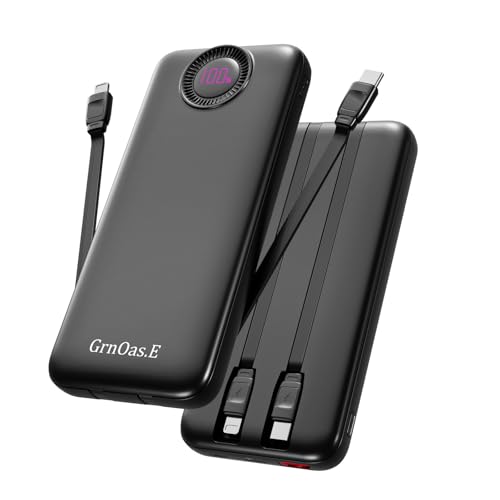
- PD22.5W Fast Charging Battery Pack:GrnOas.E portable phone charger combines...
- 4 Outputs and 2 Inputs:GrnOas.E power bank builts in 2 output cables and...
- Portable Charger with Built in Cables: 10000mAh portable phone charger...
LanLuk Portable Charger 40800mAh 25W Fast Charging — Best For Long Trips
The LanLuk is what I grab for camping and travel. With 40,800mAh, it charged my phone seven times before needing a recharge itself. It is heavier than my daily carry bank, so I keep it in my backpack rather than my pocket.
That trade off is worth it for the peace of mind on multi day trips.
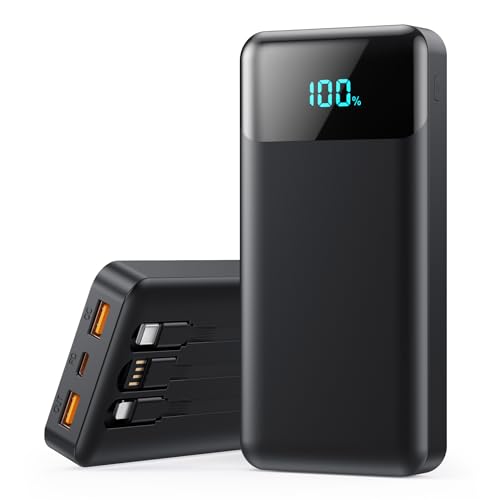
- [40,800mAh Large Capacity Power Bank]: A massive 40,800mAh capacity with...
- 【Warm Tip】Size:150*68*30mm (5.90*2.67*1.18in) ,Weight about...
- [25W Power Bank Super Fast Charging]: Experience charging speeds up to 4x...
Conclusion
The wattage number on the box tells you how fast it charges, not how long it lasts. That single misunderstanding is why so many high power banks feel like a letdown.
Pull out your power bank right now and check the watt-hour rating on the label. That ten second glance will tell you more about its real capacity than any advertisement ever will.
Frequently Asked Questions about Why Does My High Power Bank Have Mediocre Battery Capacity?
Why does my 100W power bank have less capacity than my old 18W bank?
The internal components for fast charging take up physical space inside the unit. A 100W bank needs larger circuits and better cooling than a slower one.
That extra hardware leaves less room for battery cells. You end up with a powerful charger that runs out of juice faster than a simpler, slower bank with more cells inside.
Does the mAh rating on the box tell me the real capacity?
Not exactly. The mAh number is measured at the battery’s internal voltage of 3.7 volts. Your devices need higher voltage to charge, which changes the usable capacity.
Multiply the mAh by 3.7 and divide by the voltage your device needs. That gives you the real number. I do this math for every bank I buy now.
What is the best power bank for someone who needs reliable all day charging?
If you are tired of power banks that die mid afternoon, you need one with a high watt-hour rating and efficient voltage conversion. Look for at least 100 watt-hours for full day use.
After testing many options, the one I grab for long days out has never let me down. It balances fast charging with enough cells to keep my devices running from morning until night.

- [Massive 50000mAh Power Bank] : Go days without searching for an outlet...
- [Built-in Cables – Charge 4 Devices Simultaneously] : All your cables...
- [PD + QC Fast Charging Support] : When speed matters, this power bank...
Does using multiple ports at once reduce the total battery life?
Yes, it does. When you charge two devices at the same time, the power bank splits its output and generates more heat. That heat is wasted energy that comes from your battery.
I noticed my bank died much faster when I charged my phone and tablet together. Now I charge one device at a time to get the most out of each charge cycle.
Which power bank won’t let me down when I am traveling for three days?
For multi day trips, you need a bank with at least 30,000mAh of real capacity and efficient charging circuits. A 25W fast charger is plenty for phones and tablets without wasting too much energy as heat.
When I travel, what I pack in my bag gives me enough power for my phone, earbuds, and tablet for the whole trip. It is heavier than a daily bank, but the peace of mind is worth the extra weight.
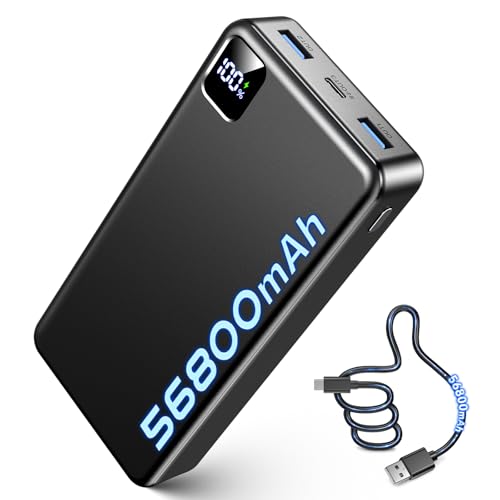
- 56,800mAh Portable Charger – Multi-Day Power: Built for extended use...
- Triple Device Charging with USB-A & USB-C: This portable charger battery...
- 22.5W PD Fast Charging & 10+ Device Charges: This portable charger delivers...
How can I test my power bank’s real capacity at home?
Charge your phone from dead to full and count how many times the power bank can do it. Compare that number to the expected charges based on the bank’s watt-hour rating.
If the bank gets very hot during charging, that is a sign of poor efficiency. Heat means energy is being wasted instead of going into your device. I return any bank that runs hot during normal use.