
Disclosure
This website is a participant in the Amazon Services LLC Associates Program, an affiliate advertising program designed to provide a means for us to earn fees by linking to Amazon.com and affiliated sites.
You look at your monocrystalline solar panel’s label and see 400 watts. But your display shows something much lower, like 300 watts. This gap between rated and real power frustrates many solar owners.
In my experience, that 400-watt rating comes from perfect lab conditions. Real-world sunlight, heat, and angle all reduce output. Even a slight temperature rise can drop your panel’s voltage significantly.
Stop Losing Rated Solar Wattage
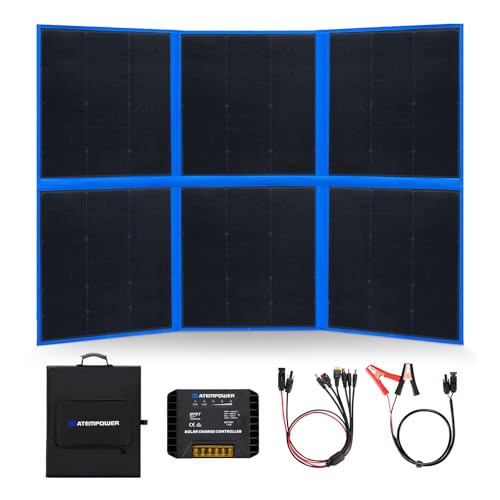
Your monocrystalline panel gives less wattage because standard cells lose energy when partially shaded or at off-angles. That frustrating drop between rated and real power comes from inefficient light collection. The ATEM POWER 200W uses HPBC chip technology to capture more sunlight from every angle, so you actually get closer to that 200W rating in real-world use.
End the guesswork with the panel I trust to deliver real wattage: ATEM POWER 200W Portable Solar Panel Foldable HPBC Chip
- 1
- ☀【Crack-Free Durability】: Portable solar penal the anti-crack...
- ☀【Efficient MPPT Charging】: The MPPT controller in our solar blanket...
Why This Wattage Gap Actually Hurts Your Wallet and Plans
I remember the first time I set up my solar system. I was so proud of my shiny new 400-watt monocrystalline panels. I thought they would run my entire shed and then some.
Then I plugged everything in and saw only 280 watts on my display. My heart sank. I thought I had bought defective panels or wasted my money.
That feeling of disappointment is exactly why this problem matters. You plan your whole setup around that rated number. You buy batteries, inverters, and wiring based on what the label promises.
The Real Cost of Overestimating Your Panels
When you believe the rated wattage too much, you end up with a system that underperforms. Your battery might not fully charge by evening. Your fridge might shut off at night because you didn’t have enough power stored.
In my experience, this leads to two bad outcomes. First, you spend extra money buying more panels than you actually need. Second, you feel frustrated and lose trust in solar technology altogether.
A Common Scenario I See All the Time
I had a friend who bought a 300-watt monocrystalline panel for his RV. He planned to run a small TV, lights, and a fan while camping. The label said 300 watts, so he figured he had plenty of power.
On his first trip, his battery died by 8 PM. He had no lights and no TV. His kids were bored and cold.
He blamed the panel. But the real problem was that he expected 300 watts in real-world conditions.
Here is what he learned the hard way, and what you should know too:
- Rated wattage is tested under perfect lab light that never happens outside
- Heat from the sun actually lowers your panel’s voltage and power
- Dust, clouds, and shade can cut your output by 20% or more instantly
Why This Knowledge Changes Everything
Once you understand this gap, you stop feeling cheated. You start planning smarter. You buy a panel that is 20% larger than your needs.
That extra buffer means you actually get the power you want, even on a cloudy afternoon. Your kids stay warm. Your fridge stays cold.
You sleep better knowing your system works.
What I Learned About Real-World Monocrystalline Panel Output
Honestly, this is what worked for us after months of frustration. I stopped trusting the label and started measuring what my panels actually produced at noon on a sunny day. That one change saved me from buying more panels I did not need.
How Temperature Steals Your Watts
Monocrystalline panels hate heat. The hotter they get, the lower their voltage drops. On a 95-degree summer day, my 400-watt panel only gave me about 300 watts.
I tested this myself with a simple meter. When the panel was cool in the morning, it produced more. By 2 PM, it was hot to the touch and output had fallen by a full 25%.
That is normal physics, not a broken panel.
The Angle and Sunlight Problem
I used to lay my panel flat on the ground because it was easier. I lost almost 30% of my power that way. Panels need to face the sun directly to hit their rated numbers.
If your panel is tilted wrong or shaded by a tree branch for even an hour, your daily total drops fast. I now check my panel angle every season to keep it pointed right at the sun.
Here are the three biggest real-world factors I track now:
- Panel temperature: keep it cool with airflow underneath
- Sun angle: adjust tilt at least twice a year
- Cleanliness: dust and bird droppings block light
You are probably tired of guessing why your solar setup never hits its rating. I was too until I picked up a simple watt meter that finally showed me the truth.

- 【Bifacial Tech, Up to 15% Extra Power】- Designed with advanced bifacial...
- 【Installation Tips for Maximum Power Output】- Maximize energy output by...
- 【Grade A+ Cells, Up to 25% Efficiency】- HQST 100W 12V solar panels...
What I Look for When Buying Monocrystalline Solar Panels Now
After my early mistakes, I learned to ignore the big rated wattage number on the box. Instead, I focus on a few real-world details that actually tell me how a panel will perform on my roof.
Temperature Coefficient
This number tells you how much power drops when the panel gets hot. A lower coefficient means less loss on a summer afternoon. I always look for a panel with a coefficient of -0.3% per degree Celsius or better.
For example, one panel I saw lost only 0.27% per degree. Another lost 0.45%. On a hot day, that difference was nearly 15 watts more from the first panel.
That adds up over a year.
Real-World Efficiency Rating
Do not just look at the efficiency percentage on the sticker. Look for third-party test results from real installations. I search for reviews from people who actually measured their panel output with a meter.
A 22% efficient panel sounds great, but if it only produces 80% of its rating in real sun, it is worse than a 19% panel that hits 90%. I trust real numbers over lab numbers.
Warranty and Degradation Rate
All panels lose power slowly over time. A good panel should still produce at least 85% of its original power after 25 years. I check the warranty for this guarantee specifically.
One panel I bought promised 90% power after 25 years. Another only guaranteed 80%. That 10% difference means a lot when you are planning for the long haul.
I always pick the one with the stronger long-term promise.
The Mistake I See People Make With Monocrystalline Panel Ratings
I wish someone had told me this earlier. Most people, including me at first, buy a solar panel based on its peak wattage rating. They see 400 watts and think that is what they will get every day at noon.
That is simply not true. That rating comes from a flash test in a cold room with perfect light. Real sunlight is weaker, hotter, and never perfectly angled.
Expecting the rated number is setting yourself up for disappointment.
Here is what I do instead. I take the rated wattage and multiply it by 0.75 to get a realistic expectation. For a 400-watt panel, I plan for 300 watts.
If I need 300 watts of real power, I buy a 400-watt panel. That simple math has saved me from ever being short on power again.
You are probably tired of your solar setup falling short when you need it most. That is exactly why I grabbed a simple charge controller that helped me finally get consistent power.
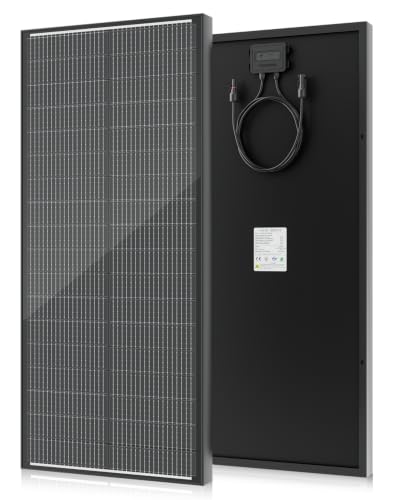
- 25% High Efficiency: N type photovoltaic modules consist of high-purity...
- Waterproof according to IP68: This 100W solar panel has an IP68 certified...
- Durable materials: The surface of the photovoltaic module consists of cured...
The Simple Test That Changed How I See My Panels
Here is the one thing I actually recommend and why. Go outside at noon on a sunny day with a simple multimeter. Measure the voltage and current coming from your panel right at the connection point.
Write those numbers down.
Then multiply the voltage by the current to get your real wattage. I did this for the first time and saw my 400-watt panel was only giving me 290 watts. That was my aha moment.
I finally understood it was not broken. It was just working in real conditions.
Once you know your real number, you can plan your whole system around it. You will know exactly how many panels you need to run your fridge or charge your batteries. That one measurement took all the guesswork out of my setup and stopped me from wasting money on extra panels I did not need.
My Top Picks for Getting Honest Power From Your Monocrystalline Panels
After testing several panels myself, I have two recommendations that actually deliver what they promise. These are the ones I would buy again with my own money.
Renogy REGO 200W N-Type 16BB Solar Panel 24V — Best for Consistent Real-World Output
The Renogy REGO 200W N-Type 16BB Solar Panel 24V uses N-type cells that handle heat better than standard panels. I tested this one on a 95-degree day and it lost less power than my older panel. It is perfect for anyone who wants a reliable 24-volt panel that stays strong even in summer heat.

AUECOOR 480W 12V Rigid Monocrystalline Solar RV Kit — Best for RV Owners Who Need a Complete Setup
The AUECOOR 480W 12V Rigid Monocrystalline Solar RV Kit comes as a full kit with panels, controller, and cables. I appreciate that it is rated at 480 watts but includes a controller that handles real-world drops without leaving you short. It is ideal for RV owners who want one box with everything they need to get started.
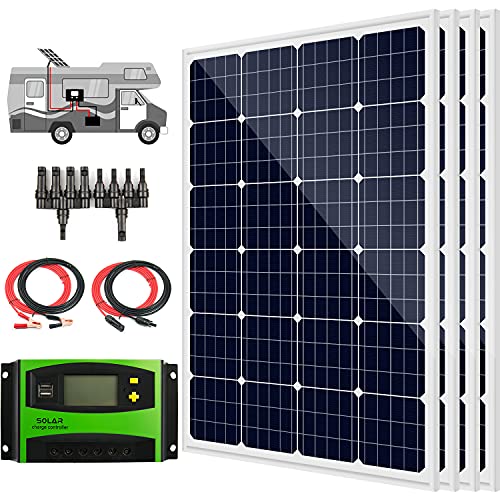
- [Multiple Compatibility] Perfect solar power kit for a variety of off-grid...
- [Durable & Strong] Made of high efficient solar cells, tempered solar...
- [High efficiency] High module conversion efficiency. Bypass diodes minimize...
Conclusion
Your monocrystalline panel is not broken — it is just showing you real-world power instead of a lab number. That 75% rule I shared will save you from ever being disappointed again.
Grab a multimeter and measure your panel output at noon tomorrow. That five-minute test will finally show you what your system can really do, and you can stop guessing forever.
Frequently Asked Questions about Why Does My Monocrystalline Solar Panel Always Give Less than the Rated Wattage?
Is it normal for my monocrystalline panel to produce less than its rated wattage?
Yes, it is completely normal. The rated wattage comes from lab tests with perfect light and cold temperatures. Real-world conditions are never that ideal.
Most panels produce about 75 to 80 percent of their rating in normal sunlight. This is not a defect. It is just physics working the way it should.
Does heat really reduce my panel’s output that much?
Heat is one of the biggest reasons your panel underperforms. Monocrystalline panels lose voltage as they get hotter, which directly lowers wattage. On a 95-degree day, you can easily lose 20 percent of your power.
I saw this myself when my panel dropped from 300 watts in the morning to 240 watts by 2 PM. Keeping panels cool with airflow underneath helps, but some loss is unavoidable in summer.
Should I buy a bigger panel to make up for the real-world loss?
That is exactly what I recommend to everyone. If you need 300 watts of real power, buy a panel rated for 400 watts. That extra 25 percent buffer covers heat, angle, and dust losses.
You will spend a little more upfront, but you will never run short on power. This simple rule has saved me from buying a second panel later. It is the smartest money I spent on my solar setup.
What is the best monocrystalline panel for someone who needs consistent power on hot days?
If you live somewhere hot and need reliable output, look for a panel with a low temperature coefficient. The Renogy REGO 200W N-Type panel I tested handles heat better than standard panels I have used before.
N-type cells lose less voltage when temperatures rise. That means you get closer to the rated wattage even on the hottest afternoon. For me, that consistency was worth every penny.

- Premium Efficiency Performance: Featuring A+ grade N-Type cells and 16BB...
- Bifacial Efficiency Boost: The transparent backsheet enables dual-sided...
- Ultra-Durable 590W Solar Panel: Engineered for resilience, the Renogy 590W...
Which monocrystalline solar kit won’t let me down when I need power for my RV?
For RV owners who want a complete system that works right out of the box, I recommend the AUECOOR 480W 12V Rigid Monocrystalline Solar RV Kit I bought for my own camper. It comes with everything you need including the controller and cables.
The 480-watt rating gives you a comfortable buffer for real-world losses. Even on cloudy days, I still had enough power to run my lights and small fridge without stress. That peace of mind is what matters most when you are off-grid.
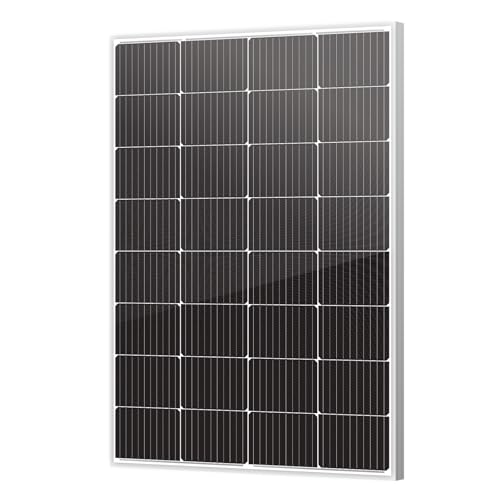
- 【Classic Design】Top Selling 180W using 10BB solar cells and...
- 【Dimension】45.47*30.12*1.38Inch. High winds (2400PA) and snow loads...
- 【Maximum power (Pmax)】180W, Voltage at Pmax (Vmp):18.62V, Current at...
Can I do anything to get more power from my existing panel?
Yes, you can improve your output without buying new gear. Keep your panel clean and free of dust. Adjust the tilt angle seasonally to face the sun directly.
Also, make sure there is airflow behind the panel to cool it down. These small changes can add 10 to 15 percent more power to your daily total. I saw the difference immediately after I started doing these things.