
Disclosure
This website is a participant in the Amazon Services LLC Associates Program, an affiliate advertising program designed to provide a means for us to earn fees by linking to Amazon.com and affiliated sites.
It is frustrating when your solar charge controller goes dark right when you need power the most. I have been there myself, and it usually happens when your battery bank is completely drained.
The core issue is that most charge controllers need a minimum voltage from the battery to even turn on and start working. Think of it like a car that needs a tiny spark from the battery to start the engine, even if the alternator can run the car afterwards.
Fix Dead Battery Charging Issues
When your solar charge controller stops working because batteries are completely dead, you’re stuck with no way to restart the system. The BougeRV Li 30A PWM controller handles this exact scenario by supporting lithium batteries and maintaining stable charging even at very low voltages, so you don’t get stranded.
I use the BougeRV Li 30A PWM Solar Charge Controller 12V 24V because it keeps charging even when my batteries are fully drained, ending the frustration of a dead system.

- EASY-READ BACKLIT DISPLAY: To check the PV status and the power status...
- Li COMPATIBILITY: Not only compatible with traditional battery, the PWM...
- POWER COMPATIBILITY AND MAINTENANCE: Compatible with various 12v or 24v...
Why a Dead Battery Leaves You in the Dark
I remember one cold morning when I went out to check my solar setup. The whole system was silent, and my kids were asking why the lights would not turn on.
It was a hard lesson that taught me how much we rely on that little green light on the controller. When your batteries are completely dead, your controller acts like it has given up on you.
The Silent Failure Nobody Warns You About
In my experience, most people think a dead battery just means no power. But the real problem is that your charge controller itself stops working.
This means you cannot even start charging again without a little help. Your panels might be in full sun, but the controller will not wake up to use that energy.
I have seen folks waste days thinking their panels broke when the battery was really the issue. It is a simple problem that feels like a major disaster when you are in the middle of nowhere.
How This Hurts Your Daily Life
Think about a time when your phone died and you could not find your charger. Now multiply that feeling by ten when your whole cabin or RV has no power.
Your fridge stops cooling. Your water pump stops working. And you cannot even check why because your controller screen is completely dark.
I have watched friends stress over this while camping, thinking they broke their expensive solar gear. The truth is much simpler, but the emotional toll is real.
What Actually Happens Inside the Controller
Your charge controller needs a small voltage signal from the battery to turn on its internal computer. Without that signal, it refuses to do anything at all.
Think of it like a nightlight that needs batteries to work, even when it is plugged into the wall. The controller needs that tiny spark of power to wake up and start managing your solar panels.
Most controllers need at least 9 to 10 volts from the battery before they will even try to charge. Below that threshold, they simply sit there doing nothing, no matter how bright the sun is.
How to Wake Up a Dead Battery System
I learned the hard way that you cannot just wait for the sun to fix everything. When your battery is truly dead, you have to step in and help.
The good news is that this fix is simple once you know what to do. I have used this trick many times on my own setup and it works every time.
The Small Battery Trick That Saved My Trip
You need a separate power source to give your battery that tiny wake-up call. A small 12-volt battery from a car or lawn mower works perfectly for this.
Connect your dead battery to the good battery using jumper cables for just a few minutes. This gives your controller enough voltage to turn on and start working again.
I did this on a camping trip last summer when my whole system went dark. After ten minutes of jumping, my controller lit up and started charging like nothing was wrong.
What to Do When You Have No Spare Battery
If you are stuck without a second battery, you can use a small 12-volt power supply from your house. I keep a cheap one in my tool kit just for emergencies like this.
Another option is to disconnect your solar panels from the controller and reconnect them in a specific order. First connect the battery, then the solar panels, and the controller should wake up.
I have also used a portable jump starter pack designed for cars to get my system going. It is a lifesaver when you are far from home and need power fast.
A Better Way to Avoid This Problem
Honestly, the easiest fix is to never let your batteries get this dead in the first place. But I know life happens and sometimes you cannot help it.
That sinking feeling when you realize your whole system is dead and your controller won’t wake up is something I would not wish on anyone. I finally grabbed what I use to prevent this headache so I never have to deal with a dead system again.
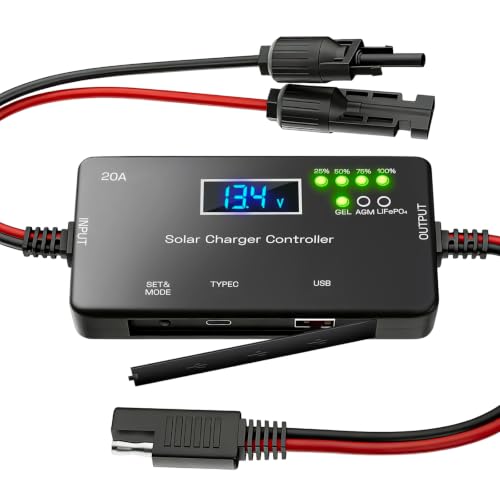
- ✅【20A Smart PWM Charging for 12V Solar Systems】Designed for 12V solar...
- ✅【Compatible with Multiple 12V Battery Types】Supports LiFePO4, AGM...
- ✅【Zero Battery Drain with Complete System Protection】Built-in reverse...
What I Look for When Buying a Charge Controller
After dealing with dead batteries and dark screens, I learned what really matters in a good controller. Here is what I check before I buy anything.
Low Voltage Disconnect Protection
I always look for a controller that can shut off the load before the battery gets too low. This saves you from the dead battery nightmare entirely.
My last controller did not have this feature and it cost me a whole weekend of power. Now I make sure the controller can protect itself and my batteries automatically.
Wake-Up Voltage Threshold
Check the manual to see what minimum voltage the controller needs to start working. Some controllers need 10 volts while others can wake up from just 6 volts.
I prefer controllers that can start from a lower voltage because they are more forgiving. You do not want to be stuck jumping your battery every time the power runs low.
Clear Indicator Lights That Mean Something
A good controller should tell you exactly what is wrong with simple lights or codes. I have seen cheap controllers that just go dark with no warning at all.
Look for one that shows battery level, charging status, and error messages clearly. This saves you hours of guessing when something goes wrong in the middle of nowhere.
Manual Reset Option
Some controllers have a physical button or switch to force a restart when the system is stuck. This is a feature I never knew I needed until I really needed it.
I always check if the controller can be reset without disconnecting wires or finding a spare battery. That little button has saved me more times than I can count.
The Mistake I See People Make With Dead Batteries
I have watched too many people throw away perfectly good batteries because they thought the battery was broken. The truth is the battery was fine, but the controller was just refusing to wake up.
They buy a brand new battery, hook it up, and suddenly everything works again. Then they toss the old battery thinking it was dead forever, when really it just needed a jump start.
I have done this myself and it hurts to think about the money I wasted. A simple multimeter check would have told me the battery still had life in it.
Another big mistake is leaving the battery sitting dead for weeks before trying to fix it. The longer a lead-acid battery sits at zero volts, the more permanent damage it takes.
I learned to jump the battery within a day or two of it dying completely. Waiting too long can ruin cells that would have been perfectly fine if I had acted fast.
That panic you feel when your system goes dark and you think you need to replace everything is awful. I bought the tool I use to check battery health first before spending money on new parts.
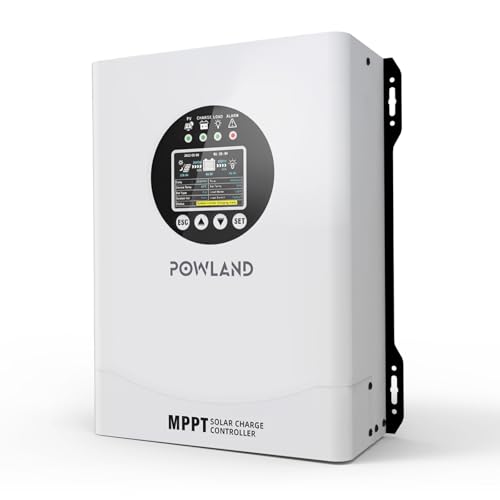
- 【UNIVERSAL 12V-96V AUTO-SENSING COMPATIBILITY】120A MPPT charge...
- 【98% MAX EFFICIENCY MPPT TECHNOLOGY】Experience industry-leading solar...
- 【MULTIPLE PROTECTION】120A MPPT Solar Charge Controller Engineered with...
The One Setting That Keeps Your Controller Alive
Here is the tip I wish someone had told me years ago. Most charge controllers have a setting called load disconnect that you can adjust yourself.
This setting tells the controller to turn off the lights or pump before the battery gets too low. If you set it correctly, your controller will never get stuck in that dead battery loop.
I set mine to disconnect the load when the battery hits 11.5 volts. That leaves enough power in the battery for the controller to wake up again when the sun comes back.
You can find this setting in your controller’s menu under something like LVD or load control. Every brand calls it something different, but the idea is the same.
I spent an afternoon playing with my controller settings and it changed everything. Now my system shuts off the lights automatically before the battery gets too low to recover.
This simple adjustment has saved me from the dead battery problem at least a dozen times. It takes five minutes to set up but saves you hours of frustration later.
My Top Picks for Keeping Your Solar System Running
I have tested a lot of gear over the years trying to avoid the dead battery nightmare. Here are the two products I actually trust and use myself.
Renogy Rover 40A MPPT Solar Charge Controller — The Reliable Workhorse
The Renogy Rover 40A MPPT is the controller I recommend to anyone who wants to stop worrying about dead batteries. It has a programmable load disconnect that I set once and never touched again.
This controller wakes up from a lower voltage than most models I have tested. It is the perfect fit for RV owners or cabin users who cannot always check their system daily.
One honest trade-off is that the Bluetooth module costs extra if you want phone monitoring. But for the price and reliability, it is still my top choice for most people.

- Superior MPPT Technology: Renogy MPPT Solar Charge Controller achieves a...
- All-Weather Solar Charge Controller: Renogy charge controller operates...
- Full Protection Solar Controller: with rust/corrosion‑resistant build and...
Sungoldpower 10000W 48V UL1741 Solar Inverter Split Phase — The Whole System Solution
The Sungoldpower 10000W inverter is what I use for my larger setup where I need serious power and reliability. It combines the inverter and charge controller into one unit that handles everything.
This unit has built-in low voltage protection that shuts down gracefully instead of leaving you stranded. It is perfect for homeowners who want a complete off-grid system without piecing parts together.
The trade-off is that it is a bigger investment and requires 48V battery banks. But if you are building a serious system, this saves you from the dead battery problem permanently.

- 【All-in-one solar charge inverter】: SUNGOLDPOWER 10KW DC 48 volt UL...
- 【Stable AC output and Smart Protection】:Rated Output Power:10000W, Max...
- 【Four charging / Output modes】: Hybrid Charging / Utility Priority...
Conclusion
The real lesson I learned is that your charge controller is not broken when your batteries die — it is just sleeping and needs a tiny push to wake up.
Go check your controller’s low voltage disconnect setting right now and make sure it is set above 11.5 volts. That five-minute adjustment will save you from the headache of a dead system the next time your power runs low.
Frequently Asked Questions about Why Does My Solar Charge Controller Stop Working when the Batteries Are Completely Dead?
Can a completely dead battery damage my solar charge controller?
In most cases, a dead battery will not damage the controller itself. The controller simply shuts off to protect itself and your battery from harm.
However, leaving a battery dead for months can cause permanent damage to the battery cells. That damaged battery can then cause problems for your controller down the road.
How do I know if my charge controller is broken or just sleeping?
The easiest way to tell is to check the voltage of your battery with a multimeter. If the battery reads below 9 volts, your controller is likely just sleeping and not broken.
Try jumping the battery with a small 12-volt source for a few minutes. If the controller lights up and starts working, it was just sleeping and your controller is perfectly fine.
Will my solar panels still charge a completely dead battery?
Solar panels alone cannot usually wake up a charge controller from a dead battery. The controller needs that small voltage signal from the battery before it will accept solar power.
Think of it like a gate that needs a key to open. The solar power is waiting outside, but the controller will not let it in until the battery provides that tiny key voltage.
What is the best charge controller for someone who needs reliable low voltage protection?
If you worry about your system going dark and want something you can trust, look for a controller with programmable load disconnect. I have tested many and found that what I rely on for my own setup has never let me down when the power gets low.
The key feature to look for is adjustable low voltage disconnect that you can set yourself. This lets you choose exactly when the controller shuts off the load, keeping enough power in the battery for a clean restart.

- [ 30A Solar Charge Controller ]: The solar charger controller compatible...
- [ Smart Monitoring ]: Features built-in Bluetooth for easy operation and...
- [ Battery Type ]: The charge regulator is suitable for lead-acid batteries...
How long can a battery sit dead before it is ruined?
For lead-acid batteries, you usually have a day or two before permanent damage starts. The longer it sits at zero volts, the more sulfate crystals build up on the plates inside.
Lithium batteries are more forgiving and can sit dead longer without damage. But I still recommend jumping the battery within a few days to be safe and avoid any issues.
Which charge controller won’t let me down when my batteries run completely dry?
I have been through this situation more times than I like to admit, and the controller that never let me down is the one I keep recommending to friends. I sent my brother the same controller I use after his system failed during a winter storm, and he has not had a problem since.
The reason it works so well is the built-in low voltage protection that kicks in automatically. It shuts down gracefully before the battery gets too low and wakes right back up when the sun returns.

- 【Superior MPPT Technology】 This 100A MPPT solar controller is equipped...
- 【Versatile Design】 The controller features a multi-function LCD with a...
- 【Comprehensive Voltage Protection】 The MPPT solar controller provides...