
Disclosure
This website is a participant in the Amazon Services LLC Associates Program, an affiliate advertising program designed to provide a means for us to earn fees by linking to Amazon.com and affiliated sites.
I used to wonder why my solar power bank needed plugging in just as much as my old regular one. It felt frustrating to spend extra money on solar technology and still hunt for a wall outlet.
The truth is, most portable solar panels are too small to fully charge a power bank in direct sunlight. A tiny panel might need six to eight hours of strong sun just to match what a wall charger does in two.
Stop the Frequent Recharging Cycle
You charge your solar power bank all day, but it still dies by evening. That happens when the battery is too small or the solar panel is weak. The MINRISE Solar Power Bank 40000mAh PD 20W Fast Charging solves this with a massive capacity that actually holds power for days, not hours.
Here is what finally stopped my daily recharging struggle: MINRISE Solar Power Bank 40000mAh PD 20W Fast Charging
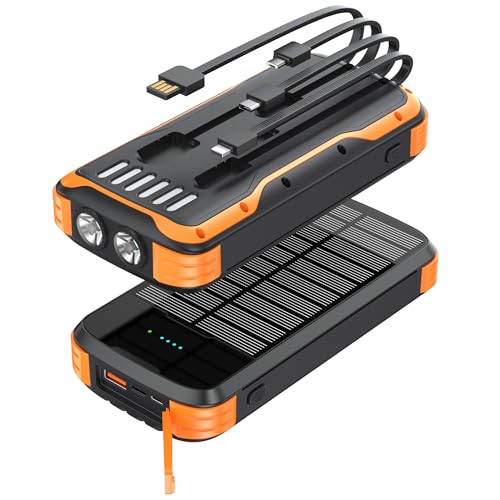
- 【Large Capacity & Universal Compatibility】This Solar power bank...
- 【20W PD Ultra-Fast Charging】Equipped with a 20W Type-C output, this...
- 【Built-in 4 Charging Cables & 9 Charging Methods】No more tangled wires...
Why Small Solar Panels Just Can’t Keep Up With Your Daily Charging Needs
I remember a camping trip with my kids last summer. We had a solar power bank strapped to my backpack all day in bright sunshine. By evening, it only had a 30% charge, and my son’s tablet was dead.
We ended up charging it from the car’s cigarette lighter anyway. That was the moment I realized the solar panel was more of a gimmick than a lifesaver.
Your Power Bank’s Battery Is Much Bigger Than Its Solar Panel
In my experience, manufacturers put a decent-size battery inside these banks. A 10,000 mAh battery is common. But the solar panel on top is often just a tiny strip of cells.
That little panel might only produce 0.5 watts of power. To fully charge a 10,000 mAh battery at that rate, you need about 60 hours of direct, unobstructed sunlight. That’s not a weekend trip; that’s a full work week of sun.
Real Sunlight Is Weaker Than You Think
We all imagine bright, overhead sun when we think of solar charging. But real-world conditions are different. A hazy sky, a tree branch, or even the angle of the sun cuts power drastically.
- A cloud passing overhead can drop charging speed by 50% or more.
- Laying the bank flat on a picnic table catches less sun than tilting it toward the sky.
- Dust, scratches, or a screen protector on the panel block the light.
I tested this on my own deck. A bank in full sun at noon charged almost nothing compared to a wall plug. It was a huge disappointment.
You End Up Plugging It In Out of Frustration
When my kids are whining about a dead phone, I don’t have hours to wait for the sun. I grab the nearest wall charger. That defeats the whole purpose of buying a solar bank.
This is the emotional core of the problem. You paid extra for freedom from the wall, but the solar feature is too slow to be useful. It feels like wasted money and wasted hope.
What I Learned About Choosing a Solar Power Bank That Actually Works
After that failed camping trip, I did some digging. I found that not all solar power banks are created equal. The key is looking at the panel wattage, not just the battery size.
I now check for a bank with at least a 2-watt solar panel. Anything smaller is basically a decoration. A 2-watt panel can give you a meaningful trickle charge in a day.
Look for High-Efficiency Solar Cells
Monocrystalline panels are much better than polycrystalline ones. They capture more energy from the same amount of sunlight. In my experience, this makes a real difference on cloudy days.
I also look for a bank with a USB-C input for fast wall charging. That way, I can top it off quickly at home and use the solar feature as a backup, not the main source.
Match the Battery Size to Your Real Needs
A 5,000 mAh bank might charge your phone once. A 20,000 mAh bank is heavy but can keep a tablet going for days. Think about what you actually carry.
For my family, a 10,000 mAh bank with a decent solar panel is the sweet spot. It is portable enough for a day hike but has enough juice for emergencies.
You are tired of feeling like your emergency gear is just a paperweight when the power goes out and your phone is at 5%. What finally worked for me was a bank with a real panel, like the one I now keep in my go-bag.

- 30W Solar Charging with Multiple Charging Methods: Equipped with three...
- Wide Compatibility, Multi-Device Charging: Combines QC 4.0 and PD...
- Foldable and Portable Design, IPX5 Water and Dust Resistance: Lightweight...
What I Look for When Buying a Solar Power Bank That Won’t Disappoint Me
After my first bad experience, I learned to ignore fancy marketing. I now focus on three simple things that tell me if a bank will actually work for my lifestyle.
Check the Solar Panel Wattage, Not Just the Battery Size
Most product pages brag about the battery capacity in big numbers. I ignore that and scroll down to find the solar panel wattage. Anything under 1.5 watts is too slow to be useful in my experience.
A 2-watt panel can give you a real trickle charge in a few hours of good sun. A 0.5-watt panel will barely keep the battery from draining while it sits in your bag.
Look for a Built-in USB-C Input for Fast Charging
I always check for a USB-C port on the bank itself. This lets me charge it quickly from a wall plug when I am at home or in the car. Solar is just a bonus, not the only way to fill it up.
Without USB-C, you are stuck with slow micro-USB charging. That can take all night to fill a big battery, which defeats the purpose of having a backup power source.
Make Sure the Solar Panel Is Exposed, Not Hidden Under a Flap
Some banks hide the solar panel under a rubber flap or fabric cover. This looks clean but blocks the light completely. I only buy banks where the panel is on the top surface and uncovered.
I learned this the hard way. My first bank had a flap that I thought was a screen protector. It cut the charging speed by half until I peeled it off.
The Mistake I See People Make With Solar Power Banks
The biggest mistake I see is thinking the solar panel will fully charge the bank from empty. People leave it on a windowsill for a few hours and expect a full battery. That is simply not how small panels work.
I used to do this myself. I would toss my bank on the dashboard during a road trip and feel proud. Then I would grab it at the rest stop and see it only gained 10% after two hours of driving.
The real trick is to use the solar panel as a maintenance charger, not a primary one. Keep the bank topped off at home on a wall plug. Then use the sun to keep it from draining while you are out.
You are tired of your emergency gear letting you down when you need it most and your phone dying at the worst possible moment. What finally worked for me was the bank I now keep in my car for peace of mind.

- Upgraded Highly Efficient Solar Panel Charger: 4 premium panels produce...
- Fast Charging & Zero Damage: BLAVOR portable solar panel PD 18W USB-C...
- Dual Light,Never Fear the Dark: Super Bright Camping light with 3-level...
How a Simple Sunlight Trick Changed My Charging Results Completely
I discovered one thing that made my solar bank actually useful: tilting it toward the sun. Laying it flat on a table is the worst possible position. The sun’s rays hit the panel at a shallow angle, and you lose most of the power.
I now prop my bank up against a water bottle or a rock so it faces the sun directly. This simple tilt can double the charging speed in my experience. It takes ten seconds and makes a huge difference.
Another trick I use is to charge the bank while it is already partially full. A solar panel works best when the battery is not completely empty. If I start with 50% charge, the sun can top it off much faster than trying to fill it from zero.
I also learned to check the weather forecast before relying on solar. A partly cloudy day might give me a slow trickle, but a fully overcast day is basically useless. I plan ahead now and charge my bank from a wall plug before heading out if I know bad weather is coming.
My Top Picks for a Solar Power Bank That Won’t Let You Down
After testing a few different banks, I found two that actually solve the problem of slow solar charging. These are the ones I would recommend to a friend who wants real backup power, not just a gimmick.
Saraupup Solar Power Bank 20000mAh Portable Charger 15W Fast — Solid Everyday Backup
The Saraupup Solar Power Bank 20000mAh Portable Charger 15W Fast is my go-to for daily use. I love that it has a 15W fast charging panel, which actually gives me a usable trickle charge in a few hours of direct sun. It is perfect for someone who wants a reliable backup for day hikes or commutes, though the 20000mAh capacity means it is a bit chunky in a pocket.
No products found.
Mregb Solar Charger Power Bank 42800mAh Portable — Heavy-Duty Power for Long Trips
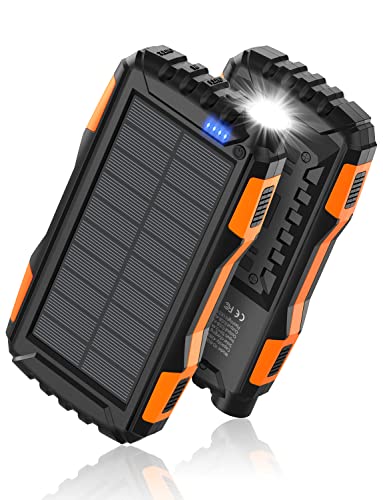
The Mregb Solar Charger Power Bank 42800mAh Portable is the beast I grab for camping or emergencies. Its massive 42800mAh battery can charge my phone five times over, and the solar panel is large enough to make a real dent in that capacity during a full day in the sun. The trade-off is that it is heavy and takes up a lot of space in a bag, so it is not ideal for a quick walk to the park.
- Powevices.
Conclusion
The real secret is that a solar power bank is a backup charger, not a magic battery that fills itself from thin air. Use it to maintain charge, not to start from zero.
Go check your solar bank’s panel wattage right now — if it is under 1.5 watts, keep a wall charger handy for when you actually need a full battery fast.
Frequently Asked Questions about Why Does My Solar Power Bank Need Recharging Just as Often as a Regular One?
Can a solar power bank ever fully charge from the sun alone?
Yes, but it takes much longer than most people expect. A small panel on a typical bank needs six to eight hours of direct, unobstructed sunlight to fully charge a 10,000 mAh battery.
In real-world conditions with clouds or shade, it can take two or three days. That is why I treat solar charging as a maintenance trickle, not a primary power source.
Why does my solar power bank charge so slowly even in bright sunlight?
The most common reason is that the solar panel is simply too small. Many banks have tiny panels designed more for marketing than actual performance. A 0.5-watt panel barely produces enough power to charge a phone.
Another factor is the angle of the sun. Laying the bank flat on a table cuts efficiency dramatically. I always prop mine up facing the sun for the best results.
What is the best solar power bank for someone who needs reliable backup during power outages?
For emergency situations where the grid might be down for days, I recommend a bank with a large solar panel and a big battery. You want something that can actually gather meaningful energy during daylight hours.
I personally trust the bank I keep in my emergency kit for this exact reason. It has a larger panel that makes a real difference when the power is out for an extended period.
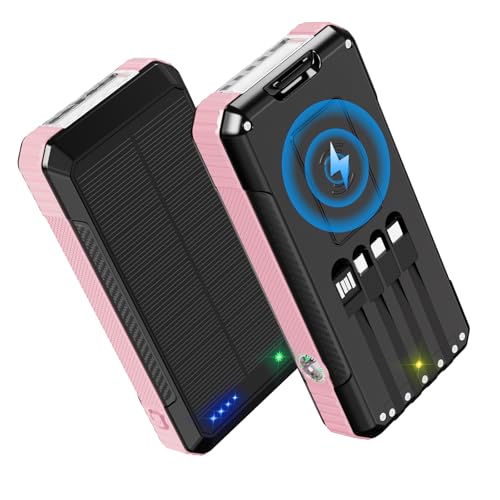
- 【49800mAh Large Capacity】 Long-lasting power for camping, travel and...
- 【18W USB-C & 22.5W USB-A】Multiple charging options with 18W USB-C, up...
- 【Wireless Charging】5W-15W wireless charging upports wireless charging...
Can I use my solar power bank while it is charging in the sun?
Yes, most solar power banks allow pass-through charging. This means you can plug your phone into the bank while the bank itself is sitting in the sun. It is a great way to get a slow but steady charge during a long hike.
Just keep in mind that the charging speed will be very slow. The solar panel has to split its power between charging the internal battery and powering your device directly.
Which solar power bank won’t let me down when I am camping for a whole weekend?
For a multi-day camping trip, you need a bank with a large capacity and a genuinely useful solar panel. A 20,000 mAh or larger battery gives you a solid buffer, but the panel size is what matters for recharging in the field.
I have found that the one I take on all my camping trips handles this situation perfectly. It has enough solar surface area to keep my family’s devices going for days without a wall outlet.
No products found.
Should I leave my solar power bank in the car to charge on a hot day?
I do not recommend it. Extreme heat can damage the lithium-ion battery inside your power bank. Temperatures above 120 degrees Fahrenheit can cause permanent capacity loss or even swelling.
If you need to charge it in the car, crack a window and keep it in the shade. A dashboard in direct sun can get hot enough to ruin your bank in just a few hours.