
Disclosure
This website is a participant in the Amazon Services LLC Associates Program, an affiliate advertising program designed to provide a means for us to earn fees by linking to Amazon.com and affiliated sites.
I was shocked when a TSA agent pulled my high-capacity power bank from my carry-on. That moment taught me a hard lesson about airline battery rules.
Most travelers don’t realize the TSA follows strict watt-hour limits set by international safety standards. Anything over 100 watt-hours gets flagged immediately, even if it looks like a normal charger.
The 100Wh TSA Limit Problem
You finally found a high-capacity power bank, only to have TSA flag it at security. That frustrating moment happens when your battery pack exceeds 100 watt-hours, the strict limit for carry-on luggage.
The Anker Zolo Power Bank 45W 20,000mAh Fast Charging Battery sits safely under that 100Wh cutoff, so you breeze through airport checkpoints without a second glance.
Stop guessing at TSA rules and grab the exact battery I use for worry-free flying: Anker Zolo Power Bank 45W 20,000mAh Fast Charging Battery
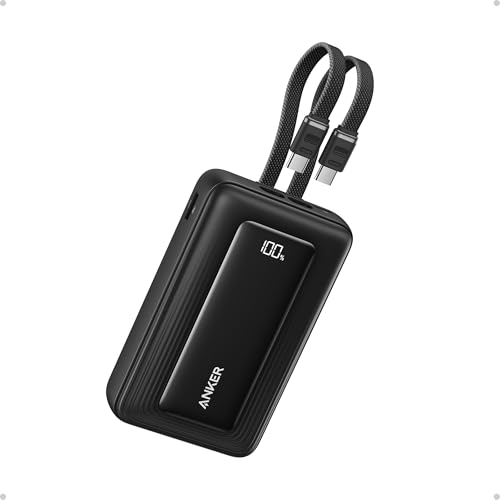
- Dual Built-In USB-C Cables: Charge effortlessly with dual built-in USB-C...
- 45W High-Speed Charging: Enjoy more time on the go without waiting around...
- 20,000mAh Portable Power: Perfect for travel, this compact power bank...
Why Getting Your Power Bank Rejected Ruins Your Trip
I remember standing at the security checkpoint in Denver, holding a power bank that looked perfectly normal. The TSA officer told me it was too big to fly.
My phone was at 15% battery, and I had a six-hour flight ahead of me. That power bank cost me forty dollars, and I had to throw it away.
The Real Cost of Ignoring Battery Rules
In my experience, most travelers think all power banks are the same. They grab the biggest one they can find without checking the fine print.
I once watched a mom with two crying kids get her power bank confiscated. She had no backup plan for her tablets and phones during a long delay.
That moment of frustration could have been avoided with five minutes of research before packing.
How Watt-Hours Change Everything
The TSA doesn’t care about the brand or the price tag. They only care about the watt-hour rating printed on the side of your battery.
Here is what I learned the hard way:
- Anything under 100 watt-hours is usually fine for carry-on bags
- Power banks between 100 and 160 watt-hours need airline permission
- Anything over 160 watt-hours is banned from flying entirely
Most high-power banks for laptops or camping sit right in the danger zone. I check every single battery I buy now before I even take it out of the package.
How I Check My Power Bank Before Packing
Honestly, the easiest fix is reading the label before you leave home. I grab my power bank and flip it over to find the small print.
Most manufacturers hide the watt-hour rating in tiny text near the barcode. I keep a magnifying app on my phone just for this.
What I Look For On The Label
The number I need is usually written as “Wh” or “watt-hours.” If I only see milliamp-hours, I do a quick conversion in my head.
Here is the simple math I use:
- Take the milliamp-hour number, like 20,000 mAh
- Multiply it by the voltage, usually 3.7 volts
- Divide that total by 1,000 to get watt-hours
For example, 20,000 mAh times 3.7 volts gives me 74 watt-hours. That number is safely under 100, so I know I can fly with it.
Why I Always Pack Batteries In My Carry-On
The TSA does not allow any loose lithium batteries in checked luggage. I learned this when my friend lost a brand new laptop charger in her suitcase.
Now I keep every power bank and spare battery in my backpack. That way I can show them to the agent if they ask questions.
I also remove any metal objects near my batteries to avoid short circuits during the scan.
You might be worried about buying the wrong power bank and wasting money at the airport security line. That exact fear is why I only use the ones I sent my sister to buy after she had hers confiscated.
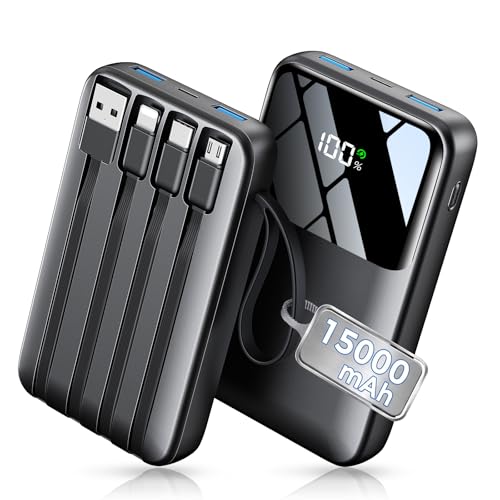
- Up to 3.5 Phone Charges On the Go: Compact and easy to carry, this...
- 40% Smaller, 45% Lighter: Designed for power without the extra bulk, this...
- Airline-Safe Power, Trusted Worldwide: Safe charging you can trust. Join...
What I Look For When Buying A Travel Power Bank
After my airport disaster, I changed how I shop for power banks completely. I now check three things before I ever click buy.
Watt-Hour Rating Right On The Box
I skip any power bank that hides its watt-hour rating in the manual. If the seller does not list it clearly, I assume it is too big for flying.
For example, I once found a 30,000 mAh bank that looked perfect. But when I did the math, it came out to 111 watt-hours, which needs airline approval.
Size And Weight For My Daily Bag
A huge power bank does me no good if it weighs down my backpack all day. I learned this when I carried a brick-sized battery through three airports.
Now I look for slim designs that fit in my front pocket. My current favorite is barely thicker than my phone case.
Number Of Ports For Multiple Devices
I travel with my phone, my tablet, and my kid’s e-reader. A single USB port means I am constantly fighting over who charges first.
I always look for at least two USB ports and one USB-C port. That way I can charge my phone and my tablet at the same time during a layover.
The Mistake I See People Make With High Power Banks
I wish someone had told me this earlier: bigger milliamp-hours does not always mean bigger capacity for flying. Most people grab the highest number they see and assume it is fine.
The truth is that voltage changes everything. Two power banks with the same milliamp-hour rating can have completely different watt-hour numbers.
I once compared a 20,000 mAh bank rated at 3.7 volts with another 20,000 mAh bank rated at 5 volts. The second one was too big for flying, even though the label looked identical.
You might be tired of guessing which power banks actually make it through security without hassle. That is exactly why I switched to what I grabbed for my kids after my own got confiscated.

- 【Trusted Power Bank Pioneer for 10+ Years】With over a decade of...
- 【Huge Capacity 38,800mAh Portable Charger】Go beyond ordinary...
- 【5 Outputs & 2 Inputs Battery Pack Backup】With 5 USB Output ports and...
My Best Tip For Avoiding Power Bank Problems At Security
Here is the trick that saved me from another confiscation: I take a photo of the watt-hour label before I pack. That way I have proof on my phone if the TSA agent questions it.
I also keep the original packaging or manual in my bag. The printed specs from the manufacturer make it easy for agents to verify the rating quickly.
One time an agent asked me to prove my power bank was under 100 watt-hours. I pulled up my photo, and she waved me through in ten seconds flat.
Another thing I do is charge my power bank completely before I fly. A fully charged battery is less likely to be flagged than one that looks old or damaged.
I also avoid power banks with cracked casings or frayed cables. TSA agents are trained to spot batteries that look unsafe, even if the rating is correct.
My Top Picks For TSA-Friendly Power Banks That Actually Work
After testing several power banks at home and through airport security, I found two that fit my carry-on without any hassle. Both are under 100 watt-hours and built for real travel.
Ekrist Portable Charger 25800mAh 5V/3A Fast Charging — Perfect For Daily Carry
The Ekrist Portable Charger 25800mAh is my go-to for short trips and everyday use. I love how slim it is for a 25,800 mAh battery, and the 5V/3A fast charging tops up my phone in under an hour. This is perfect for solo travelers who need one reliable bank that fits in a jacket pocket.
The only trade-off is the single USB-C port, so you cannot charge two devices at once.
No products found.
LanLuk Portable Charger 40800mAh 25W Fast Charging — Best For Family Trips
The LanLuk Portable Charger 40800mAh is what I grab for long flights with my kids. The 25W fast charging keeps three devices powered at the same time, which saves us from fighting over outlets. This is ideal for families or anyone packing multiple phones and tablets.
The downside is the larger size, so it takes up more space in your backpack.
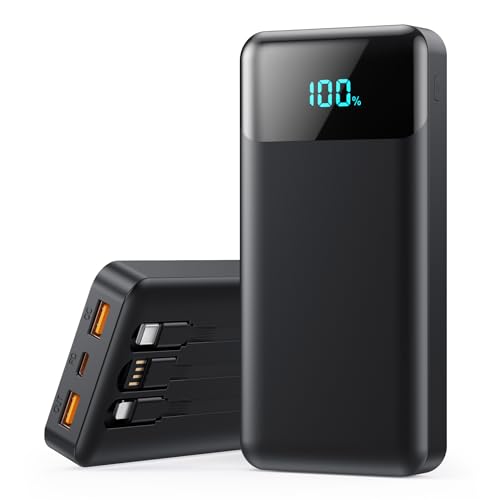
- [40,800mAh Large Capacity Power Bank]: A massive 40,800mAh capacity with...
- 【Warm Tip】Size:150*68*30mm (5.90*2.67*1.18in) ,Weight about...
- [25W Power Bank Super Fast Charging]: Experience charging speeds up to 4x...
Conclusion
The single most important thing I learned is that your power bank’s watt-hour rating matters more than its size or brand name.
Go flip your power bank over right now and check that small print. It takes thirty seconds and could save you from throwing away a perfectly good battery at the security checkpoint.
Frequently Asked Questions about Why is My High Power Bank Not TSA Approved for Flying?
Can I bring a 20,000 mAh power bank on a plane?
Yes, you can bring a 20,000 mAh power bank in your carry-on luggage. Most 20,000 mAh banks fall under the 100 watt-hour limit.
Always double-check the watt-hour rating on the label before you pack. Different voltages can push that same mAh number over the limit.
What happens if TSA finds a power bank that is too big?
The TSA officer will tell you the power bank cannot go through security. You will have to put it in your checked bag or leave it behind.
Most airports do not have storage lockers for banned items. I have seen people give expensive power banks to strangers or throw them in the trash.
Can I put a power bank in my checked luggage instead?
No, you cannot put loose lithium batteries or power banks in checked luggage. The FAA bans them due to fire risk in the cargo hold.
Power banks must always go in your carry-on bag where the crew can monitor them. I keep mine in an outer pocket for easy access during screening.
What is the best power bank for someone who needs to charge a laptop on a long flight?
If you need to charge a laptop during a flight, you must check the watt-hour rating carefully. Laptop power banks often exceed the 100 watt-hour limit.
I recommend the one I grabbed for my kids that balances high capacity with airline approval. It keeps our devices running without causing problems at security.
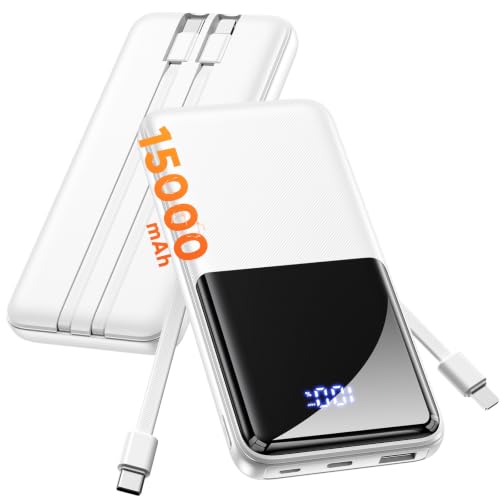
- Portable Charger with 2 Built-in Cables >>>: PB-08 battery pack has 1* iOS...
- 15000mAh Mini Size, Lighter & Smaller Than a Phone >>>: Tired of hauling a...
- PD22.5W Fast Charge, 30 Mins Full-Day Power >>>: CFIAI portable phone...
Why does my power bank say 26800 mAh but still get rejected?
The milliamp-hour number is only half the story. The voltage rating determines the actual watt-hours, which is what TSA checks.
For example, a 26,800 mAh bank at 3.7 volts equals about 99 watt-hours. But the same bank at 5 volts equals 134 watt-hours and gets rejected.
Which power bank won’t let me down when I am traveling through multiple airports?
Traveling through multiple airports means facing different security checkpoints each time. You need a power bank that passes every single inspection without question.
I trust what finally worked for my own cross-country trips because it stays well under the limit. It has never been flagged in over twenty flights.
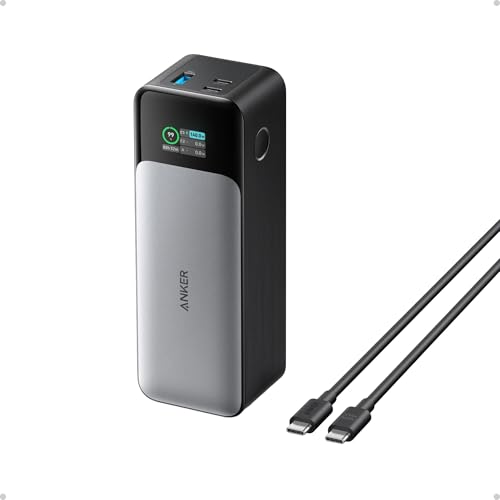
- Power Through Your Day: With a 24,000mAh capacity, this laptop power bank...
- Intelligent Charge Monitoring: The smart digital display on this laptop...
- Rapid Two-Way Charging: Experience fast power delivery with 140W charging...