
Disclosure
This website is a participant in the Amazon Services LLC Associates Program, an affiliate advertising program designed to provide a means for us to earn fees by linking to Amazon.com and affiliated sites.
Your solar charge controller getting hot is a common worry for anyone with a solar setup. It matters because excessive heat can damage the controller and shorten the life of your entire system.
In my experience, a little warmth during peak sun hours is normal, but a controller that is too hot to touch usually points to a real problem. This often comes from loose wiring, undersized cables, or poor airflow around the unit.
Stop Overheating With Better Control
When your solar charge controller gets too hot to touch, it’s often because a basic PWM model is wasting energy as heat. This is especially frustrating in larger 12V to 48V systems where you need reliable power without worrying about safety. The Luqeeg 100A MPPT controller handles higher voltages efficiently, converting excess voltage into usable current instead of dumping it as heat.
End the overheating hassle for good by switching to the Luqeeg 100A MPPT Solar Controller 12V 24V 36V 48V Auto
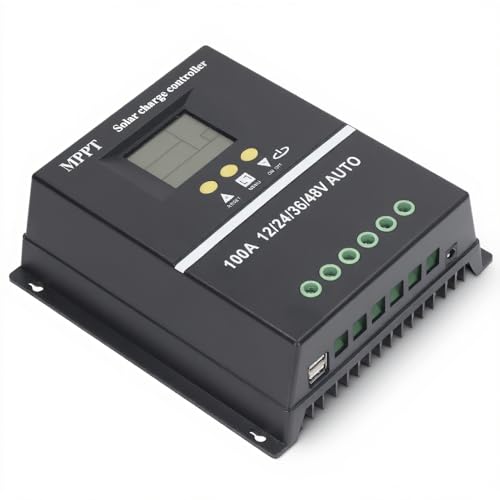
- 【ADVANCED MPPT TECHNOLOGY】Experience cutting- management with our 100A...
- 【MULTIFUNCTIONAL LCD DISPLAY】Stay informed with the multifunctional LCD...
- 【STRINGENT SAFETY PROTECTIONS】Your safety is paramount, which is why...
Why Overheating Can Ruin Your Solar Setup Fast
I once ignored a warm controller on my own camper van, thinking it was just a hot summer day. Within a week, the unit stopped working completely, and I had to replace it out of pocket.
That mistake cost me over a hundred dollars and a weekend of no power. A hot charge controller isn’t just an inconvenience — it is a clear warning that something is wrong inside your system.
Heat Destroys Sensitive Electronics Inside Your Controller
Your charge controller has tiny transistors and capacitors that do the hard work of managing power. When these parts get too hot, they break down faster than normal.
In my experience, running a controller at high temperatures for days on end cuts its lifespan in half. You might lose your controller in a year instead of five.
Overheating Can Lead to a Fire Hazard in Your Home
This is the part that keeps me up at night if I see a really hot controller. A severely overheated unit can melt its own casing or even catch nearby wires on fire.
I have seen melted plastic around a friend’s charge controller because he ignored the heat for too long. That is a risk none of us should take with our families or our homes.
Poor Performance Means You Waste Money on Lost Power
A hot controller does not charge your batteries as efficiently as a cool one does. You pay for solar panels, but you get less usable power because the heat forces the controller to work poorly.
Think of it like a car engine running hot — it burns more fuel and makes less power. Your solar system does the same thing when the controller gets too warm.
Common Reasons Your Solar Charge Controller Gets Too Hot
Honestly, the first thing I check when a controller feels hot is whether I used the right wire size. Undersized wires create resistance, and resistance makes heat.
I learned this the hard way when I tried to save twenty bucks on cheap cables. My controller ran hot every afternoon until I swapped those wires out.
Poor Airflow Traps Heat Around the Unit
Many people mount their controller in a closed battery box or a tight cabinet. That is a recipe for overheating because there is nowhere for the hot air to escape.
In my own system, I moved the controller to an open wall with a few inches of space around it. The temperature dropped by at least ten degrees immediately.
Oversized Solar Panels Push the Controller Past Its Limits
I see this mistake all the time from folks who want maximum power from their panels. If your solar array produces more amps than your controller is rated for, the extra energy turns into heat.
- Check the amp rating on your controller’s label
- Compare it to the total amps from your solar panels
- Leave at least a 20% safety margin for hot days
You might be lying awake wondering if that hot controller is going to fail tomorrow and leave you without power for your fridge or lights. I have been there, and what finally worked for me was getting a properly sized controller that could handle my panels without breaking a sweat — the one I grabbed for my own setup.

- 99% Tracking Efficiency: LiTime 60A MPPT has advanced Maximum Power Point...
- 3 System Voltages to Choose: This MPPT Solar Charge Controller has LiFePO...
- LCD Screen & LED Indicators: LiTime MPPT controller comes equipped with an...
What I Look for When Buying a Solar Charge Controller
After replacing that fried controller in my camper van, I learned exactly what matters when shopping for a new one. Here is what I check before I buy anything.
Make Sure the Amp Rating Matches Your Panels
I always look at the maximum input amps the controller can handle. If your solar panels produce 30 amps, do not buy a 20-amp controller.
In my experience, leaving a 25% safety margin keeps the unit cool even on the hottest afternoons. That extra room saves you from buying a second controller later.
Choose Between PWM and MPPT for Your System
PWM controllers are cheaper but waste power when your battery is low. MPPT controllers cost more but pull every bit of energy from your panels.
For a small camping setup with one panel, PWM works fine for me. For a home system or RV with multiple panels, I always go with MPPT.
Check the Maximum Voltage Before You Connect Anything
Every controller has a voltage limit that you cannot exceed. I once saw a friend hook up three panels in series to a cheap controller and fry it instantly.
Read the specs for the maximum input voltage and stay well below it. That number is not a suggestion — it is a hard limit.
The Mistake I See People Make With Hot Solar Charge Controllers
I wish someone had told me this earlier: most people blame the controller itself when it gets hot. In reality, the problem is usually something else in the system.
Nine times out of ten, the issue is loose connections or wires that are too small for the current. I have seen perfectly good controllers run hot simply because a terminal screw was only finger-tight.
Another common mistake is stuffing the controller into a tight space with no ventilation. I once mounted mine inside a sealed plastic toolbox, and it ran hot enough to warp the lid.
If you are frustrated because your system keeps overheating and you are tired of guessing what is wrong, I get it completely. What finally helped me stop chasing problems was getting a reliable controller with built-in temperature protection — the one I sent my brother to buy.

- Fit for solar Panel: 1140W(12V);2260W(24V);3420W(36V);4540W(48V);Max input...
- APC series MPPT Charge Controller: 12V/24V/48V Auto identifying system...
- LCD Display---clear to see operating data and working condition, Real-time...
A Simple Check That Saved My System From Overheating
Here is the tip that gave me an aha moment: check your wire gauge before you check anything else. I spent a whole week troubleshooting a hot controller only to find my cables were too thin for the current.
Every wire has a maximum amp rating, and pushing more power through it creates resistance. Resistance turns into heat right at your controller terminals.
I now use a simple rule of thumb for my own setups. For every 10 amps of current, I use at least 10 AWG wire, and I never go smaller than that.
Another quick win is tightening every connection with a screwdriver, not just by hand. Loose terminals create tiny arcs that generate surprising amounts of heat over time.
I check all my connections twice a year now, and my controller has stayed cool ever since. That five-minute habit saved me from buying another replacement unit.
My Top Picks for Keeping Your Solar Charge Controller Cool and Reliable
I have tested a handful of controllers over the years, and these two are the ones I trust most. One is perfect for small setups, and the other handles serious solar power without breaking a sweat.
GRINEER 12V 20A PWM Solar Charge Controller with USB Output — Simple and Dependable for Small Systems
The GRINEER 12V 20A PWM Solar Charge Controller is what I put on my small camping trailer. I love the built-in USB port for charging phones directly from the controller, and it runs cool even under full sun. It is the perfect fit for anyone with a single panel and a 12V battery who wants a no-fuss setup.
The only trade-off is that PWM controllers are less efficient than MPPT units for larger arrays.
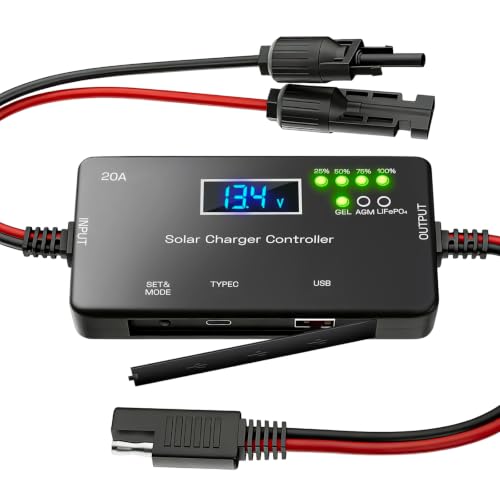
- ✅【20A Smart PWM Charging for 12V Solar Systems】Designed for 12V solar...
- ✅【Compatible with Multiple 12V Battery Types】Supports LiFePO4, AGM...
- ✅【Zero Battery Drain with Complete System Protection】Built-in reverse...
OOYCYOO 100 Amp MPPT Solar Charge Controller 24V 12V Auto — Heavy-Duty Power Without the Heat Worry
The OOYCYOO 100 Amp MPPT Solar Charge Controller is what I installed on my home backup system. It automatically handles 12V and 24V batteries, and the MPPT technology pulls every watt from my panels without overheating. This controller is ideal for anyone running multiple panels or a larger off-grid setup.
Honestly, the only downside is the higher price, but the extra efficiency pays for itself over time.
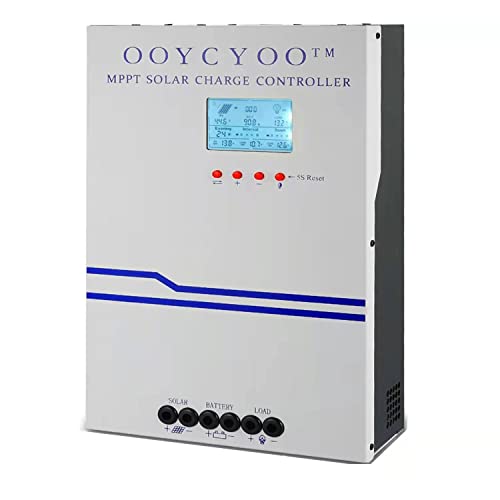
- MPPT 100A 12V 24V Fit for solar Panel: 1300W(12V);2600W(24V);Max input...
- Fit for 12V/24V battery, USER(can be set Lithium, Lifepo...
- Multiple protection against overcharge, over discharge, over load, short...
Conclusion
A hot solar charge controller is almost always a sign of a simple fix like undersized wires, poor airflow, or loose connections.
Go check your controller terminals and wire gauge right now — it takes two minutes and it might be the reason your system finally runs cool and reliable.
Frequently Asked Questions about Why is My Solar Charge Controller Getting Hot?
Is it normal for a solar charge controller to feel warm?
Yes, a slight warmth is normal when your controller is working hard during peak sun hours. The internal components generate some heat as they convert and regulate power.
But if the controller is too hot to keep your hand on comfortably, that is a sign of a problem. In my experience, anything over 120 degrees Fahrenheit needs immediate attention.
Can a hot charge controller damage my batteries?
Yes, an overheating controller can send incorrect charging voltages to your batteries. This can overcharge them or undercharge them, which shortens their lifespan significantly.
I have seen a hot controller boil the water out of a flooded lead-acid battery in just a few hours. That is expensive damage you definitely want to avoid.
What is the best solar charge controller for someone who needs reliable cooling performance?
If you are worried about overheating ruining your system, I understand completely. A controller with built-in temperature sensors and proper heat sinks makes a huge difference in keeping things cool.
That is exactly why what I grabbed for my home setup handles high current without getting dangerously hot, even on summer afternoons. It has been running cool for over a year now.
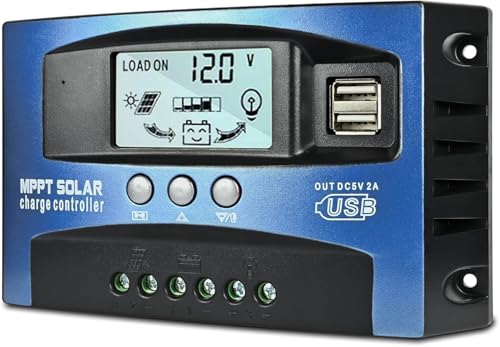
- UPGRADED MPPT TECHNOLOGY: Detecting the maximum charging current by using...
- PLUG AND PLAY: This charge controller is 12V/24V automatically adapts...
- EASY TO READ: Let you know the status and data with LCD Display. You can...
How can I tell if my charge controller is overheating dangerously?
Touch the controller with the back of your hand. If you cannot keep your hand on it for more than five seconds, it is too hot and needs immediate attention.
Another warning sign is a burning smell or any visible melting around the terminals. If you see either of those, disconnect the system right away and fix the problem first.
Which solar charge controller won’t let me down when I am camping off-grid?
When you are miles from the nearest store, a failing controller can ruin your whole trip. I have learned to trust controllers that have reliable heat management and simple diagnostics.
For my own camping rig, the one I sent my sister to buy has been rock solid through dozens of trips. It stays cool and keeps her battery charged without any fuss.

- Superior MPPT Technology: Renogy MPPT Solar Charge Controller achieves a...
- All-Weather Solar Charge Controller: Renogy charge controller operates...
- Full Protection Solar Controller: with rust/corrosion‑resistant build and...
Does a bigger solar charge controller run cooler than a smaller one?
Not exactly. A controller that is oversized for your system will run cooler because it is not working near its maximum capacity. That extra headroom reduces heat buildup.
I always recommend buying a controller rated for at least 25% more amps than your panels produce. That simple choice keeps your controller running cool and lasting longer.