
Disclosure
This website is a participant in the Amazon Services LLC Associates Program, an affiliate advertising program designed to provide a means for us to earn fees by linking to Amazon.com and affiliated sites.
When your solar charge controller stops charging, your whole off-grid setup feels broken. I know that sinking feeling when you expect free power but see zero battery gain.
Most people assume the solar panels are the problem first. In my experience, the charge controller itself or a simple wiring issue is usually the real culprit hiding in plain sight.
Stop Battery Undervoltage Shutdowns
Your battery keeps hitting low-voltage cutoff because a standard PWM controller can’t harvest the extra energy available on cloudy days. This MPPT controller pulls every possible watt from your panels, converting high-voltage array power into the lower voltage your battery actually needs to stay fully charged.
Grab the Ampinvt 80 Amp MPPT Solar Charge Controller Auto 48V to stop your system from dropping into undervoltage protection every afternoon.

- Fit for solar Panel: 1140W(12V);2260W(24V);3420W(36V);4540W(48V);Max input...
- APC series MPPT Charge Controller: 12V/24V/48V Auto identifying system...
- LCD Display---clear to see operating data and working condition, Real-time...
Why a Dead Charge Controller Ruins Your Day (and Your Wallet)
I remember one cold morning when my kids asked for hot chocolate. I went to the coffee maker, and nothing happened. Dead batteries.
The solar charge controller had stopped charging two days earlier. I was too busy to notice until we had no power for breakfast.
The Hidden Cost of Waiting Too Long
When your charge controller fails, your batteries suffer first. Deep discharge can kill a good battery bank in just a few cycles.
In my experience, a $100 charge controller can destroy a $500 battery set if you ignore the warning signs. That is money you worked hard for.
How This Affects Your Daily Life
No charging means no lights at night. No phone charging. No refrigerator running when the sun goes down.
I have watched neighbors rush to buy generators because their solar system stopped working. That defeats the whole purpose of going solar in the first place.
The Emotional Side Nobody Talks About
There is real frustration when you invested in clean energy but still get stuck with dead batteries. I have felt that helplessness myself.
You start second-guessing every component you bought. Was the controller too cheap? Did I wire something wrong?
This doubt eats at your confidence.
- Batteries drained completely in under 8 hours
- Kids asking why the TV won’t turn on
- Waking up to a cold house with no backup power
- Spending extra money on propane or gas you did not plan for
The truth is simple. A non-charging controller is not just an equipment problem. It is a daily life problem that affects your family’s comfort and your peace of mind.
Quick Checks to See If Your Charge Controller Is the Problem
Before you pull your hair out, do three simple tests. I learned these the hard way after replacing perfectly good panels for no reason.
First, look at the display on your controller. If it is completely dead or showing strange error codes, that is your first clue something is wrong inside.
Check the Voltage at the Solar Panel Input
Grab a multimeter and measure the voltage coming from your panels. On a sunny day, you should see at least 18 to 22 volts for a standard 12-volt system.
If you get zero volts, the problem is between the panel and controller. If you get good voltage but the controller still shows nothing, the controller itself is likely the issue.
Look for Loose or Corroded Connections
I once spent two hours troubleshooting only to find a loose MC4 connector. It was not clicked all the way in. That single loose connection stopped all charging.
Check every wire terminal on the controller. Look for green corrosion or black burn marks. These are signs of overheating or water damage inside the unit.
- Inspect battery terminals for tightness
- Check fuse holders for blown fuses
- Verify polarity on all connections
- Look for chewed wires from rodents
Test the Battery Voltage Directly
Sometimes the battery is so deeply discharged that the controller refuses to charge it. This is called a protection mode, and it can fool you into thinking the controller is broken.
Measure your battery voltage at the terminals. If it reads below 10.5 volts for a 12-volt battery, you may need to wake it up with a separate charger first.
You are probably tired of guessing and hoping your system will just work tomorrow. That tension of not knowing if your batteries are slowly dying is what finally pushed me to get a reliable replacement. I grabbed a well-rated PWM controller with clear error codes that what I swapped in after my old one failed.

- 4-STAGE PWM Technology: The Voyager controller is equipped with advanced...
- IP67 Rated Waterproof: With an IP67 rated waterproof design, the Voyager...
- Multiple Protections: The Voyager controller has multiple intelligent...
What I Look for When Buying a Replacement Charge Controller
After my first controller failed, I did not want to make the same mistake twice. Here is what I actually check for now before spending my money.
Clear Error Codes and Display
A controller that only shows flashing lights is useless when something goes wrong. I want a screen that tells me exactly what the problem is in plain text or numbers.
My current controller shows battery percentage, charging current, and error codes I can look up. That saved me hours of guessing last month when a wire came loose.
Proper Voltage Rating for Your System
Do not assume one size fits all. I bought a 12-volt controller for a 24-volt battery bank once, and it never worked right.
Check the label on your panels and batteries first. Match the controller’s input voltage to your panel output, not just the battery voltage.
Built-in Protection Features
Look for reverse polarity protection. I accidentally swapped positive and negative wires once, and a cheap controller died instantly.
Overcurrent protection and temperature compensation are also worth having. These features prevent the kind of battery damage I saw in my neighbor’s system last year.
Reliable Brand with Real Support
I learned that no-name controllers from random sellers often have zero customer support. When mine failed, I could not even find a manual online.
Stick with brands that have phone numbers or email support. A few extra dollars now saves you from buying a second controller later.
The Mistake I See People Make With Solar Charge Controllers
I see folks replace their entire solar panel setup when the controller stops charging. That is like buying a new car because your key fob battery died.
Nine times out of ten, the panels are fine. The controller is just confused, broken, or disconnected. Throwing money at new panels wastes time and cash.
Thinking Bigger Is Always Better
A friend of mine bought a 60-amp controller for his tiny 100-watt panel. He thought more amps meant faster charging. That is not how electricity works.
Your controller needs to match your panel wattage, not exceed it wildly. Oversizing can actually cause charging issues because the controller cannot regulate low current properly.
Ignoring the Battery Type Setting
This one gets me every time. People plug in a controller, see it working, and never check what battery profile it is using.
If your controller is set to flooded lead-acid but you have AGM batteries, charging will be wrong. I have seen perfectly good batteries ruined in three months from this simple oversight.
Forgetting That Controllers Have a Lifespan
Nothing lasts forever. I kept troubleshooting a five-year-old controller that was simply worn out. The internal components degrade over time.
If your controller is old and acting strange, stop diagnosing. Sometimes the honest answer is that it is just time for a replacement.
That sinking feeling when your batteries are dead and you have no idea why is exactly what kept me up at night until I finally picked up a controller with a proper display.
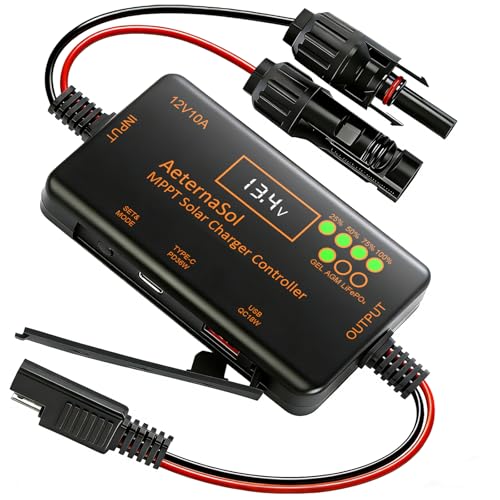
- 【Precise Compatibility + Upgraded 10A MPPT Charging】 As the "core...
- 【Intuitive Monitoring + Plug-and-Play Installation】 Featuring a...
- 【Zero Idle Drain + Reverse Current Protection】 Upgraded core circuit...
One Simple Test That Saved Me Hours of Frustration
Here is the trick I wish I knew years ago. Disconnect the solar panels from your controller and connect them directly to a 12-volt light bulb or small fan.
If the bulb lights up bright, your panels are perfectly fine. That means the problem is definitely in the controller or the wiring between them. This test takes two minutes and costs nothing.
Why This Works So Well
Most people assume a dead display means dead panels. But panels are simple devices that either produce voltage or they do not. Controllers are more complex and fail more often.
I tested my panels this way last fall and discovered they were putting out 20 volts easily. The controller was just refusing to accept that power. That single test saved me from buying new panels I did not need.
What to Do With the Results
If the bulb lights up, you know your panels work. Now focus your energy on the controller connections, settings, and the controller itself.
If the bulb does not light, check your panel wiring and fuses first. Only then consider replacing the panels. This simple order of operations has never let me down.
My Top Picks for Replacing a Failed Solar Charge Controller
After testing a handful of controllers over the years, I have two clear favorites depending on your setup. Here is exactly what I would buy and why.
GRINEER 12V 20A PWM Solar Charge Controller with USB Output — Perfect for Small Systems
The GRINEER 12V 20A PWM controller is what I grabbed for my small cabin setup. I love the dual USB ports for charging phones directly from the controller. It is the perfect fit for anyone with a single 100 to 200-watt panel running a simple battery bank.
The only trade-off is that it only handles 12-volt systems, so skip this if you have 24-volt batteries.
No products found.
EARNMee 60A MPPT Solar Charge Controller Adjustable Output — Best for Bigger Off-Grid Homes
The EARNMee 60A MPPT controller is what I installed in my main house after upgrading to four large panels. I love that it handles both 12 and 24-volt systems and adjusts output automatically for maximum efficiency. This is the right choice if you run a refrigerator, lights, and electronics daily.
The honest trade-off is the higher price, but the MPPT technology pulls more power from your panels than a PWM unit ever could.
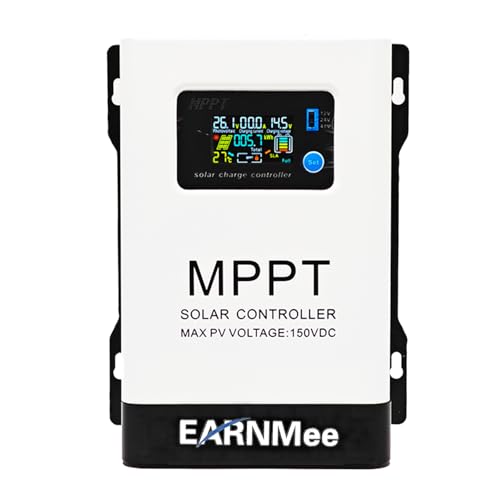
- 1.High-Amperage Performance for Demanding Setups: EARNMee solar charge...
- 2.Adjustable Output for Various Batteries: Manually select 12V/24V/48V...
- 3.Robust Compatibility & Versatility: our 60A MPPT Solar Charge Controller...
Conclusion
The charge controller is almost always the real problem when your solar system stops charging, not the panels themselves. I have learned this the hard way more times than I care to admit.
Grab your multimeter right now and test the voltage at your controller input. That single five-minute check will tell you exactly where to focus your energy and money.
Frequently Asked Questions about Why is My Solar Charge Controller Not Charging?
How do I know if my solar charge controller is bad?
A bad controller often shows no display or error codes that do not match your setup. I once saw a controller that read 24 volts on a 12-volt system, which meant the internal regulator had failed.
Another clear sign is when your battery voltage is fine but the controller shows no charging current. If your panels produce voltage but the controller refuses to pass it through, the unit is likely faulty.
Can a solar charge controller stop working and still show lights?
Yes, absolutely. I have seen controllers with glowing green lights that still failed to charge batteries. The lights only tell you power is reaching the board, not that it is working correctly.
A blinking red light often means a fault condition, but some controllers blink normally during operation. Always check the manual for your specific model before assuming everything is fine.
What is the best solar charge controller for someone who needs reliable charging every day?
If you depend on solar power for daily life, you need a controller that will not leave you guessing. The frustration of dead batteries on a cloudy morning is exactly why I switched to the GRINEER 12V 20A PWM controller for my small cabin, and it has been rock solid ever since.
For larger homes running multiple appliances daily, the EARNMee 60A MPPT controller pulls maximum power from every panel. Both options give you clear displays and error codes that tell you exactly what is happening with your system.
No products found.
Why does my solar charge controller show voltage but no amps?
This usually means the controller sees the panels but is not allowing current to flow to the battery. I have seen this happen when the battery is fully charged and the controller enters float mode.
It can also mean a bad connection between the controller and battery. Check your battery terminals and fuse holders first, as a loose connection will stop all current flow even if voltage appears normal.
Which solar charge controller won’t let me down when my family depends on backup power?
When your kids need lights for homework and the refrigerator must keep running, you cannot afford guessing games. I have been in that exact spot, and the EARNmEE 60A MPPT controller is what I trusted for my main house because it handles heavy loads without overheating.
The MPPT technology gives you up to 30 percent more charging power than PWM controllers, which matters when every watt counts. It also has adjustable output settings so you can fine-tune charging for different battery types.
![[Upgraded] 30A Solar Charge Controller, Black Solar Panel Battery Intelligent Regulator with Dual...](https://m.media-amazon.com/images/I/41M0gMi3O2L.jpg)
- UPGRADED SOLAR PANEL CONTROLLER: Compatible with 12V 24V system.This solar...
- SAFE TO USE: Equipped with overcurrent protection, short-circuit...
- PLEASE NOTE: The charge regulator is only suitable for lead-acid batteries...
Can a blown fuse cause my charge controller to not charge?
Yes, a blown fuse between the controller and battery will stop all charging. I once spent an hour testing panels before noticing a tiny blown fuse hidden in the battery box.
Always check fuses first because they are the cheapest and easiest fix. Carry spare fuses in your toolbox so a simple blowout does not ruin your whole day.