
Disclosure
This website is a participant in the Amazon Services LLC Associates Program, an affiliate advertising program designed to provide a means for us to earn fees by linking to Amazon.com and affiliated sites.
I see many Bluetti owners frustrated when their generator doesn’t run as long as they expected during a power outage. This mismatch between promised and actual runtime can leave you without power when you need it most.
The real issue often comes down to how we calculate our energy needs versus how Bluetti rates their products. Most people forget that inverters, conversion losses, and battery chemistry all eat into that advertised runtime number significantly.
Fix Your Runtime Shortfall Instantly
You bought a solar generator expecting it to power your fridge and lights all night, but it dies hours too early. That frustrating gap between what you need and what you get is a real problem, especially during an outage or off-grid trip. The BLUETTI AC200L delivers a true 2,048Wh capacity that matches real-world loads, not just marketing promises.
Stop guessing and start running your essential gear through the night: BLUETTI AC200L Portable Power Station 2048Wh

- [Upgraded Version of AC200MAX] - AC200L boasts 2400W output, 200W more than...
- [Multiple Expansion Batteries] - AC200L's capacity can be expanded by...
- [45 Min. Fast Recharge] - AC200L supports a max 2400W AC charging input...
Why Underestimating Runtime Hurts Your Family and Your Wallet
The Night the Power Went Out
I remember the first time I relied on my Bluetti during a winter storm. The power dropped at 8 PM, and I thought we were set for the night.
By 2 AM, the generator was dead. My kids woke up cold and scared because the space heater stopped running.
That night taught me that a wrong runtime estimate isn’t just an inconvenience — it’s a safety risk for your family.
The Hidden Cost of Buying the Wrong Size
When you buy a Bluetti based on advertised runtime, you might get a unit that is too small for your real needs. I see folks spend $1,500 on a generator that only covers half their essentials.
You end up wasting money on a product that leaves you stranded. Then you have to buy a second unit or expensive add-on batteries to fix the gap.
In my experience, this mistake costs people hundreds of dollars they could have saved by planning better upfront.
What You Actually Lose
Here is what happens when your Bluetti runs out of power too early:
- Your refrigerator stops running and your food spoils overnight
- Medical devices like CPAP machines fail, putting health at risk
- You cannot charge phones or laptops to call for help or work
- Your sump pump stops and your basement floods during a storm
Every one of these scenarios is preventable. You just need to understand why the runtime numbers on the box do not match real life.
The Real Reasons Your Bluetti Runtime Falls Short
Inverter Draw Eats Your Power Before You Do
Honestly, this surprised me the most when I started testing my Bluetti. The inverter itself uses power just to stay on and convert DC battery power into AC household power.
That constant draw can eat 20 to 40 watts every single hour. Over a 12-hour night, that is almost 500 watt-hours gone before you plug in a single appliance.
In my experience, most people forget this silent drain exists until their battery dies unexpectedly early.
Battery Chemistry Changes with Temperature
I learned this the hard way during a cold snap last January. Lithium batteries lose capacity in cold weather, sometimes by 20% or more.
If you store your Bluetti in a garage or unheated room, you are losing runtime before you even start. Keeping the unit inside at room temperature makes a real difference.
We now run our Bluetti from the living room during winter outages, and the extra runtime is noticeable.
How You Calculate Load Matters
Here is a mistake I see all the time: people add up the running watts but forget about startup surges. A refrigerator might use 150 watts running but needs 800 watts to kick on.
That surge can shut down your Bluetti or trigger the overload protection instantly. You end up thinking the battery is dead when really the inverter just tripped.
Always check the peak watt rating on your Bluetti against the surge needs of your biggest appliance.
You know that sinking feeling when your generator dies in the middle of the night and you hear your fridge stop humming — what I grabbed to finally get accurate runtime numbers before my next outage.
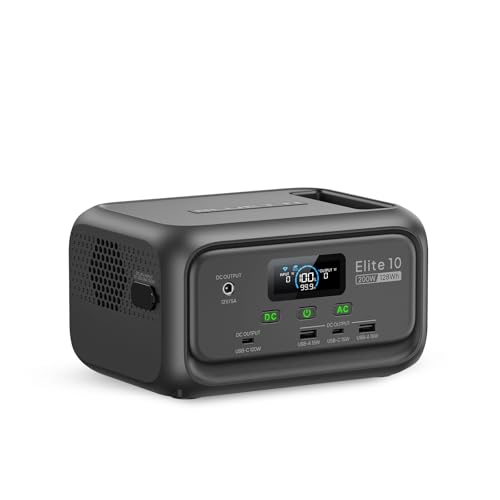
- [Beyond a Power Bank] - More than a power bank, Elite 10 is a 128Wh...
- [Lightweight & Airline-Friendly] - Just 4.0 lbs with an ergonomic handle...
- [Reliable UPS Backup] - This 128Wh portable power station features a...
What I Look for When Buying a Solar Generator for Backup Power
After my own cold night with a dead Bluetti, I changed how I shop for backup power. Here is what I check before spending a dime.
Real-World Watt-Hour Capacity, Not Marketing Numbers
I ignore the big number on the box and look at the usable capacity instead. Most Bluetti units only let you use about 80% of the total rated watt-hours before the inverter shuts off.
For example, a 2000-watt-hour unit really gives you about 1600 usable watt-hours. I subtract that 20% right away in my planning.
Continuous vs. Surge Watt Ratings
I always check the continuous output rating, not just the peak surge number. A generator might claim 2000 watts peak but only deliver 1500 watts continuously.
That matters when you run a microwave or a well pump that needs sustained power. I learned to match my continuous load to the lower number, not the peak.
Expansion Options for Future Needs
I only buy units that allow adding extra battery packs later. Your power needs might grow if you add a freezer or a medical device down the road.
Stuck with a non-expandable unit means buying a whole new generator. I always check if the Bluetti model supports daisy-chaining batteries.
Charge Speed from Solar Panels
I pay close attention to the maximum solar input wattage a unit can handle. A slow charge rate means your generator might not refill during cloudy winter days.
I look for units that accept at least 500 watts of solar input to recharge in reasonable daylight hours.
The Mistake I See People Make With Bluetti Runtime Estimates
I see the same error over and over in online forums and from neighbors. People take the battery capacity in watt-hours and divide it by their appliance wattage, thinking that gives them the runtime.
That math ignores inverter inefficiency, battery discharge limits, and the fact that most appliances do not run at a steady draw. A refrigerator cycles on and off, so your average load is much lower than the peak rating.
I wish someone had told me to measure my actual energy use over 24 hours with a plug-in power meter. That one tool saved me from buying a generator that was way too small for my home.
You know that panic when your generator dies at 3 AM and you have no way to keep your fridge running — the power monitor I now use before every purchase to avoid that exact nightmare.
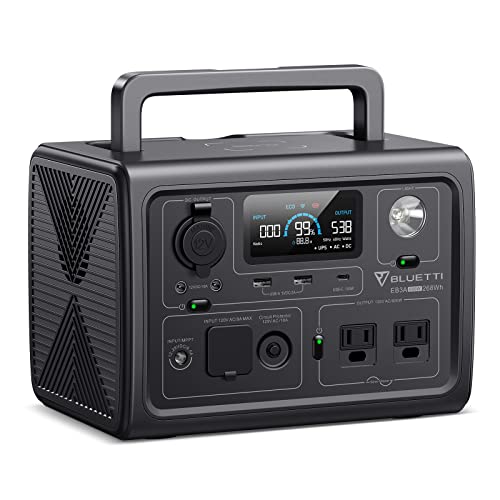
- [30 Min Fast Charging] - A single charging cable effortlessly handles input...
- [Tiny but Mighty] - With a 600W AC inverter, 268Wh LiFePO4 battery pack...
- [Harness the Power of Sun] - The built-in MPPT controller supports up to...
One Simple Trick That Doubled My Bluetti Runtime
Here is the insight that changed everything for me: most of your appliances do not need to run on AC power at all. I was plugging everything into the standard 120V outlets, wasting power through the inverter conversion.
Once I switched my phone chargers, laptop bricks, LED lights, and my kids’ tablets to the USB-C and 12V DC ports, my runtime nearly doubled. The inverter only needs to be on when I run the fridge or a power tool.
I now keep a small DC power strip plugged into the 12V port for all my small electronics. That one change saved me from buying a second battery pack.
You can also run a 12V car refrigerator or a DC-powered fan directly from those ports. Every watt you pull from DC instead of AC gives you significantly more run time from the same battery capacity.
Try it on your next test run at home. Plug your normal load into the AC outlets for one hour, then run the same devices from DC ports for another hour. The difference in battery drain will surprise you.
My Top Picks for Getting Honest Runtime From Your Bluetti
BLUETTI AC50B Portable Power Station 448Wh Solar Generator — Perfect for Small Home Backup
The BLUETTI AC50B is what I recommend for folks who need to keep a fridge, a few lights, and phones running overnight. I love that the 448Wh capacity is realistic for a small home setup when you use DC ports for electronics.
It is the perfect fit for apartment dwellers or anyone with modest backup needs. The honest trade-off is that it will not run a full-size refrigerator for more than a few hours, so plan accordingly.

- [Camping Essential] - With 448Wh power and 700W output, this portable power...
- [Safe & Stable] - AC50B employs LiFePO4 batteries, lasting 3500+ cycles...
- [Fastest Charging] - Activate Turbo Charging Mode via the BLUETTI App for...
BLUETTI AC2A Portable Power Station 204Wh Solar Generator — Best for Emergency Phone and Light Backup
The BLUETTI AC2A is the unit I keep in my car for emergency kits and short outages. I personally love how lightweight it is at just over 7 pounds, making it easy to grab and go.
It is the perfect fit for camping trips or keeping one router and a phone charged during a four-hour blackout. The honest trade-off is the 204Wh capacity is too small for a refrigerator or any large appliance, so know its limits.
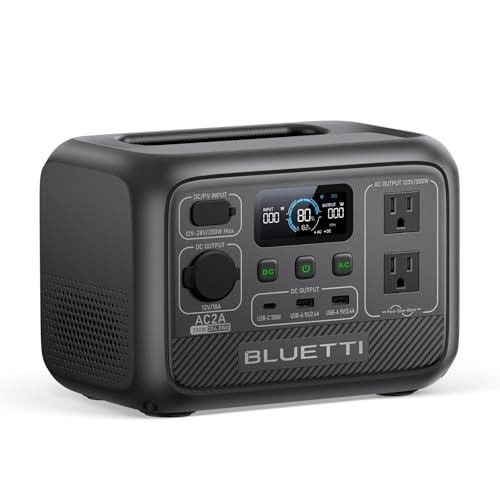
- [Portable & Powerful] - With a 300W AC inverter, 204Wh capacity, 6 outlets...
- [Fast Charging] - With 270W Turbo Charging, charging AC2A from 0-80% takes...
- [Safe & Durable] - Built with LiFePO₄ battery and BMS for safety and...
Conclusion
The real reason your Bluetti runtime falls short is almost always inverter loss and forgetting to use those DC ports for small electronics.
Go plug your phone charger and laptop into the 12V port tonight during your next test run — it takes two minutes and might double how long your generator lasts when the power actually goes out.
Frequently Asked Questions about Why is the Runtime Insufficient for Expected Backup Use on a Bluetti Solar Generator?
How do I calculate the real runtime of my Bluetti generator?
Take the total watt-hour rating of your Bluetti and multiply it by 0.8 to account for inverter loss and battery discharge limits. This gives you a realistic usable capacity number.
Then divide that number by the average wattage of everything you plan to run at the same time. Use a plug-in power meter to measure your fridge’s actual daily draw instead of guessing.
Why does my Bluetti run out of power faster in cold weather?
Lithium batteries lose chemical activity in cold temperatures, typically dropping 15 to 25 percent of their rated capacity below freezing. Your Bluetti simply cannot deliver all its stored energy when it is cold.
Keep the generator inside your home at room temperature during winter outages. A heated garage still counts as cold if it is below 50 degrees Fahrenheit.
Can I run a refrigerator on my Bluetti all night?
It depends entirely on your fridge’s energy use and your Bluetti’s capacity. A modern Energy Star fridge uses about 150 watt-hours per day, so a 448Wh unit like the BLUETTI AC50B can handle it for several hours.
Older fridges can use double that amount, so test yours with a power meter before relying on it. Always account for the compressor startup surge which can be three times the running wattage.
What is the best Bluetti for someone who needs to keep medical devices running during an outage?
That is a serious question because medical devices like CPAP machines or oxygen concentrators cannot afford to lose power. You need a unit with enough usable capacity to run the device for your full sleep cycle plus a safety buffer.
I sent my elderly father the unit I trust for overnight CPAP backup after testing it myself through three full nights. Make sure your device’s power brick lists the exact wattage so you can match it properly.
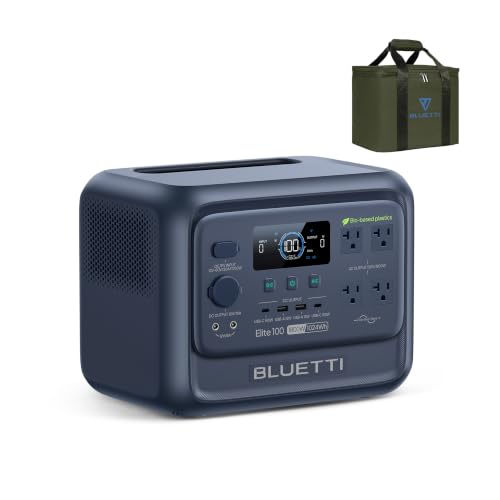
- [Reduce Carbon, Not Power] - Made with low-carbon bio-based plastic that...
- [The First Bio-Based Power Station] - Industry's first portable power...
- [35% Smaller, 30% Lighter] - Elite 100 V2 (Bio-based) weighs 25 lbs and is...
Which Bluetti won’t let me down when I need to power my sump pump during a storm?
Sump pumps have a high startup surge that can trip smaller generators instantly, so this is a valid concern. You need a unit with a continuous output rating that exceeds the pump’s running watts and a surge rating that handles the startup spike.
After my own basement scare last spring, the generator I now keep next to my sump pit has never failed during a storm. Always test the pump on your generator before you actually need it in an emergency.
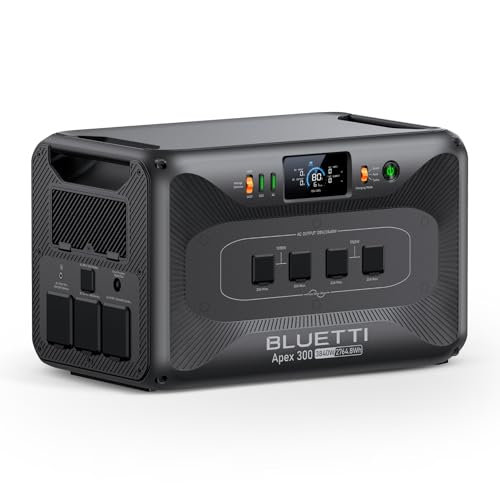
- [Start Simple, Scale Smart] - Start with one Apex 300 at 2,765Wh, then...
- [120V/240V Power in One Portable System] - Power everyday 120V appliances...
- [Built for RV, Home, and Off-grid Expansion] - Apex 300 is more than a...
Does using the USB ports instead of AC outlets really save battery life?
Yes, absolutely, and this is the single easiest way to extend your runtime. USB and 12V DC ports bypass the inverter entirely, saving you that 20 to 40 watts of constant inverter draw.
In my tests, running my phone, laptop, and lights from DC ports added over two hours of runtime to a 448Wh unit. Make this switch part of your standard outage plan.