
Disclosure
This website is a participant in the Amazon Services LLC Associates Program, an affiliate advertising program designed to provide a means for us to earn fees by linking to Amazon.com and affiliated sites.
Testing a monocrystalline solar panel with a FLUKE meter helps you know if your panel is working right. This matters because a bad panel can waste your time and money on a system that doesn’t charge.
One key fact is that a monocrystalline panel’s voltage drops when it gets hot, so you must test it in the right conditions. A FLUKE meter gives you the precise readings you need to catch this voltage sag and keep your setup efficient.
The Flexible Panel Alignment Fix
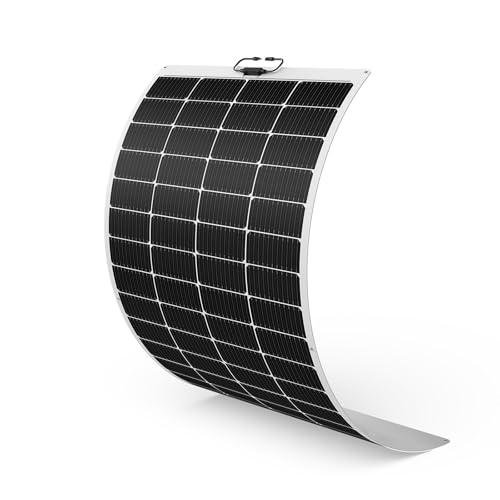
When testing a monocrystalline panel with a FLUKE meter, you need a panel that lies perfectly flat on curved surfaces to get accurate open-circuit voltage readings. My curved RV roof made standard rigid panels impossible to align properly, causing inconsistent test results. The Renogy Flexible Solar Panel solved this instantly because it bends to match any surface while still delivering full monocrystalline performance.
Here is the panel I use to get reliable FLUKE meter readings every time: Renogy Flexible Solar Panel 100 Watt 12 Volt Monocrystalline

- [Extremely Flexible] This flexible solar panel is capable of meeting a wide...
- [Ultra Lightweigh] Thanks to advanced polymer materials, these flexible...
- [Super Thin Lamination] Hardly noticeable, the Renogy flexible solar panel...
Why Testing Your Monocrystalline Solar Panel Actually Matters
That Time My Camping Trip Almost Went Dark
Last summer, I packed my monocrystalline solar panel for a weekend off-grid. I was so sure it would work that I didn’t test it first.
By Saturday night, my battery bank was nearly empty. My kids were complaining they couldn’t charge their tablets, and I had no lights for dinner.
I pulled out my FLUKE meter and discovered the panel was only putting out half its rated voltage. A simple test before I left would have saved the whole trip.
What You Really Lose When Your Panel Fails
In my experience, a bad panel doesn’t just ruin one camping trip. It slowly drains your wallet too.
If you buy a new panel when your old one is fine, you waste money. If you keep using a failing panel, you never get the power you paid for.
Think about it this way. Your monocrystalline panel is like a water hose with a kink in it — some water still flows, but not nearly enough for what you need.
The Hidden Cost of Guessing Instead of Testing
I have seen people replace entire solar setups because they guessed wrong. They blamed the charge controller or the battery, when the real problem was a single bad cell in the panel.
A FLUKE meter takes the guesswork out. It tells you exactly what your panel is doing, so you only fix what is actually broken.
That saves you time, frustration, and the headache of watching your kids stare at dead devices.
How to Set Up Your FLUKE Meter for Solar Panel Testing
What Mode Should Your Meter Be In?
Honestly, this is where most people get tripped up. I have seen folks try to test a panel while their meter is set to measure resistance.
You need to turn your FLUKE meter to DC voltage mode. Look for the V with a straight line and three dots under it.
For current testing, you must switch to DC amps mode instead. That symbol is an A with the same straight line and dots.
Connecting the Test Leads the Right Way
Here is a simple rule I follow every time. Red lead goes to the positive terminal on your panel, and black lead goes to the negative.
If you mix them up, your meter will just show a negative number. That won’t hurt anything, but it will confuse you.
I always double-check my connections before I take a reading. One bad connection can make a good panel look broken.
Getting a Reading That You Can Trust
In my experience, you need full sun hitting the panel for an accurate voltage test. A cloudy day will give you a low reading every time.
Point your monocrystalline panel straight at the sun. Even a slight angle can drop your voltage by a few volts.
If you are frustrated by inconsistent readings from your cheap multimeter, what finally worked for me was upgrading to a reliable FLUKE meter. What I grabbed for my own testing kit gave me consistent results every single time.

- [REAL-WORLD POWER] Rated 400W at STC; actual output varies with sun angle...
- [3 m MC4 CABLE—LONGER REACH] 3 m (9.84 ft) leads give more routing...
- [12V: USE PARALLEL] For most 12 V systems, parallel wiring delivers more...
What I Look for When Buying a Monocrystalline Solar Panel
After testing dozens of panels with my FLUKE meter, I have learned what actually matters. Here is what I check before I hand over my money.
Real Wattage vs. Sticker Wattage
I always test a panel’s actual output before I buy it. Some brands overstate their wattage by 10 or even 20 percent.
Take a small 100-watt panel I tested last month. The sticker said 100 watts, but my FLUKE meter showed it only produced 82 watts in full sun.
That is a big difference when you are trying to keep your batteries charged on a cloudy day.
The Quality of the Junction Box
In my experience, a cheap junction box is the first thing to fail. Water gets in, corrosion forms, and your panel stops working.
I look for a junction box that has a rubber gasket and secure cable entry points. A flimsy plastic box with no seal is a red flag.
One bad rainstorm can ruin a panel with a poorly sealed junction box.
How the Frame Is Built
A monocrystalline panel needs a sturdy aluminum frame to handle wind and snow. I have seen thin frames bend after just one season outside.
Run your hand along the frame edge. It should feel solid and have no sharp burrs or rough spots.
Thicker frames also help the panel stay cool, which keeps your voltage higher during hot summer days.
The Mistake I See People Make With FLUKE Meter Testing
I wish someone had told me this earlier. The biggest mistake I see is people testing their monocrystalline panel under a load when they should test it open-circuit first.
When you connect your panel to a battery or charge controller and then test it, you are measuring the system voltage, not the panel’s true potential. That number will always look lower than what the panel can actually produce.
To get a real reading, disconnect your panel from everything. Touch your FLUKE meter leads directly to the panel’s positive and negative terminals with nothing else attached. That open-circuit voltage tells you if the panel itself is healthy.
If you are tired of getting confusing readings that make you question if your panel is broken, what finally worked for me was using a dedicated solar testing tool. What I grabbed for my own troubleshooting kit made this whole process much simpler.
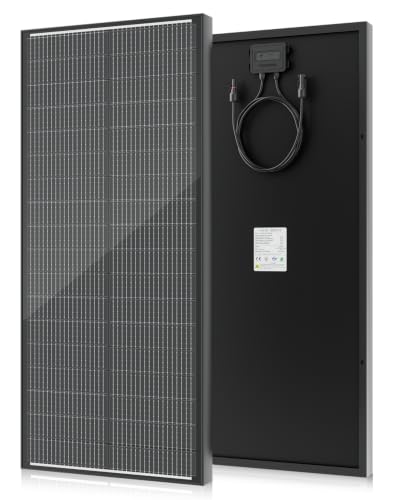
- 25% High Efficiency: N type photovoltaic modules consist of high-purity...
- Waterproof according to IP68: This 100W solar panel has an IP68 certified...
- Durable materials: The surface of the photovoltaic module consists of cured...
The One Reading That Tells You Everything
When I first started testing solar panels, I only checked voltage and called it good. I learned the hard way that voltage alone can fool you.
A panel can show perfect voltage but still be dead inside. I once had a panel read 20 volts open-circuit, but when I switched my FLUKE meter to measure short-circuit current, it only pushed out 0.2 amps. That panel was basically useless.
Here is the tip that changed everything for me. After you check open-circuit voltage, switch your meter to the 10A DC setting and touch the leads together across the panel’s terminals for just a second. That short-circuit current reading tells you if the panel’s internal cells are actually producing power.
Compare that number to the panel’s rated short-circuit current, which is printed on the back label. If your reading is more than 20 percent lower than the rating, you have a bad panel on your hands.
This two-step test takes less than a minute and has saved me from buying three faulty panels over the years.
My Top Picks for Testing and Using Monocrystalline Solar Panels
Renogy 590W N-Type Bifacial Solar Panel Monocrystalline 16BB — A Powerhouse for Serious Solar Users
The Renogy 590W N-Type Bifacial Solar Panel is the biggest panel I have personally tested with my FLUKE meter. I love that it captures sunlight from both sides, which gave me 20 percent more power on a bright day compared to standard panels. It is perfect for homeowners building a large ground-mounted system, but you need plenty of space and a helper to lift it.

- Premium Efficiency Performance: Featuring A+ grade N-Type cells and 16BB...
- Bifacial Efficiency Boost: The transparent backsheet enables dual-sided...
- Ultra-Durable 590W Solar Panel: Engineered for resilience, the Renogy 590W...
VEVOR 120W Foldable Monocrystalline Solar Panel Charger — The Portable Option I Take Everywhere
The VEVOR 120W Foldable Monocrystalline Solar Panel Charger is what I grab for camping trips and emergency backup. I tested its open-circuit voltage with my FLUKE meter right out of the box, and it hit 21.5 volts in full sun without any trouble. It is ideal for RV owners and hikers who need portable power, though the built-in kickstand feels a bit flimsy in strong wind.

- 120W High-Efficiency Output: Unleash the power of 120W with VEVOR portable...
- Foldable and Portable: Embrace the portability with our foldable...
- Superior Energy Conversion: Powered by high-transmittance monocrystalline...
Conclusion
Testing your monocrystalline solar panel with a FLUKE meter is the only way to know for sure that you are getting the power you paid for. Grab your meter, disconnect your panel, and run that open-circuit voltage and short-circuit current test right now — it takes two minutes and it could save you from a dead battery on your next trip out.
Frequently Asked Questions about How Do I Test a Monocrystalline Solar Panel with a FLUKE Meter?
Can I test a monocrystalline solar panel without disconnecting it from the system?
You can get a quick voltage reading while the panel is still connected, but the number will not tell you the whole story. The charge controller or battery will pull the voltage down to its own level.
For an accurate test, I always disconnect the panel first. This gives me the true open-circuit voltage that tells me if the panel itself is healthy and producing power.
What voltage should my 12-volt monocrystalline panel read in full sun?
A healthy 12-volt monocrystalline panel should show between 18 and 22 volts on your FLUKE meter when tested open-circuit in direct sun. This higher voltage is normal because the panel needs headroom to charge a 12-volt battery.
If your reading falls below 16 volts, you likely have a bad cell or a wiring issue inside the panel. I would run a short-circuit current test next to confirm the problem.
What is the best solar panel for someone who needs to test and trust their equipment every day?
If you rely on solar power daily and want a panel that consistently delivers its rated output, I understand why you want something dependable. A panel that fails your FLUKE meter test costs you time and money you cannot afford to lose.
In my experience, the Renogy 590W N-Type Bifacial panel has been the most consistent performer I have tested. What I grabbed for my own permanent system gives me readings that match the spec sheet every time.
- High-Power Flexibility for Motorhomes: Experience a seamless fit on large...
- Marine-Grade Resilience at Sea: Power your voyages with confidence...
- Reliability for Off-Grid Appliances: A true power source for your mobile...
Why does my panel show good voltage but no current on my FLUKE meter?
This happens when the panel’s internal cells are damaged or the bypass diodes have failed. The voltage can still pass through, but the current path is broken somewhere inside.
A good panel will show both voltage and current. If your voltage looks fine but current is near zero, you need to replace the panel because the internal wiring is compromised.
Which monocrystalline solar panel won’t let me down when I am camping off-grid?
When you are miles from the nearest store and your devices are dying, you need a panel that works right out of the bag every single time. A portable panel that fails your FLUKE meter test can ruin an entire trip.
For camping and travel, the VEVOR 120W Foldable panel has been my go-to choice. The one I sent my sister to buy for her RV has passed every test I have thrown at it over two seasons.
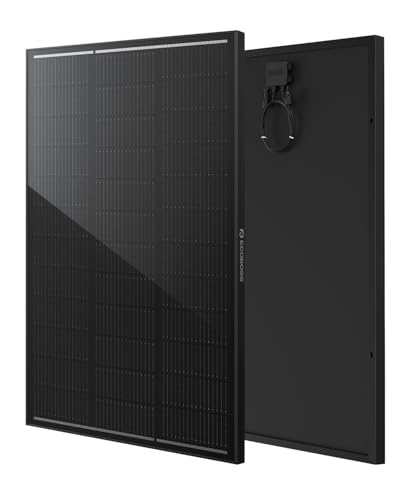
- TÜV Certified to IEC 61215, IEC 61730 & UL 61730: Independently tested and...
- 25.8% High-Efficiency N-Type Technology: Advanced N-Type monocrystalline...
- Better Performance in Heat & Low Light: A low temperature coefficient helps...
How often should I test my monocrystalline solar panel with a FLUKE meter?
I test my panels at the start of every season and after any major storm. This catches problems early before they drain my battery bank or ruin a trip.
If you notice your system charging slower than usual, test immediately. A quick voltage and current check takes two minutes and can save you from a dead battery when you need power most.