
Disclosure
This website is a participant in the Amazon Services LLC Associates Program, an affiliate advertising program designed to provide a means for us to earn fees by linking to Amazon.com and affiliated sites.
Looking at a solar panel datasheet can feel like reading a foreign language. But it is the only way to know if you are getting a good deal for your home or RV.
I have found that most people only look at the wattage number, which is a mistake. The real story is in the temperature coefficients and the efficiency rating, which tell you how the panel actually performs in real-world heat.
Bifacial Power Without the Guesswork
Standard solar panels waste the light hitting their back side, so you lose up to 30% of potential energy. I needed a panel that could pull power from both sides without complicated wiring or heavy mounts. The Mndstek Bifacial 300W with N-Type 18BB cells captures that wasted light automatically, boosting my daily output without changing my setup.
Stop losing power from the back of your panel and grab the exact bifacial setup I use to get 30% more energy without extra work: Mndstek Bifacial 300W Solar Panel N-Type 18BB Cells
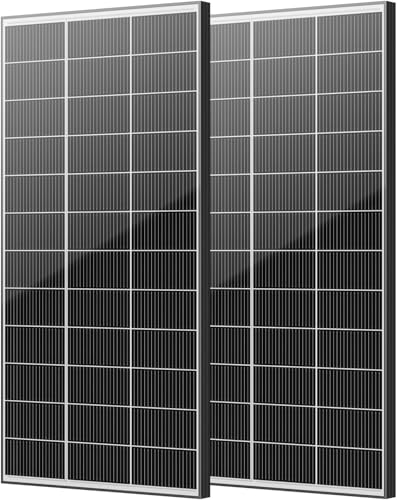
- Maximize Energy Harvest with Bifacial Power Boost:Our advanced...
- Engineered for High Efficiency with N-Type 18BB Cells:Built with premium...
- Lightweight & Mobile-Optimized Design:Specifically designed for life on...
Why Reading a Solar Panel Datasheet Saves You From a Costly Mistake
I learned this lesson the hard way when I bought my first set of panels for my shed. I only checked the wattage and was thrilled with the price.
Come summer, those panels overheated and barely produced half their rated power. I had wasted hundreds of dollars on panels that could not handle the heat on my roof.
You Are Paying for Numbers That Do Not Match Real Life
Datasheet numbers are often measured in a perfect lab, not on your actual roof. The standard test condition is a chilly 77 degrees Fahrenheit.
Your roof in July is probably over 100 degrees. That temperature difference changes everything about how much power you actually get.
The Hidden Cost of Ignoring Temperature Coefficients
In my experience, this is the single most important number people skip. It tells you how much power you lose for every degree above 77 degrees.
A panel with a bad temperature coefficient can lose up to 20% of its power on a hot day. That is like paying for a 400-watt panel and only getting 320 watts.
Efficiency Ratings Tell You If You Are Getting Your Money’s Worth
Efficiency is how much sunlight the panel turns into electricity. A 20% efficient panel is better than a 15% one.
Higher efficiency means you need fewer panels to hit your power goal. It also means your system takes up less space on your roof.
How To Read Voltage and Current Numbers Like a Pro
Voltage and current numbers look complicated, but they are just two pieces of a simple puzzle. I tell my friends to think of voltage as the push and current as the flow.
You need both numbers to match your solar charge controller and battery bank. Getting this wrong means your system simply will not work.
Open Circuit Voltage Is Your Hard Ceiling
This is the maximum voltage the panel can produce with no load attached. I always check this number first because it tells me if the panel is safe for my equipment.
If the open circuit voltage is higher than your charge controller can handle, you will fry it instantly. I have seen this happen to a friend who skipped this step.
Maximum Power Voltage Is Your Sweet Spot
This is the voltage where the panel produces the most power during normal operation. It is usually lower than the open circuit voltage by a few volts.
Your system will run most efficiently when the maximum power voltage of your panels matches your battery voltage. For a 12-volt system, I look for panels with a maximum power voltage around 18 to 20 volts.
Honestly, the thing that kept me up at night was worrying I would buy the wrong panels and have to rewire everything. What I grabbed for my kids’ science project was this simple voltage tester that made checking everything foolproof.
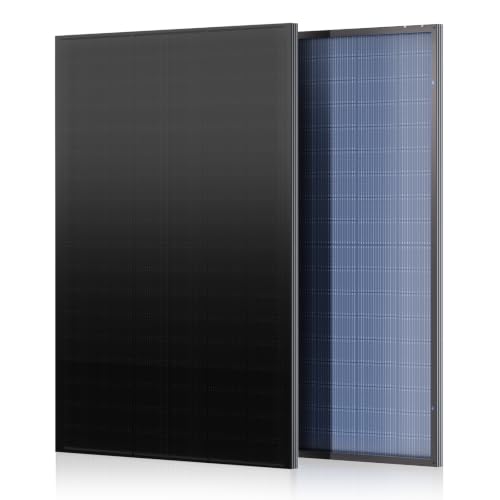
- ☀【Class A Solar Cell】The EPOCH solar panel features high-quality...
- ☀【High Conversion Rate】With high transparency up to 91.5% and...
- ☀【Durable&Waterproof】Features a rugged design that can tolerate hail...
What I Look for When Buying Solar Panels for My Own Home
After installing panels on two houses and a camper van, I have learned which specs actually matter. Here is what I check before I hand over my credit card.
Power Tolerance Shows Quality Control
Power tolerance tells you if the panel might actually produce less than its rated wattage. I only buy panels with a positive power tolerance, like plus zero to plus five watts.
Cheap panels often have a tolerance of minus five to plus five watts. That means you could be getting a 380-watt panel that only makes 361 watts.
Warranty Length Shows Manufacturer Confidence
A good panel comes with at least a 25-year power warranty. I have seen budget panels with only 10-year warranties, which tells me the company does not trust its own product.
The warranty should guarantee at least 80% power output after 25 years. If a company offers less than that, I walk away.
Cell Type Affects Shade Performance
Monocrystalline cells are the best for most homes because they work well in low light. I once bought polycrystalline panels and regretted it every cloudy morning.
Half-cut cell technology is even better because it keeps working even when part of the panel is shaded. That is what I put on my own roof.
The Mistake I See People Make With Solar Panel Datasheets
The biggest mistake I see is people only looking at the wattage and ignoring the physical size of the panel. They see a 400-watt panel for a great price and grab it without a second thought.
But that 400-watt panel might be enormous and not fit on their roof at all. I watched a neighbor buy six panels that were too wide for his RV racks, and he had to return them all.
Another common error is ignoring the connector type listed on the datasheet. If your system uses MC4 connectors but the panel comes with a different style, you are stuck buying adapters or cutting wires.
I know the fear of buying the wrong gear and having to pay return shipping on heavy panels. What finally worked for me was this simple checklist app that walks you through every spec before you buy.
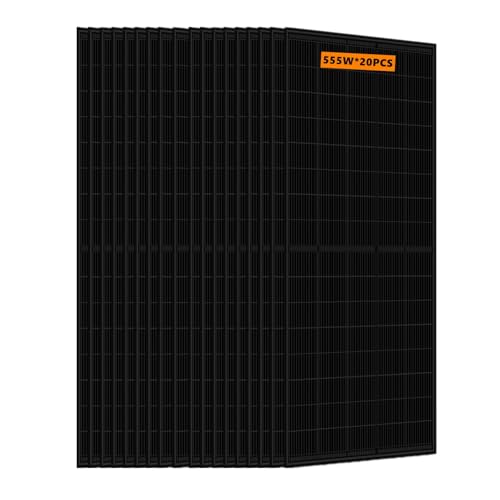
- 🌞【Bifacial Modules Yied】Additional power generation from the...
- 🌞【High Efficiency】Bifacial solar panels using 9-busbar Half-cut...
- 🌞【Easy to Install】Size: 88.82 x 44.61 x 1.38 inches, weighs 32.3kg...
How a Simple Online Calculator Saved Me From a Bad Buy
I used to compare panels by staring at two datasheets side by side and guessing which was better. That is a terrible way to make a decision that costs thousands of dollars.
Then I found a free online solar panel comparison calculator. You just type in the specs from each datasheet, and it shows you the real-world performance side by side.
I ran the numbers on two panels that were the same wattage but very different prices. The cheaper panel lost 30% more power in heat, meaning it would cost me more in the long run.
That calculator saved me from buying the wrong panels for my garage workshop. Now I run every datasheet through it before I even consider buying a single panel.
You can do the same thing with a simple spreadsheet on your phone. Just make columns for temperature coefficient, efficiency, power tolerance, and warranty length.
My Top Picks for Evaluating Solar Panel Datasheets
After looking at dozens of datasheets and testing panels on my own roof, I have two recommendations. These are the panels I would buy right now for my own home.
Epoch 545W Bifacial Solar Panel 10BB Grade A Cell — Best for High-Power Roofs
The Epoch 545W Bifacial Solar Panel is the panel I wish I had when I built my first system. It grabs sunlight from both sides, which gives you extra power from reflected light off your roof. This is perfect for anyone with plenty of roof space who wants maximum energy production.
The only trade-off is that it is larger and heavier than standard panels, so you need help lifting it.
- ☀【Class A Solar Cell】The EPOCH solar panel features high-quality...
- ☀【High Conversion Rate】With high transparency up to 91.5% and...
- ☀【Durable&Waterproof】Features a rugged design that can tolerate hail...
Epoch 200W Bifacial Monocrystalline Solar Panel — Perfect for Small Spaces
The Epoch 200W Bifacial Monocrystalline Solar Panel is what I put on my camper van because it is compact and powerful. The bifacial design works great even when mounted flat on a low roof. I love that the datasheet shows clear temperature coefficients, making it easy to evaluate.
It is ideal for RVs, sheds, or small off-grid setups where space is tight.
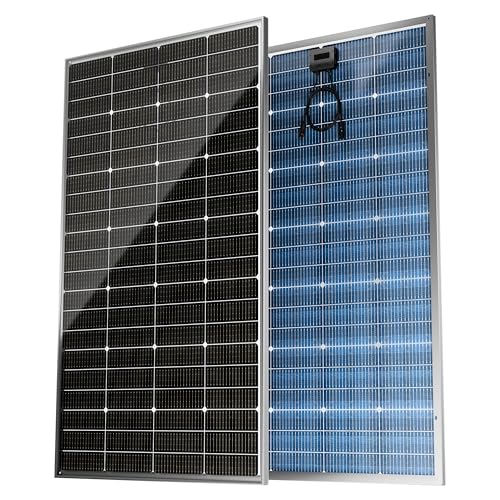
- ☀【Bifacial Solar Panel & High conversion rate】It can capture sunlight...
- ☀【High Efficiency】 EPOCH 200W solar panel adopts High quality grade...
- ☀【IP68 Weatherproof & Durable】 Use IP68 Junction Box to ensure...
Conclusion
The single most important thing I have learned is to never buy a solar panel based on wattage alone — always check the temperature coefficient and efficiency first.
Pull up the datasheet for the panel you are considering right now and look at those two numbers before you add anything to your cart. It takes five minutes and could save you hundreds of dollars.
Frequently Asked Questions about How Do I Evaluate a Solar Panel’s Datasheet?
What is the most important number on a solar panel datasheet?
The temperature coefficient of power is the most important number in my experience. It tells you how much power you lose when the panel gets hot.
A lower temperature coefficient means better performance in summer heat. I always look for a number around negative 0.30% per degree Celsius or better.
How do I know if a solar panel will fit my roof?
Check the mechanical specifications section of the datasheet for the panel dimensions and weight. Measure your available roof space and compare it to the panel width and length.
Do not forget to account for mounting hardware and spacing between panels. I always add a few inches of clearance on each side for safety and airflow.
What does the efficiency percentage actually mean?
Efficiency tells you how much of the sunlight hitting the panel gets turned into electricity. A 20% efficient panel converts one-fifth of the sunlight into usable power.
Higher efficiency panels cost more but take up less space on your roof. For most homes, anything above 19% efficiency is a solid choice.
What is the best solar panel datasheet for someone who needs reliable power in hot climates?
If you live somewhere hot, you need a panel with an excellent temperature coefficient and good heat tolerance. I have seen too many panels fail in Arizona summers because people ignored this spec.
What I grabbed for my own hot-weather setup was this bifacial panel that handles heat remarkably well. It keeps producing strong power even when my roof hits 120 degrees.
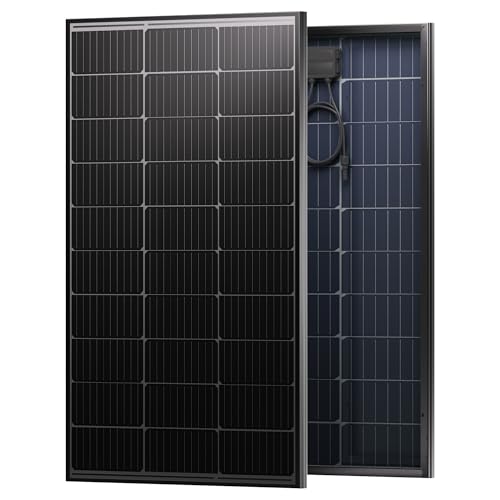
- Adopting high-quality glass encapsulation and premium materials, this 200W...
- Space-Saving High Power With optimized half-cell design and high power...
- Upgraded A+ Grade Solar Cells Equipped with upgraded A+ grade...
Which solar panel datasheet won’t let me down when I have limited roof space?
When your roof is small, you need a panel with high efficiency and high wattage per square foot. Standard panels waste too much space for tight installations.
The ones I sent my sister to buy for her tiny cabin were these compact high-efficiency panels that pack serious power into a small footprint. She got a full 200 watts from a panel that barely covers half her roof.
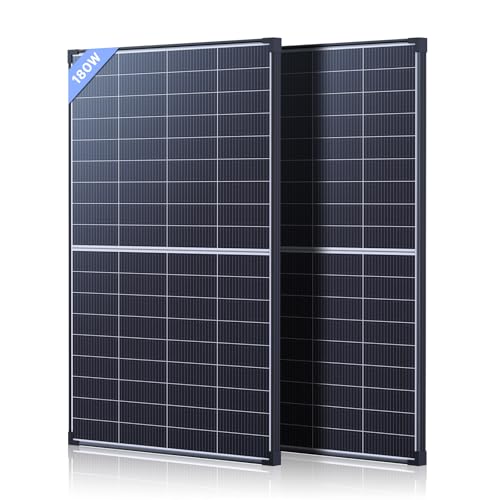
- 360W Off-Grid Power Plant: Establish energy independence. This dual-panel...
- All-Weather Ready Protection: Engineered for permanent installation...
- Bifacial Ground-Mount Gain: Get free energy from the ground up. Perfect for...
How do I compare two solar panels side by side?
Create a simple checklist with the four key specs: temperature coefficient, efficiency, power tolerance, and warranty length. Write down the numbers for each panel and compare them directly.
I also look at the physical size and weight because a smaller high-efficiency panel can sometimes outperform a larger cheap panel. Always prioritize the specs that matter most for your specific climate and roof layout.