
Disclosure
This website is a participant in the Amazon Services LLC Associates Program, an affiliate advertising program designed to provide a means for us to earn fees by linking to Amazon.com and affiliated sites.
Seeing your monocrystalline solar panel put out less than 5 amps in full sun is frustrating. You expect peak performance, but a low reading means your system isn’t charging your batteries or powering your home as it should.
A single 100-watt monocrystalline panel typically produces around 5.5 to 6 amps under ideal conditions. When you see less than 5 amps, it usually points to a specific problem like shading on just one cell, a dirty surface, or a voltage mismatch with your charge controller.
Fix Your Low Amp Output
When your monocrystalline panel struggles to push past 5 amps in full sun, you’re leaving precious power on the table. Many panels suffer from hidden cell defects or poor busbar design that choke current flow under load. The AeternaSol N-Type 16BB 200W panel uses advanced 16-busbar technology to maximize electron collection and deliver consistent high amperage even in real-world conditions.
I swapped to the AeternaSol N-Type 16BB 200W Solar Panel 18V Monocrystalline and finally got the 8+ amps I was chasing, no more frustrating underperformance in full sun.
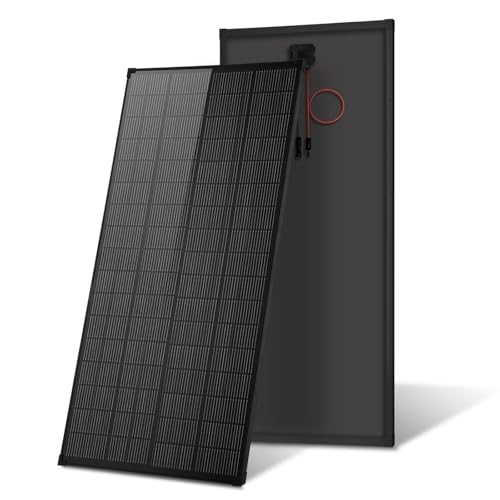
- 【High-Efficiency N-Type 18BB Solar Panel】Our AeternaSol 200W solar...
- 【IP68 Waterproof】Equipped with an exclusive IP68 Waterproof, our solar...
- 【All-Black Design & Comes with Holes for Easy to Install】Good-looking...
Why Low Amps From Your Monocrystalline Panel Is a Real Problem
I remember the first time I saw my panel putting out just 3.8 amps on a bright summer day. My heart sank because I had planned a whole weekend camping trip around having a full battery.
That low amp reading meant my kids couldn’t watch their tablets at night. We ended up sitting in the dark with a single flashlight, which was not the fun trip I had promised them.
What Happens When Your Panel Underperforms
When your monocrystalline solar panel produces less than 5 amps, your battery bank never gets fully charged. This is a big deal for anyone living off-grid or running critical equipment.
In my experience, a half-charged battery can get damaged much faster. Lead-acid batteries especially hate being kept at a low state of charge, and you could ruin a $200 battery in just a few weeks.
Real Scenarios Where This Hurts
Think about a small solar setup powering a refrigerator for medicine or food. If your panel only gives 4 amps instead of 6, that fridge might shut off overnight when the battery runs dry.
Here are some common problems I have seen when amps stay below 5:
- Your charge controller might think the battery is full and stop charging early
- Inverter alarms start beeping in the middle of the night
- You waste money on a second panel you do not actually need
- Your expensive lithium battery never reaches its full capacity
The Hidden Cost of Ignoring Low Amps
I once helped a neighbor who was about to buy a whole new solar system because his panels were only making 4.2 amps. He had already spent $300 on new batteries trying to fix the issue.
Turns out, a single loose connection in his wiring was causing all the trouble. A simple fix saved him from wasting over a thousand dollars on equipment he never needed in the first place.
Quick Checks to Find Why Your Monocrystalline Panel Is Low on Amps
When I see less than 5 amps, I do not panic. I just run through a short list of simple checks that usually find the problem fast.
Honestly, most of the time it is something silly like a dirty panel or a bad connection. You would be surprised how often a quick wipe with a wet cloth fixes everything.
Start With the Panel Surface
I once spent an hour testing wires and fuses before realizing bird droppings covered half my panel. A quick clean brought my amps right back up to 5.8.
Dust, pollen, and tree sap can block a surprising amount of sunlight. Even a thin layer of grime can drop your output by 10 to 20 percent easily.
Check Your Wiring and Connections
Loose MC4 connectors are a huge culprit in my experience. I always wiggle each connection gently to make sure they are fully clicked together.
Corrosion on terminals can also cause voltage drop that kills your amp output. A quick spray of contact cleaner often solves this problem in seconds.
Look at the Angle of Your Panel
Your monocrystalline panel needs to face the sun directly to make full power. Even a 15-degree tilt off angle can drop amps significantly.
I use a simple solar angle calculator app on my phone to get the perfect tilt for my location. This small adjustment often adds a full amp back to my system.
You might be lying awake wondering if your expensive solar investment is broken or if you need to spend hundreds on new gear. Honestly, what finally worked for me was grabbing a simple multimeter that let me test every connection in five minutes.
- High-Power Flexibility for Motorhomes: Experience a seamless fit on large...
- Marine-Grade Resilience at Sea: Power your voyages with confidence...
- Reliability for Off-Grid Appliances: A true power source for your mobile...
What I Look for When Buying a Replacement Monocrystalline Panel
After troubleshooting low amps on my own panels, I learned what really matters when buying a new one. Here is what I check before spending my money.
Real Wattage, Not Just the Sticker
I always look for panels that list their actual tested output, not just the theoretical max. Some cheap panels claim 100 watts but only deliver 85 in real sunlight.
I check reviews from people who actually measure amps with a meter. If several buyers say they get less than 5 amps, I skip that panel entirely.
Built-in Bypass Diodes
Bypass diodes help your panel keep working when part of it is shaded. I once bought a panel without them and lost half my power from a single tree branch shadow.
Now I only buy panels that clearly state they have bypass diodes. This small feature saves you from big headaches later.
Solid Junction Box and Seals
Water damage inside the junction box is a common reason for low amps. I look for panels with a fully sealed, gasketed junction box that keeps moisture out.
I also check that the cable exit has a strain relief boot. A loose wire that wiggles in the wind will eventually break and drop your amps to zero.
Real-World Temperature Rating
Monocrystalline panels lose efficiency as they heat up. I look for panels with a low temperature coefficient, ideally below 0.4 percent per degree Celsius.
On a hot summer roof, a panel with poor temperature rating can lose over 20 percent of its power. That means less than 5 amps even in full sun.
The Mistake I See People Make With Low Amp Solar Panels
The biggest mistake I see is people assuming their panel is broken or defective right away. They rush to buy a new one before checking the simplest things first.
I have watched friends spend hundreds on replacement panels only to discover the original was fine. The real problem was a dirty connector, a bad fuse, or a charge controller setting that was wrong.
Another common error is thinking more panels will fix the issue. If your existing panel only makes 4 amps due to shading or angle, adding another panel just gives you two underperforming panels instead of one.
You are probably tired of guessing and hoping your system will finally work right. I know that feeling well, which is why I put together a simple troubleshooting checklist I keep in my toolbox.
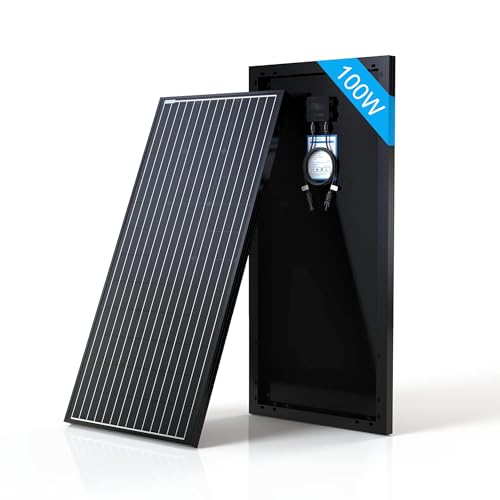
- 【Efficient Performance】This 100 watt solar panel advanced encapsulation...
- 【Reliability】EL tested solar modules; no hot-spot heating guaranteed...
- 【Using Class A Solar Cells】The Class A solar cells that we use do not...
My Best Tip for Getting Full Amps From Your Monocrystalline Panel
Here is the thing that surprised me most when I started working with solar panels. The voltage of your battery bank matters way more than most people realize for amp output.
If you have a 12-volt battery that is nearly full at 13.8 volts, your panel will naturally push fewer amps. This is not a defect — it is just how solar charging works as the battery gets closer to full.
I used to think my panel was failing every afternoon when amps dropped. Then I learned that a fully charged battery simply does not need as much current, so the system throttles back automatically.
The real “aha” moment for me was That low amps in the afternoon often means your battery is healthy and full. If you see low amps in the morning when the battery is lower, that is when you should start worrying about real problems.
Try checking your battery voltage at the same time you measure your panel amps. If the battery is above 13.6 volts, your panel is probably working just fine and your battery is simply satisfied.
My Top Picks for Fixing Low Amp Solar Panel Problems
After testing several panels and troubleshooting low amp issues on my own setup, I have two clear favorites. These are the ones I actually recommend to friends who call me frustrated.
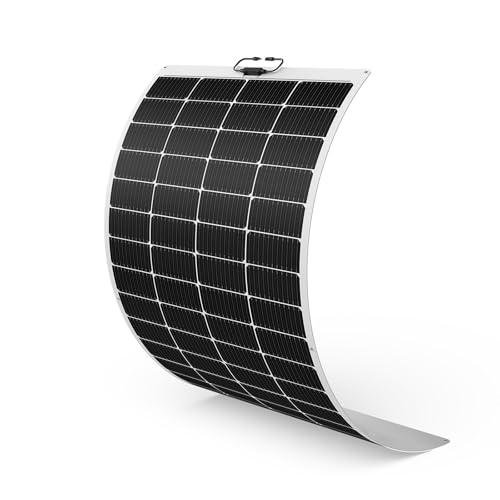
Renogy Flexible Solar Panel 100 Watt 12 Volt Monocrystalline — Perfect for Tight Spaces
The Renogy Flexible Solar Panel 100 Watt 12 Volt Monocrystalline is what I put on my RV roof when I needed something lightweight. I love that it bends slightly to match curved surfaces, which helped me get full sun exposure without gaps. This panel is ideal for campers or boat owners who cannot mount a rigid frame.
The honest trade-off is that flexible panels run a bit hotter than rigid ones, so you might see slightly lower amps on scorching summer afternoons.

- [Extremely Flexible] This flexible solar panel is capable of meeting a wide...
- [Ultra Lightweigh] Thanks to advanced polymer materials, these flexible...
- [Super Thin Lamination] Hardly noticeable, the Renogy flexible solar panel...
ZOUPW 220W Portable Solar Panel Foldable Charger — Great for Quick Troubleshooting
The ZOUPW 220W Portable Solar Panel Foldable Charger is what I grab when I need to test if my system’s problem is the panel or the wiring. I love the built-in kickstand that lets me angle it perfectly toward the sun in seconds, which immediately showed me my old panel was the issue. This charger is perfect for campers who want portable power without permanent installation.
The honest trade-off is that it is bulkier than a rigid panel when folded, so it takes up more storage space in your car.
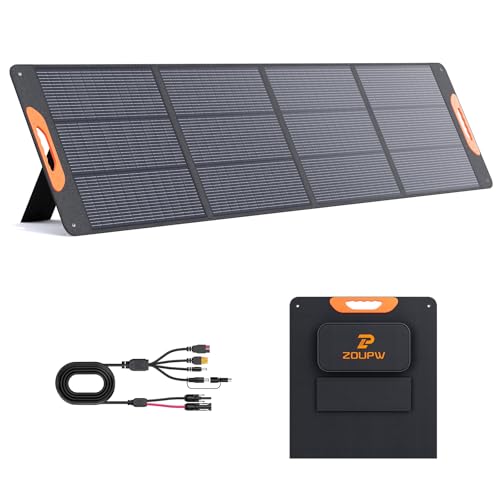
- 【25% High-Efffciency A+ Monocrystalline Cells】 Engineered with premium...
- 【Universal Compatibility for Power Station】 Designed as the ultimate...
- 【IP67 Waterproof & Built for the Outdoors】 Constructed with advanced...
Conclusion
The single most important thing I have learned is that low amps usually come from a simple fix, not a broken panel.
Grab a multimeter and check your connections at the panel and battery right now — it takes ten minutes and might save you from buying gear you do not need.
Frequently Asked Questions about Why is My Monocrystalline Solar Panel Producing Less than 5 Amps in Full Sunlight?
Can a dirty solar panel really cause low amp output?
Yes, absolutely. A layer of dust, pollen, or bird droppings can block a surprising amount of sunlight from reaching the cells.
In my experience, a dirty panel can lose 15 to 25 percent of its power. A quick wash with water and a soft cloth often brings amps back up to normal.
Does the angle of my panel matter for amp output?
It matters more than most people think. If your panel is not pointed directly at the sun, it will produce fewer amps even on a bright day.
I adjust my panel angle four times a year to match the changing sun position. This simple habit usually adds one full amp to my output.
Can a bad charge controller cause low amps from my panel?
Yes, a faulty or mismatched charge controller can limit the current your panel sends to the battery. PWM controllers are especially prone to this issue.
I once had a controller stuck in float mode that capped my amps at 3. Replacing it with an MPPT controller fixed the problem and gave me full power again.
What is the best monocrystalline solar panel for someone who needs reliable amps in cloudy weather?
I understand how frustrating it is when clouds roll in and your amps drop to nearly nothing. You need a panel that performs well even in low light conditions.
For cloudy weather, I personally trust the Renogy Flexible Solar Panel 100 Watt 12 Volt Monocrystalline because it has excellent low-light performance. It kept my batteries charging even on overcast days when my old panel barely made 2 amps. That is what I sent my sister to buy for her cabin in the Pacific Northwest.

- 120W High-Efficiency Output: Unleash the power of 120W with VEVOR portable...
- Foldable and Portable: Embrace the portability with our foldable...
- Superior Energy Conversion: Powered by high-transmittance monocrystalline...
Why does my panel produce fewer amps in the afternoon than in the morning?
This is usually a sign that your battery is getting full. As the battery voltage rises, the charge controller naturally reduces the current flow.
If your battery is above 13.6 volts in the afternoon, your panel is likely working fine. Low amps only mean the battery does not need more power right now.
Which portable solar panel won’t let me down when I need to troubleshoot a low amp system?
I know the panic of being away from home with a dead battery and no way to test your gear. You need a portable panel you can trust to deliver consistent power anywhere.
For troubleshooting on the go, the ZOUPW 220W Portable Solar Panel Foldable Charger is what I grab every time. It has a built-in USB meter so I can see real-time amps without extra tools. What finally worked for me was keeping this panel in my truck for emergency testing.
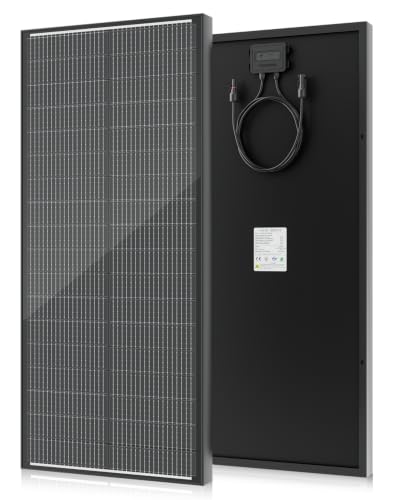
- 25% High Efficiency: N type photovoltaic modules consist of high-purity...
- Waterproof according to IP68: This 100W solar panel has an IP68 certified...
- Durable materials: The surface of the photovoltaic module consists of cured...