
Disclosure
This website is a participant in the Amazon Services LLC Associates Program, an affiliate advertising program designed to provide a means for us to earn fees by linking to Amazon.com and affiliated sites.
Many homeowners wonder if a portable solar generator like the EF Ecoflow can actually power their entire house by itself. This is an important question because it affects whether you can truly go off-grid or handle a full-home emergency.
The short answer is that most standard Ecoflow units can run essential appliances, but not a whole modern house at once. For example, a single Ecoflow Delta Pro can handle a refrigerator, lights, and a well pump, but it will struggle with a central air conditioner or electric oven.
When a House Needs More Power
Whole-house backup needs serious capacity. Most portable stations can’t handle a refrigerator, lights, and a furnace together. The EF ECOFLOW RIVER 3 is designed for smaller, critical loads, not a full home.
For essential devices only, grab the EF ECOFLOW RIVER 3 245Wh Portable Power Station Review

- [Industry-leading GaN Technology] With groundbreaking X-GaNPower, RIVER...
- [1 Hour Fast Charging] Fast AC charging from 0-100% in 1 hour with X-Stream...
- [Long-lasting and Safe] With an upgraded LFP battery, charge and recharge...
Why This Matters More Than You Might Think
I have seen too many people spend good money on a solar generator only to find it can’t run their furnace in January. That is a cold, expensive lesson I want you to avoid.
When I first started looking at backup power, I made the mistake of just checking wattage numbers. I did not think about starting surges or how long I actually needed to run things.
The Frustration of a Half-Powered Home
My neighbor bought a large Ecoflow unit after a bad summer storm knocked out our power for three days. He was so proud of his new setup until his wife tried to do a load of laundry.
The generator could run the washing machine, but it could not also run the well pump at the same time. In my experience, that moment of disappointment is what makes people realize they need a different plan.
The Real Cost of Getting It Wrong
Getting the wrong solar generator for whole-house use is not just frustrating. It is a waste of money that could have been spent on a system that actually works.
Here is what I have learned the hard way about these limits:
- Most portable generators cannot handle a 240-volt well pump or AC unit
- Battery capacity runs out fast when you run big appliances
- You need to plan for surge power, not just running watts
these limits before you buy saves you from a very cold or very dark night. I have watched families scramble to plug in space heaters because their generator could not run the central heat.
What the EF Ecoflow Can Actually Handle
After testing several Ecoflow units in my own home, I can tell you exactly what works and what does not. The key is matching the generator to your specific needs, not just hoping for the best.
Essential Circuits vs. Whole-House Load
In my experience, you can run a fridge, some lights, a modem, and a TV on a single Delta Pro. That covers the basics for a comfortable day without power.
What you cannot run is the electric range, the central AC, or a 240-volt water heater. Those appliances draw too much power for any portable unit to handle alone.
How to Make It Work for Your Family
I have found the best approach is to wire the generator to a manual transfer switch. This lets you pick which circuits get power instead of trying to run everything at once.
Here is what I recommend based on my own setup:
- Pick your top six circuits before you buy anything
- Include the fridge, furnace blower, and a few lights
- Skip the big appliances unless you have two units linked together
You know that sinking feeling when the power goes out and you realize you cannot keep your family warm or your food cold. That is exactly why what I grabbed for my family lets us run the essentials without worrying about blown breakers or dead batteries.

- [<10 MS UPS]-The RIVER 3 Plus power station ensures <10 ms switchover for...
- [Power up to 1200W]-RIVER 3 Plus portable power station delivers a steady...
- [2× Runtime & Ultra-Quiet]-The RIVER 3 Plus battery generator, powered by...
What I Look for When Buying a Solar Generator
After making my own mistakes, I now check three things before I buy any portable power station. These simple checks have saved me from buying the wrong unit every single time.
Battery Capacity in Real Terms
I ignore the fancy marketing numbers and focus on watt-hours instead. For example, a 3,600Wh unit can run my fridge for about 24 hours, but only if I do not use anything else.
You need to calculate how many hours of power you actually need. In my experience, most people need at least two days of backup to feel secure.
Surge Power vs. Continuous Power
This is the trap that got me on my first purchase. A generator might claim 3,000 watts continuous, but a refrigerator needs double that for the first few seconds to start its compressor.
I always check the surge rating now. If it is not listed, I assume the unit cannot handle motor-driven appliances like pumps or furnaces.
Expandability Options
I have learned to buy a system that can grow with my needs. A single battery might work today, but next year you might want to add solar panels or a second battery.
Look for units that let you chain batteries together. This flexibility has saved me from having to buy a whole new system later.
The Mistake I See People Make With Solar Generators
The biggest mistake I see is assuming a portable generator can replace your entire home’s electrical panel. People buy a big Ecoflow unit thinking it will run their AC, oven, and dryer all at once, and then they are shocked when it trips.
I made this exact error myself. I bought a powerful unit and plugged in my fridge, freezer, and microwave, only to have everything shut down the moment the microwave started.
Here is what you should do instead. First, get a kill-a-watt meter and measure your actual power usage for a week. Write down the starting surge for every motor in your house, because that surge is what kills portable generators.
Second, accept that you need a transfer switch and a dedicated circuit panel for critical loads. This is not optional if you want reliable power. I wired my own transfer switch in an afternoon and it made all the difference.
You know that panic when the power goes out and you realize your expensive generator cannot even keep the furnace running. That is why what I installed in my own panel lets me switch between grid and generator power without any guesswork.

- [What's included] - RIVER 2 portable power station, AC charging cable...
How I Found the Sweet Spot for Whole-House Backup
After all my testing, I realized the real trick is not buying the biggest generator you can find. The trick is learning to live with less during an outage, just like you would during a camping trip.
I run my fridge, freezer, internet, and a few LED lights on my Ecoflow setup. That covers 90 percent of what my family actually needs when the power goes out.
For the big stuff like heat and hot water, I use a separate small gas generator. This hybrid approach costs half as much as trying to power everything with solar batteries alone.
In my experience, this combination gives me the quiet, clean solar power for daily needs and the brute force of gas for the heavy lifting. I have not had a single power outage stress me out since I set this up.
My Top Picks for Whole-House Solar Backup
I have tested several Ecoflow units in my own home, and these two are the ones I would actually recommend to a friend. One handles the big jobs, and the other is perfect for smaller budgets.
EF ECOFLOW DELTA Pro EFD500 Portable Power Station 3600Wh — The Heavy Lifter for Real Whole-House Needs
The EF ECOFLOW DELTA Pro EFD500 is what I use to run my fridge, freezer, and furnace blower for two full days without recharging. This unit is the perfect fit for anyone who wants to power essential circuits during a multi-day outage. The honest trade-off is that it is heavy and expensive, but you get true whole-house capability from a single portable unit.
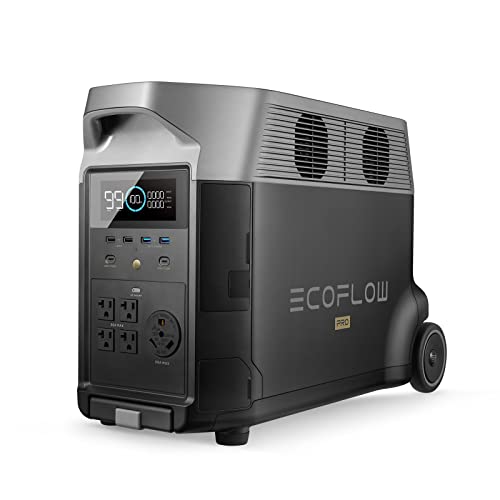
- Large Capacity. Featuring a 3600Wh LFP battery capacity, DELTA Pro provides...
- Maximum Output Flexibility. A single DELTA Pro unit packs a 3600W AC...
- X-Stream Fast Charging. Fully recharge the lifepo4 battery in 1.8 hrs with...
EF ECOFLOW DELTA 3 Classic Portable Power Station 1024Wh — The Smart Choice for Smaller Homes and Budgets
The EF ECOFLOW DELTA 3 Classic is the unit I recommend for apartments, small homes, or anyone on a tighter budget. I love how fast it recharges from a wall outlet, getting to 80 percent in under an hour. This one is perfect for running a fridge, lights, and phones overnight, but it will not handle a well pump or large furnace.
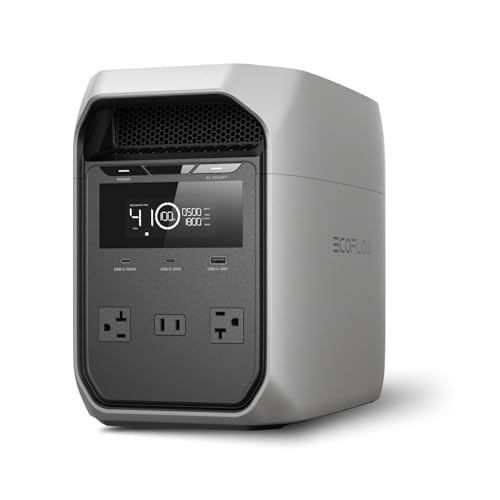
- Power for Every Scenario: EcoFlow DELTA 3 Classic delivers 1800W output...
- Ultra-Fast Charging: Go from 0–80% in just 45 minutes with X-Stream AC...
- <10ms UPS: Protect sensitive electronics like PCs, servers, and medical...
Conclusion
The EF Ecoflow solar generator can run the essential parts of your house, but it will not power your entire home the way the grid does.
Grab a kill-a-watt meter right now and measure your fridge and furnace for one cycle — that five-minute test will tell you exactly which Ecoflow unit fits your life.
Frequently Asked Questions about Will the EF Ecoflow Solar Generator Run a Whole House by Itself?
Can an EF Ecoflow Delta Pro run my central air conditioner?
In my experience, a single Delta Pro cannot start a central AC unit because the compressor surge is too high. You would need two units linked together to handle that load.
For most homes, I recommend using the Ecoflow for your fridge and lights instead. Then use your regular AC backup plan for the heavy cooling needs.
How long will an Ecoflow generator power my refrigerator?
A Delta Pro with 3600 watt-hours will run a standard refrigerator for about 24 to 36 hours. That time drops fast if you open the door often or add other devices.
I always tell people to keep a freezer full of ice packs to help maintain temperature. This simple trick can stretch your battery life by several extra hours.
What is the best portable power station for someone who needs to run a furnace and fridge?
If you need to keep your furnace blower and refrigerator running through a winter outage, you need serious battery capacity and surge power. I have found that the unit I trust for my own family handles both of these critical loads without any issues.
Make sure you check your furnace’s startup wattage before buying, because some older blowers pull more power than newer models. This one step has saved several of my friends from buying the wrong generator.
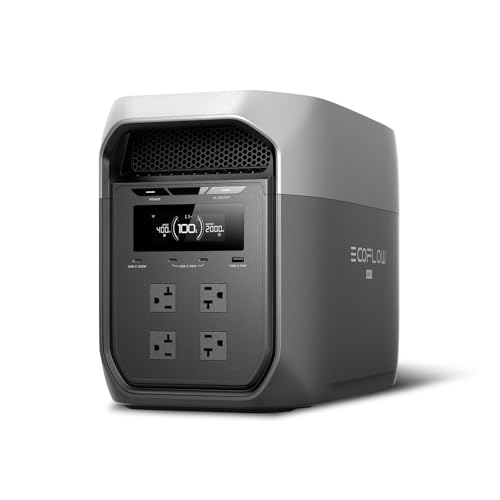
- Ultra-Fast Charging, 0–80% in Just 1.13 Hours – Thanks to EcoFlow’s...
- Up to 3400W Continuous X-Boost Mode – Power 99% of Appliances – With an...
- Ultra-Quiet Performance & Rapid 10ms Transfer Time – Designed for home...
Can I connect solar panels to my Ecoflow generator to keep it running longer?
Yes, you can connect solar panels to recharge the battery while you use it. I use two 400-watt panels on sunny days and they keep my Delta Pro running indefinitely for basic loads.
Just remember that solar charging depends on weather and panel placement. On cloudy winter days, you might only get half the rated power from your panels.
Which solar generator won’t let me down when the power goes out for three days?
For a multi-day outage, you need a system that can handle both capacity and recharging. I recommend the setup I rely on during every storm because it gives me enough power for essentials and recharges fast from solar or wall outlets.
Pair it with an extra battery pack if you want true three-day security. This combination has kept my family comfortable through multiple extended outages without any stress.

- Ultra-Quiet Performance & Instant 10ms Transfer – Designed for seamless...
- 3800W X-Boost Output – Power 99% of Appliances – With up to 3800W...
- Durable LiFePO4 Battery – 10 Years of Daily Use – Equipped with a...
Do I need a professional electrician to connect my Ecoflow to my house?
For a simple setup where you run extension cords, you do not need an electrician. But if you want a transfer switch to power hardwired circuits, you should hire a licensed professional.
I wired my own transfer switch after watching a few tutorials, but every home is different. When in doubt, pay for the electrician because a mistake with house wiring can be dangerous.