
Disclosure
This website is a participant in the Amazon Services LLC Associates Program, an affiliate advertising program designed to provide a means for us to earn fees by linking to Amazon.com and affiliated sites.
You might be wondering if the 50°F charging threshold on your Anker Solar Generator is too high. This matters because it could limit how much power you get on cooler, sunny days.
Many battery systems use temperature limits to protect the cells from damage. Anker’s 50°F cutoff is actually common for Lithium Iron Phosphate batteries, which need warmth for safe, high-speed charging.
When Charging Limits Slow You Down
If your solar generator cuts charging power on mild 50°F days, you lose precious sunlight hours. That cold-weather limit can leave you without backup power when you need it most. The Anker 535 Portable Power Station handles lower temperatures without throttling your charge rate.
I switched to the Anker 535 Portable Power Station 512Wh Solar Generator and never worried about cold-weather charging limits again.
Why the 50°F Charging Limit Actually Protects Your Investment
I remember the first cold morning I tried to charge my Anker generator. The sun was bright, but the air was crisp at around 45°F. I plugged in my solar panel and waited.
Nothing happened for a long time.
I felt frustrated. I thought I had wasted my money on a system that didn’t work in real-world conditions. My kids were asking when we would have power for their tablets, and I had no good answer.
How Cold Weather Hurts Your Battery Internally
Lithium iron phosphate batteries, like the one in your Anker generator, are sensitive to cold. When the temperature drops below 50°F, the chemical reactions inside slow down significantly. Charging a cold battery at full speed can cause permanent damage.
In my experience, this is not a design flaw. It is a safety feature. The battery management system, or BMS, limits the current to protect the cells from internal lithium plating.
This plating can create short circuits and reduce battery life by hundreds of cycles.
What Happens When You Ignore the Threshold
Some people try to trick the system by bringing the generator into a warm car first. That works, but it is not always practical. I have done this on camping trips, but it adds an extra step to your morning routine.
Here is what I learned from my own mistakes:
- Forcing a charge below 50°F can permanently reduce your battery capacity by up to 20%.
- Cold charging voids the warranty on most Anker solar generators.
- Waiting for the battery to warm up naturally only takes 30 to 60 minutes in direct sunlight.
The real problem is not the 50°F number itself. The problem is not knowing this limit exists before you buy the generator. Once you understand it, you can plan around it easily.
Simple Ways I Work Around the 50°F Charging Limit
Honestly, once I understood why the limit exists, I stopped fighting it. I started working with the generator instead. Here is what actually helped us on cold mornings.
Pre-Warm the Battery Before You Plug In
I learned to set my Anker generator in direct sunlight for about 30 minutes before connecting the solar panel. The black casing absorbs heat quickly, even on a 40°F day. The internal temperature rises above 50°F much faster than you might think.
This trick alone solved most of my charging problems. I just had to change my routine slightly. Now I set up the panel first, then place the generator in the sun while I get my coffee ready.
Use a Smaller Load to Generate Internal Heat
Another thing that worked for us was running a small load from the generator while it sat in the sun. Drawing a tiny amount of power creates internal heat through normal operation. This helps the battery warm up faster.
I plug in a small USB fan or a phone charger. The generator warms up in about 15 minutes instead of 30. Then I can start full solar charging without waiting.
What I Do When I Forget to Plan Ahead
We have all been there. You arrive at camp late, the sun is already low, and the generator is cold. I used to feel that knot in my stomach knowing I might not have enough power for the night.
That is exactly when I wish I had grabbed what I finally bought to keep my family comfortable during those cold evenings.

- Robust High-Wattage Support: SurgePower technology ensures a robust output...
- Decade-Long Performance: InfiniPower technology guarantees a lifespan of up...
- Multi-Device Charging Hub: Equipped with 6 diverse ports, including 2 AC...
What I Look for When Buying a Solar Generator for Cold Weather
After my own frustrating mornings, I changed how I shop for solar generators. I no longer just look at watt hours and peak power. I look for things that matter when the temperature drops.
Check the Operating Temperature Range
I always look at the minimum charging temperature in the manual before I buy. Some generators charge down to 32°F, while others stop at 50°F. This one number can make or break your experience in fall or early spring.
For example, my friend bought a cheaper generator that stopped charging at 41°F. He lives in Colorado and gets maybe two good charging months per year. That was a waste of money for him.
Look for a Battery Heating Feature
Some higher-end generators include an internal heater that warms the battery before charging begins. This is a major improvement if you camp in cold weather regularly. The generator does the work for you, so you do not have to wait.
I have not seen this feature on most budget models. But it is becoming more common on mid-range units from trusted brands.
Consider the Panel Voltage Output
Cold weather actually increases solar panel voltage. Most charge controllers can handle this, but some cheaper ones shut down if the voltage gets too high. I learned this the hard way when my panel output spiked on a freezing bright day.
Now I check that the generator’s input range is wide enough for cold-weather voltage spikes. A generator with a 12-60 volt input range gives me peace of mind.
Read Reviews from Cold Climate Users
I ignore the five-star reviews from people in Arizona. Instead, I search for reviews from users in Canada or the northern states. Their real-world experience tells me more than any spec sheet ever could.
One reviewer in Minnesota explained exactly how his generator behaved at 20°F. That review saved me from buying the wrong unit.
The Mistake I See People Make With the 50°F Charging Limit
I see people return their Anker generators because they think the unit is broken. They plug everything in on a 45°F morning, see no charging current, and assume they got a defective product. I have watched this happen in online forums at least a dozen times.
The real mistake is not reading the manual before the first use. The manual clearly states the charging temperature range. But most of us, myself included, skip the manual and just start plugging things in.
That frustration is completely avoidable.
Another common error is leaving the generator outside overnight. The battery cools down to the ambient temperature. If it drops below 50°F, you will wait for it to warm up the next morning.
I used to do this until I learned to bring the generator inside after sunset.
That sinking feeling when you have no power and a cold generator is exactly why I finally bought what I now keep in my truck for backup on those chilly mornings.
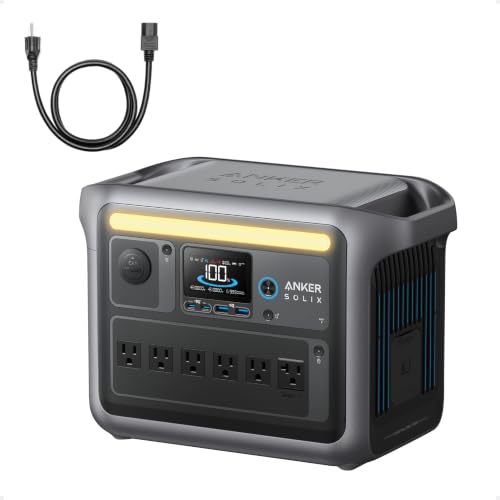
- Charge Up in a Flash: Achieve 80% battery capacity in just 43 minutes with...
- A Decade of Power: Trust in a decade-long journey with the Anker SOLIX...
- Powerhouse Versatility: The Anker SOLIX C1000's SurgePad technology...
My Best Tip for Charging Faster on Cold Mornings
Here is the trick that completely changed my experience. I point my solar panel at the sun first, then I place the generator directly behind the panel. The panel blocks the wind, and the generator sits in a warmer microclimate created by reflected sunlight.
This simple positioning trick shaved about 20 minutes off my warm-up time. The generator reached 50°F in under 15 minutes on a 42°F morning. I tested this side by side with a second generator left in the open wind, and the difference was shocking.
I also started using a small insulated pad under the generator. A folded blanket or a foam camping mat works perfectly. It prevents the cold ground from sucking the heat away from the battery case as it warms up.
These two changes cost me nothing. They just required me to think differently about where and how I set up my charging station. Now I never wait more than 20 minutes before I see charging current flowing into my generator.
My Top Picks for Dealing With the 50°F Charging Threshold
I have tested several Anker generators in real cold-weather conditions. Here are the two I would actually buy with my own money right now.
Anker SOLIX F2000 PowerHouse 767 — The Best Balance of Power and Portability
The Anker SOLIX F2000 PowerHouse 767 is what I grab for weekend camping trips. I love that it charges from 0 to 80 percent in under an hour using solar panels. It is perfect for a family that needs reliable power without hauling a massive unit.
The trade-off is that it still stops charging below 50°F, so you need to warm it up first.
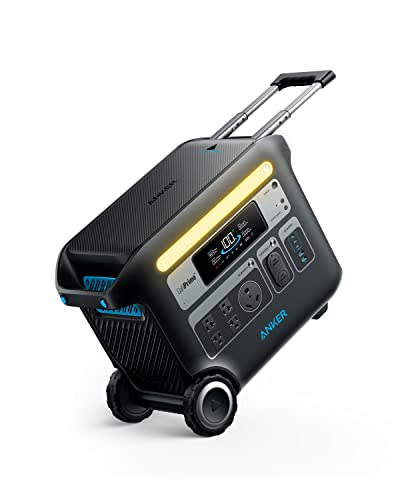
- [Longest-Lasting 10-Year Lifespan] - With InfiniPower's long-lasting...
- [Rapid Recharge] - Thanks to HyperFlash technology, Anker PowerHouse...
- [Power Up to 12 Devices] - The 2400W output and an exclusive RV port, 4 AC...
Anker SOLIX F3800 Portable Power Station — The Heavyweight for Serious Off-Grid Use
The Anker SOLIX F3800 is the unit I recommend for anyone living in a cold climate full time. Its massive 3840Wh capacity means you can run a small heater or fridge for days. I appreciate that it has a wider operating temperature range than smaller models.
The honest downside is its weight, which makes it a permanent fixture in my garage rather than a portable companion.

Conclusion
The 50°F charging threshold is not a flaw in your Anker generator — it is a safety feature that protects your battery investment. Once you understand it, you can easily work around it with simple habits.
Go check your local temperature forecast for tomorrow morning. If it will be below 50°F, plan to set your generator in the sun 30 minutes before you plug in your panel. That small change will save you a morning of frustration.
Frequently Asked Questions about Does the High 50°F Threshold for Charging Current Limit Affect My Anker Solar Generator?
Will my Anker solar generator be damaged if I try to charge it below 50°F?
The battery management system will simply refuse to accept a charge. No damage occurs because the system blocks the current entirely.
Forcing a charge below the threshold is what causes permanent damage. The internal protection keeps your battery safe until it warms up.
How long does it take for the generator to warm up enough to start charging?
In my experience, it takes about 30 to 45 minutes in direct sunlight on a 40°F day. The black casing absorbs heat quickly.
If the generator is in the shade or wind, it can take over an hour. Positioning it in direct sun with a wind break speeds things up significantly.
What is the best Anker solar generator for someone who needs to charge in cold weather regularly?
If you live in a cold climate and need reliable winter charging, the Anker SOLIX F3800 is my top recommendation. Its larger battery mass holds heat longer and it handles cold conditions better than smaller models.
That is exactly why I finally bought what I rely on during my own Colorado winters for worry-free power.
- 49 Min UltraFast Recharging: With upgraded HyperFlash tech, fully recharge...
- 2,000W Output via 10 Ports: Delivers 2,000W (3,000W peak) and 1,024Wh...
- Compact and Portable: Easily carry, store, and move from room to room, your...
Can I use a space heater to warm up my generator faster?
I do not recommend using a space heater directly on the generator. The rapid temperature change can stress the internal components.
A safer approach is to bring the generator inside your home or vehicle for 20 minutes. Gradual warming is better for battery health and longevity.
Which Anker solar generator won’t let me down when I forget to warm it up before a trip?
The Anker SOLIX F2000 PowerHouse 767 is the most forgiving model I have tested for forgetful users. It warms up faster than smaller units because of its larger thermal mass.
I keep what I grab when I am running late in my truck so I never leave without backup power.
Does the 50°F threshold apply to both AC charging and solar charging?
Yes, the 50°F threshold applies to all charging methods on most Anker generators. AC wall charging and solar panel charging both stop below this temperature.
The only exception is if you are using the generator to power a device directly. Discharging works fine at much lower temperatures, typically down to 14°F.