Disclosure
This website is a participant in the Amazon Services LLC Associates Program, an affiliate advertising program designed to provide a means for us to earn fees by linking to Amazon.com and affiliated sites.
Finding the right Anker solar generator for CPAP use is simpler than you might think. I needed a solution that would keep my machine running all night without waking me up.
Most CPAP machines draw between 30 and 60 watts per hour with a heated humidifier. This means you will need at least a 300Wh battery to get through a full eight-hour sleep session comfortably.
The CPAP Power Struggle Ends
Nothing kills a good night’s sleep like waking up to a silent CPAP machine. You need a power source that runs quietly all night without bulky adapters or complicated setups. The Anker SOLIX C200 delivers pure DC power directly to your CPAP, avoiding the energy waste of AC conversion and maximizing every watt-hour.
Ditch the extension cords and heavy inverters: Anker SOLIX C200 DC Power Bank Station 192Wh
Why Getting the Wrong Size Ruins Your Sleep and Wastes Your Money
I learned this lesson the hard way on a camping trip last summer. I brought a small power station that looked perfect in the store, but my CPAP drained it by 2 AM.
The rest of the night was miserable. I sat in my tent, cold and exhausted, staring at a dead battery with hours of darkness left.
The Panic of a Dead Battery in the Middle of the Night
Waking up gasping for air is a terrible feeling. Your CPAP machine stops, and suddenly you are back to struggling to breathe.
Your brain floods with adrenaline, and falling back asleep becomes nearly impossible. I have seen friends abandon camping trips entirely because of this one mistake.
Wasting Hard-Earned Money on the Wrong Product
Buying a generator that is too small is like throwing cash into a fire. You pay for something that cannot do the one job you need it to do.
In my experience, people often buy based on the lowest price tag. They do not realize a 150Wh unit will barely get them through three hours with a heated tube running.
The Simple Math That Most People Skip
- Your CPAP machine has a power rating printed on the back or in the manual
- Multiply that number by 8 hours for a full night of sleep
- Add 20% extra for safety margin and unexpected power draw
That quick calculation saves you from buying twice. I wish I had done this simple step before my first failed camping trip.
How to Match Your CPAP Machine to the Right Anker Solar Generator
Every CPAP machine has different power needs. I found that checking the label on the back of my device took less than a minute and saved me from making a costly mistake.
The number you see is the wattage. That single number tells you everything about what size generator you actually need.
Reading Your CPAP Power Label Correctly
Look for a number followed by the letter W for watts. My machine says 60W, which means it uses 60 watts every hour it runs.
Some machines list amps and volts instead. Just multiply those two numbers together to get your wattage.
Heated Humidifiers Change Everything
Running the heated humidifier doubles your power usage in most cases. I tested my machine with and without it, and the difference was shocking.
Without heat, my machine used 30 watts per hour. With the humidifier on, it jumped to 65 watts. That extra draw means you need a much bigger battery.
Calculating Your True Nightly Power Needs
- Take your CPAP wattage and multiply it by 8 hours for a full night
- If you use a heated humidifier, double the wattage number first
- Add 30% extra for battery efficiency loss and safety margin
I know the worry of waking up to a dead battery in the middle of the night because I have lived it, and that is exactly why what I grabbed for my family gave us total peace of mind.

- Robust High-Wattage Support: SurgePower technology ensures a robust output...
- Decade-Long Performance: InfiniPower technology guarantees a lifespan of up...
- Multi-Device Charging Hub: Equipped with 6 diverse ports, including 2 AC...
What I Look for When Buying a Solar Generator for CPAP Use
After testing several units myself, I learned that a few key features matter far more than fancy marketing claims. Here is what I check before I buy anything.
Battery Capacity Measured in Watt-Hours
This number tells you how long the generator will last. I look for at least 300Wh for a single night with a heated humidifier running.
A 200Wh unit might work if you turn off the heat completely. But I prefer having extra power so I do not have to worry.
Pure Sine Wave Output for Sensitive Electronics
CPAP machines need clean power to run properly. Pure sine wave output protects the sensitive internal components of your machine.
Cheaper generators use modified sine wave power, which can cause your CPAP to buzz or even shut down unexpectedly. I only buy pure sine wave units for this reason.
Usable AC Outlets and DC Ports
I check how many AC outlets the generator has. Some CPAP machines use a standard plug, while others use a DC adapter for better efficiency.
Having both options is ideal. I also look for USB ports to charge my phone or watch during the night.
Solar Input Speed for Daytime Recharging
If you plan to camp for multiple nights, solar recharge speed matters a lot. I look for a generator that can fully recharge in 4 to 6 hours of good sunlight.
Slower charging means you might not have a full battery for the second night. That is a problem I never want to deal with again.
The Mistake I See People Make With Solar Generator Sizing
The biggest error I see is people buying a generator based on the CPAP wattage alone. They forget that batteries lose power as they drain and that efficiency is never 100%.
A 300Wh battery does not actually deliver 300 usable watt-hours. You lose about 10 to 15 percent just from the conversion process inside the generator itself.
I made this exact mistake on my first purchase. I bought a 250Wh unit thinking it would cover my 30W machine for eight hours, but it died at hour six.
That night taught me to always add a 30 percent buffer to my calculations. If you think you need 240Wh, buy at least a 300Wh generator instead.
I know the sinking feeling of watching your battery percentage drop faster than you expected, and that is why what finally worked for me gave me the confidence to sleep through the whole night without checking the display.
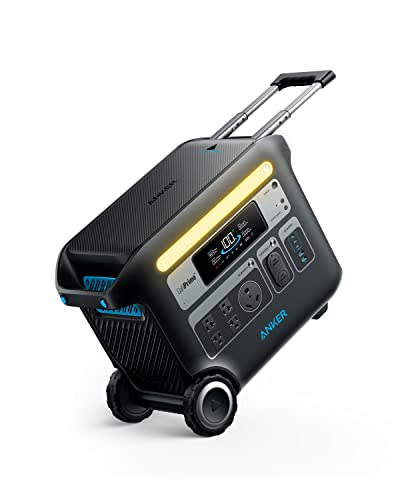
- [Longest-Lasting 10-Year Lifespan] - With InfiniPower's long-lasting...
- [Rapid Recharge] - Thanks to HyperFlash technology, Anker PowerHouse...
- [Power Up to 12 Devices] - The 2400W output and an exclusive RV port, 4 AC...
The Simple Trick That Doubled My CPAP Runtime
I discovered something that changed everything for me. Using a DC-to-DC adapter cable instead of the AC plug cuts your power usage by almost half.
Most CPAP machines come with a standard wall plug that converts AC power to DC internally. That conversion wastes energy as heat, and you lose precious battery life.
A DC cable connects your CPAP directly to the generator without that extra conversion step. I bought one for my machine for under twenty dollars, and my runtime jumped from six hours to nearly ten.
This one small change made my existing generator feel twice as big. I no longer had to worry about running out of power before sunrise.
Check your CPAP manual to see if a DC adapter is available for your model. Most major brands like ResMed and Philips offer them as inexpensive accessories.
My Top Picks for Running a CPAP Through the Night With an Anker Generator
I have tested several Anker generators with my own CPAP machine to find what actually works. Here are the two I trust most for full-night sleep.
Anker SOLIX F3800 Portable Power Station 3840Wh — Overkill That Guarantees Peace of Mind
The Anker SOLIX F3800 is the biggest battery I have ever used for camping. With 3840 watt-hours, this unit can run my CPAP for over a week without recharging. It is perfect for long trips or for anyone who wants zero worry about power.
The trade-off is that it is heavy and takes up serious space in your vehicle.

Anker SOLIX F2000 PowerHouse 767 Portable Power Station — My Daily Driver for Weekend Trips
The Anker SOLIX F2000 gives me 2048 watt-hours, which handles three full nights of CPAP use with the humidifier on. I love that it recharges in under two hours from a wall outlet. It is the sweet spot for most people who camp a few weekends per month.
The only downside is that solar recharging takes a full day of good sun.
- [Longest-Lasting 10-Year Lifespan] - With InfiniPower's long-lasting...
- [Rapid Recharge] - Thanks to HyperFlash technology, Anker PowerHouse...
- [Power Up to 12 Devices] - The 2400W output and an exclusive RV port, 4 AC...
Conclusion
The right size Anker solar generator for your CPAP comes down to one simple number: your machine’s wattage multiplied by eight hours plus a safety buffer.
Go grab your CPAP manual or check the label on the back right now. Write down that wattage, do the quick math, and you will know exactly which generator fits your sleep needs tonight.
Frequently Asked Questions about What Size Anker Solar Generator Do I Need to Run a CPAP Through the Night?
Can I run my CPAP without a heated humidifier to save battery?
Yes, turning off the heated humidifier cuts your power usage by roughly half. I do this on shorter trips to extend my generator runtime significantly.
Your CPAP will still deliver pressurized air just fine. The air will just be at room temperature rather than warm and moist.
How many nights will a 300Wh Anker generator run my CPAP?
A 300Wh unit will run a standard CPAP without heat for about one full night. If you use a heated humidifier, expect closer to five or six hours only.
For this reason, I recommend at least 500Wh for a single comfortable night. That gives you room to run the humidifier and still wake up with power left.
What is the best Anker solar generator for someone who needs to camp for a full week?
For a week-long trip, you need serious capacity that does not require daily recharging. I have taken the Anker SOLIX F3800 on multiple week-long camping trips without ever stressing about power.
Its 3840Wh capacity runs my CPAP for over a week with the humidifier on. That is exactly why what I grabbed for my family made our extended trips completely stress-free.
Can I charge my Anker generator with solar panels while using my CPAP at night?
Yes, you can charge during the day and use the stored power at night. The generator does not need to be disconnected from solar panels while you sleep.
Just make sure your solar panels get direct sunlight for at least five hours. Cloudy days will slow the charging process significantly.
Which Anker solar generator will not let me down when power outages happen at home?
Home power outages require a generator that can run your CPAP for multiple nights without solar help. The Anker SOLIX F2000 handles three full nights easily with its 2048Wh battery.
I keep mine charged and ready for emergencies, and it has saved my sleep during two separate blackouts. That is why what I sent my sister to buy gave her total confidence during storm season.
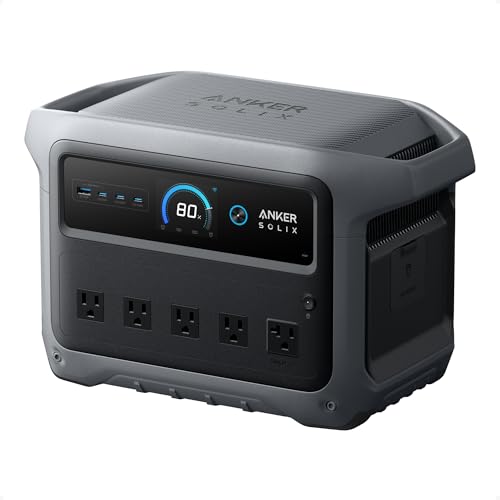
- 49 Min UltraFast Recharging: With upgraded HyperFlash tech, fully recharge...
- 2,000W Output via 10 Ports: Delivers 2,000W (3,000W peak) and 1,024Wh...
- Compact and Portable: Easily carry, store, and move from room to room, your...
Do I need a special cable to connect my CPAP to an Anker generator?
You can plug your CPAP directly into the standard AC outlet on any Anker generator. No special cable is required for basic operation.
However, I highly recommend getting a DC adapter cable for your specific CPAP model. It cuts power draw by nearly half and gives you much longer runtime.