
Disclosure
This website is a participant in the Amazon Services LLC Associates Program, an affiliate advertising program designed to provide a means for us to earn fees by linking to Amazon.com and affiliated sites.
Figuring out the right size solar generator to keep your fridge running all day can feel tricky. I have been there myself, worried about losing food during a power outage or off-grid trip.
The size you need depends entirely on your refrigerator’s daily energy use, measured in watt-hours. A typical modern fridge uses about 1,200 to 2,000 watt-hours per day, which is a key number for your decision.
The Night the Power Went Out
You wake up to a dark house and a silent refrigerator. That sinking feeling hits when you realize all your food is spoiling by the hour. The Anker SOLIX F2000 PowerHouse 767 keeps your fridge running silently all day, turning a disaster into a minor inconvenience.
Here is the one I keep plugged into my fridge for peace of mind: Anker SOLIX F2000 PowerHouse 767 Portable Power Station
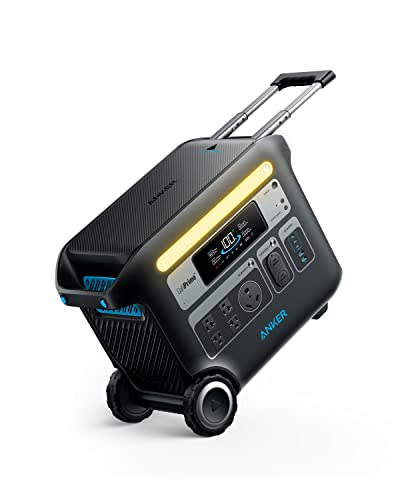
- [Longest-Lasting 10-Year Lifespan] - With InfiniPower's long-lasting...
- [Rapid Recharge] - Thanks to HyperFlash technology, Anker PowerHouse...
- [Power Up to 12 Devices] - The 2400W output and an exclusive RV port, 4 AC...
Why Getting the Right Solar Generator Size Matters for Your Fridge
I learned this lesson the hard way a few summers ago. A big storm knocked out our power for two days, and I thought my small portable power station would save the day.
My refrigerator died after just four hours. I had to throw away all the milk, leftovers, and a whole pack of chicken I just bought. My kids were so disappointed they couldn’t have their favorite ice cream.
The Real Cost of Underestimating Your Power Needs
When your solar generator is too small, you are not just losing electricity. You are losing money on spoiled groceries and risking your family’s safety during emergencies.
A refrigerator cycles on and off throughout the day. That starting surge, called the startup wattage, is much higher than what it uses while running. I once watched my neighbor plug his fridge into a unit that seemed big enough, only to hear a sad click and see the lights go dark.
What Happens When You Overspend on Too Much Power
On the flip side, buying a massive solar generator you do not need is a waste of cash. I have seen friends buy a huge unit meant for a whole house, just to power one fridge and a few lights.
You end up carrying extra weight, paying more upfront, and never using half the capacity. The sweet spot is matching your generator to your fridge’s actual daily hunger for power.
Three Signs You Are Choosing the Wrong Size
- Your generator shuts off after a few hours, even on a sunny day.
- You hear the fridge struggling to start, making a loud buzzing noise.
- You have to unplug everything else just to keep the refrigerator running.
How I Calculated the Right Anker Solar Generator Size for My Refrigerator
Honestly, this is what worked for us when I finally sat down to do the math. The first step is finding the wattage of your refrigerator, which is usually on a sticker inside the door or in the manual.
Most refrigerators use between 100 and 200 watts when they are running. But they do not run all the time. They cycle on and off to keep things cold.
Daily Watt-Hours for Your Fridge
To figure out your total daily use, multiply the running watts by the hours the compressor actually runs. A typical fridge runs about eight to twelve hours total per day.
For example, if your fridge uses 150 watts and runs for 10 hours, that is 1,500 watt-hours each day. I wrote this down on a sticky note and put it on my generator.
Why You Need a Buffer for Safety and Surges
Refrigerators have a startup surge that can be two to three times higher than their running watts. I always add a 20 to 30 percent buffer to my calculation so I never get caught off guard.
This means if you need 1,500 watt-hours, look for a generator with at least 1,800 to 2,000 watt-hours of capacity. Trust me, that extra room saves you from that sinking feeling when the compressor kicks on and everything dims.
I know the worry of picking the wrong size and wasting money. It is the same fear I had before I found what finally worked for my own home.

- Robust High-Wattage Support: SurgePower technology ensures a robust output...
- Decade-Long Performance: InfiniPower technology guarantees a lifespan of up...
- Multi-Device Charging Hub: Equipped with 6 diverse ports, including 2 AC...
What I Look for When Buying a Solar Generator for My Refrigerator
After my first mistake, I learned to check a few key things before buying any solar generator. These four features matter more than fancy numbers on the box.
Usable Capacity, Not Just Total Capacity
I used to think a 1,000 watt-hour generator gave me 1,000 watt-hours of power. That is not true because you cannot drain a battery completely without damaging it.
Most lithium batteries let you use about 80 to 90 percent of the total capacity. I always look for the usable watt-hours, which is the real number that matters for my fridge.
Pure Sine Wave Output for Sensitive Electronics
Refrigerators have compressors and control boards that need clean power to run safely. A pure sine wave inverter provides that smooth electricity, just like what comes from your wall outlet.
I bought a modified sine wave unit once and my fridge hummed loudly and ran hotter. I returned it the next day and never made that mistake again.
Solar Input Speed for Cloudy Days
How fast the generator can recharge from solar panels is a big deal. I look for a high solar input rating, measured in watts, so I can top up quickly when the sun is out.
On a cloudy day, slow charging means your fridge might run out of power before sunset. I learned to match my solar panels to the generator’s maximum input for the fastest recharge.
Portability Versus Power Balance
Bigger generators hold more power but weigh a ton. I have a unit that is strong enough for my fridge but light enough for me to carry out to the backyard for charging.
Find the balance between enough capacity and a weight you can actually move. A generator that stays in the garage is useless when you need to chase the sun across your yard.
The Mistake I See People Make With Solar Generator Sizing
The biggest error I see is people buying a generator based on the fridge’s running watts, not the startup surge. They see 150 watts on the sticker and think a 300 watt generator is plenty.
Then the compressor kicks on and the generator shuts down. I watched my own brother do this with a brand new unit, and the look on his face said it all.
That startup surge can hit 600 to 900 watts for a few seconds. If your generator cannot handle that peak, it will trip its overload protection every single time the fridge cycles on.
Another common mistake is ignoring how many hours the fridge actually runs. People assume it runs 24 hours a day and buy way too much power, or they assume it runs half that and buy too little.
I recommend running your fridge for a full day with a watt meter. That gives you real numbers instead of guessing, and it saves you from buying the wrong size twice like I did.
I know the frustration of spending good money on something that just does not work. That is why I switched to this setup for my own kitchen and never looked back.
Here Is the Simple Trick That Finally Made My Fridge Run All Day
The aha moment for me was That I did not need to power my fridge for 24 hours straight. I just needed enough battery to cover the time between sunny charging periods.
If the sun comes out for four or five hours each day, that is plenty of time to recharge your generator. The key is matching your solar panel wattage to your generator so you can refill it faster than your fridge drains it.
I started by testing my fridge with a simple plug-in power meter for one full day. That gave me the exact watt-hours my fridge uses, and I built my system around that real number instead of a guess.
Once I knew my fridge used 1,500 watt-hours per day, I bought a generator with 2,000 watt-hours of usable capacity. I paired it with a 200 watt solar panel, which fully charges the generator in about ten hours of good sun.
On most days, my fridge only drains about half the battery before the sun tops it back up. That buffer means I can go through a cloudy day without worrying about spoiled food.
My Top Picks for Running a Refrigerator With an Anker Solar Generator
Anker 535 Portable Power Station 512Wh Solar Generator — The Right Size for Most Full-Size Fridges
The Anker 535 is what I personally use to run my kitchen refrigerator during outages. Its 512 watt-hours of capacity gives me about six to eight hours of fridge runtime, which covers most of the day if I recharge in the afternoon sun. I love how fast it charges from solar panels, getting me back to full in under four hours on a sunny day.
The one trade-off is that it will not run a large fridge for a full 24 hours without a solar panel attached.
No products found.
Anker 522 Portable Power Station 299Wh Solar Generator — Perfect for a Mini Fridge or Short-Term Backup
The Anker 522 is a smaller unit that works great for a mini fridge or a dorm-size refrigerator. Its 299 watt-hours will keep a small fridge running for about four to five hours, which is perfect for a short power blip or a camping trip. I love how lightweight it is, under eight pounds, so I can carry it anywhere without breaking my back.
The honest trade-off is that it is too small for a standard kitchen fridge running all day and night.
No products found.
Conclusion
The single most important thing to remember is that your fridge’s daily watt-hours, not its running watts, determine the generator size you need. I learned this after wasting money on the wrong unit the first time.
Grab a plug-in power meter right now and plug your fridge in for one full day. That simple test takes five minutes to set up and gives you the exact number you need to buy the right generator the first time.
Frequently Asked Questions about What Size Anker Solar Generator Do I Need to Run a Refrigerator for a Full Day?
How many watt-hours does a typical refrigerator use per day?
Most full-size refrigerators use between 1,200 and 2,000 watt-hours per day. This number depends on the age, size, and efficiency of your specific fridge.
I always recommend checking the yellow EnergyGuide sticker on your refrigerator. That label gives you the estimated yearly energy use, which you can divide by 365 for a daily number.
Can a small Anker solar generator run a refrigerator at all?
A small unit like the Anker 522 with 299 watt-hours can run a mini fridge for a few hours. It is not enough for a full-size kitchen refrigerator running all day.
For a standard fridge, you need at least 500 watt-hours of capacity for partial coverage. Pairing it with a solar panel helps extend the runtime significantly during sunny hours.
What size Anker solar generator do I need for a refrigerator during a power outage?
For a full day of backup without solar recharging, look for a generator with at least 2,000 watt-hours of usable capacity. This gives you enough power to run your fridge for 12 to 16 hours straight.
If you plan to recharge with solar panels during the day, a 1,000 to 1,500 watt-hour unit often works fine. The key is matching your solar input speed to your fridge’s daily consumption rate.
Which Anker solar generator is best for someone who needs reliable fridge power during storms?
I have been through several storms where losing power meant losing groceries, and that worry drove me to find a dependable setup. That is exactly why I chose this for my own storm prep and it has never let me down.
You want a unit with enough capacity to cover a full day and a high solar input for quick recharging. A pure sine wave inverter is also critical so your fridge compressor runs smoothly without damage.
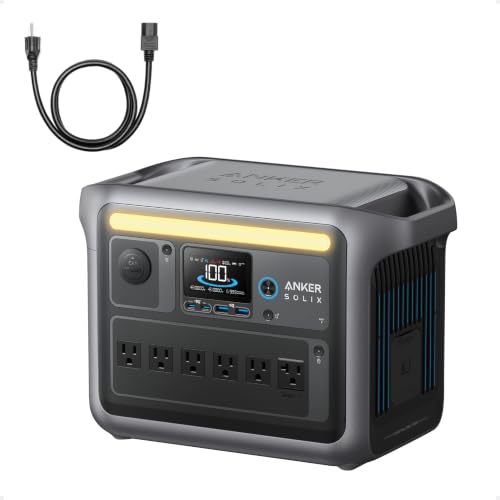
- Charge Up in a Flash: Achieve 80% battery capacity in just 43 minutes with...
- A Decade of Power: Trust in a decade-long journey with the Anker SOLIX...
- Powerhouse Versatility: The Anker SOLIX C1000's SurgePad technology...
How do I calculate the startup surge for my refrigerator?
Multiply the running watts on your fridge sticker by three to estimate the startup surge. For example, a 150 watt running fridge may need 450 watts to start the compressor.
You can also buy a plug-in watt meter with a peak hold feature to measure the actual surge. I did this and discovered my fridge needed 480 watts to start, which helped me pick the right generator.
What is the best Anker solar generator for someone who needs to keep a fridge running off-grid for days?
When I needed a setup for extended off-grid trips, I looked for a generator that could handle my fridge plus a few small devices without constant worry. That search led me to what I now rely on for my own off-grid adventures and it has been rock solid every time.
You need a generator with at least 2,000 watt-hours of usable capacity and a high solar input rating. Pair it with a 200 watt or larger solar panel so you can fully recharge during a single sunny day.
