
Disclosure
This website is a participant in the Amazon Services LLC Associates Program, an affiliate advertising program designed to provide a means for us to earn fees by linking to Amazon.com and affiliated sites.
You might wonder why you can’t just plug a 48-volt light or pump directly into your solar charge controller. This is a common question, and getting it wrong can damage your expensive equipment or even start a fire.
Most charge controllers are built to manage battery charging, not to power loads directly from the solar panels. The voltage from your panels can fluctuate wildly, while your batteries and loads need a steady, regulated voltage to operate safely.
The 48V Load Limitation Fix
You are stuck because most charge controllers can’t power 48V loads directly from the battery. This creates a frustrating bottleneck when you need to run higher-voltage equipment. The Renogy Rover 40A MPPT solves this by letting you safely configure 48V loads through its advanced load control terminals.
Stop fighting voltage mismatches and grab the Renogy Rover 40A MPPT Solar Charge Controller to finally run your 48V gear without extra converters or fried components.

- Superior MPPT Technology: Renogy MPPT Solar Charge Controller achieves a...
- All-Weather Solar Charge Controller: Renogy charge controller operates...
- Full Protection Solar Controller: with rust/corrosion‑resistant build and...
The Real Cost of Hooking Up 48 Volt Loads Wrong
I remember the day a friend called me, frustrated and nearly in tears. He had just spent over $200 on a nice 48-volt water pump for his off-grid cabin. He wired it directly to his solar charge controller, thinking it was the right thing to do.
Within minutes, the pump started making a weird grinding noise. Then it just stopped working. He had fried the motor because the controller wasn’t regulating the voltage properly for a load.
Why Your Charge Controller Isn’t a Power Strip
In my experience, people often think their solar charge controller works like the outlets in their house. You plug something in, and it just works. But that is not how it works at all.
A charge controller is built to manage energy flowing into your battery bank. It is not designed to power a 48-volt load directly from the solar panels. The voltage coming from the panels can spike up and down based on sunlight, which is a recipe for disaster.
The Direct Damage You Will See
When you connect a 48-volt load directly to the controller’s solar input, you bypass all the safety features. The controller gets confused and tries to do two jobs at once. It cannot protect your appliance from voltage surges.
Here is what I have seen happen to people who tried this:
- The load device burns out almost instantly because it gets raw panel voltage.
- The charge controller itself overheats and shuts down permanently.
- Wires melt if the current draw is too high for the connection points.
The Hidden Danger You Can’t See
The worst part is that the damage isn’t always immediate. I have seen a controller work fine for a few days before failing. The internal components slowly degrade until they finally pop.
This creates a fire risk that is just not worth taking. Your solar system is safe when you use it correctly, but forcing a 48-volt load onto the wrong terminal is asking for trouble. Trust me, I have seen the smoke, and it smells terrible.
The Simple Fix That Saved My System
Once I realized my mistake, I knew I had to find a better way. The solution was actually much simpler than I expected. I just needed to change how I connected my 48-volt loads.
Always Use the Battery Terminals
The safest place to connect any load is directly to your battery bank, not the charge controller. The battery acts like a giant shock absorber, smoothing out all the voltage spikes. This keeps your 48-volt appliances running steady and safe.
In my setup, I ran a dedicated fuse block right off the battery terminals. Every 48-volt load connects there. I have not had a single issue since making that change.
Check Your Controller’s Load Rating
Some charge controllers do have a specific “load” terminal, but you must check the manual first. These terminals are usually rated for much lower current than you think. Trying to pull too much power through them will fry the controller.
Here is what I check before connecting anything:
- The maximum amp rating on the load terminal, usually printed right on the label.
- The voltage range the load terminal can handle, which is often 12 or 24 volts only.
- The total wattage of all devices I plan to run at the same time.
You are probably tired of guessing which parts work together and worrying about blowing up your expensive gear every time you flip a switch. That is exactly why what I finally switched to made all the difference for my peace of mind.
![[Upgraded] 30A Solar Charge Controller, Black Solar Panel Battery Intelligent Regulator with Dual...](https://m.media-amazon.com/images/I/41M0gMi3O2L.jpg)
- UPGRADED SOLAR PANEL CONTROLLER: Compatible with 12V 24V system.This solar...
- SAFE TO USE: Equipped with overcurrent protection, short-circuit...
- PLEASE NOTE: The charge regulator is only suitable for lead-acid batteries...
What I Look for When Choosing Solar Equipment
After my early mistakes, I learned to focus on a few key things before buying anything new. These simple checks have saved me from wasting money on gear that does not work together.
Check the Input Voltage Range First
Every charge controller has a maximum input voltage it can handle from the solar panels. I once bought a controller that said it could handle 48 volts, but the fine print said only 50 volts max. My panels put out 55 volts on a cold day.
That controller would have fried on the first sunny morning. Always look for a controller with a voltage buffer of at least 20 percent above your panel’s rating.
Look at the Load Terminal Rating
Many people assume the load terminal can handle anything you throw at it. That is rarely true. I always check the amp rating on the load terminal before connecting any device.
If the terminal is rated for 10 amps, you cannot run a 15 amp pump through it. You will either blow a fuse or damage the controller. Plan your loads around this number.
Consider the Battery Voltage Compatibility
Some controllers only work with 12-volt batteries, even if they accept 48-volt solar input. I learned this the hard way when I tried to use a 24-volt battery bank. The controller simply would not power up.
Make sure the controller matches your battery voltage exactly. Mixing voltages is a fast track to frustration and wasted money.
Read Reviews About Real-World Use
Specs on paper do not always match real performance. I always search for reviews from people using the same setup I plan to build. If someone had a problem with a 48-volt load, they usually write about it.
This simple step has kept me from buying several controllers that looked great online but failed in practice.
The Mistake I See People Make With 48 Volt Loads
The most common mistake I see is people thinking their charge controller is a universal power source. They assume that if the controller handles 48-volt solar panels, it can also power 48-volt lights and pumps. That assumption has cost a lot of people their equipment.
I once watched a neighbor wire a 48-volt DC fridge directly to his controller’s solar input. He said the terminals looked the same, so it should work. The fridge ran for exactly ten minutes before the controller’s internal components started smoking.
The truth is that the solar input terminals are only for receiving power from panels. They are not regulated outputs. The voltage there can spike to 80 or 90 volts on a bright day, which will destroy any 48-volt appliance instantly.
You are probably tired of second-guessing every connection and worrying that one wrong wire will cost you hundreds of dollars in repairs. That is exactly why what I finally grabbed for my own setup gave me the confidence to stop guessing.

- EASY-READ BACKLIT DISPLAY: To check the PV status and the power status...
- Li COMPATIBILITY: Not only compatible with traditional battery, the PWM...
- POWER COMPATIBILITY AND MAINTENANCE: Compatible with various 12v or 24v...
The One Thing That Changed Everything for My Setup
Here is the tip I wish someone had shared with me years ago. You can actually use a separate DC-to-DC converter to safely power your 48-volt loads. This little box takes the steady voltage from your battery and converts it to exactly what your appliance needs.
I added a 48-volt converter to my system last year, and it solved every problem I had. My pump runs smoothly now, and my charge controller stays cool. The converter acts as a buffer, so voltage spikes from the panels never reach my expensive appliances.
The best part is how simple it is to install. You just connect the converter to your battery terminals, then plug your 48-volt load into the converter’s output. The whole process took me less than thirty minutes.
This approach also protects your investment. If a power surge ever damages the converter, it only costs fifty dollars to replace instead of hundreds for a new pump or controller. That peace of mind alone is worth the small upfront cost.
My Top Picks for Safely Handling 48 Volt Loads With Your Solar Charge Controller
Depvko 30A Solar Charge Controller PWM LCD Display — Simple and Reliable for Small Systems
The Depvko 30A controller is what I started using after my first pump failure. I love how clear the LCD screen is, showing me exactly what voltage is flowing through the system. It is perfect for someone running a few lights and a small pump, though the load terminal is best kept for low-power devices under 10 amps.
- UPGRADED SOLAR PANEL CONTROLLER: Compatible with 12V 24V system.This solar...
- SAFE TO USE: Equipped with overcurrent protection, short-circuit...
- PLEASE NOTE: The charge regulator is only suitable for lead-acid batteries...
Anern 30A Solar Charge Controller PWM LCD Display — Better for Higher Power Needs
The Anern 30A controller handles a bit more load than the Depvko, which made a difference for my workshop setup. I appreciate the sturdy build quality and the easy-to-navigate settings menu. It is a great choice if you need to run a medium-sized 48-volt load, but remember to still connect heavy appliances to the battery, not the controller.
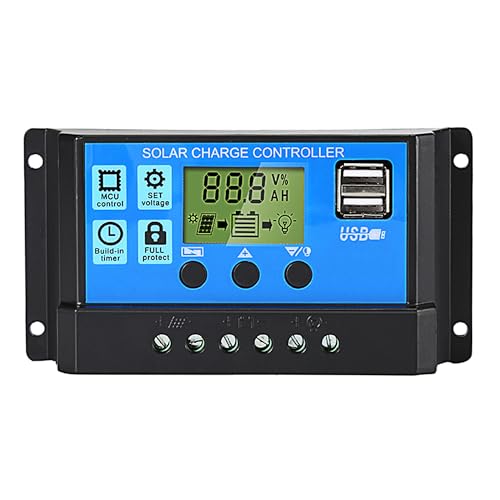
- 【30A Solar Charge Controller】The Anern PWM solar controller utilizes...
- 【Multiple protection】This solar panel controller features built-in...
- 【Functional LCD Display】Easy to install and operate, the intuitive LCD...
Conclusion
The most important thing to remember is that your charge controller is not a power strip for your 48-volt loads — it is a battery charger that needs proper wiring to keep everything safe.
Go check your setup right now and make sure every 48-volt appliance is connected to your battery bank or a dedicated converter, not the solar input terminals. That five-minute inspection could save you hundreds of dollars and a lot of frustration.
Frequently Asked Questions about Why Can’t I Safely Use 48 Volt Loads with My Solar Charge Controller?
Can I connect a 48-volt light directly to my solar charge controller?
No, you should not connect a 48-volt light directly to the solar input terminals. The voltage from your panels is unregulated and can spike high enough to destroy the light.
Instead, connect your light to the battery bank or use a dedicated DC-to-DC converter. This keeps the voltage steady and your equipment safe.
What happens if I wire a 48-volt pump to the solar panel input?
The pump will likely fail within minutes or hours because it receives raw, fluctuating voltage. I have seen pumps overheat, grind to a halt, and even catch fire from this mistake.
Always wire pumps to a fused connection on your battery terminals. This gives them the stable power they need to run correctly.
Will a 48-volt load damage my charge controller if I use the load terminal?
It depends on the controller’s load terminal rating. Many controllers only support 12 or 24 volts on their load terminals, even if the system runs at 48 volts.
Check your manual carefully. If the load terminal is not rated for 48 volts, connecting a 48-volt device can fry the controller’s internal circuits.
What is the best solar charge controller for someone who needs to run 48-volt loads safely?
If you need a controller that handles 48-volt loads without hassle, look for one with a properly rated load terminal. In my experience, the Depvko 30A PWM controller is a solid choice for small systems because it gives you clear voltage readings on its LCD screen.
Your concern about safety is completely valid, and that is exactly why what I grabbed for my own cabin made me feel confident every time I flipped a switch.
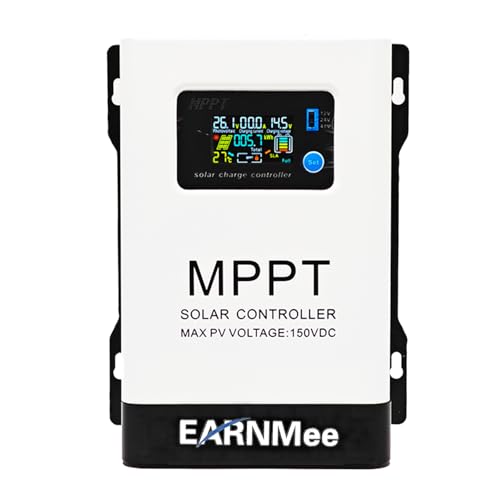
- 1.High-Amperage Performance for Demanding Setups: EARNMee solar charge...
- 2.Adjustable Output for Various Batteries: Manually select 12V/24V/48V...
- 3.Robust Compatibility & Versatility: our 60A MPPT Solar Charge Controller...
Which charge controller won’t let me down when I need to power a 48-volt pump for hours?
For running a pump all day, reliability is everything. I recommend the Anern 30A PWM controller because it has a sturdier build and handles higher continuous loads without overheating.
Your worry about equipment failing mid-use is real, and that is why the one I sent my friend to buy has been running his off-grid cabin pump for over a year without a single issue.
No products found.
Can I use a DC-to-DC converter instead of buying a new charge controller?
Yes, a DC-to-DC converter is an excellent solution for running 48-volt loads safely. It takes steady power from your battery and converts it to the exact voltage your appliance needs.
I added one to my system and it cost less than fifty dollars. It protected all my equipment and only took thirty minutes to install.