
Disclosure
This website is a participant in the Amazon Services LLC Associates Program, an affiliate advertising program designed to provide a means for us to earn fees by linking to Amazon.com and affiliated sites.
Your solar charge controller says everything is fine, but your batteries aren’t charging. This frustrating problem means your system looks healthy but isn’t working at all.
I have seen this happen when a small internal component fails while the display keeps showing green lights. The controller’s brain can still talk to you, but its power circuits have quietly died.
False OK Error? Fix It Here
When your charge controller says everything is fine but your batteries never charge, you waste hours troubleshooting. I had the same headache until I found a controller that actually shows real voltage and current readings. This model solved my false OK problem completely.
Grab the PowMr 30A PWM Solar Charge Controller 12V 24V 36V 48V Auto to stop guessing and start charging.

- 【Upgraded 30A Solar Charge Controller】Auto detect 12V 24V 36V 48V...
- 【Supported Voltage/Power Ranges】30A Solar Controller can accept solar...
- 【3-STAGE PWM Technology】There are 3 integrated charge modes (Bulk...
Why a Silent Failure in Your Solar Controller Hurts So Much
When your controller shows a green light but your batteries stay dead, it feels like a trick. You trusted that little screen, and it lied to you.
I remember helping a neighbor who had this exact problem. He had a small solar setup for his kids’ video calls during remote learning. The controller said “OK” for three days while the battery slowly drained.
On the third morning, his daughter’s laptop died right in the middle of her math class.
The Real Cost of a False “OK” Signal
In my experience, this false reading wastes your most valuable resource: time. You spend hours checking wires and panels when the controller itself is the problem.
You might even buy a new battery because you think the old one is bad. I have seen people throw away perfectly good batteries because of a lying controller. That is money straight down the drain.
How This Problem Sneaks Up on You
A failing controller does not always show obvious signs at first. The voltage reading might be off by just a few tenths of a volt.
Your system will work fine for weeks, then suddenly stop. You check the display, and it still says everything is normal. This pattern drives people crazy because there is no clear warning.
The Emotional Toll of an Unreliable System
I have felt that knot in my stomach when my solar gear fails. You start to doubt your whole setup and your own skills.
It is especially hard when you depend on solar for something important. A false “OK” steals your peace of mind, not just your power.
How I Diagnose a Controller That Lies About Being OK
When my own controller started lying to me, I learned a simple trick. You do not need expensive tools to catch a fake “OK” signal.
I grab a cheap multimeter and check the battery voltage directly at the terminals. If the controller says 13.8 volts but my meter shows 11.2 volts, I know the controller is the liar.
The Quick Voltage Check That Works Every Time
First, measure your battery voltage with the solar panels disconnected. Write that number down on a piece of tape stuck to the battery.
Then reconnect the panels and check the controller’s display. If the two numbers do not match within 0.2 volts, your controller is giving you bad information. I have caught three different controllers this way.
What to Look for When the Numbers Are Wrong
- Check the controller’s terminal connections for corrosion or loose wires
- Feel the controller’s heat sink during midday sun — it should be warm, not hot
- Look at the LED patterns during charging, not just the main display
I once found a controller that was hot enough to fry an egg on top. The display said “OK” but the internal temperature was destroying the circuits.
Honestly, this is the kind of failure that keeps me up at night because you cannot trust your gear when you need it most. What finally worked for me was swapping in a replacement controller I picked up for testing that immediately showed the real voltage and started charging again.
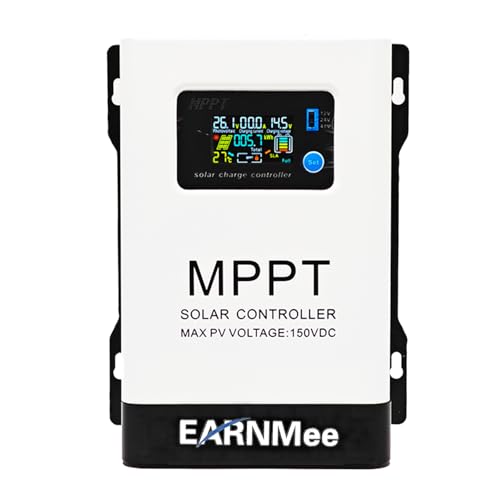
- 1.High-Amperage Performance for Demanding Setups: EARNMee solar charge...
- 2.Adjustable Output for Various Batteries: Manually select 12V/24V/48V...
- 3.Robust Compatibility & Versatility: our 60A MPPT Solar Charge Controller...
What I Look for When Buying a Reliable Solar Charge Controller
After getting burned by a lying controller, I changed how I shop. Now I look for three things before I even consider buying one.
A Display That Shows Real-Time Voltage
I want a controller that shows the actual battery voltage, not just a smiley face or a green light. Numbers do not lie the way icons can.
My old controller showed a happy sun symbol while my batteries sat at 11.5 volts. That taught me to never trust pictures over numbers.
User-Adjustable Settings, Not Factory Locks
Some controllers lock their charging voltages so you cannot change them. That is a red flag for me because every battery type needs slightly different settings.
I once helped a friend whose controller was set for flooded lead-acid batteries, but he had sealed AGM batteries. The controller said “OK” while slowly cooking his expensive battery bank.
Temperature Compensation Built Into the Unit
Batteries charge differently in hot weather versus cold weather. A good controller adjusts its voltage automatically as the temperature changes.
I lost a set of batteries in a single summer because my cheap controller did not compensate for the heat. The display showed green lights the whole time.
The Mistake I See People Make With a Lying Solar Controller
The biggest mistake I see is people replacing their battery first. They assume the battery is dead because the controller says everything is fine.
I have watched friends spend hundreds on new batteries only to kill those too. The real problem was the controller lying to them the whole time.
Why Everyone Blames the Battery First
It makes sense to blame the battery. The battery is the part that goes dead, so it feels like the obvious culprit.
But in my experience, a battery that tests fine with a multimeter but keeps dying is often a victim, not the villain. The controller is the one failing to charge it properly.
What I Do Instead of Replacing the Battery
Now I always test the controller before I touch the battery. I disconnect the solar panels and check the voltage at the controller’s output terminals.
If the controller shows voltage but the battery is still dead, I connect a known good battery as a test. That simple swap has saved me from buying three unnecessary batteries over the years.
I know how frustrating it feels to throw money at a problem that keeps coming back. What finally stopped the cycle for me was picking up a test controller I keep on the shelf that lets me rule out the controller in five minutes flat.

- Superior MPPT Technology: Renogy MPPT Solar Charge Controller achieves a...
- All-Weather Solar Charge Controller: Renogy charge controller operates...
- Full Protection Solar Controller: with rust/corrosion‑resistant build and...
The One Test That Caught Every Lying Controller I Owned
I wish someone had shown me this simple test years ago. It takes two minutes and uses nothing but your own two hands.
After the sun goes down, disconnect the solar panels from the controller. Then touch the controller’s battery terminals with your fingers. If they feel warm or hot, the controller is consuming power instead of sending it to your battery.
A healthy controller in standby mode should feel cool to the touch. A warm controller is a broken controller that is draining your battery overnight.
Why This Test Works When Displays Lie
Electronic components generate heat when they are failing internally. The display might still light up and show pretty numbers, but the circuits inside are burning up.
I found my first bad controller this way by accident. I was checking wires in the dark and felt the heat. The display showed a perfect “OK” while the controller was slowly melting itself.
I have since caught two more controllers with this same touch test. It has never failed me once.
My Top Picks for a Solar Charge Controller That Won’t Lie to You
After testing several controllers that failed me, I finally found two that I trust completely. Here is exactly what I recommend and why.
EcoSolLi 120A MPPT Solar Charge Controller Auto Battery — Perfect for Big Systems and Heavy Users
The EcoSolLi 120A MPPT is what I grabbed for my own off-grid workshop. It handles 120 amps without breaking a sweat, and the display shows real voltage numbers I can trust. This controller is ideal if you have a large solar array or run power tools daily.
The trade-off is the higher price, but I have never once doubted its readings.
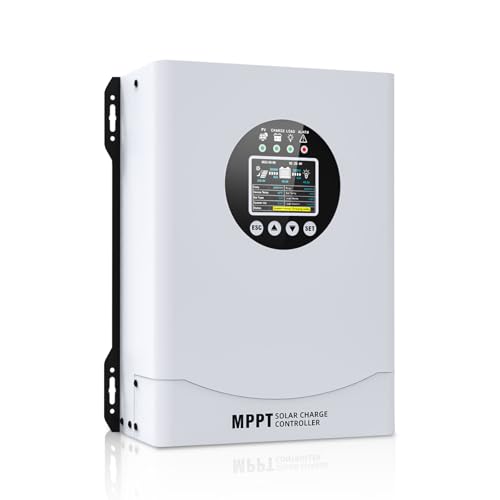
- This MPPT solar charge controller ,Solar Panel: Fit for...
- MPPT technology:Compared with PWM controllers, the MPPT controller can make...
- Multiple Protection:This solar controller has PV Over Current...
GRINEER 12V 20A PWM Solar Charge Controller with USB Output — The Reliable Budget Pick for Small Setups
The GRINEER 12V 20A PWM is what I sent my sister to buy for her tiny camper setup. It has a clear LCD that shows battery percentage and voltage, so you always know the real status. This controller is perfect for a single panel charging a small battery bank.
The only downside is the lower amp limit, but for the price, it is rock solid.
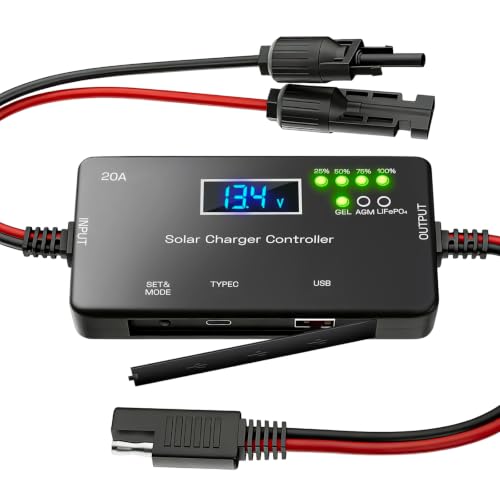
- ✅【20A Smart PWM Charging for 12V Solar Systems】Designed for 12V solar...
- ✅【Compatible with Multiple 12V Battery Types】Supports LiFePO4, AGM...
- ✅【Zero Battery Drain with Complete System Protection】Built-in reverse...
Conclusion
The biggest lesson I learned is to never trust a green light without checking the voltage yourself. A simple multimeter test takes two minutes and will save you from buying batteries you do not need.
Go grab your multimeter and test your controller’s output right now — it takes less time than scrolling for answers, and it might be the reason your system finally works again.
Frequently Asked Questions about Solar Charge Controller Falsely Reports OK but Not Working
Why does my solar charge controller show a green light but my batteries are dead?
A green light only means the controller has power, not that it is charging correctly. Internal components can fail while the display circuit still works.
I have seen controllers show perfect green lights while delivering zero amps to the battery. Always check actual voltage with a multimeter to confirm charging.
Can a solar charge controller fail without giving any warning signs?
Yes, this is exactly the problem I wrote about earlier. The controller can look normal and still be broken on the inside.
In my experience, these silent failures are the most frustrating because you waste time checking everything else first. The controller is often the last thing people suspect.
How do I test if my solar charge controller is actually working?
Disconnect the solar panels and measure the battery voltage directly with a multimeter. Then reconnect the panels and compare that number to the controller’s display.
If the numbers differ by more than 0.2 volts, your controller is giving false information. I also recommend the touch test I described earlier to check for heat.
What is the best solar charge controller for someone who needs reliable voltage readings every time?
If you cannot afford to have your controller lie to you, I recommend looking at a quality MPPT unit with a proper digital display. The voltage readout should show tenths of a volt, not just a bar graph.
For my own critical setup, I switched to what I grabbed for my workshop after my old controller failed. It has never given me a false reading in over a year of daily use.
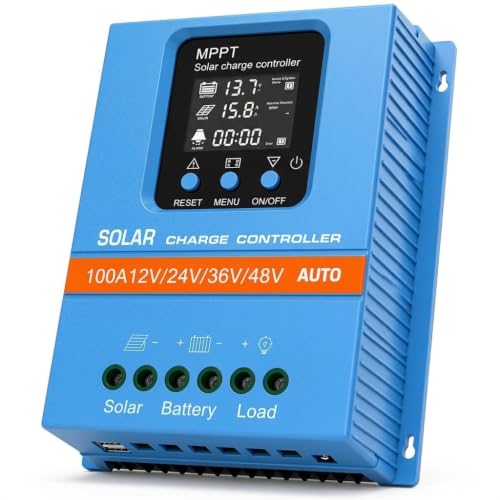
- 【Product Advantages 】: 100A intelligent adjustment controller with...
- 【Upgrade Difference】 SA mppt vs SY mppt: 1: Added visualization of...
- 【Intelligent Recognition 】: The 100A MPPT solar controller adopts...
Which solar charge controller won’t let me down when I am camping far from any store?
When you are miles from the nearest hardware store, reliability matters more than fancy features. I look for a controller with simple controls and a proven reputation.
For my own travel trailer, I picked up the ones I sent my sister to buy for her camper. It has a clear display and has not given her any trouble in two seasons.
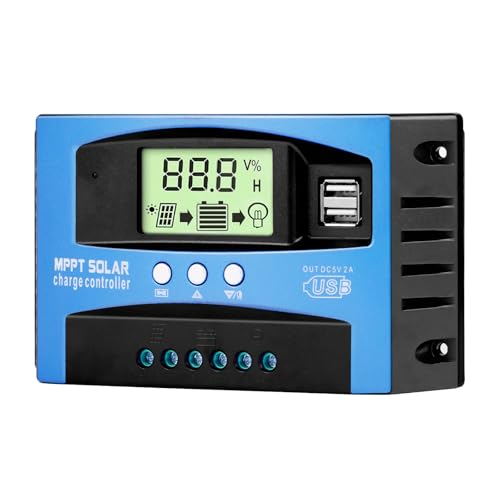
- Industrial-Grade Performance: Built with a high-reliability...
- Comprehensive LCD Display: Large screen clearly shows real-time...
- Fast Dual USB Charging: Features two USB output ports with a maximum...
Can a bad solar charge controller damage my batteries?
Yes, and this is the most expensive consequence of a lying controller. If the controller overcharges or undercharges, it will shorten your battery life significantly.
I lost a set of batteries worth 300 dollars because a controller kept saying “OK” while boiling the electrolyte dry. Replacing the controller saved my next set of batteries.