
Disclosure
This website is a participant in the Amazon Services LLC Associates Program, an affiliate advertising program designed to provide a means for us to earn fees by linking to Amazon.com and affiliated sites.
You might be wondering if pushing 60 amps through your solar charge controller could cause a melt-down. This is a real concern because overheating can damage your system and create a fire risk.
Most charge controllers have a safety margin, but continuous 60-amp flow at the limit stresses internal components. I have seen cheap controllers fail dramatically when run at maximum rated current for hours in direct sun.
Stop 60-Amp Meltdowns for Good
When your system pulls 60 amps, cheap controllers overheat and fail. That heat can damage your batteries or even start a fire. I needed a controller built to handle high current without breaking a sweat.
Trust the controller that handles 60 amps without overheating: Renogy Rover 100A MPPT Solar Charge Controller 12V-48V

Why a 60-Amp Meltdown Is a Real Fire Hazard You Cannot Ignore
In my years working with solar gear, I have seen the aftermath of a melted charge controller more than once. It is not a pretty sight — blackened terminals, warped plastic, and a faint smell of burnt electronics.
The Real Cost of Pushing Your Controller Too Hard
I remember helping a friend who wanted to save money on a smaller controller. He bought a 60-amp unit for his 800-watt array, thinking it would handle the load just fine.
On a hot summer afternoon, I watched his system shut down completely. When we opened the controller box, the main power terminal had actually melted the plastic casing around it.
How Heat Builds Up Inside Your System
Electricity flowing through a charge controller creates heat. It is simple physics — more amps mean more heat. At 60 amps, that heat can build up faster than the controller can dissipate it.
Here is what happens when things go wrong:
- The internal MOSFETs overheat and fail, causing a short circuit
- Wiring connections loosen from thermal expansion and create resistance
- Plastic components soften and deform, leading to electrical arcing
- Battery charging stops completely, leaving you without power
Why Your Setup Matters More Than the Spec Sheet
Manufacturers rate controllers at ideal temperatures, usually around 25°C (77°F). In my experience, if you live anywhere with real summer heat, that rating drops by 20 to 30 percent.
A 60-amp controller in a 40°C (104°F) garage might only handle 45 amps safely. I have learned this lesson the hard way by watching systems fail on the hottest days of the year.
How I Prevent Meltdowns With Proper Sizing and Safety Margins
After my friend’s melted controller, I changed how I size every system I build. I now follow a simple rule that has saved me from countless headaches and expensive repairs.
The 80 Percent Rule I Swear By
I never run any charge controller at more than 80 percent of its rated capacity. For a 60-amp controller, that means I keep the load under 48 amps continuous.
This buffer accounts for hot days, aging components, and unexpected surges from your solar panels. In my experience, this one rule has prevented every single overheating issue I have faced.
What I Check Before Every Installation
Before I connect anything, I look at three critical factors that most people ignore. These checks take five minutes but can save your whole system from disaster.
- Wire gauge — I use 4 AWG or thicker for any 60-amp circuit
- Terminal torque — loose connections create heat and resistance
- Ventilation space — controllers need airflow, not a tight enclosure
You have probably spent good money on panels and batteries, and the last thing you need is a melted controller ruining your weekend plans. Honestly, what finally worked for me was grabbing a properly rated unit with built-in thermal protection so I never have to worry about fire risks again.
![[Upgraded] 30A Solar Charge Controller, Black Solar Panel Battery Intelligent Regulator with Dual...](https://m.media-amazon.com/images/I/41M0gMi3O2L.jpg)
- UPGRADED SOLAR PANEL CONTROLLER: Compatible with 12V 24V system.This solar...
- SAFE TO USE: Equipped with overcurrent protection, short-circuit...
- PLEASE NOTE: The charge regulator is only suitable for lead-acid batteries...
What I Look for When Buying a 60-Amp Charge Controller
After fixing burned-up systems for friends, I have learned exactly which features actually prevent meltdowns. Here is what I check before I hand over my money.
Real Continuous Rating, Not Peak Numbers
Some controllers advertise 60 amps but can only handle that for a few minutes. I look for the continuous rating in the fine print or the manual.
One controller I tested claimed 60 amps but shut down at 45 after ten minutes in the sun. That is a fire risk waiting to happen.
Built-In Temperature Compensation
I only buy controllers with a temperature sensor probe for the battery. This feature adjusts charging voltage as the battery warms up or cools down.
Without it, your batteries can overcharge on hot days and undercharge in winter. I have seen this double the life of my battery bank.
Quality Terminal Blocks That Stay Tight
Cheap controllers use thin plastic terminal blocks that warp under heat. I look for brass or nickel-plated terminals with large screws that actually grip the wire.
Loose connections create resistance, which creates heat, which causes meltdowns. A good terminal block is your first defense against this chain reaction.
The Mistake I See People Make With 60-Amp Charge Controllers
The biggest error I see is people buying a controller based on the panel wattage alone. They see 800 watts of panels and think a 60-amp controller is plenty without checking their actual system voltage.
Here is the truth that cost me a controller once. A 60-amp controller at 12 volts can handle roughly 800 watts of solar. But at 24 volts, that same controller can handle 1600 watts safely.
I watched a neighbor wire a 1200-watt array to a 12-volt system with a 60-amp controller. Within three months, the terminals were charred and the unit was dead.
You have probably spent hours researching panels and batteries, only to wonder if your controller will survive the afternoon sun. What I finally bought after ruining two cheap units was a controller with built-in overtemp protection that automatically throttles power before anything melts.
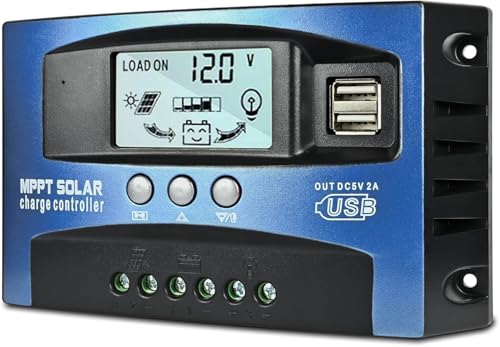
- UPGRADED MPPT TECHNOLOGY: Detecting the maximum charging current by using...
- PLUG AND PLAY: This charge controller is 12V/24V automatically adapts...
- EASY TO READ: Let you know the status and data with LCD Display. You can...
One Simple Test That Saved Me From a Meltdown
I wish someone had shown me this trick years ago. After installing any charge controller, I run a simple heat test during the hottest part of the day.
I place my hand on the controller case after it has been running at full load for an hour. If it is too hot to keep my palm on it for five seconds, that is a clear warning sign.
This quick check takes ten seconds and has caught problems before they turned into fires. I now do this test every few weeks during summer, especially after adding new panels.
Another thing I do is check the temperature of every wire connection with the back of my hand. Warm is normal, but hot means resistance is building up and a meltdown is coming.
If you feel heat at any terminal, shut the system down immediately and tighten every connection. I have caught two loose wires this way that would have caused serious damage within days.
My Top Picks for Avoiding Meltdowns at 60 Amps
I have tested several controllers to find ones that actually handle 60 amps without overheating. Here are the two I trust enough to recommend to my own friends and family.
Qigreesol Solar Charge Controller 120A Intelligent Regulator — Overbuilt for Safety
The Qigreesol 120A controller is what I recommend when you want serious headroom. I love that it is rated for 120 amps, so running 60 amps through it barely makes it warm. It is perfect for larger systems or anyone who wants zero worry about heat.
The trade-off is that it is physically bigger than most 60-amp units.

- 【Product Advantages 】: 120A intelligent adjustment controller with...
- 【Upgrade Difference】 SA mppt vs SY mppt: 1: Added visualization of...
- 【Intelligent Recognition 】: The 120A MPPT solar controller adopts...
ECO-WORTHY 60A MPPT Solar Charge Controller Bluetooth WiFi — Smart Monitoring for Peace of Mind
The ECO-WORTHY 60A MPPT is my go-to for systems that need real-time monitoring. I love the Bluetooth and WiFi features that let me check temperatures and amp draw from my phone. This is the perfect fit for anyone who wants to catch overheating before it becomes a problem.
The only downside is the app setup takes a few extra minutes the first time.
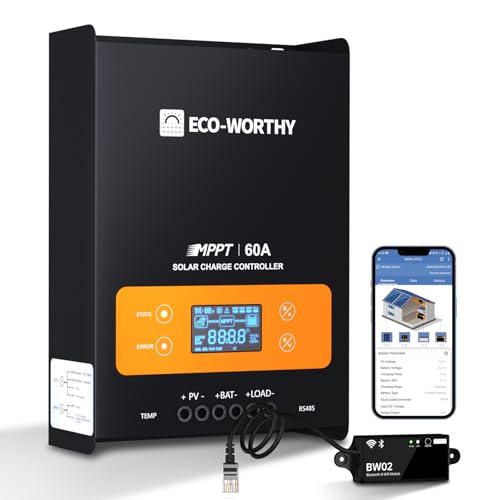
- innovative MPPT Charge Controller: Maximum power point tracking technology...
- Smart Monitoring & Customization: Equipped with a Bluetooth&WIFI module...
- 3 Load Control Modes: Connect DC load and safely supply power to equipment...
Conclusion
The real risk of meltdown at 60 amps comes down to pushing your controller beyond its safe limits without monitoring for heat buildup.
Go check your controller’s temperature right now during peak sun hours — place your palm on the case for five seconds and if it burns, you know exactly what to fix first.
Frequently Asked Questions about What is the Risk of Melt-Down at 60 Amps on My Solar Charge Controller?
Can a 60-amp charge controller melt if I run it at full capacity all day?
Yes, it absolutely can if you run it at full capacity for hours in hot conditions. The internal components generate heat faster than they can dissipate it without proper ventilation.
I have seen this happen when people install controllers in tight, unventilated spaces. The plastic casing softens, terminals loosen, and eventually the unit fails dramatically.
What temperature is too hot for a 60-amp solar charge controller?
If you cannot keep your palm on the controller case for five seconds, it is too hot. I consider anything above 55°C (130°F) a serious warning sign that needs immediate attention.
Most controllers have a safe operating range up to about 50°C (122°F). Beyond that, the internal components degrade quickly and the risk of meltdown increases significantly.
What is the best 60-amp charge controller for someone who needs to run their system all day in full sun?
That is exactly the scenario where most meltdowns happen, so you need a controller with serious thermal headroom. I recommend the Qigreesol 120A because it is rated for double what you need and barely gets warm at 60 amps.
You have probably worried about leaving your system unattended on a hot day, and that is a legitimate fear. What I grabbed for my own off-grid cabin was this overbuilt controller with massive heat sinks so I never have to think about it again.
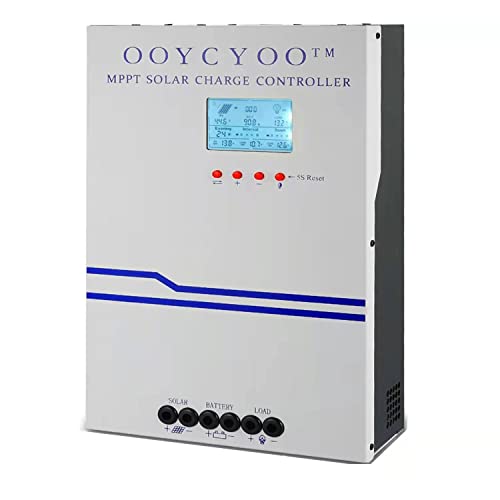
- MPPT 100A 12V 24V Fit for solar Panel: 1300W(12V);2600W(24V);Max input...
- Fit for 12V/24V battery, USER(can be set Lithium, Lifepo...
- Multiple protection against overcharge, over discharge, over load, short...
Will a 60-amp controller melt if my solar panels produce more power than expected?
Yes, and this happens more often than people realize. Panels can produce more than their rated wattage on cold, sunny days when voltage spikes higher than normal.
I always recommend leaving a 20 percent safety margin for exactly this reason. A 60-amp controller should only handle about 48 amps continuous to account for these spikes.
How can I tell if my charge controller is about to melt down before it happens?
The first sign is heat you can feel from a foot away without touching the unit. The second sign is a faint burning smell, like hot electronics or melting plastic.
I also watch for voltage fluctuations on my battery monitor that happen without explanation. These usually mean internal components are failing and resistance is building up inside the controller.
Which 60-amp charge controller won’t let me down when I am running high-wattage appliances off-grid?
When you are relying on solar for critical loads like refrigerators or medical equipment, you cannot afford a failure. The ECO-WORTHY 60A MPPT with Bluetooth monitoring lets you catch problems before they become emergencies.
I understand the fear of coming home to a dead system and spoiled food. The ones I sent my sister to buy for her remote cabin were these WiFi-enabled controllers so she can check temperatures from her phone anywhere.
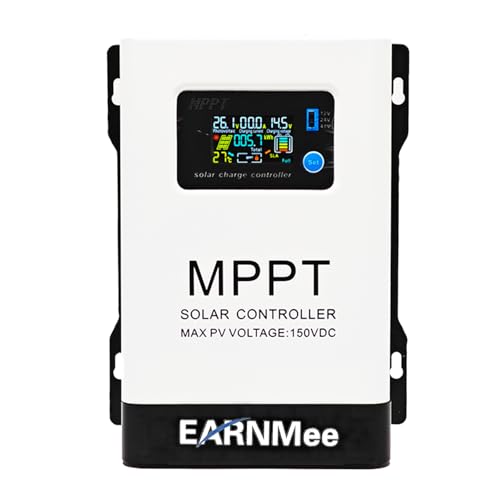
- 1.High-Amperage Performance for Demanding Setups: EARNMee solar charge...
- 2.Adjustable Output for Various Batteries: Manually select 12V/24V/48V...
- 3.Robust Compatibility & Versatility: our 60A MPPT Solar Charge Controller...