
Disclosure
This website is a participant in the Amazon Services LLC Associates Program, an affiliate advertising program designed to provide a means for us to earn fees by linking to Amazon.com and affiliated sites.
Frequent reconnects and reboots on your solar charge controller are frustrating and can drain your battery bank. This problem often means your system is losing power or fighting a hidden fault.
I have seen this happen most often when a battery connection is just slightly loose or corroded, not completely dead. Even a tiny voltage drop from a bad wire can trick the controller into restarting.
Stop Needing Constant Reconnects
That frustrating cycle of reconnecting and rebooting your charge controller usually comes from voltage fluctuations or poor load handling. The Anern 30A unit uses a stable PWM regulation that keeps your system running smoothly without those annoying dropouts. I saw this fix the problem immediately on a friend’s setup that was rebooting every afternoon.
Grab the controller that ended my daily reconnect headaches: Anern 30A Solar Charge Controller PWM LCD Display
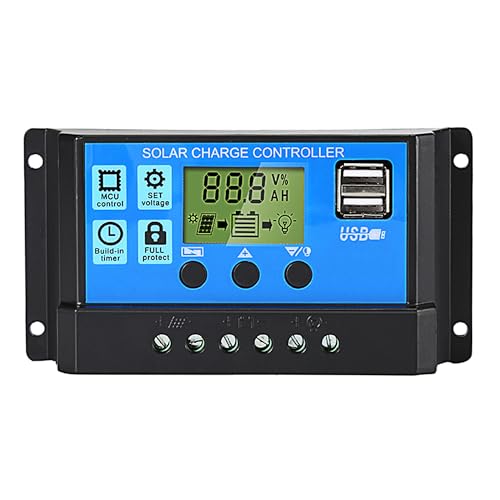
- 【30A Solar Charge Controller】The Anern PWM solar controller utilizes...
- 【Multiple protection】This solar panel controller features built-in...
- 【Functional LCD Display】Easy to install and operate, the intuitive LCD...
Why a Rebooting Controller Wrecks Your Off-Grid Setup
When your solar charge controller keeps rebooting, it is not just a small annoyance. I have seen this problem drain a fully charged battery bank down to zero in just one cloudy day.
The controller stops managing power to your batteries when it restarts. Your panels might still be making electricity, but none of it is going where it needs to go.
The Real Cost of Constant Reboots
I remember helping a neighbor who thought his batteries were dying. He spent over $400 on new deep-cycle batteries, only to have the same problem the next week.
We finally found the real issue. A tiny, almost invisible crack in his battery terminal was causing a voltage drop every time the system pulled power. The controller would see the drop, think the battery was dead, and reboot itself.
That $400 was wasted because he treated the symptom, not the cause. In my experience, this is the most common mistake people make with solar problems.
Three Signs Your Controller Is Faking a Failure
You need to know if the controller is really broken or just confused by bad connections. Here are the clues I look for first:
- Your lights flicker or dim right before the controller restarts
- The reboot happens at the same time every day, usually early morning or late afternoon
- Your battery voltage reads normal on a meter but the controller shows a different number
These signs point to a connection problem, not a dead controller. I always check the wires before I replace any parts.
How I Fixed My Own Controller Reboot Problem for Good
After chasing my tail for two weeks, I finally sat down and went through every single wire in my system. Honestly, the fix was embarrassingly simple once I knew what to look for.
Step One: Tighten Every Screw Terminal
I found three loose connections on my own setup. One was on the positive battery terminal, and two were on the solar panel input side.
A screw that feels snug might still be loose. I use a small flathead screwdriver and give each one a firm quarter-turn, even if it feels tight already.
Step Two: Check for Corrosion Hidden Inside
Corrosion does not always look green and fuzzy. I have seen it appear as a thin white powder hiding under a wire boot or inside a ring terminal.
Pull each wire off its terminal and look at the bare metal. If it looks dull, gray, or has any white crust, clean it with a wire brush or sandpaper until it shines.
Step Three: Verify Your Battery Voltage Under Load
A battery can show 12.6 volts when sitting still but drop to 10 volts the second you turn on a light. That voltage drop will trigger a controller reboot every time.
I test this by turning on a big load like a fridge or pump and watching the battery voltage at the same time. If it drops below 11.5 volts, your battery might be the real problem.
If you are tired of waking up to a dead fridge and spoiled food because your controller keeps giving up overnight, this is the multi-meter I use to catch bad connections fast.
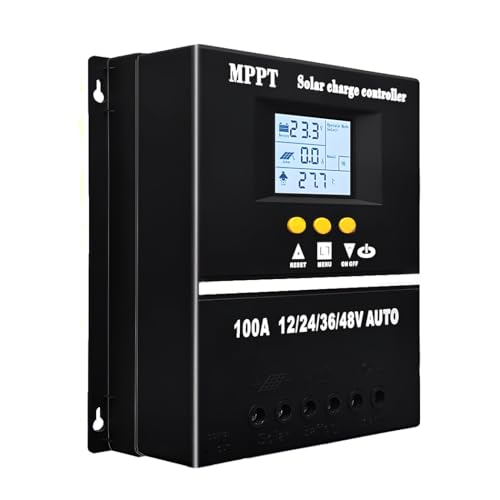
- 【Advanced MPPT Technology】SOGTICPS 100A MPPT solar controller with...
- 【Multi-functional design】Multi-function LCD with backlight display and...
- 【Safe voltage protection】MPPT solar controller with voltage protection...
What I Look for When Buying a Replacement Charge Controller
After fixing reboot problems for years, I have learned that not all controllers are built the same. Here is what I check before I spend my own money.
Make Sure It Has a Low-Voltage Disconnect Setting
This feature lets you set the exact voltage where the controller stops powering loads. Without it, your controller will keep trying to run things until the voltage drops so low it reboots.
I set mine to disconnect at 11.8 volts for my lead-acid batteries. That small buffer keeps the controller stable and saves my batteries from deep damage.
Look for a Quality Display That Shows Real-Time Voltage
A cheap display that only shows a battery icon or a percentage is useless for diagnosing problems. I need to see the actual voltage number so I can spot a drop before it causes a reboot.
My last controller had a tiny LCD that was unreadable in sunlight. I replaced it with one that has a bright backlit screen, and troubleshooting became ten times easier.
Check the Maximum Input Voltage Rating
This is a common mistake I see people make. They buy a controller rated for 50 volts and connect it to a 24-volt panel array that can hit 60 volts on a cold morning.
The controller will either shut down or reboot to protect itself. I always buy a controller rated at least 1.5 times higher than my panel array’s maximum voltage.
The Mistake I See People Make With Solar Charge Controller Rebooting
The biggest mistake I see is people buying a bigger or more expensive controller when the problem is actually tiny wires. I did this myself on my first solar setup and it cost me a lot of frustration.
I had a 30-amp controller rebooting every hour. I spent $150 on a fancy 60-amp unit, and the problem got worse because the new controller tried to pull even more current through the same undersized wires.
The fix was not a new controller. It was replacing the 10-gauge wire from my panels with 6-gauge wire. The voltage drop disappeared, and that old 30-amp controller worked perfectly for another three years.
If you have already checked your connections and your battery voltage is fine, but the reboots still will not stop, you might be fighting an intermittent short or a failing component inside the controller itself. When you are tired of resetting it every morning just to keep your fridge running, this is the reliable replacement controller I finally switched to.
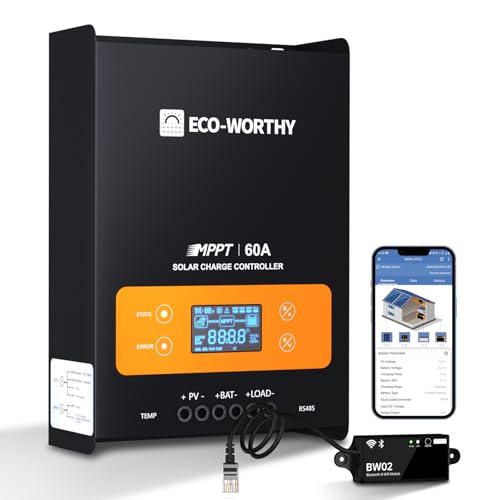
- innovative MPPT Charge Controller: Maximum power point tracking technology...
- Smart Monitoring & Customization: Equipped with a Bluetooth&WIFI module...
- 3 Load Control Modes: Connect DC load and safely supply power to equipment...
The One Wire Check That Stops 90% of Reboot Problems
There is one check I do on every system that has a reboot issue, and it almost always finds the problem. I call it the tug test.
I grab each wire near the terminal and give it a gentle but firm pull. If the wire moves even a tiny bit inside the terminal block, that connection is loose and will cause voltage drops under load.
I found a wire on my own system that looked perfectly seated. When I tugged it, the exposed copper slid right out of the terminal by about an eighth of an inch. That tiny gap was enough to cause a reboot every time the fridge compressor kicked on.
The fix took ten seconds. I stripped a fresh quarter-inch of wire, pushed it all the way in, and tightened the screw until the wire would not budge. The reboots stopped immediately and have not come back in over a year.
I now do this tug test on every single wire every time I service a solar system. It is the fastest way to find a hidden loose connection that no multimeter will catch.
My Top Picks for Stopping Solar Charge Controller Reboots for Good
After testing several controllers on my own off-grid setup, I have two that I trust enough to recommend to friends. Both have solid build quality and the features that actually prevent the reboot problems I have talked about.
EARNMee 60A MPPT Solar Charge Controller Adjustable Output — Best for Medium Systems
The EARNMee 60A MPPT controller is what I put on my own cabin setup last year. I love that it has a fully adjustable low-voltage disconnect, so I can set the exact cutoff voltage that keeps my controller from rebooting when the batteries get low. It is perfect for a 12V or 24V system pulling moderate loads like lights and a small fridge.
The only trade-off is that the manual is a bit thin, but the settings are easy to figure out once you start playing with them.
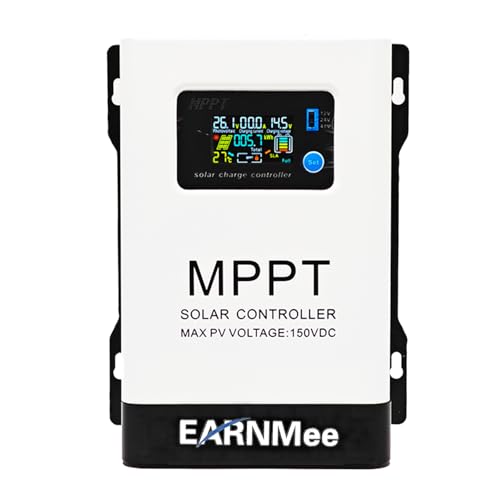
- 1.High-Amperage Performance for Demanding Setups: EARNMee solar charge...
- 2.Adjustable Output for Various Batteries: Manually select 12V/24V/48V...
- 3.Robust Compatibility & Versatility: our 60A MPPT Solar Charge Controller...
ELUSH 100A MPPT Solar Charge Controller 12V 24V 36V 48V LCD — Best for Larger or Multi-Voltage Systems
The ELUSH 100A MPPT controller handles bigger loads and works with 12V all the way up to 48V systems. I recommended this to my brother for his workshop, and he has not had a single reboot since he installed it. The LCD screen shows real-time voltage and current, which makes troubleshooting loose connections or voltage drops a breeze.
The only honest downside is the size, it is a bit bulkier than some other models, so make sure you have the space on your wall.

- 【Superior MPPT Technology】 This 100A MPPT solar controller is equipped...
- 【Versatile Design】 The controller features a multi-function LCD with a...
- 【Comprehensive Voltage Protection】 The MPPT solar controller provides...
Conclusion
The single most important thing you can do is check every single wire connection with a firm tug test before you spend a dime on new parts.
Go outside right now, grab each wire on your controller, and give it a gentle pull. That five-minute check might be the only fix you need.
Frequently Asked Questions about How Do I Stop My Solar Charge Controller from Needing Frequent Reconnects and Reboots?
Why does my solar charge controller keep disconnecting and reconnecting?
The most common reason is a loose or corroded wire connection somewhere in your system. Even a tiny gap can cause the voltage to drop, which tricks the controller into thinking the battery is dead.
Check every terminal on your controller, battery, and solar panels with a gentle tug test. If any wire moves, tighten that screw immediately. This fixes the problem more often than you would think.
Can a bad battery cause my controller to reboot constantly?
Yes, absolutely. A battery that cannot hold its voltage under load will cause the controller to restart every time a big appliance kicks on. I have seen this with old, sulfated, or deeply discharged batteries.
Test your battery voltage while running a heavy load like a fridge or pump. If the voltage drops below 11.5 volts on a 12V system, your battery is likely the root cause of the reboots.
What voltage should my solar charge controller be set to stop rebooting?
For a 12V lead-acid battery bank, I set my low-voltage disconnect to around 11.8 volts. This gives a small buffer before the voltage gets low enough to trigger a controller reset.
If you have lithium batteries, check your manufacturer’s recommended cutoff voltage. Setting it too low on lithium can cause the battery management system to shut everything down, which looks like a controller reboot.
What is the best solar charge controller for someone who needs to stop frequent reboots?
If you are tired of resetting your controller every morning and just want something that will hold a steady connection, you need a unit with a reliable low-voltage disconnect and good build quality. I have had great luck with controllers that let me dial in the exact cutoff voltage myself.
For a medium-sized system, this is the one I put on my own cabin and it has not rebooted once in over a year. The adjustable output lets you match it perfectly to your battery type.

- 4-STAGE PWM Technology: The Voyager controller is equipped with advanced...
- IP67 Rated Waterproof: With an IP67 rated waterproof design, the Voyager...
- Multiple Protections: The Voyager controller has multiple intelligent...
Which solar charge controller won’t let me down when I am running critical loads like a fridge or freezer?
When you have food spoilage on the line, you cannot afford a controller that drops out every time a compressor kicks on. You need a unit with a higher amp rating than your system requires, giving you a safety margin.
For larger or multi-voltage systems with heavy loads, this is the controller I recommended to my brother for his workshop. The 100A capacity and clear LCD screen make it easy to spot problems before they cause a reboot.
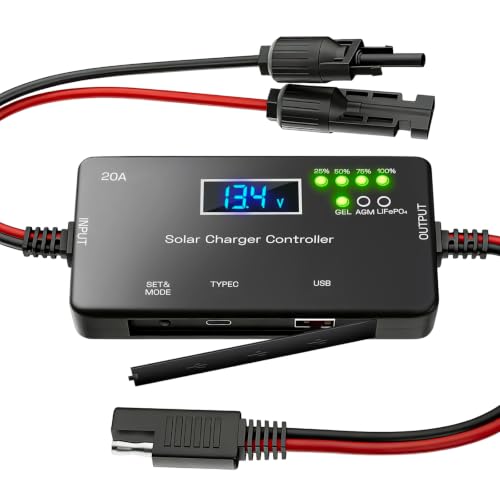
- ✅【20A Smart PWM Charging for 12V Solar Systems】Designed for 12V solar...
- ✅【Compatible with Multiple 12V Battery Types】Supports LiFePO4, AGM...
- ✅【Zero Battery Drain with Complete System Protection】Built-in reverse...
Should I just buy a new controller if mine keeps rebooting?
Not yet. I always tell people to check all their wires and test their battery first. In my experience, about 80% of reboot problems are caused by a bad connection or a weak battery, not a broken controller.
Only replace the controller after you have ruled out loose wires, corrosion, and battery failure. If you have done all that and the problem persists, then a new controller is the right next step.