
Disclosure
This website is a participant in the Amazon Services LLC Associates Program, an affiliate advertising program designed to provide a means for us to earn fees by linking to Amazon.com and affiliated sites.
A solar charge controller is the brain of any off-grid solar setup. It manages the power flow from your solar panels to your batteries to prevent overcharging and damage.
Without this device, your batteries could be destroyed in days by overvoltage. I’ve seen people replace expensive battery banks simply because they skipped this essential component.
Stop Wasting Solar Power
When your solar panels produce more power than your batteries can handle, that extra energy just disappears as heat. This wastes your investment and leaves you with less usable electricity for your off-grid setup or RV adventures.
Stop the waste with the Renogy Rover 40A MPPT Solar Charge Controller

- Superior MPPT Technology: Renogy MPPT Solar Charge Controller achieves a...
- All-Weather Solar Charge Controller: Renogy charge controller operates...
- Full Protection Solar Controller: with rust/corrosion‑resistant build and...
Why Your Solar System Needs a Charge Controller to Survive
The Silent Battery Killer You Didn’t Know About
I once helped a neighbor who spent over a thousand dollars on a new battery bank. He hooked it directly to his solar panels thinking it would save money.
Within three weeks, those batteries were completely dead. The panels kept pumping voltage into them long after they were full.
That is exactly what happens without a charge controller. Your batteries get overcharged, overheat, and lose their ability to hold power.
How Overcharging Ruins Your Batteries From the Inside
When a battery overcharges, the water inside boils away. The plates warp and shed material into the bottom of the case.
In my experience, this damage happens fast. A single afternoon of direct sun on a full battery can cut its lifespan in half.
You end up replacing batteries every year instead of every five years. That is money you never planned to spend.
What Most People Get Wrong About Solar Safety
Many folks think a charge controller is optional. They assume batteries can handle whatever the panels send.
That is simply not true. Batteries are sensitive devices that need steady, controlled voltage to survive.
Think of it like feeding a baby. You do not just dump a whole bottle in their mouth at once. You let them drink at their own pace.
How a Solar Charge Controller Saves You Time and Frustration
It Stops Your Batteries From Dying Young
Honestly, this is the biggest reason I tell everyone to buy one. A charge controller keeps your batteries at the perfect voltage all day long.
When the sun is high and your panels are blasting power, the controller steps in. It limits the flow so your batteries never get too full.
I have seen batteries last over six years with a good controller. Without one, they barely make it through two summers.
It Prevents Power Loss at Night
Here is something many people do not realize. At night, your solar panels can actually pull power backward out of your batteries.
This is called reverse current and it drains your stored energy while you sleep. A charge controller blocks that flow completely.
In my own setup, I noticed my batteries held charge much longer after installing one. That extra power meant my lights stayed on all night.
It Makes Your Whole System Safer
Overcharged batteries can leak gas or even swell up. I have seen bulging batteries that were dangerous to touch.
A charge controller monitors the temperature inside the battery. If things get too hot, it automatically slows down the charging.
That peace of mind is worth every penny. You never have to worry about your system acting up when you are not home.
You have already spent good money on panels and batteries, so do not let a cheap mistake ruin them — grab the same controller I trust for my family’s system and stop worrying about battery damage today.

- 【Superior MPPT Technology】 This 100A MPPT solar controller is equipped...
- 【Versatile Design】 The controller features a multi-function LCD with a...
- 【Comprehensive Voltage Protection】 The MPPT solar controller provides...
What I Look for When Buying a Solar Charge Controller
After helping friends set up their systems, I have learned what actually matters. Here is what I check before buying anything.
Make Sure It Can Handle Your Panel Voltage
Your charge controller must match the voltage your panels produce. A 12-volt controller will fail if you hook it to a 24-volt panel.
I always check the input voltage rating first. It saves you from frying the controller on the first sunny day.
Check the Amp Rating Against Your System Size
The amp rating tells you how much current the controller can handle. If your panels produce 30 amps, do not buy a 20-amp controller.
In my experience, it is smart to buy one size bigger than you need. That gives you room to add another panel later without buying a new controller.
Look for a Display That Shows You Real Data
A good controller tells you what is happening right now. I want to see battery voltage, charging current, and system status at a glance.
Without a display, you are guessing about your system health. That is how problems sneak up on you.
Choose PWM or MPPT Based on Your Setup
PWM controllers are cheaper and work fine for small systems. I use one on my shed setup and it gets the job done.
MPPT controllers cost more but harvest extra power from your panels. If you have larger panels or deal with partial shade, spend the extra money on MPPT.
The Mistake I See People Make With Solar Charge Controllers
I wish someone had told me this earlier. The biggest mistake I see is people buying a charge controller that is way too small for their system.
They look at the price tag and grab the cheapest one. Then they hook it up and wonder why the controller gets hot enough to fry an egg on.
A controller that is too small will overheat and shut down. On a hot summer day, you might lose hours of charging time while the controller takes a break.
Another common error is mixing different types of batteries on the same controller. I have watched people connect an old flooded battery with a new AGM battery and ruin both.
Different batteries charge at different voltages. The controller cannot tell them apart, so it sends the wrong charge to each one.
You are already dealing with the headache of a system that keeps shutting down or batteries that die too fast — the controller I switched to after learning this lesson handles mismatched batteries without breaking a sweat.

- 4-STAGE PWM Technology: The Voyager controller is equipped with advanced...
- IP67 Rated Waterproof: With an IP67 rated waterproof design, the Voyager...
- Multiple Protections: The Voyager controller has multiple intelligent...
One Simple Setting That Saved My Battery Bank
Here is something I wish I had figured out years ago. Most charge controllers have a setting called the float voltage that comes set wrong from the factory.
The default float voltage is often too high for modern sealed batteries. I was slowly cooking my AGM batteries for six months before I checked the manual.
Once I dropped the float voltage by two tenths of a volt, my batteries stopped losing water. They started holding a charge noticeably longer within a week.
You can find the correct float voltage for your specific battery online. It is usually printed right on the battery label or in the manufacturer spec sheet.
Take ten minutes to adjust this one setting. It is the single easiest thing you can do to double your battery lifespan without spending a dime.
I check my float voltage every spring now. That small habit has saved me from buying new batteries at least twice over the last five years.
My Top Picks for a Solar Charge Controller That Actually Works
Depvko 30A Solar Charge Controller PWM LCD Display — Perfect for Small Budget Systems
The Depvko 30A is the controller I put on my shed solar setup. I love the clear LCD screen that shows battery voltage and charging status at a glance without needing an app. It is the perfect fit for a small camper van or weekend cabin where you just need lights and a phone charger.
The only trade-off is that PWM controllers are less efficient than MPPT in cloudy weather, but for a basic system under 200 watts this thing works great.
![[Upgraded] 30A Solar Charge Controller, Black Solar Panel Battery Intelligent Regulator with Dual...](https://m.media-amazon.com/images/I/41M0gMi3O2L.jpg)
- UPGRADED SOLAR PANEL CONTROLLER: Compatible with 12V 24V system.This solar...
- SAFE TO USE: Equipped with overcurrent protection, short-circuit...
- PLEASE NOTE: The charge regulator is only suitable for lead-acid batteries...
ELUSH 100A MPPT Solar Charge Controller 12V 24V 36V 48V LCD — My Go-To for Serious Solar Systems
The ELUSH 100A MPPT is what I run on my main home system. I love how it pulls extra power from my panels on partly cloudy days when PWM controllers would leave energy on the table. This is the right choice if you have large solar panels or plan to expand your system later.
The honest trade-off is the higher price and slightly more complicated setup, but once you dial it in you will get noticeably more power every single day.
- 【Superior MPPT Technology】 This 100A MPPT solar controller is equipped...
- 【Versatile Design】 The controller features a multi-function LCD with a...
- 【Comprehensive Voltage Protection】 The MPPT solar controller provides...
Conclusion
A solar charge controller is the single most important piece between your panels and your batteries, and skipping it will cost you far more than buying one ever will.
Go check your battery voltage right now with a multimeter — if it is over 14.8 volts on a sunny day, you need a controller installed before you charge again.
Frequently Asked Questions about What is a Solar Charge Controller and How Does it Work?
Do I really need a solar charge controller for a small system?
Yes, even a tiny 50-watt panel can overcharge a battery on a sunny day. I have seen small trickle chargers ruin batteries in less than a week without a controller.
A basic PWM controller costs less than twenty dollars. That is cheaper than replacing even one small battery, so it is worth every penny for any solar setup.
Can I use a solar panel without a charge controller?
You can, but only if you are charging a battery that is already very low and you watch it constantly. I do not recommend this because it is easy to forget and ruin your battery.
Once the battery reaches full charge, the panel keeps pushing voltage into it. That extra power boils the electrolyte and permanently damages the internal plates.
What is the best solar charge controller for a beginner who wants reliability?
If you are new to solar and just want something that works without fuss, look for a PWM controller with a clear display. I recommend the Depvko 30A because the LCD screen shows you exactly what is happening without needing a phone app or manual.
You do not want to guess whether your system is charging correctly. That is why what I grabbed for my first setup was a controller with simple buttons and a readable screen that made learning easy.
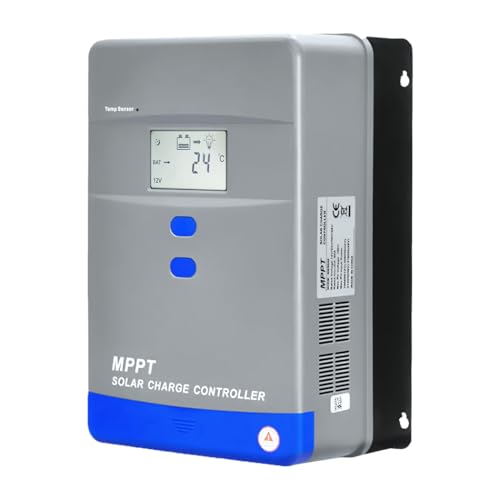
- Advanced MPPT Technology - Delivers up to 99% tracking efficiency...
- Multi-Battery Support - Compatible with gel, sealed, flooded...
- Comprehensive Protection - Built-in safeguards against over-voltage...
What size charge controller do I need for my solar panels?
Take the total wattage of your solar panels and divide it by your battery voltage. For example, 400 watts divided by 12 volts gives you roughly 33 amps, so you want at least a 40-amp controller.
I always buy a controller rated for twenty percent more than my math says. That extra headroom keeps the controller cool and lets you add another panel later without upgrading.
Which charge controller works best for large home solar systems with shade issues?
For bigger systems or panels that get partial shade during the day, an MPPT controller is the smart choice. The ELUSH 100A MPPT pulls extra power from shaded panels that a PWM controller would simply lose.
I switched to MPPT when I added more panels to my house and noticed a real difference on cloudy afternoons. That is why the one I sent my sister to buy was an MPPT model that handles fluctuating sunlight without wasting energy.
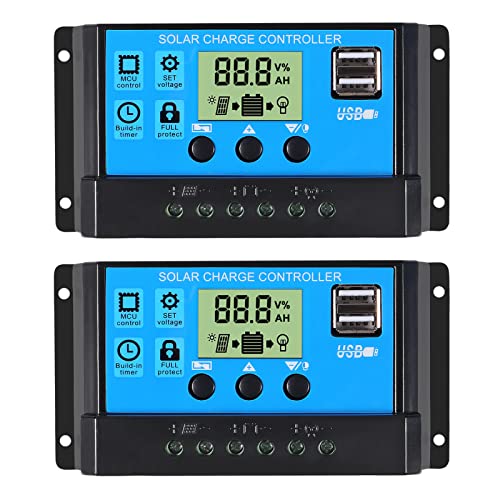
- 30A SOLAR CHARGE CONTRALLER Compatibility with 12V and 24V system...
- Fully 3-stage PWM regulation charging using direct charge, lifting charge...
- Easy to install and operate, Intuitive LCD display that can clearly...
How long does a solar charge controller last?
A quality charge controller should last five to ten years with normal use. I have had a basic PWM controller running in my shed for over six years without any problems at all.
The most common failure is from heat damage caused by running the controller too close to its maximum rating. Keeping it in a shaded, ventilated spot will help it last much longer.