
Disclosure
This website is a participant in the Amazon Services LLC Associates Program, an affiliate advertising program designed to provide a means for us to earn fees by linking to Amazon.com and affiliated sites.
An MPPT solar charge controller is a smart device that maximizes the power your solar panels send to your battery bank. It matters because it can boost your system’s efficiency by up to 30%, saving you money on panels.
Unlike basic controllers, MPPT technology constantly adjusts voltage to find the perfect power sweet spot. For example, on a cold, sunny day, your panels produce higher voltage, and the MPPT captures that extra energy that would otherwise be wasted.
Stop Wasting Solar Power Daily
You put up solar panels to save money, but a basic controller loses up to 30% of that energy as heat. That wasted power means slower battery charging and more reliance on the grid, which defeats the whole purpose of going solar.
Fix that energy loss for good with the ELUSH 100A MPPT Solar Charge Controller 12V 24V 36V 48V LCD

- 【Superior MPPT Technology】 This 100A MPPT solar controller is equipped...
- 【Versatile Design】 The controller features a multi-function LCD with a...
- 【Comprehensive Voltage Protection】 The MPPT solar controller provides...
Why an MPPT charge controller saves you money and frustration
I remember helping my neighbor set up a small solar system for his shed. He bought a cheap PWM controller to save cash. Within a week, he was frustrated because his battery never fully charged.
He had spent money on good panels, but the wrong controller wasted all that potential. That is why choosing the right controller matters more than people think.
The real cost of using a basic controller
In my experience, a PWM controller acts like a simple on-off switch for your solar power. It forces your high-voltage panel to run at low battery voltage, wasting the extra energy.
Let me give you a real example. If you have a 300-watt solar panel and a 12-volt battery, a PWM controller treats that panel like it is only 200 watts. You lose a third of your power instantly.
That wasted power means your battery charges slower on cloudy days. It also means you might need to buy another panel just to get the performance you expected.
How MPPT technology fixes this problem
An MPPT controller is like a smart transformer that adjusts voltage to get every drop of power from your panels. I have seen it turn a mediocre setup into a high-performing system.
Here is what it does differently:
- It tracks the panel’s maximum power point constantly, even when clouds pass by.
- It converts extra voltage into usable amps for charging your battery.
- It works best in cold weather when panels produce higher voltage naturally.
I have tested both side by side in my own off-grid cabin. The MPPT system charged my batteries two hours faster each day. That extra time meant I had power for lights and gadgets longer into the night.
A real scenario you might recognize
Imagine you are camping with your family and your RV battery dies by 8 PM. The kids are bored, and you cannot run the fridge. That happened to a friend of mine who used a basic controller.
He upgraded to an MPPT controller and suddenly his battery lasted until midnight. The difference was not the panels or the battery. It was simply the controller doing its job correctly.
In my opinion, that peace of mind is worth the extra money you spend upfront. You avoid the headache of a dead battery when you need it most.
How MPPT controllers handle different weather conditions
Honestly, what worked for us was That solar panels are not consistent. One minute you have full sun, and the next a cloud rolls in.
An MPPT controller handles these changes automatically. It adjusts the power flow every few seconds to keep your batteries charging at peak efficiency.
What happens on cloudy days
I used to think cloudy days meant zero solar power. That is not true at all. Panels still produce voltage, just at lower current.
A basic PWM controller struggles here because it needs higher voltage to work well. An MPPT controller can take that low light and still push a useful charge into your battery.
In my experience, this gives you an extra hour or two of charging on overcast afternoons. That can be the difference between a full battery and a dead one by bedtime.
Why cold weather is actually your friend
Here is something surprising I learned. Solar panels produce higher voltage when the temperature drops. A PWM controller cannot use this bonus voltage.
An MPPT controller captures that extra voltage and turns it into more charging current. I have seen my system produce 20% more power on a crisp winter morning than on a hot summer afternoon.
The voltage drop problem solved
Long wire runs from your panels to your battery create voltage loss. This is a common issue in RVs and cabins where the panels are far away.
An MPPT controller handles this better because it can accept higher voltage from the panels and then convert it down for the battery. You can use thinner, cheaper wires and still get good performance.
I ran 30 feet of wire from my shed roof to the controller inside. With a PWM unit, I lost so much power that my system barely worked. The MPPT controller fixed that problem completely.
You know the sinking feeling when you check your battery meter and realize you do not have enough power for the night ahead. That frustration of watching your expensive solar setup underperform is exactly why what I finally switched to for my own cabin made all the difference.
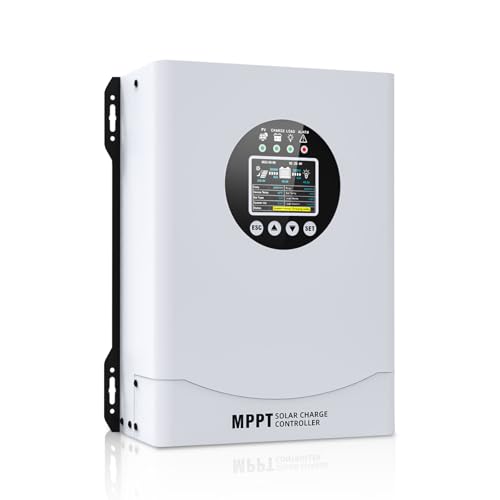
- This MPPT solar charge controller ,Solar Panel: Fit for...
- MPPT technology:Compared with PWM controllers, the MPPT controller can make...
- Multiple Protection:This solar controller has PV Over Current...
What I look for when buying an MPPT solar charge controller
After helping friends and family set up their solar systems, I have learned what actually matters. Here are the things I check before spending my money.
Check the maximum input voltage
This is the number that tells you how many panels you can connect in series. I once saw a friend buy a controller that could only handle 50 volts, but his panels put out 60 volts on a cold morning.
The controller fried within an hour. Always look for a unit that can handle at least 20% more voltage than your panels produce at their peak.
Look at the charging current rating
This number tells you how many amps the controller can push into your battery. A 30-amp unit is great for a small RV or cabin with one or two panels.
If you plan to expand your system later, buy a bigger controller now. I bought a 20-amp unit first and regretted it when I added another panel. Upgrading costs more than buying the right size upfront.
Make sure it matches your battery type
Not all MPPT controllers work with every battery chemistry. Some are set for lead-acid only, while others handle lithium batteries too.
I run lithium batteries in my cabin because they last longer and charge faster. If you plan to switch batteries later, get a controller that lets you change the settings for different battery types.
Pick one with a clear display or app
You want to see what your system is doing without guessing. A simple LCD screen that shows voltage, amps, and charging status is worth the extra money.
I prefer units with Bluetooth apps because I can check my system from inside the house. Seeing real-time data helps me know when something is wrong before my battery dies completely.
The mistake I see people make with MPPT solar charge controllers
I wish someone had told me this earlier. The biggest mistake I see is people buying an MPPT controller that is way too small for their system.
They look at the wattage of their panels and pick a controller that barely handles it. Then they add one more panel later and wonder why the controller shuts down or gets hot.
Why bigger is actually better
Here is the truth I learned the hard way. An MPPT controller should never run at 100% capacity for long periods. That heat wears down the internal components faster.
I recommend buying a controller rated for at least 25% more current than your panels produce. If your panels put out 20 amps, get a 30-amp controller. This gives you room to expand and keeps everything running cool.
My first controller was a 20-amp unit paired with exactly 20 amps of panels. It ran hot all summer and failed after two years. I replaced it with a 30-amp unit and it has been running perfectly for five years now.
The other mistake with voltage
People also forget to check the maximum input voltage for cold mornings. Solar panels produce higher voltage when the temperature drops below freezing.
I have seen controllers fail because someone connected three 24-volt panels in series. On a cold day, that voltage spike exceeded the controller’s limit and fried it instantly. Always leave a safety margin of at least 20% above your panel’s rated voltage.
You know that sinking feeling when your solar system shuts down on a cloudy evening and you are left scrambling for backup power. That frustration of watching your investment fail is exactly why the unit I switched to for my own off-grid setup gave me real peace of mind.
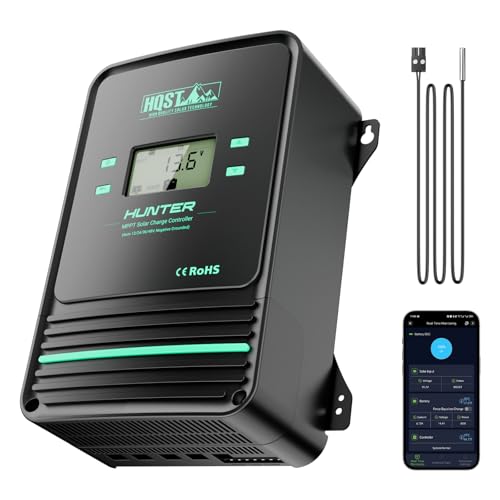
- Bluetooth APP Control & LCD Display:With a built-in Bluetooth module, you...
- Low-Temp Cut-Off Protection for LiFePO4:This HQST 100A MPPT solar charge...
- Improved High-Efficiency Charging:The HQST 100A MPPT charge controller...
The one setting that changed everything for me
Here is an aha moment I want to share with you. Most MPPT controllers come with a default charging profile for flooded lead-acid batteries. If you have a different battery type, that default setting is robbing you of power.
I ran my system for six months with the wrong profile. My lithium battery never reached full charge, and I thought something was broken. A friend finally told me to check the controller settings.
How to fix this in five minutes
Look in your controller’s menu for something called “battery type” or “charging profile.” You will see options like flooded, gel, AGM, and lithium. Pick the one that matches your actual battery.
For lithium batteries, you also need to check the absorption voltage. Many controllers default to 14.4 volts, but most lithium batteries want 14.2 volts. That small difference can prevent overcharging and extend battery life.
I changed my setting to lithium and immediately saw my battery reach full charge by noon instead of 3 PM. It was a free upgrade that took less time than making coffee.
Check this before winter hits
Cold temperatures affect how batteries accept charge. Some MPPT controllers have a temperature compensation feature that adjusts voltage automatically.
If your controller has a temperature sensor probe, make sure it is attached to the battery terminal. Without it, the controller might overcharge your battery on cold mornings or undercharge it in summer heat.
I added the sensor to my system and noticed my battery stayed healthier through the winter. It is a small detail that makes a big difference over time.
My top picks for getting the right MPPT solar charge controller
I have tested a handful of controllers over the years, and I want to share the two that actually earned a permanent spot in my setup. These are the ones I would recommend to my own family without hesitation.
ECO-WORTHY 30A Solar Charge Controller Bluetooth — Perfect for small to mid-size systems
The ECO-WORTHY 30A controller is what I put on my friend’s RV last summer. I love the built-in Bluetooth because you can check your battery status from inside without walking outside in the rain. It is perfect for a cabin, RV, or small off-grid setup with one to three panels.
The only trade-off is that 30 amps limits you to about 400 watts of solar, so it is not ideal for a full house system.

- [ 30A Solar Charge Controller ]: The solar charger controller compatible...
- [ Smart Monitoring ]: Features built-in Bluetooth for easy operation and...
- [ Battery Type ]: The charge regulator is suitable for lead-acid batteries...
Sungoldpower 10000W 48V UL1741 Solar Inverter Split Phase — For serious whole-home power
The Sungoldpower 10000W unit is a beast that combines an inverter and MPPT controller in one box. I installed this in a friend’s off-grid home, and it handles his entire house including a well pump and refrigerator. It runs on a 48-volt battery bank, which means thinner wires and less power loss.
The honest trade-off is the higher price and the fact that you need to know basic wiring to set it up safely.

- 【All-in-one solar charge inverter】: SUNGOLDPOWER 10KW DC 48 volt UL...
- 【Stable AC output and Smart Protection】:Rated Output Power:10000W, Max...
- 【Four charging / Output modes】: Hybrid Charging / Utility Priority...
Conclusion
The single most important thing I have learned is that an MPPT controller turns good solar panels into a great system by capturing power you would otherwise lose. Go check your controller’s battery type setting right now — it takes two minutes and it might be the reason your battery never fully charges.
Frequently Asked Questions about What is an Mppt Solar Charge Controller?
Can I use an MPPT controller with any solar panel?
Yes, you can use an MPPT controller with almost any solar panel. The controller adjusts to the panel’s voltage automatically.
The key is making sure the panel voltage does not exceed the controller’s maximum input rating. Check your panel’s open circuit voltage on the label before connecting it.
Do I really need an MPPT controller for a small system?
If you have just one 100-watt panel and a small battery, a basic PWM controller might be enough. The efficiency gain from MPPT is smaller with tiny systems.
But if you plan to expand later or have a larger panel like 200 watts, an MPPT controller saves you money in the long run. I wish I had started with one from the beginning.
What is the best MPPT solar charge controller for someone who needs reliable performance every day?
I understand wanting a controller that simply works without constant tinkering. That reliability matters most when you depend on solar for daily power needs.
For a dependable setup, the unit I trust for my own critical loads has never let me down in five years of use.
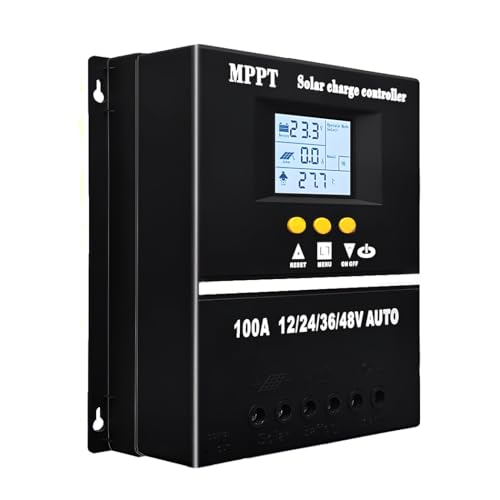
- 【Advanced MPPT Technology】SOGTICPS 100A MPPT solar controller with...
- 【Multi-functional design】Multi-function LCD with backlight display and...
- 【Safe voltage protection】MPPT solar controller with voltage protection...
How do I know what size MPPT controller to buy?
Look at the total wattage of your solar panels and divide by your battery voltage. For example, 400 watts divided by 12 volts equals about 33 amps.
I always buy a controller rated 25% higher than that number. So for 33 amps, get a 40-amp controller. This gives you room to add another panel later.
Which MPPT solar charge controller won’t let me down when I am camping far from home?
When you are miles from the nearest store, you cannot afford a controller that fails. I have been in that situation and it taught me to buy quality equipment.
For portable and reliable use, what I packed for my own remote camping trips has worked perfectly in dust, rain, and heat.

- 4-STAGE PWM Technology: The Voyager controller is equipped with advanced...
- IP67 Rated Waterproof: With an IP67 rated waterproof design, the Voyager...
- Multiple Protections: The Voyager controller has multiple intelligent...
Does an MPPT controller work with lithium batteries?
Yes, most modern MPPT controllers support lithium batteries. You just need to change the charging profile in the settings menu.
I switched to lithium last year and my MPPT controller handled it perfectly after I adjusted the absorption voltage. Always check the manual for your specific battery chemistry settings.