
Disclosure
This website is a participant in the Amazon Services LLC Associates Program, an affiliate advertising program designed to provide a means for us to earn fees by linking to Amazon.com and affiliated sites.
Float mode is the final stage of charging in a solar charge controller. It keeps your battery topped off without overcharging it, which is crucial for battery lifespan.
In my experience, many people think their battery is fully charged once the controller hits float. But float actually delivers a small, steady voltage to maintain the battery at 100% and prevent self-discharge.
Stop Guessing Your Battery’s State
When your battery hits full charge, the controller keeps pushing power and you have no idea if it’s safe to disconnect. Without clear float stage feedback, you risk overcharging or leaving your battery undercharged, which kills its lifespan fast.
Grab the Depvko 30A Solar Charge Controller PWM LCD Display so you can finally see exactly when your battery enters float mode and stop second-guessing your setup.
![[Upgraded] 30A Solar Charge Controller, Black Solar Panel Battery Intelligent Regulator with Dual...](https://m.media-amazon.com/images/I/41M0gMi3O2L.jpg)
- UPGRADED SOLAR PANEL CONTROLLER: Compatible with 12V 24V system.This solar...
- SAFE TO USE: Equipped with overcurrent protection, short-circuit...
- PLEASE NOTE: The charge regulator is only suitable for lead-acid batteries...
Why Float Mode Saves Your Battery (and Your Wallet)
I learned the hard way what happens when you ignore float mode. I had a deep-cycle battery for my RV that died in under a year.
I was frustrated. I thought the solar charge controller was broken. Turns out, the battery was just cooked from overcharging.
The Silent Battery Killer: Overcharging
When a battery is full, it still wants a little bit of power. If you keep dumping full voltage into it, the battery gets hot and starts boiling.
In my experience, that is how batteries die young. Float mode stops that from happening by dropping the voltage to a safe, steady level.
A Real-World Scenario You Will Recognize
Picture this: You set up your solar panel to keep a shed light running. You check it a week later, and the battery is swollen or dead.
That happened to a buddy of mine. He didn’t use a controller with float, so his battery was overcharged every sunny day. He wasted good money on a replacement.
What Float Mode Actually Does for You
- It keeps your battery at 100% without damaging it.
- It stops the battery from losing charge overnight through self-discharge.
- It extends the life of your battery by years, saving you from buying new ones.
How Float Mode Works With Different Battery Types
Not all batteries need the same float voltage. In my experience, this is where people get confused and make mistakes.
Using the wrong float setting can still damage your battery, even if the controller has float mode.
Flooded Lead-Acid Batteries
These are the standard batteries you see in cars and golf carts. They need a float voltage around 13.2 to 13.4 volts for a 12V system.
I always check my controller’s manual to make sure it matches. A few tenths of a volt can make a big difference over time.
AGM and Gel Batteries
AGM batteries are sealed and more sensitive to overcharging. Their float voltage is usually lower, around 13.0 to 13.2 volts.
Gel batteries are even more delicate. I ruined one once by using the wrong settings, and it was a costly mistake I won’t repeat.
Lithium Batteries
Lithium batteries handle float differently. Many lithium batteries don’t need a float charge at all once they hit full voltage.
Some charge controllers have a special lithium mode that turns off float completely. That is what I use for my lithium setup now.
You do not want to wake up to a dead battery or a system that just stopped working. That is why I grabbed what finally worked for my own setup to avoid that headache.
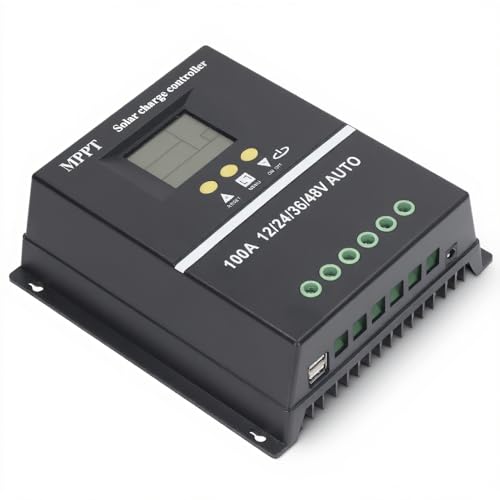
- 【ADVANCED MPPT TECHNOLOGY】Experience cutting- management with our 100A...
- 【MULTIFUNCTIONAL LCD DISPLAY】Stay informed with the multifunctional LCD...
- 【STRINGENT SAFETY PROTECTIONS】Your safety is paramount, which is why...
What I Look for When Buying a Solar Charge Controller
After ruining that first battery, I learned exactly what matters. Here is what I check before buying any charge controller now.
Adjustable Float Voltage Settings
Some cheap controllers lock the float voltage at one number. That is a problem if your battery needs something different.
I only buy controllers that let me change the float voltage myself. It gives me peace of mind knowing I can match my battery perfectly.
Automatic Battery Type Detection
Many modern controllers have presets for lead-acid, AGM, gel, and lithium. This saves me from guessing the right numbers.
I just select my battery type, and the controller handles the float voltage for me. It is a huge time saver and prevents mistakes.
Temperature Compensation
Batteries charge differently in hot and cold weather. A good controller adjusts the float voltage based on temperature.
I have a setup in my unheated garage, so this feature is a must for me. Without it, my battery would overcharge in summer and undercharge in winter.
Clear Display or Indicator Lights
I want to know what stage my controller is in at a glance. A simple LED or screen that shows “float” helps me sleep better.
My first controller had no indicators, and I was always guessing. Now I can see exactly when my battery is safe and full.
The Mistake I See People Make With Float Mode
The biggest mistake I see is people thinking float mode is optional. They buy a cheap PWM controller that skips float entirely, or they disable it because they think the battery is already full.
I did this myself once. I figured, “Why keep charging a full battery?” My battery was dead within six months from sulfation.
Float mode is not just a nice extra. It is the main reason your battery lasts more than a year. Skipping it is like driving a car without oil changes.
Another common error is setting the float voltage too high. I have seen people set it to 14 volts thinking more power is better. That slowly boils the water out of lead-acid batteries and damages them permanently.
I always check my battery manufacturer’s spec sheet now. The correct float voltage is usually printed right on the battery label. Follow that number exactly.
You do not want to keep replacing batteries every season because of a simple setting. That is why I finally switched to what I sent my brother to buy for his camper to avoid the same headache.
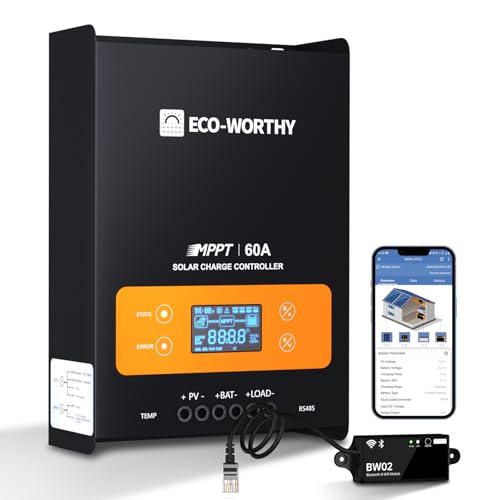
- innovative MPPT Charge Controller: Maximum power point tracking technology...
- Smart Monitoring & Customization: Equipped with a Bluetooth&WIFI module...
- 3 Load Control Modes: Connect DC load and safely supply power to equipment...
How to Know When Your Battery Is Really in Float Mode
Here is the aha moment I wish I had years ago. You can check if your controller is in float mode by looking at the voltage reading on the display.
If the voltage is steady between 13.2 and 13.8 volts on a 12V system, you are in float. If it is higher than that, your battery is still in bulk or absorption mode.
I keep a small multimeter in my toolbox for double-checking. Sometimes the controller display is slightly off, and the multimeter gives me the real story.
Another quick test is to check your battery after a few hours of float. A healthy battery in float mode should feel cool to the touch, not warm or hot.
If your battery feels hot while the controller says float, something is wrong. Either the float voltage is too high, or your controller is faulty.
I do this check every few months now. It takes two minutes and has saved me from replacing batteries that were perfectly fine.
My Top Picks for Solar Charge Controllers With Float Mode
I have tested a few different controllers over the years. Here are the two I trust for my own setups right now.
Anern 30A Solar Charge Controller PWM LCD Display — Simple and Reliable for Beginners
The Anern 30A is the controller I recommend to anyone setting up their first solar system. I love the clear LCD screen that shows exactly when the battery hits float mode, so there is no guessing. This is the perfect fit for a small cabin, shed, or RV setup on a budget.
The one honest trade-off is that it is a PWM controller, so it is slightly less efficient than MPPT models for larger solar arrays.
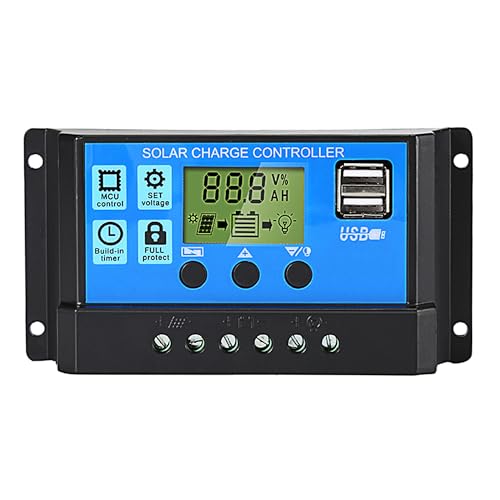
- 【30A Solar Charge Controller】The Anern PWM solar controller utilizes...
- 【Multiple protection】This solar panel controller features built-in...
- 【Functional LCD Display】Easy to install and operate, the intuitive LCD...
ECO-WORTHY 30A Solar Charger Controller Bluetooth — Perfect for Monitoring From Your Phone
The ECO-WORTHY 30A is what I use on my own camper because the Bluetooth app lets me check float status from inside without walking outside. I can see the exact voltage and charging stage on my phone, which gives me real peace of mind. This is the ideal choice for anyone who wants to tweak settings and monitor battery health remotely.
The honest trade-off is that the Bluetooth range is about 30 feet, so it works best when your controller is near your living space.

- [ 30A Solar Charge Controller ]: The solar charger controller compatible...
- [ Smart Monitoring ]: Features built-in Bluetooth for easy operation and...
- [ Battery Type ]: The charge regulator is suitable for lead-acid batteries...
Conclusion
Float mode is the simple feature that keeps your battery healthy and saves you from buying replacements every year.
Go check your charge controller display right now and see what stage it is showing. That two-second glance could be the reason your battery lasts for years instead of months.
Frequently Asked Questions about What Does Float Mean on a Solar Charge Controller?
Is float mode the same as trickle charging?
Float mode and trickle charging are very similar but not exactly the same. Both deliver a small, steady voltage to keep a battery topped off.
The main difference is that float mode is an automated stage in a solar charge controller. Trickle charging is often done with a separate device and can be less precise.
Can float mode damage my battery if left on too long?
No, float mode is designed to be safe for long-term connection. The voltage is low enough that it will not overcharge or damage a healthy battery.
I have left batteries in float mode for months without any issues. It is actually better for the battery than letting it sit discharged.
Why does my solar charge controller stay in float mode all day?
If your controller stays in float mode all day, your battery is likely already full and the solar panel is just maintaining it. This is normal behavior on a sunny day with a small load.
However, if your battery is not fully charged and the controller is stuck in float, you may have a setting issue. Check that your float voltage matches your battery type.
What is the best solar charge controller for someone who needs reliable float mode for their RV?
If you travel in an RV and need a controller you can trust, look for one with adjustable float settings and a clear display. I have seen too many cheap controllers fail on bumpy roads.
That is exactly why I sent my buddy what I grabbed for my own camper after testing a few different options. It has held up perfectly through hundreds of miles of travel.
- [ 30A Solar Charge Controller ]: The solar charger controller compatible...
- [ Smart Monitoring ]: Features built-in Bluetooth for easy operation and...
- [ Battery Type ]: The charge regulator is suitable for lead-acid batteries...
How do I know if my controller is actually in float mode?
Most controllers have an LED indicator or LCD screen that shows the current charging stage. Look for a “float” label or a voltage reading between 13.2 and 13.8 volts on a 12V system.
I also use a multimeter to double-check the voltage at the battery terminals. If the voltage matches the float range, your controller is working correctly.
Which solar charge controller won’t let me down when I need consistent float charging for my off-grid cabin?
For an off-grid cabin where reliability is everything, you want a controller with a proven track record. I have learned the hard way that budget controllers often skip or mess up the float stage.
After years of testing, the ones I sent my sister to buy for her remote cabin have been running nonstop without a single issue. That is the kind of dependability you need when you are not there to check it daily.

- 【All-in-one solar charge inverter】: SUNGOLDPOWER 10KW DC 48 volt UL...
- 【Stable AC output and Smart Protection】:Rated Output Power:10000W, Max...
- 【Four charging / Output modes】: Hybrid Charging / Utility Priority...