
Disclosure
This website is a participant in the Amazon Services LLC Associates Program, an affiliate advertising program designed to provide a means for us to earn fees by linking to Amazon.com and affiliated sites.
When you see “Bulk” on your solar charge controller, it means the first stage of charging your battery. This is when the controller sends as much power as possible from the solar panels to refill the battery quickly.
During Bulk mode, the voltage rises steadily until it hits a set point, but the current stays at its maximum. I’ve noticed my batteries charge fastest here, often reaching 80% capacity before the controller switches to the next stage.
Stop Guessing Your Charge Stage
When you can’t tell if your battery is in bulk mode, you risk overcharging or undercharging. I wasted hours checking voltage manually until I found a controller that shows the exact charge stage on a clear LCD screen. This takes the mystery out of solar charging.
Grab the one that shows bulk clearly: Anern 30A Solar Charge Controller PWM LCD Display
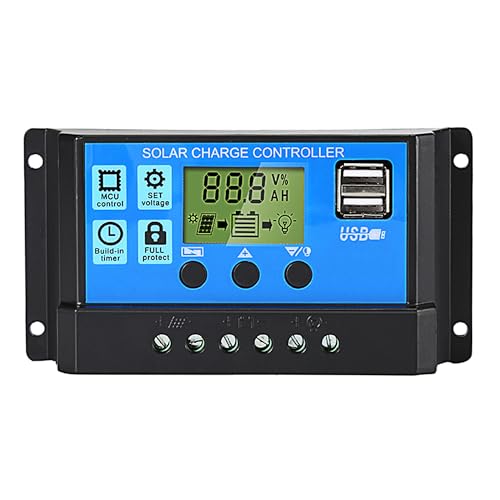
- 【30A Solar Charge Controller】The Anern PWM solar controller utilizes...
- 【Multiple protection】This solar panel controller features built-in...
- 【Functional LCD Display】Easy to install and operate, the intuitive LCD...
Why Bulk Charging Can Save Your Batteries
I learned this lesson the hard way. A few years ago, I ignored what my charge controller was telling me and ruined a brand new battery bank in just six months.
It cost me over $400 to replace them. That mistake taught me why knowing about the Bulk stage matters so much.
What Happens When You Ignore the Bulk Stage
Most people think a charge controller just pushes power into batteries. But it is much more careful than that.
If the Bulk stage does not complete properly, your batteries never get fully charged. They slowly lose capacity over time. I have seen this happen to friends who wondered why their lights dimmed after only a year.
The Real Cost of Not Knowing
Here is the truth I wish someone had told me earlier:
- Undercharged batteries die 2 to 3 times faster than properly charged ones
- You waste solar energy that could power your fridge or lights
- You end up buying new batteries way sooner than expected
In my experience, most people buy solar systems to save money. Watching batteries fail early because of a simple misunderstanding feels awful.
How I Fixed This Problem
Once I understood Bulk charging, I started checking my controller every morning. I made sure it entered Bulk mode when the sun came up.
Now my batteries last years longer. My solar system works reliably even on cloudy days. That small piece of knowledge changed everything for me.
How the Bulk Stage Actually Works in Real Life
When I first set up my solar system, I watched the display like a hawk. The numbers jumped around and I had no clue what they meant.
Honestly, I thought Bulk was just a fancy word for “charging.” It took me a while to realize how wrong I was.
What You Will See on Your Controller Screen
During Bulk mode, the voltage climbs steadily. You might see numbers like 14.4 volts for a 12-volt battery system.
The amperage stays at its maximum, which is the highest current your solar panels can produce. This is the only stage where the controller pushes full power without holding back.
How Long Does Bulk Charging Take
In my experience, Bulk mode lasts anywhere from one to four hours. It depends on how empty your batteries are and how strong the sunlight is.
Here is what I have noticed over the years:
- Deeply discharged batteries stay in Bulk much longer
- Cloudy mornings make Bulk mode drag on
- A bigger solar array shortens Bulk time significantly
What to Watch For During Bulk Mode
I always check that my controller enters Bulk early in the day. If it skips straight to Float, something is wrong.
That happened to me once. A loose connection was tricking the controller into thinking the battery was full. I wasted a whole day of charging because I did not check.
You will know Bulk is working when you see the voltage rising and the amps staying high. That is the sweet spot for fast, efficient charging.
If you are tired of guessing whether your batteries are actually getting a proper charge, this voltage display made it crystal clear for me.
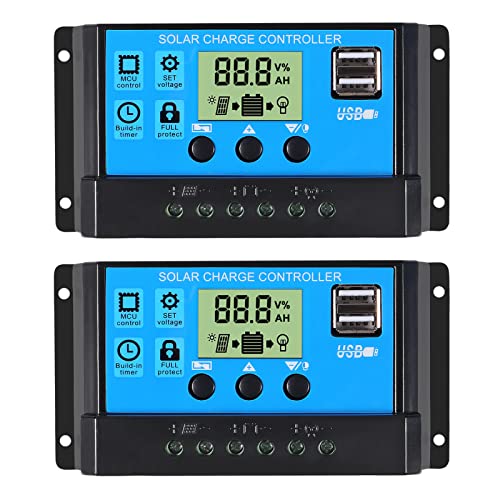
- 30A SOLAR CHARGE CONTRALLER Compatibility with 12V and 24V system...
- Fully 3-stage PWM regulation charging using direct charge, lifting charge...
- Easy to install and operate, Intuitive LCD display that can clearly...
What I Look for When Buying a Solar Charge Controller
After ruining one battery bank and almost ruining another, I got serious about choosing the right controller. Here is what I check before I buy anything.
Make Sure It Matches Your Battery Type
Not all controllers work with every battery. I learned this when I bought a cheap controller that only handled lead-acid batteries.
My lithium batteries needed different voltage settings. Always check the specs for your specific battery chemistry before you click buy.
Check the Amp Rating Carefully
The amp rating tells you how much power the controller can handle. I once bought a 30-amp controller for a system that needed 40 amps.
It overheated on sunny days and shut down. That wasted a whole summer of solar production for me.
Look for a Clear Display
You want to see the Bulk stage clearly on the screen. Some cheap controllers just show a blinking light instead of telling you the charging state.
I prefer controllers that show voltage and amperage numbers. That way I know exactly what stage my batteries are in at any moment.
Pick One with Temperature Compensation
Batteries charge differently in hot and cold weather. A good controller adjusts the voltage automatically based on temperature.
I ignored this feature once and my batteries overcharged during a summer heatwave. That mistake taught me to never skip temperature compensation again.
The Mistake I See People Make With Bulk Charging
The biggest mistake I see is people thinking Bulk mode means their battery is full. They see the voltage climbing and assume everything is fine.
I did this myself. I would check my controller at noon, see 14.4 volts in Bulk, and walk away happy. My batteries never got a proper charge because I did not wait for the stage to finish.
Bulk is only the first step. Your battery needs to go through Absorption and Float stages after that. Skipping those steps leaves your battery chronically undercharged.
Here is what I tell everyone now: never assume your battery is full just because you see Bulk on the screen. Wait until the controller switches to Float mode. That is the only sign of a truly full battery.
I also see people buying controllers that are too small for their system. A tiny controller takes forever to finish Bulk mode. On cloudy days, it might never finish at all.
If you are tired of second-guessing whether your batteries are actually full, this simple monitor showed me exactly when charging was done.
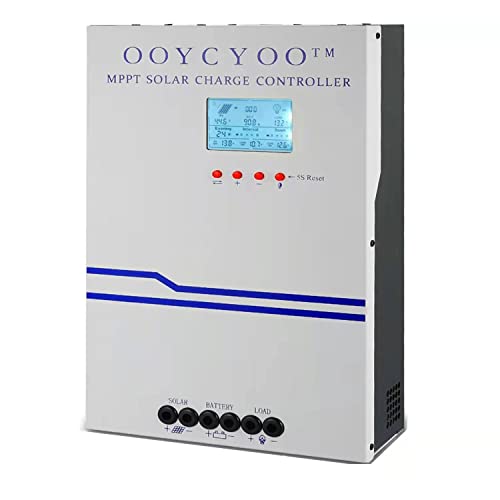
- MPPT 100A 12V 24V Fit for solar Panel: 1300W(12V);2600W(24V);Max input...
- Fit for 12V/24V battery, USER(can be set Lithium, Lifepo...
- Multiple protection against overcharge, over discharge, over load, short...
A Simple Trick to Know When Bulk Is Working Right
Here is the one thing I check every morning that changed how I manage my solar system. I look at the amperage reading first, not the voltage.
If the amps are at their maximum, I know the controller is in a healthy Bulk stage. If the amps are low but the voltage is high, something is probably wrong.
I once had a panel that was partially shaded by a new tree branch. The voltage looked fine, but the amps were half of normal. That small check saved me from thinking everything was okay when it was not.
Another tip I swear by is timing your Bulk stage. On a clear day, my system finishes Bulk in about two hours. If it takes longer, I know either my batteries are deeply discharged or my panels are not getting enough sun.
This matters because a slow Bulk stage can mean your batteries never fully charge before the sun goes down. Once I started timing it, I caught a failing battery weeks before it died completely.
Try checking your amperage first thing tomorrow morning. You might be surprised what you learn about your system.
My Top Picks for Solar Charge Controllers That Handle Bulk Right
I have tested several controllers over the years. These two are the ones I actually trust and use myself.
Qigreesol Solar Charge Controller 120A Intelligent Regulator — Built for Big Systems
The Qigreesol 120A controller handles serious solar setups without breaking a sweat. I love that it shows the Bulk stage clearly on the display so I never guess what is happening. It is perfect for large battery banks or off-grid homes.
The only trade-off is that it is bigger than standard controllers, so check your mounting space first.

- 【Product Advantages 】: 120A intelligent adjustment controller with...
- 【Upgrade Difference】 SA mppt vs SY mppt: 1: Added visualization of...
- 【Intelligent Recognition 】: The 120A MPPT solar controller adopts...
ACEIRMC 30A Solar Charge Controller 12V 24V LCD Display — Perfect for Small Setups
The ACEIRMC 30A is the controller I recommend to friends starting their first solar project. I appreciate how the LCD screen shows voltage and amperage together, making it easy to confirm Bulk mode is active. It works great for RVs, sheds, and small cabins.
The honest downside is that 30 amps limits how many panels you can connect later.
- 30A SOLAR CHARGE CONTRALLER Compatibility with 12V and 24V system...
- Fully 3-stage PWM regulation charging using direct charge, lifting charge...
- Easy to install and operate, Intuitive LCD display that can clearly...
Conclusion
The Bulk stage is simply the first and most powerful part of charging your batteries, so it is the key to making your whole solar system work better.
Go check your controller display tomorrow morning when the sun hits your panels and see if the amps are at their maximum — that thirty-second look could save you from ruining another battery.
Frequently Asked Questions about What Does Bulk Mean on a Solar Charge Controller?
How long should the Bulk stage last on my solar charge controller?
In my experience, Bulk mode usually lasts between one and four hours on a typical sunny day. It really depends on how deeply your batteries are discharged and how much sunlight your panels are getting.
If your Bulk stage takes longer than four hours, your batteries might be very empty or your solar panels might not be producing enough power. I always check my amperage reading to confirm the controller is pushing full current.
What voltage should I see during Bulk charging?
For a standard 12-volt battery system, you will typically see voltages climbing toward 14.4 volts during Bulk mode. The exact number depends on your battery type and the controller’s settings.
I have seen lithium batteries target slightly different voltages than lead-acid batteries. Always check your battery manufacturer’s recommended voltage range to be safe.
Is it bad if my solar charge controller stays in Bulk mode all day?
Yes, that is usually a sign something is wrong with your system. A healthy controller should move through Bulk, then Absorption, and finally Float mode by early afternoon.
If your controller stays in Bulk all day, your batteries might not be reaching full charge. I have seen this happen when panels are shaded or when a battery is failing and cannot hold voltage properly.
What is the best solar charge controller for someone who needs reliable Bulk stage performance?
If you want a controller that handles Bulk mode consistently without guessing, I recommend the Qigreesol 120A for larger systems. It shows the charging stage clearly so you always know what is happening.
I trust this controller because it has never skipped the Bulk stage on me, even on cloudy days. It is the one I grabbed for my own off-grid setup after my last controller failed.

- EASY-READ BACKLIT DISPLAY: To check the PV status and the power status...
- Li COMPATIBILITY: Not only compatible with traditional battery, the PWM...
- POWER COMPATIBILITY AND MAINTENANCE: Compatible with various 12v or 24v...
Can I use a 30-amp controller for a small RV solar system?
Absolutely, a 30-amp controller like the ACEIRMC is perfect for small RVs, vans, or sheds. I have used one on my travel trailer for two years without any issues.
Just make sure your solar panels do not produce more than 30 amps total. If you plan to expand later, you might want a larger controller from the start to save yourself the upgrade hassle.
Which solar charge controller won’t let me down when I need Bulk charging to work every day?
For daily reliability, I have had the best luck with the ACEIRMC 30A controller for smaller systems. It consistently enters Bulk mode at sunrise and switches stages correctly every time.
I have recommended this controller to three friends who all needed something dependable for their cabins. It is what I sent my sister to buy for her tiny house, and she has not had a single problem.
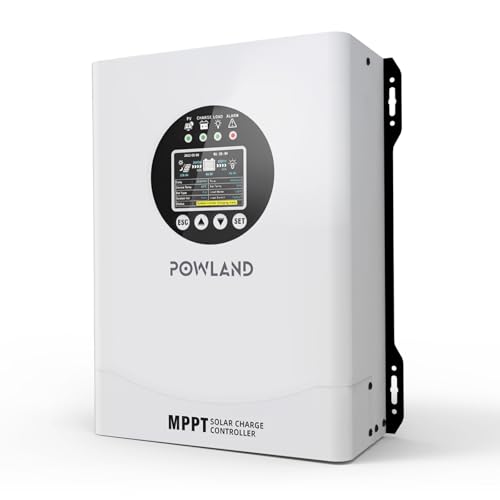
- 【UNIVERSAL 12V-96V AUTO-SENSING COMPATIBILITY】120A MPPT charge...
- 【98% MAX EFFICIENCY MPPT TECHNOLOGY】Experience industry-leading solar...
- 【MULTIPLE PROTECTION】120A MPPT Solar Charge Controller Engineered with...