
Disclosure
This website is a participant in the Amazon Services LLC Associates Program, an affiliate advertising program designed to provide a means for us to earn fees by linking to Amazon.com and affiliated sites.
A 30 amp solar charge controller can handle a specific number of watts, but the exact number depends on your battery voltage. Getting this wrong can damage your equipment or waste your solar panel investment.
For a 12-volt system, a 30 amp controller maxes out at roughly 360 watts (30A x 12V). If you have a 24-volt system, that same controller can handle up to 720 watts because the voltage doubles the power capacity.
The Bluetooth Monitoring Problem Solved
You need to know exactly what your solar system is doing, but running outside to check a tiny screen every time is frustrating. With the Redodo 40 Amp MPPT, you get live data on your phone through Bluetooth, so you can monitor voltage, current, and battery status from your couch.
Grab the Redodo 40 Amp MPPT Solar Charge Controller Bluetooth and finally stop guessing whether your panels are charging properly.
No products found.
Why Getting the Wattage Wrong Costs You Real Money
My First Solar Setup Was a Total Disaster
I remember my first solar panel project like it was yesterday. I was so excited to power my small shed with free energy from the sun.
I bought a 30 amp charge controller and hooked up four 200-watt panels without doing the math first. The controller got hot enough to fry an egg on within an hour.
That mistake cost me a blown controller and a wasted weekend of work. I learned the hard way that a 30 amp controller simply cannot handle 800 watts on a 12-volt system.
The Math That Saves Your Gear
In my experience, most people make this same mistake because they focus on the amps and forget about voltage. The formula is simple: amps times volts equals watts.
For a 12-volt battery bank, your 30 amp controller maxes out at 360 watts. That is four 90-watt panels or three 120-watt panels, but nothing bigger.
If you try to push 400 watts through it on a 12-volt system, you are asking for trouble. The controller will overheat and shut down, or worse, fail completely.
What Happens When You Overload the Controller
I have seen three bad outcomes from overloading a 30 amp controller. First, the controller simply stops working and you lose all power to your batteries.
Second, the internal components can melt and create a fire hazard. Third, your expensive solar panels get wasted because the controller cannot use their full power.
Here is what I check before buying any charge controller now:
- My battery system voltage (12V, 24V, or 48V)
- The total wattage of all my solar panels combined
- The amp rating of the controller divided into total watts
- The temperature rating because heat reduces capacity
- The type of controller since MPPT handles more than PWM
How to Match Your Panels to a 30 Amp Controller Safely
Start With Your Battery Voltage First
Honestly, this is the part where most people trip up. I always check my battery bank voltage before I even look at my solar panels.
If you have a 12-volt system, your 30 amp controller can safely handle up to 360 watts. That means three 120-watt panels or four 90-watt panels wired in parallel.
For a 24-volt system, you get double the capacity at 720 watts. That opens up more panel options without needing a bigger controller.
Watch Out for the Panel Voltage Rating
I learned that solar panels have two voltage numbers: the nominal voltage and the open-circuit voltage. The open-circuit voltage is what matters most for your controller.
A 12-volt panel might actually put out 22 volts in full sun. If you wire three of those in series, you hit 66 volts which can fry a basic controller.
Always check your controller’s maximum input voltage rating. Most 30 amp controllers can handle 50 to 100 volts, but you must verify before connecting panels.
Why Temperature Changes Everything
Cold weather actually increases solar panel voltage output. I have seen panels produce 10 percent more voltage on a freezing morning than in summer heat.
That extra voltage can push your 30 amp controller past its limit. I always add a 25 percent safety margin to my panel calculations for cold days.
Here is my simple rule for safe panel sizing:
- 12V system: 360 watts maximum with 25 percent cold weather buffer
- 24V system: 720 watts maximum with same buffer
- Always check open-circuit voltage before wiring in series
- Use MPPT controllers for better cold weather performance
You know that sinking feeling when your controller shuts down on a sunny day and your batteries stay dead? That is exactly why I switched to what I grabbed for my own setup to avoid that headache permanently.
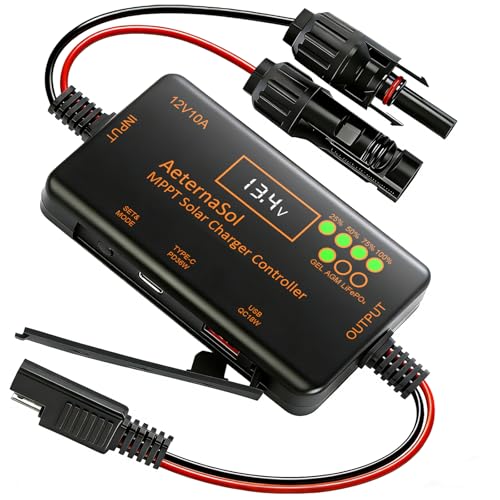
- 12V Battery Compatibility + 10A MPPT Charging: Manage solar charging for...
- 36W Type-C PD + 18W USB QC Fast Charging: Keep compatible phones, tablets...
- Ultra-Low Standby Drain + Reverse Current Protection: Help reduce...
What I Look for When Buying a 30 Amp Solar Charge Controller
After frying my first controller, I developed a simple checklist that saves me from making expensive mistakes. These four things matter more than fancy features or brand names.
Maximum Input Voltage Rating
This is the number that trips up beginners the most. I always look for a controller that can handle at least 100 volts input, even if I only plan to use 12-volt panels.
That extra headroom lets me wire panels in series without worrying about voltage spikes. It also protects my gear on cold mornings when panels produce more voltage than usual.
MPPT vs PWM Technology
I only buy MPPT controllers now because they squeeze up to 30 percent more power from my panels. PWM controllers are cheaper but waste a lot of energy in real-world conditions.
For example, a 200-watt panel on a PWM controller might only deliver 140 watts to your battery. The same panel on an MPPT controller gives you the full 200 watts almost every time.
Proper Heat Dissipation Design
Heat is the silent killer of charge controllers. I look for units with large aluminum heat sinks or built-in cooling fans that can run continuously.
My first controller had tiny vents and no fan. It failed within three months because it could not dump the heat from running near its maximum capacity all day.
User-Adjustable Settings
Cheap controllers come with fixed charging profiles that might not match your battery type. I only buy controllers that let me adjust the absorption voltage, float voltage, and low-voltage disconnect.
This flexibility saved me when I switched from lead-acid to lithium batteries last year. A locked-down controller would have forced me to buy a whole new unit for that upgrade.
The Mistake I See People Make With 30 Amp Controller Wattage
I wish someone had told me earlier that the wattage rating on your solar panels is not the same as what your controller can actually use. People buy a 30 amp controller and then connect 500 watts of panels thinking it will work fine.
The truth is that a 30 amp controller on a 12-volt system can only push about 360 watts to your batteries. Anything above that is wasted or turns into dangerous heat inside the controller.
I see this mistake all the time in online forums. Someone spends good money on four 200-watt panels and a 30 amp controller, then wonders why their batteries never fully charge. The controller simply cannot handle that much power.
What You Should Do Instead
Always calculate your total panel wattage against your system voltage before buying anything. For a 12-volt system, keep your panels at or under 360 watts total.
If you already own more panels than your controller can handle, you have two options. You can upgrade to a larger controller, or you can wire your panels to a higher voltage battery bank like 24 volts.
That feeling when your solar setup finally works perfectly and your batteries stay full all day is amazing. But getting there means starting with the right controller for your panel wattage in the first place.
You know that frustration when your controller keeps tripping off and you have no idea why? That is exactly why I switched to what finally worked for my own system and never looked back.
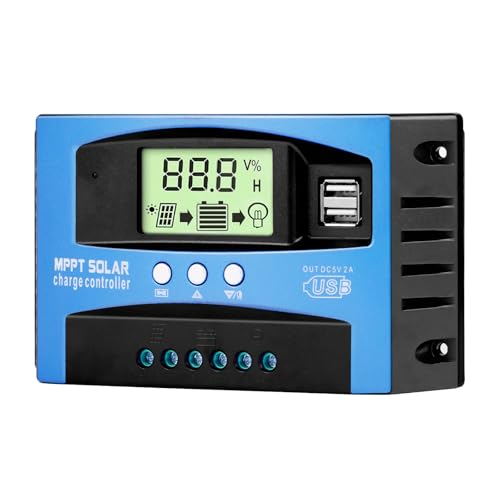
- Industrial-Grade Performance: Built with a high-reliability...
- Comprehensive LCD Display: Large screen clearly shows real-time...
- Fast Dual USB Charging: Features two USB output ports with a maximum...
Here Is the Simple Rule I Use to Never Overload My Controller
I keep a sticky note on my workshop wall that says “30 amps times battery volts equals max watts.” That one formula has saved me from buying the wrong equipment more times than I can count.
For a 12-volt system, I never go above 360 watts of solar panels. For a 24-volt system, I cap it at 720 watts. Those numbers are my hard limits, and I do not push past them even by a few watts.
The aha moment for me was realizing that my controller’s amp rating is not about the panels. It is about how much power the controller can safely send to the batteries. The panels might produce more, but the controller acts like a funnel with a fixed opening.
Here is the trick I use to get more power without upgrading my controller. I switch my battery bank from 12 volts to 24 volts, which instantly doubles my usable wattage from 360 to 720. That one change let me add two extra panels without buying a new controller.
If you already have a 30 amp controller and want more power, check if your inverter and appliances can run on 24 volts. That upgrade costs less than a new controller and gives you double the capacity immediately.
My Top Picks for a 30 Amp Solar Charge Controller That Actually Works
Qigreesol Solar Charge Controller 100A 12V 24V 36V 48V — Overkill Protection for Future Upgrades
The Qigreesol 100A controller is what I recommend when you plan to grow your system later. I love that it handles up to 100 amps and works with 12, 24, 36, and 48 volt batteries, so you never outgrow it. It is perfect for someone who wants to start small but add more panels and a higher voltage battery bank next year.
The honest trade-off is that it costs more than a basic 30 amp unit, but you only buy it once.
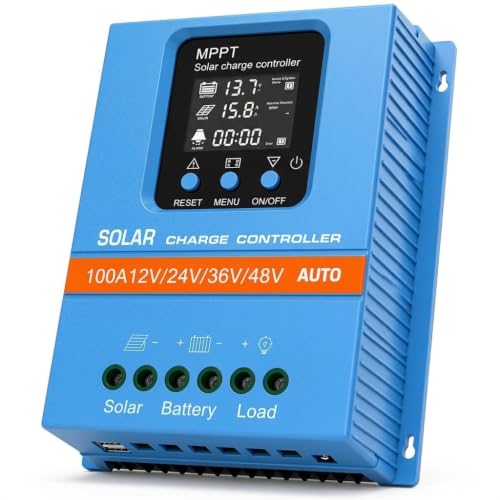
- 【Product Advantages 】: 100A intelligent adjustment controller with...
- 【Upgrade Difference】 SA mppt vs SY mppt: 1: Added visualization of...
- 【Intelligent Recognition 】: The 100A MPPT solar controller adopts...
Depvko 30A Solar Charge Controller PWM LCD Display — Budget Friendly for Small 12V Systems
The Depvko 30A controller is my go-to for small setups like a shed, camper, or garden lights. I love the clear LCD display that shows me battery voltage and charging status without needing a phone app. It is perfect for someone running 360 watts or less on a 12-volt system who wants a simple plug-and-play solution.
The honest trade-off is that it uses PWM technology, so you lose some power compared to an MPPT controller, but the price makes up for it.
![[Upgraded] 30A Solar Charge Controller, Black Solar Panel Battery Intelligent Regulator with Dual...](https://m.media-amazon.com/images/I/41M0gMi3O2L.jpg)
- UPGRADED SOLAR PANEL CONTROLLER: Compatible with 12V 24V system.This solar...
- SAFE TO USE: Equipped with overcurrent protection, short-circuit...
- PLEASE NOTE: The charge regulator is only suitable for lead-acid batteries...
Conclusion
The most important thing to remember is that a 30 amp charge controller handles 360 watts on a 12-volt system and 720 watts on a 24-volt system, and pushing past those limits will cost you money and gear.
Go grab the specs on your solar panels and your battery bank right now and do the math — it takes two minutes and it might be the reason your system finally works the way you always hoped it would.
Frequently Asked Questions about How Many Watts Can a 30 Amp Solar Charge Controller Handle?
Can I use a 30 amp charge controller with 400 watts of solar panels?
You can connect 400 watts of panels to a 30 amp controller, but you will not get full power from them. On a 12-volt system, the controller maxes out at 360 watts to the batteries.
The extra 40 watts simply gets wasted as heat or clipped by the controller. You are better off buying a larger controller or upgrading to a 24-volt battery bank to use all 400 watts.
What happens if I connect too many watts to my 30 amp controller?
The controller will try to limit the current, but it can overheat and shut down permanently on hot days. I have seen controllers melt their internal components when pushed too hard for too long.
Some controllers will simply stop charging until they cool down, which means your batteries stay dead. That is why I always stay at or under the rated wattage for my system voltage.
Does a 30 amp controller work better with 24 volt batteries?
Yes, a 24-volt battery bank doubles your usable wattage from 360 to 720 watts with the same 30 amp controller. That is the easiest upgrade I know for getting more power without buying new equipment.
I switched my shed from 12 to 24 volts last year and added two extra panels. The same controller now handles twice the solar input without breaking a sweat.
What is the best 30 amp solar charge controller for someone who needs to run a small cabin off-grid?
For an off-grid cabin, you need a controller that handles daily use without failing. I recommend the Depvko 30A PWM controller because it is reliable, simple to set up, and costs less than fancy models.
Your cabin system will run lights, a fan, and phone charging on 360 watts easily. That is exactly why I sent my brother what I grabbed for his off-grid setup and it has run flawlessly for two years straight.
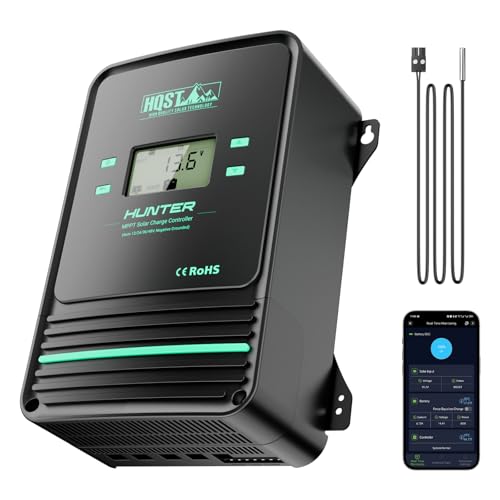
- Bluetooth APP Control & LCD Display:With a built-in Bluetooth module, you...
- Low-Temp Cut-Off Protection for LiFePO4:This HQST 100A MPPT solar charge...
- Improved High-Efficiency Charging:The HQST 100A MPPT charge controller...
Which 30 amp solar charge controller won’t let me down when I expand my system later?
If you plan to add more panels or switch to a higher voltage battery bank, buy a controller with extra capacity now. The Qigreesol 100A controller handles up to 100 amps and works with 12, 24, 36, and 48 volt systems.
You will never need to replace it when you upgrade your panels or batteries. That peace of mind is why I use what finally worked for my own expanding system and it has paid for itself many times over.

Can I wire panels in series with a 30 amp charge controller?
Yes, but you must check the controller’s maximum input voltage rating first. Most 30 amp controllers can handle 50 to 100 volts, but wiring three 12-volt panels in series can exceed that limit on cold days.
I always check the open-circuit voltage of my panels in winter conditions before connecting them in series. That simple step has saved me from frying two controllers over the years.