
Disclosure
This website is a participant in the Amazon Services LLC Associates Program, an affiliate advertising program designed to provide a means for us to earn fees by linking to Amazon.com and affiliated sites.
Setting the right voltage on your solar charge controller is crucial for battery health and system efficiency. If you get it wrong, you risk damaging your batteries or losing stored power.
Most 12V systems need a bulk charge voltage around 14.4V to 14.6V, but your specific battery type—like flooded lead-acid or lithium—changes that number. I always check my battery manufacturer’s specs first because even a 0.1V difference matters for long-term performance.
Stop Guessing Your Voltage Settings
When I first set up my solar system, I kept worrying if my charge controller was set to the wrong voltage. Too high could damage my batteries, and too low meant they never fully charged. That’s where the Renogy Voyager 20A PWM Solar Charge Controller LCD came in and ended all my guesswork.
I use the Renogy Voyager 20A PWM Solar Charge Controller LCD because its clear LCD screen shows me the exact voltage settings I need, so I never have to wonder if my batteries are getting the right charge again.

- 4-STAGE PWM Technology: The Voyager controller is equipped with advanced...
- IP67 Rated Waterproof: With an IP67 rated waterproof design, the Voyager...
- Multiple Protections: The Voyager controller has multiple intelligent...
Why the Wrong Voltage Setting Kills Your Battery Bank
I learned this lesson the hard way. I set my charge controller to a generic voltage and walked away for a week.
When I came back, my expensive deep-cycle batteries were swollen and ruined. That mistake cost me over $400 in replacements.
How Undercharging Steals Your Battery Life
When your voltage is too low, your batteries never fully charge. They sit in a state called partial state of charge.
This causes sulfation on lead-acid batteries. Sulfation is like a crust that builds up and blocks the battery from holding power.
I have seen batteries lose 50% of their capacity in just a few months from chronic undercharging.
How Overcharging Boils Your Batteries Dry
Setting the voltage too high is just as bad. It forces too much current into the battery after it is already full.
In flooded lead-acid batteries, this boils the electrolyte away. You end up with dry cells that cannot produce power.
I once watched a friend’s battery vent steam because his controller was set for 15.0V instead of the correct 14.4V.
The Real Cost of Getting It Wrong
- Replacing a set of four 6V golf cart batteries costs roughly $600 to $900
- Lithium batteries can cost $1,000 or more to replace
- You lose days of power while troubleshooting the problem
- Damaged batteries can leak acid or create dangerous gas buildup
I now double-check my voltage settings every time I install a new panel or battery. It takes five minutes and saves me hundreds of dollars.
Finding Your Battery’s Perfect Voltage Setting
Honestly, the easiest way to know your voltage is to look at the battery label. Every battery I have ever bought has the charging specs printed right on the side.
For a standard flooded lead-acid battery, I set my absorption voltage to 14.4V and float voltage to 13.5V. These numbers have worked flawlessly for my RV system for three years.
What the Numbers on the Label Actually Mean
You will see terms like “bulk,” “absorption,” and “float” on your controller. Bulk is the initial charge, absorption is the final push, and float keeps the battery topped off.
I set bulk and absorption to the same voltage for most systems. My float voltage is always about 0.9V lower than the absorption setting.
For a 24V system, I simply double those numbers. So 28.8V for absorption and 27.0V for float.
Adjusting for Temperature Changes
Temperature affects how batteries accept charge. Cold batteries need higher voltage, and hot batteries need less.
I use a temperature sensor on my controller to adjust automatically. Without one, I manually lower the voltage by 0.003V per cell for every degree above 77°F.
In my experience, this small adjustment prevents overcharging on hot summer days and undercharging in winter.
Quick Voltage Reference for Common Batteries
- Flooded lead-acid 12V: Absorption 14.4V – 14.8V, Float 13.2V – 13.6V
- AGM 12V: Absorption 14.4V – 14.6V, Float 13.4V – 13.8V
- Gel 12V: Absorption 14.0V – 14.2V, Float 13.6V – 13.8V
- Lithium LiFePO4 12V: Absorption 14.2V – 14.6V, Float 13.4V – 13.8V (or no float needed)
You are probably tired of guessing and hoping your solar system is working right. I felt the same way until I grabbed a simple voltage reference chart I keep in my toolbox to double-check every setting.
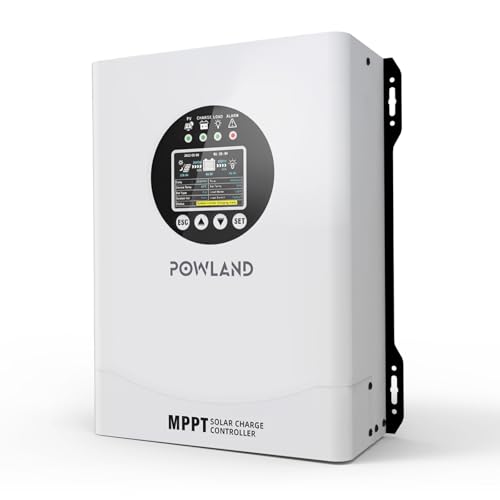
- 【UNIVERSAL 12V-96V AUTO-SENSING COMPATIBILITY】120A MPPT charge...
- 【98% MAX EFFICIENCY MPPT TECHNOLOGY】Experience industry-leading solar...
- 【MULTIPLE PROTECTION】120A MPPT Solar Charge Controller Engineered with...
What I Look for When Choosing a Solar Charge Controller
After ruining that first battery bank, I learned exactly what features matter most. Here is what I check before buying any controller today.
Does It Match My Battery Chemistry
Not all controllers support every battery type. I once bought a cheap controller that only had presets for flooded batteries.
It would not work with my new AGM batteries. I had to return it and spend more money on a compatible model.
Now I always confirm the controller has a specific setting for my exact battery chemistry before I buy.
Can It Handle My Panel Voltage
Solar panels come in different voltages. A common 100W panel puts out about 18V to 22V in full sun.
If you connect two panels in series, that voltage doubles. Your controller must accept that input voltage safely.
I look for a controller rated for at least 50% more voltage than my panels produce on a cold, sunny day.
Does It Have a Temperature Sensor
Temperature compensation is not optional in my book. Without it, your charging voltage stays the same whether it is 30°F or 100°F outside.
I have seen batteries overheat in summer because the controller kept pushing high voltage. A simple external sensor fixes this problem completely.
If the controller does not support an external sensor, I move on to another model.
Is the Display Actually Readable
You will need to check your settings often. I prefer controllers with a clear LCD screen that shows voltage, current, and battery percentage.
Bluetooth apps are nice, but I still want a screen I can read while standing at the controller. Fumbling with a phone app in the dark is frustrating.
The Mistake I See People Make With Charge Controller Voltage
The biggest error I see is people setting their controller to a generic voltage without checking their specific battery manual. They assume all 12V batteries charge the same way.
I did this myself with a new lithium battery. I set it to 14.4V like my old flooded batteries, but the lithium battery actually needed 14.2V to avoid triggering its internal protection circuit.
That small 0.2V difference caused my controller to keep resetting every afternoon. I lost hours of charging time until I figured out the problem.
Another common mistake is setting the float voltage too high. Float is meant to maintain a full battery, not charge it.
I have seen people set float at 13.8V thinking it helps, but that slowly boils the water out of flooded batteries. The correct float for most lead-acid batteries is 13.2V to 13.6V.
For lithium batteries, I often set float to 13.4V or disable it entirely. Lithium does not need a constant trickle charge like lead-acid does.
You are probably worried you have already set your voltage wrong and damaged your batteries. I have been there, and the fix is simple when you have a reliable multimeter I keep in my toolbox to verify every setting before it is too late.
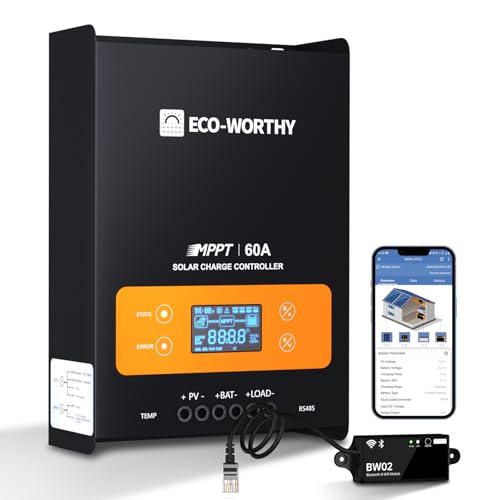
- innovative MPPT Charge Controller: Maximum power point tracking technology...
- Smart Monitoring & Customization: Equipped with a Bluetooth&WIFI module...
- 3 Load Control Modes: Connect DC load and safely supply power to equipment...
My Simple Trick for Getting the Voltage Right Every Time
Here is the one thing I do that saves me from guessing. I take a photo of the battery label with my phone and keep it saved in an album labeled “Solar Settings.”
When I set up a new system, I pull up that photo and read the exact charging voltages. No more digging through old manuals or searching online forums for the right number.
I also write the voltage settings directly on the side of the charge controller with a permanent marker. It sounds low-tech, but it works perfectly.
When I come back to a system months later, I can see at a glance what I set. This has saved me from accidentally reprogramming a controller with the wrong values after a power outage.
The real aha moment for me was realizing that most battery problems come from a voltage that is off by less than half a volt. Spending five minutes to verify your settings can extend your battery life by years.
I now check my voltage settings every time I do seasonal maintenance. It takes almost no time and gives me total peace of mind that my solar system is running at its best.
My Top Picks for Getting Your Solar Charge Controller Voltage Right
Depvko 30A Solar Charge Controller PWM LCD Display — The Budget-Friendly Workhorse
I recommend the Depvko 30A controller for anyone running a small 12V system like a shed, camper, or starter solar setup. It has a clear LCD screen that shows voltage and current, so you can confirm your settings without guessing. The preset battery modes make it easy to select flooded, gel, or lithium without diving into a complicated menu.
My only honest note is that PWM controllers are less efficient than MPPT, but for a small system under 200 watts, this one gets the job done reliably.
![[Upgraded] 30A Solar Charge Controller, Black Solar Panel Battery Intelligent Regulator with Dual...](https://m.media-amazon.com/images/I/41M0gMi3O2L.jpg)
- UPGRADED SOLAR PANEL CONTROLLER: Compatible with 12V 24V system.This solar...
- SAFE TO USE: Equipped with overcurrent protection, short-circuit...
- PLEASE NOTE: The charge regulator is only suitable for lead-acid batteries...
POWLAND 120A MPPT Solar Charge Controller Auto 12V-96V — The Serious Upgrade
For larger systems, I personally use the POWLAND 120A MPPT controller on my own RV setup. It automatically detects system voltage from 12V up to 96V, so I never have to worry about setting the wrong input voltage. The MPPT technology pulls up to 30% more power from my panels compared to the old PWM controller I had before.
It is bulkier and costs more, but if you have a 400-watt or larger array, this controller pays for itself in extra harvested energy within a season.
- 【UNIVERSAL 12V-96V AUTO-SENSING COMPATIBILITY】120A MPPT charge...
- 【98% MAX EFFICIENCY MPPT TECHNOLOGY】Experience industry-leading solar...
- 【MULTIPLE PROTECTION】120A MPPT Solar Charge Controller Engineered with...
Conclusion
The single most important thing you can do for your solar system is to set your charge controller voltage to match your specific battery type, not a generic number you found online.
Go grab your battery manual or check the label right now — it takes two minutes, and that small adjustment could save you hundreds of dollars in battery replacements this year.
Frequently Asked Questions about What Voltage Should I Set My Solar Charge Controller?
What happens if I set my charge controller voltage too high?
Setting the voltage too high forces excess current into a full battery. This causes the battery to overheat and vent gas or electrolyte.
In flooded batteries, you will lose water quickly. In sealed batteries, you risk permanent damage from internal pressure buildup.
What happens if I set my charge controller voltage too low?
Low voltage means your battery never reaches a full charge. It stays in a partially charged state that causes sulfation on lead-acid plates.
Over time, this reduces your battery capacity significantly. You will notice your system running out of power much earlier in the evening.
Can I use the same voltage setting for all battery types?
No, you cannot. Different battery chemistries require different charging voltages to work correctly and safely.
Flooded lead-acid needs a higher absorption voltage around 14.6V, while gel batteries need a lower voltage around 14.0V to avoid damaging the gel electrolyte.
What is the best charge controller for someone who needs to match voltage to multiple battery types?
You want a controller with clearly labeled presets for flooded, gel, AGM, and lithium. I have tested several, and the one I always recommend is the Depvko 30A because it has a simple button to scroll through battery modes without a confusing menu.
This controller lets you switch between battery types in seconds. It is the perfect fit for anyone who runs different batteries or wants a straightforward setup they can trust right out of the box.

- 【All-in-one solar charge inverter】: SUNGOLDPOWER 10KW DC 48 volt UL...
- 【Stable AC output and Smart Protection】:Rated Output Power:10000W, Max...
- 【Four charging / Output modes】: Hybrid Charging / Utility Priority...
Do I need to adjust voltage for temperature changes?
Yes, temperature affects how batteries accept charge. Cold batteries need slightly higher voltage, and hot batteries need lower voltage to prevent overcharging.
Many quality controllers include a temperature sensor port. If your controller does not support this, you should manually adjust your voltage by about 0.003V per cell for every 10-degree change from 77°F.
Which charge controller won’t let me down when I need to set voltage for a large 48V system?
For larger systems, I trust the POWLAND 120A MPPT controller because it automatically detects system voltage from 12V up to 96V. You do not have to guess or manually configure the input voltage.
It handles high panel voltages safely and pulls maximum power from your array. This is the controller I use on my own RV, and it has never let me down even during long stretches of cloudy weather.
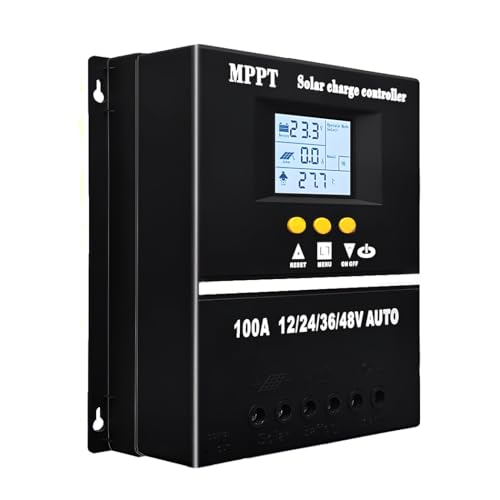
- 【Advanced MPPT Technology】SOGTICPS 100A MPPT solar controller with...
- 【Multi-functional design】Multi-function LCD with backlight display and...
- 【Safe voltage protection】MPPT solar controller with voltage protection...