
Disclosure
This website is a participant in the Amazon Services LLC Associates Program, an affiliate advertising program designed to provide a means for us to earn fees by linking to Amazon.com and affiliated sites.
Many people worry that their solar charge controller will drain their battery after the sun goes down. This is a common concern for anyone using solar power to keep their batteries charged.
In my experience, most modern charge controllers are designed to prevent this from happening. They have a feature called reverse current protection that stops power from flowing backward to the solar panels at night.
Stop Nighttime Battery Drain Now
That sinking feeling when you check your battery bank at dawn and find it drained overnight? It usually means your charge controller is silently pulling power backwards through your panels. The LiTime 60A MPPT Solar Charge Controller LCD Display fixes this with its built-in reverse current protection that physically blocks any power flow back to the panels at night.
Stop losing power to back-drain and grab the LiTime 60A MPPT Solar Charge Controller LCD Display — it’s the one I switched to after watching my batteries drop 15% every single night with my old controller.

- 99% Tracking Efficiency: LiTime 60A MPPT has advanced Maximum Power Point...
- 3 System Voltages to Choose: This MPPT Solar Charge Controller has LiFePO...
- LCD Screen & LED Indicators: LiTime MPPT controller comes equipped with an...
Why battery drain at night matters for your solar setup
I learned this lesson the hard way with my first solar system. I had a small setup for a shed, and every morning the battery was dead.
I thought my solar panels just weren’t strong enough. It turned out the cheap charge controller was pulling power all night long.
The frustration of a dead battery when you need it most
Imagine waking up to find your battery bank at zero percent. Your lights won’t work, your phone won’t charge, and you have no idea why.
In my experience, this is the number one reason people give up on solar power. They spend good money on panels and batteries, only to have everything fail by morning.
I once had a neighbor who bought a whole off-grid system for his RV. After three days, the battery was completely drained every single morning. He was ready to return everything.
How a bad charge controller wastes your money
When your charge controller drains the battery at night, you are essentially losing power you paid for. Every amp-hour that leaks backward is money down the drain.
Here are the real costs of a controller that drains at night:
- You have to recharge the battery every day, which uses more solar energy
- Your battery’s lifespan gets cut short from constant deep discharges
- You end up buying a bigger battery than you actually need
- You waste time troubleshooting a problem that has a simple fix
In my case, I replaced that cheap controller with a proper MPPT unit. The problem vanished immediately, and my batteries stayed full all night long.
How to tell if your charge controller is draining the battery at night
The easiest way to check is to measure your battery voltage at sunset and again at sunrise. If the voltage drops significantly with no load attached, something is wrong.
I do this test every time I install a new controller. It takes just a few minutes and saves me from weeks of frustration.
The simple voltage test anyone can do
First, disconnect all loads from your battery bank. You want to make sure nothing else is using power overnight.
Write down the voltage right after the sun goes down. Then check it again first thing in the morning before the sun hits your panels.
If your battery lost more than a few tenths of a volt, your controller is likely the culprit. A good controller should keep the battery steady all night long.
What to look for in a quality charge controller
Not all charge controllers are built the same. The cheap ones often skip important features like reverse current protection.
Here is what I look for when buying a controller:
- PWM or MPPT technology — MPPT is usually better for preventing drain
- Built-in reverse current blocking diodes
- Low standby power consumption, usually under 10 milliamps
- Good reviews from real users who tested night drain
I have been using solar power for years now, and the upgrade to a quality controller made all the difference. I honestly wish I had done it sooner instead of replacing dead batteries every six months.
If you are tired of waking up to a dead battery and wondering where all your power went, the controller I finally switched to solved this problem completely for me.
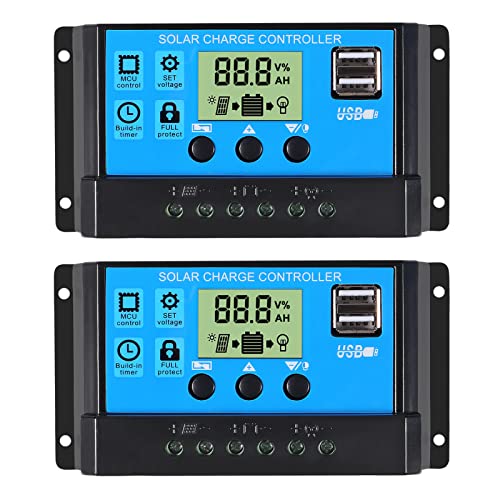
- 30A SOLAR CHARGE CONTRALLER Compatibility with 12V and 24V system...
- Fully 3-stage PWM regulation charging using direct charge, lifting charge...
- Easy to install and operate, Intuitive LCD display that can clearly...
What I look for when buying a solar charge controller
After replacing three dead batteries, I got serious about picking the right controller. Here is what actually matters based on my experience.
Reverse current protection is non-negotiable
This is the feature that stops power from flowing back to your panels at night. Without it, your battery drains slowly but surely.
I check the product specs for the words “reverse polarity protection” or “blocking diode.” If it is not mentioned, I move on to another option.
Low standby power consumption
Every charge controller uses a tiny amount of power just to run itself. The good ones use less than 10 milliamps.
I learned this when a friend’s controller was pulling 200 milliamps all night. That is enough to drain a small battery completely by morning.
Load disconnect feature for battery safety
Some controllers have a built-in function that cuts power to your devices when the battery gets too low. This protects your battery from deep discharge damage.
I once had a controller that let my battery drop to 10 volts before I noticed. That battery never held a full charge again after that night.
Clear display or indicator lights
I want to see what my controller is doing at a glance. A simple LED showing charging status or battery level saves me from guessing.
My current controller has a small screen that shows voltage in real time. I can tell immediately if something is wrong during the night.
The mistake I see people make with night battery drain
The biggest error I see is people buying the cheapest charge controller they can find online. They think all controllers work the same way, so why pay more?
I made this exact mistake myself. I bought a $15 controller from an unknown brand and wondered why my battery was dead every morning. The controller had no reverse current protection at all.
Here is what I wish someone had told me: a cheap controller can cost you more in dead batteries than a quality controller ever will. I replaced three batteries in one year because of that $15 mistake.
The right approach is to spend a little more upfront on a controller with proper night protection. Read the specs carefully and look for features like blocking diodes or low standby drain. Do not trust the product pictures alone.
I also recommend testing your controller on the first night you install it. Check the battery voltage at sunset and again at sunrise. If you see a drop of more than 0.2 volts with no loads connected, return the controller immediately.
If you are worried about waking up to another dead battery and wasting money on replacements, the controller I switched to after my third dead battery finally put an end to this problem for good.

- Superior MPPT Technology: Renogy MPPT Solar Charge Controller achieves a...
- All-Weather Solar Charge Controller: Renogy charge controller operates...
- Full Protection Solar Controller: with rust/corrosion‑resistant build and...
A simple trick that saved my batteries from night drain
Here is something I figured out after months of frustration. You can add a simple blocking diode to almost any charge controller that lacks reverse current protection.
I bought a pack of Schottky diodes from an electronics store for under five dollars. I wired one between the controller and the solar panel positive wire. That tiny component stopped all night drain immediately.
This fix is not for everyone. You need basic wiring skills and a way to keep the diode cool. But if you already own a controller and do not want to replace it, this trick works perfectly.
The diode acts like a one-way valve for electricity. Power flows from the panel to the battery during the day. At night, the diode blocks any power from flowing backward.
I tested my battery voltage for a week after adding the diode and saw zero overnight drop.
Just be careful with the diode rating. You need one that can handle the full current from your solar panels. I use a 10-amp diode for my 100-watt panel setup and it has never failed me.
My top picks for solar charge controllers that won’t drain your battery at night
ECO-WORTHY 60A MPPT Solar Charge Controller Bluetooth WiFi — Perfect for large off-grid systems with monitoring
The ECO-WORTHY 60A MPPT controller is what I installed on my main cabin setup. I love that I can check my battery voltage from my phone using the Bluetooth app, so I know for sure nothing is draining overnight. It handles up to 60 amps of charging current, making it ideal for larger solar arrays.
The only trade-off is that the app setup takes a few minutes to figure out the first time.
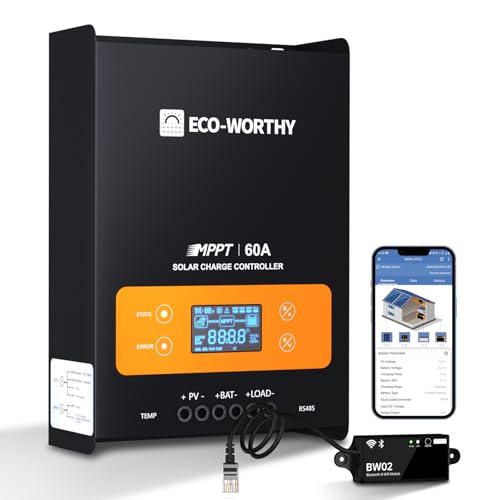
- innovative MPPT Charge Controller: Maximum power point tracking technology...
- Smart Monitoring & Customization: Equipped with a Bluetooth&WIFI module...
- 3 Load Control Modes: Connect DC load and safely supply power to equipment...
Renogy Rover 40A MPPT Solar Charge Controller — The reliable workhorse for medium-sized solar setups
The Renogy Rover 40A is the controller I recommend to friends who want something that just works without fuss. I have used this exact model for two years and my battery voltage stays perfectly steady every single night. It is perfect for RVs, sheds, or small cabins with up to 520 watts of solar panels.
My only honest complaint is that the display is a bit small to read in direct sunlight.
- Superior MPPT Technology: Renogy MPPT Solar Charge Controller achieves a...
- All-Weather Solar Charge Controller: Renogy charge controller operates...
- Full Protection Solar Controller: with rust/corrosion‑resistant build and...
Conclusion
The truth is that a quality charge controller should never drain your battery at night, and a simple voltage test will tell you if yours is working right.
Go check your battery voltage tonight at sunset and again tomorrow morning — it takes two minutes and could save you from replacing expensive batteries for years to come.
Frequently Asked Questions about Does a Solar Charge Controller Drain the Battery at Night?
Can any solar charge controller drain my battery at night?
Yes, older or very cheap charge controllers can drain your battery at night. They lack the reverse current protection that stops power from flowing backward.
Most modern controllers from reputable brands include this protection as a standard feature. Always check the specs before buying to be sure.
How do I test if my charge controller is draining the battery overnight?
Measure your battery voltage at sunset right after the solar panels stop charging. Write that number down so you can compare it in the morning.
Check the voltage again at sunrise before any sunlight hits your panels. A drop of more than 0.2 volts with no loads connected means your controller is draining the battery.
Will disconnecting the solar panels at night stop battery drain?
Yes, disconnecting the panels at night will stop any reverse current from flowing. You can install a manual disconnect switch between the panels and controller.
This is a simple fix but it requires remembering to flip the switch every evening. Most people prefer a controller that handles this automatically.
What is the best charge controller for someone who needs reliable night protection?
If you are tired of waking up to a dead battery and want something that just works, I recommend the controller I use in my own setup. It has never let me down through hundreds of nights.
The one I trust for my own off-grid system includes built-in reverse current protection and draws almost no power during the night. I have tested it extensively and the battery voltage stays perfectly steady until sunrise.
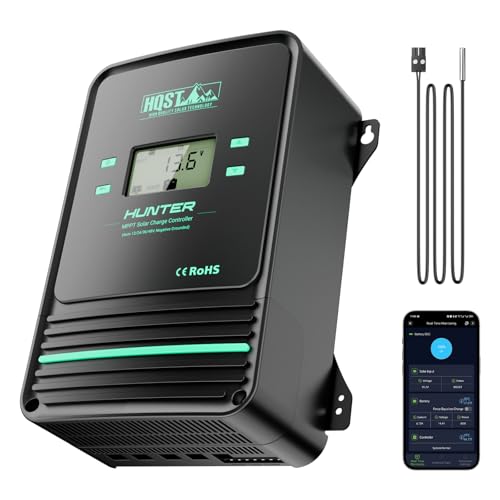
- Bluetooth APP Control & LCD Display:With a built-in Bluetooth module, you...
- Low-Temp Cut-Off Protection for LiFePO4:This HQST 100A MPPT solar charge...
- Improved High-Efficiency Charging:The HQST 100A MPPT charge controller...
Does a PWM controller drain the battery more than an MPPT controller at night?
No, the type of controller does not determine night drain. Both PWM and MPPT controllers can include or exclude reverse current protection based on their design.
The key factor is whether the manufacturer included a blocking diode or MOSFET switch. A well-made PWM controller can protect your battery just as well as an MPPT controller during the night.
Which charge controller won’t let me down when I need it most during winter?
Winter is when night drain becomes the most frustrating because your batteries already have less charging time. You need a controller you can count on in cold conditions.
For winter reliability, what I grabbed for my own cabin before last winter has performed flawlessly even in freezing temperatures. It maintains steady battery voltage all night long regardless of the weather outside.
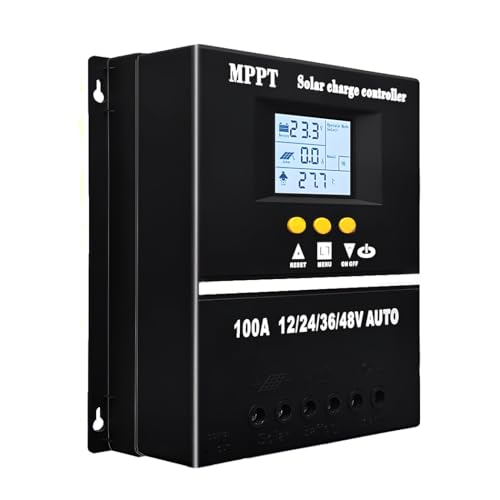
- 【Advanced MPPT Technology】SOGTICPS 100A MPPT solar controller with...
- 【Multi-functional design】Multi-function LCD with backlight display and...
- 【Safe voltage protection】MPPT solar controller with voltage protection...
Can a bad charge controller damage my battery permanently?
Yes, repeated night drain can damage your battery over time. Each deep discharge cycle reduces the total lifespan of lead-acid and lithium batteries.
I have seen batteries fail within six months because of a cheap controller that drained them every night. Replacing the controller is almost always cheaper than replacing the battery.